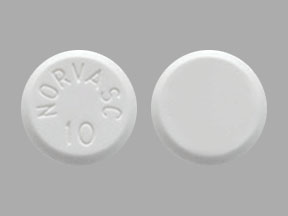
Norvasc Side Effects
Generic name: amlodipine
Medically reviewed by Drugs.com. Last updated on Oct 11, 2024.
Note: This document provides detailed information about Norvasc Side Effects associated with amlodipine. Some dosage forms listed on this page may not apply specifically to the brand name Norvasc.
Applies to amlodipine: oral solution, oral suspension, oral tablet.
Precautions
It is very important that your doctor check your or your child's progress at regular visits to make sure this medicine is working properly. Blood tests may be needed to check for unwanted effects.
This medicine may cause worsening of angina (chest pain) or a heart attack in certain patients with severe heart or blood vessel disease. Check with your doctor right away if you are having chest pain or discomfort, fast or irregular heartbeat, nausea or vomiting, pain or discomfort in the arms, jaw, back, or neck, trouble breathing, or sweating.
Dizziness, lightheadedness, or fainting may also occur, especially when you get up suddenly from a lying or sitting position. If you feel dizzy, lie down so you do not faint. Then sit for a few moments before standing to prevent the dizziness from returning. If you faint, call your doctor right away.
Dizziness, lightheadedness, or fainting may also occur if you exercise or if the weather is hot. Heavy sweating can cause loss of too much water and result in low blood pressure. Use extra care during exercise or hot weather.
Check with your doctor right away if you or your child have pain or tenderness in the upper stomach, pale stools, dark urine, loss of appetite, nausea, vomiting, or yellow eyes or skin. These could be symptoms of a serious liver problem.
If you have been using this medicine regularly for several weeks, do not suddenly stop using it. Stopping suddenly may cause your chest pain or high blood pressure to come back or get worse. Check with your doctor for the best way to reduce gradually the amount you are taking before stopping completely.
After taking a dose of this medicine you may get a headache that lasts for a short time. This should become less noticeable after you have taken this medicine for a while. If this effect continues, or if the headaches are severe, check with your doctor.
In some patients, tenderness, swelling, or bleeding of the gums may appear soon after treatment with this medicine is started. Brushing and flossing your teeth carefully and regularly and massaging your gums may help prevent this. See your dentist regularly to have your teeth cleaned. Check with your doctor or dentist if you have any questions about how to take care of your teeth and gums, or if you notice any tenderness, swelling, or bleeding of your gums.
Do not take other medicines unless they have been discussed with your doctor. This especially includes prescription or nonprescription (over-the-counter [OTC]) medicines for appetite control, asthma, colds, cough, hay fever, or sinus problems, and herbal or vitamin supplements.
Serious side effects of Norvasc
Along with its needed effects, amlodipine (the active ingredient contained in Norvasc) may cause some unwanted effects. Although not all of these side effects may occur, if they do occur they may need medical attention.
Check with your doctor immediately if any of the following side effects occur while taking amlodipine:
More common side effects
- swelling of the ankles or feet
Less common side effects
- chest tightness
- difficult or labored breathing
- dizziness
- fast, irregular, pounding, or racing heartbeat or pulse
- feeling of warmth
- redness of the face, neck, arms, and occasionally, upper chest
Rare side effects
- black, tarry stools
- bleeding gums
- blistering, peeling, or loosening of the skin
- blood in the urine or stools
- blurred vision
- burning, crawling, itching, numbness, prickling, "pins and needles", or tingling feelings
- chest pain or discomfort
- chills
- cold and clammy skin
- cold sweats
- confusion
- cough
- dark yellow urine
- diarrhea
- dilated neck veins
- dizziness or lightheadedness when getting up from a lying or sitting position
- extra heartbeats
- fainting
- fever
- itching of the skin
- joint or muscle pain
- large, hive-like swelling on the face, eyelids, lips, tongue, throat, hands, legs, feet, or sex organs
- numbness and tingling of the face, fingers, or toes
- pain in the arms, legs, or lower back, especially pain in the calves or heels upon exertion
- painful or difficult urination
- pale, bluish-colored, or cold hands or feet
- pinpoint red or purple spots on the skin
- red, irritated eyes
- redness of the face, neck, arms, and occasionally, upper chest
- redness, soreness or itching skin
- shakiness in the legs, arms, hands, or feet
- slow or irregular heartbeat
- sore throat
- sores, ulcers, or white spots on the lips or in the mouth
- sores, welting, or blisters
- sudden sweating
- sweating
- swelling of the face, fingers, feet, or lower legs
- swollen glands
- trembling or shaking of the hands or feet
- unsteadiness or awkwardness
- unusual bleeding or bruising
- unusual tiredness or weakness
- weak or absent pulses in the legs
- weakness in the arms, hands, legs, or feet
- weight gain
- yellow eyes or skin
Incidence not known
- clay-colored stools
- difficulty with speaking
- drooling
- headache
- loss of appetite
- loss of balance control
- muscle trembling, jerking, or stiffness
- nausea
- rash
- shuffling walk
- stomach pain
- twisting movements of the body
- uncontrolled movements, especially of the face, neck, and back
- unpleasant breath odor
- vomiting of blood
- yellow eyes or skin
Other side effects of Norvasc
Some side effects of amlodipine may occur that usually do not need medical attention. These side effects may go away during treatment as your body adjusts to the medicine. Also, your health care professional may be able to tell you about ways to prevent or reduce some of these side effects.
Check with your health care professional if any of the following side effects continue or are bothersome or if you have any questions about them:
Less common side effects
- acid or sour stomach
- belching
- feeling of warmth
- heartburn
- indigestion
- lack or loss of strength
- muscle cramps
- redness of the face, neck, arms, and occasionally, upper chest
- sleepiness or unusual drowsiness
- stomach discomfort, upset, or pain
Rare side effects
- abnormal dreams
- anxiety
- back pain
- bad unusual or unpleasant (after) taste
- bleeding gums
- blistering, crusting, irritation, itching, or reddening of the skin
- bloating
- bloody nose
- burning feeling in the chest or stomach
- burning while urinating
- burning, dry, or itching eyes
- change in color of the treated skin
- change in sense of smell
- change in taste
- changes in vision
- constipation
- continuing ringing or buzzing or other unexplained noise in the ears
- cracked, dry, or scaly skin
- decreased sexual performance or desire
- depression
- difficulty with moving
- difficulty with swallowing
- discharge, excessive tearing
- double vision
- dry mouth
- dryness of the skin
- excess air or gas in the stomach or intestines
- excessive muscle tone
- eye pain
- feeling of constant movement of self or surroundings
- feeling of unreality
- feeling unusually cold
- flushed, dry skin
- fruit-like breath odor
- full feeling
- general feeling of discomfort or illness
- hair loss or thinning of the hair
- headache, severe and throbbing
- hearing loss
- increased appetite
- increased hunger
- increased sweating
- increased thirst
- increased urge to urinate during the night
- increased urination
- irritability
- irritation in the mouth
- lack of feeling or emotion
- loose stools
- loss of memory
- muscle pains, stiffness, tension, tightness, or weakness
- nervousness
- pain
- pains in the stomach, side, or abdomen, possibly radiating to the back
- passing gas
- problems with memory
- redness and swelling of the gums
- redness, pain, or swelling of the eye, eyelid, or inner lining of the eyelid
- restlessness
- runny nose
- seeing double
- sensation of spinning
- sense of detachment from self or body
- shakiness and unsteady walk
- shivering
- sneezing
- stuffy nose
- sweating
- swollen joints
- tenderness in the stomach area
- thirst
- trouble in holding or releasing urine
- trouble sleeping
- twitching
- uncaring
- unexplained weight loss
- unsteadiness, trembling, or other problems with muscle control or coordination
- waking to urinate at night
- weight loss
Incidence not known
- swelling of the breasts or breast soreness in both females and males
See also:
For healthcare professionals
Applies to amlodipine: oral liquid, oral powder for reconstitution, oral suspension, oral tablet, oral tablet disintegrating.
General adverse events
The most commonly reported side effects include headache, edema, rash, fatigue, and dizziness.[Ref]
Cardiovascular
- Very common (10% or more): Edema (up to 14.6%)
- Common (1% to 10%): Palpitations, ankle edema
- Uncommon (0.1% to 1%): Hypotension, chest pain
- Very rare (less than 0.01%): Myocardial infarction, arrhythmia (including bradycardia, ventricular tachycardia, atrial fibrillation), vasculitis, cardiac failure, pulse irregularity, extrasystoles, hot flush
- Frequency not reported: Tachycardia, peripheral ischemia, postural hypotension[Ref]
Myocardial infarction, chest pain, and arrhythmia (e.g., bradycardia, ventricular tachycardia, atrial fibrillation) cannot be distinguished from the natural history of the underlying disease.
Edema occurred in 14.6% of female patients given this drug compared to 5.6% of male patients, and was more likely to occur in patients given the 10 mg dose (compared to the 5 and 2.5 mg doses).[Ref]
Nervous system
- Common (1% to 10%): Somnolence, dizziness, headache
- Uncommon (0.1% to 1%): Tremor, taste perversion/dysgeusia, syncope, hypoesthesia, paresthesia
- Very rare (less than 0.01%): Hypertonia, peripheral neuropathy, ataxia, migraine, amnesia, parosmia
- Frequency not reported: Extrapyramidal syndrome, postural dizziness, vertigo[Ref]
Headache occurred commonly during clinical trials, especially at the beginning of treatment.
Extrapyramidal syndrome may be associated with this drug.[Ref]
Gastrointestinal
- Common (1% to 10%): Abdominal pain, nausea
- Uncommon (0.1% to 1%): Vomiting, dyspepsia, altered bowel habits (including diarrhea and constipation), dry mouth
- Very rare (less than 0.01%): Pancreatitis, gastritis, gingival hyperplasia, loose stools
- Frequency not reported: Dysphagia, flatulence[Ref]
Dermatologic
- Common (1% to 10%): Flushing
- Uncommon (0.1% to 1%): Alopecia, skin discoloration, increased sweating/hyperhidrosis, pruritus, rash, exanthema
- Very rare (less than 0.01%): Erythema multiforme, urticaria, exfoliative dermatitis, Stevens-Johnson syndrome, Quincke edema, photosensitivity, skin dryness, cold and clammy skin, dermatitis[Ref]
Other
- Common (1% to 10%): Fatigue
- Uncommon (0.1% to 1%): Tinnitus, asthenia, pain, malaise
- Frequency not reported: Rigors, thirst[Ref]
Genitourinary
- Uncommon (0.1% to 1%): Micturition disorder, nocturia, increased urinary frequency, impotence
- Very rare (less than 0.01%): Dysuria, polyuria
- Frequency not reported: Male/female sexual dysfunction[Ref]
Musculoskeletal
- Uncommon (0.1% to 1%): Arthralgia, myalgia, muscle cramps, back pain
- Very rare (less than 0.01%): Muscle weakness
- Frequency not reported: Arthrosis, twitching[Ref]
Psychiatric
- Uncommon (0.1% to 1%): Insomnia, mood changes (including anxiety), depression
- Rare (0.01% to 0.1%): Confusion
- Frequency not reported: Abnormal dreams, depersonalization, nervousness, apathy, agitation[Ref]
Respiratory
- Uncommon (0.1% to 1%): Dyspnea, rhinitis
- Very rare (less than 0.01%): Cough
- Frequency not reported: Epistaxis[Ref]
Ocular
- Uncommon (0.1% to 1%): Visual disturbance (including diplopia)
- Very rare (less than 0.01%): Abnormal visual accommodation, xerophthalmia
- Frequency not reported: Abnormal vision, conjunctivitis, eye pain[Ref]
Metabolic
- Uncommon (0.1% to 1%): Weight increase/decrease
- Very rare (less than 0.01%): Hyperglycemia, increased appetite
- Frequency not reported: Anorexia[Ref]
Hematologic
- Uncommon (0.1% to 1%): Purpura
- Very rare (less than 0.01%): Leukopenia, thrombocytopenia[Ref]
Endocrine
- Uncommon (0.1% to 1%): Gynecomastia[Ref]
Hepatic
- Very rare (less than 0.01%): Hepatitis, jaundice, hepatic enzymes increased[Ref]
Increased hepatic enzymes were mostly consistent with cholestasis.
Some cases of hepatitis, jaundice, and/or hepatic enzyme elevations were severe enough to require hospitalization; however, the association with this drug was uncertain in most cases.[Ref]
Hypersensitivity
- Very rare (less than 0.01%): Allergic reactions, angioedema[Ref]
References
1. (2002) "Product Information. Norvasc (amlodipine)." Pfizer U.S. Pharmaceuticals
2. Cerner Multum, Inc. "UK Summary of Product Characteristics."
3. Cerner Multum, Inc. "Australian Product Information."
Frequently asked questions
- What is the best time of day to take blood pressure medication?
- How long does it take for amlodipine to work?
- How do I reduce swelling from amlodipine?
- Does amlodipine cause weight gain?
- What medications cause swollen ankles and feet?
- Best time to take amlodipine - day or night?
- How long does amlodipine stay in your system?
More about Norvasc (amlodipine)
- Check interactions
- Compare alternatives
- Pricing & coupons
- Reviews (105)
- Drug images
- Dosage information
- Patient tips
- During pregnancy
- Generic availability
- Support group
- Drug class: calcium channel blockers
- Breastfeeding
- En español
Patient resources
Other brands
Professional resources
Other brands
Related treatment guides
Further information
Norvasc side effects can vary depending on the individual. Always consult your healthcare provider to ensure the information displayed on this page applies to your personal circumstances.
Note: Medication side effects may be underreported. If you are experiencing side effects that are not listed, submit a report to the FDA by following this guide.