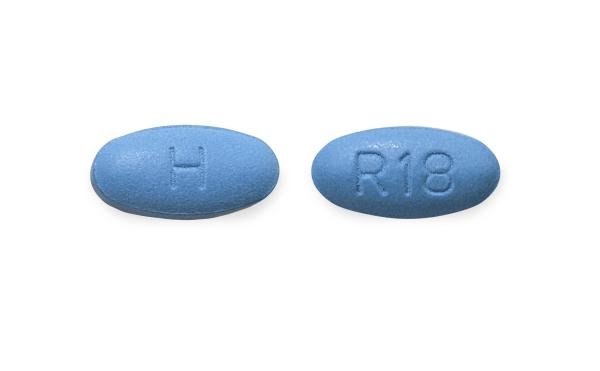
Ranolazine (Monograph)
Brand name: Ranexa
Drug class: Cardiac Drugs, Miscellaneous
VA class: CV250
Chemical name: N-(2,6-Dimethylphenyl)-4-[2-hydroxy-3-(2-methoxyphenoxy)propyl]-1-piperazineacetamide
Molecular formula: C24H33N3O4
CAS number: 95636-55-5
Introduction
Antianginal agent; a piperazine derivative.
Uses for Ranolazine
Angina
Used in the management of chronic stable angina pectoris.
May be used in combination with β-adrenergic blocking agents, calcium channel blocking agents, nitrates, antiplatelet therapy, lipid-lowering therapy, ACE inhibitors, or angiotensin receptor blocking agents.
Ranolazine Dosage and Administration
Administration
Oral Administration
Administer orally without regard to meals.
Do not break, chew, or crush tablets.
Dosage
Adults
Angina
Oral
Initially, 500 mg twice daily; may increase to maximum of 1 g twice daily.
Adjustments necessary when used in conjunction with moderate CYP3A inhibitors. (See Interactions).
Prescribing Limits
Adults
Angina
Oral
Maximum 1 g twice daily.
Special Populations
Hepatic Impairment
Contraindicated in patients with hepatic cirrhosis. (See Contraindications and also see Hepatic Impairment, under Cautions.)
Renal Impairment
No specific dosage recommendations at this time.
Geriatric Patients
Select dosage with caution, usually initiating therapy at the low end of the dosage range because of age-related decreases in hepatic, renal, and/or cardiac function and concomitant disease and drug therapy. (See Geriatric Use under Cautions.)
Cautions for Ranolazine
Contraindications
-
Hepatic cirrhosis.
-
Concomitant use with potent inhibitors of CYP3A. (See Interactions.)
-
Concomitant use with inducers of CYP3A.
-
Known hypersensitivity to ranolazine or any ingredient in the formulation.
Warnings/Precautions
Prolongation of QT Interval
Has been shown to prolong QT interval corrected for rate (QTc) in a dose-related manner. In some cases, other drugs that cause QTc interval prolongation have been associated with torsades de pointes-type arrhythmias and sudden death.
No increased risk of proarrhythmia or sudden death observed in patients with acute coronary syndromes receiving ranolazine.
Experience with high ranolazine dosages (>1 g twice daily) or exposure, other QTc interval-prolonging drugs, potassium channel variants resulting in a long QTc interval, or in patients with a family history of long QTc syndrome or with known acquired or congenital QTc interval prolongation, is limited. (See Interactions.) Dosages >1 g twice daily should not be used.
No proarrhythmic effects observed in 7-day Holter monitor recordings in patients with acute coronary syndrome receiving ranolazine. Ranolazine was associated with a lower incidence of arrhythmias (bradycardia, new atrial fibrillation, supraventricular tachycardia, ventricular tachycardia lasting ≥8 beats) compared with placebo; however, no reduction in mortality, hospitalization secondary to arrhythmia, or arrhythmia symptoms observed.
Specific Populations
Pregnancy
Category C.
Lactation
Not known whether ranolazine is distributed into milk; discontinue nursing or the drug.
Pediatric Use
Safety and efficacy not established in children <18 years of age.
Geriatric Use
No substantial differences in safety or efficacy observed in patients ≥65 years of age relative to younger adults. However, greater severity of adverse effects and increased incidence of drug discontinuance observed in patients ≥75 years of age.
Select dosage with caution because of age-related decreases in hepatic, renal, and/or cardiac function and potential for concomitant disease and drug therapy.
Hepatic Impairment
Increased plasma concentrations and increased QTc-prolonging effect in patients with mild or moderate hepatic impairment. Contraindicated in patients with hepatic cirrhosis. (See Prolongation of QT Interval under Cautions.)
Renal Impairment
BP increases (≤15 mm Hg) observed in patients with severe renal impairment; monitor BP periodically in such patients.
Safety and efficacy not established in patients undergoing dialysis.
Gender
Magnitude of the treatment effect and improvements in exercise tolerance are smaller in women than in men. No dosage adjustment required.
Common Adverse Effects
Constipation, dizziness, nausea, headache.
Drug Interactions
Metabolized by CYP isoenzymes, principally CYP3A and, to a lesser extent, CYP2D6. Weak inhibitor of CYP isoenzyme 3A and moderate inhibitor of CYP isoenzyme 2D6. Does not inhibit CYP isoenzymes 1A2, 2C8, 2C9, 2C19, or 2E1.
Substrate and moderate inhibitor of the p-glycoprotein transport system.
Drugs Affecting Hepatic Microsomal Enzymes
CYP3A and 2D6 inhibitors: Potential pharmacokinetic interaction (increased plasma ranolazine concentrations). Avoid concomitant use with potent CYP3A inhibitors. Maximum ranolazine dosage of 500 mg twice daily in patients receiving moderate CYP3A inhibitors (see Specific Drugs and Foods under Interactions).
Drugs Metabolized by Hepatic Microsomal Enzymes
CYP3A and 2D6 substrates: Potential pharmacokinetic interaction (increased plasma concentration of substrate).
Drugs that Inhibit the p-Glycoprotein Transport System
Potential pharmacokinetic interaction (increased absorption of ranolazine) with p-glycoprotein inhibitors. Reduce dosage of ranolazine as needed based on clinical response in patients receiving p-glycoprotein inhibitors (see Specific Drugs and Foods under Interactions).
Drugs That Prolong QT Interval
Potential pharmacologic effect (additive effect on QT interval prolongation). Experience with concomitant use of ranolazine with drugs that prolong the QT interval is limited.
Specific Drugs and Foods
|
Drug or Food |
Interaction |
Comments |
|---|---|---|
|
Antiarrhythmic agents (e.g., dofetilide, quinidine, sotalol) |
Additive effects on prolongation of QT interval |
Experience with concomitant use limited |
|
Antidepressants, tricyclic |
Possible decreased metabolism of tricyclic antidepressants |
Consider reducing tricyclic antidepressant dosage if used concomitantly |
|
Antifungals, azole (e.g., fluconazole, itraconazole, ketoconazole) |
Increased plasma ranolazine concentrations |
Concomitant use with itraconazole or ketoconazole contraindicated Maximum ranolazine dosage of 500 mg twice daily in patients receiving fluconazole |
|
Antipsychotics (e.g., thioridazine, ziprasidone) |
Additive effects on prolongation of QT interval Possible decreased metabolism of antipsychotics |
Experience with concomitant use limited Consider reducing antipsychotic dosage if used concomitantly |
|
Antituberculosis agents (e.g., rifabutin, rifampin, rifapentine) |
Decreased plasma ranolazine concentrations |
Avoid concomitant use |
|
Calcium-channel blocking agents (diltiazem, verapamil) |
Increased plasma ranolazine concentrations |
Maximum ranolazine dosage of 500 mg twice daily in patients receiving diltiazem or verapamil |
|
Carbamazepine |
Potential decrease in plasma ranolazine concentrations |
Avoid concomitant use |
|
Cimetidine |
Pharmacokinetic interactions unlikely |
No dosage adjustment required |
|
Cyclosporine |
Increased absorption of ranolazine Potential increase in plasma cyclosporine concentrations |
Reduce ranolazine dosage as needed based on clinical response Dosage adjustment of cyclosporine may be required |
|
Dextromethorphan |
Formation of dextrorphan, the main metabolite of dextromethorphan, partially inhibited by ranolazine in extensive metabolizers of dextromethorphan |
|
|
Digoxin |
Increased plasma digoxin concentrations; no effect on plasma ranolazine concentrations |
Reduced digoxin dosage may be necessary |
|
Grapefruit juice |
Potential increase in plasma ranolazine concentrations |
Maximum ranolazine dosage of 500 mg twice daily in patients consuming grapefruit juice or grapefruit products during therapy |
|
HIV protease inhibitors (e.g., indinavir, nelfinavir, ritonavir, saquinavir) |
Increased plasma ranolazine concentrations |
Concomitant use contraindicated |
|
Lovastatin |
Potential increase in plasma lovastatin concentrations |
Dosage adjustment of lovastatin may be required |
|
Macrolides (e.g., erythromycin, clarithromycin) |
Increased plasma ranolazine concentrations |
Concomitant use with clarithromycin contraindicated Maximum ranolazine dosage of 500 mg twice daily in patients receiving erythromycin |
|
Metoprolol |
Increased plasma metoprolol concentrations |
Dosage adjustment of metoprolol not required |
|
Paroxetine |
Increased plasma ranolazine concentrations |
Dosage adjustment of ranolazine not required |
|
Simvastatin |
Increased plasma simvastatin concentrations; no effect on ranolazine concentrations |
Limit simvastatin dosage to 20 mg daily in patients receiving ranolazine Dosage adjustment of ranolazine not required |
|
Sirolimus |
Potential increase in plasma sirolimus concentrations |
Dosage adjustment of sirolimus may be required |
|
Tacrolimus |
Potential increase in plasma tacrolimus concentrations |
Dosage adjustment of tacrolimus may be required |
|
St. John’s Wort |
Potential decrease in plasma ranolazine concentrations |
Avoid concomitant use |
|
Warfarin |
Pharmacokinetic interactions unlikely |
Ranolazine Pharmacokinetics
Absorption
Bioavailability
Following oral administration, bioavailability is approximately 55%.
Peak plasma concentrations occur between 2–5 hours. Steady state generally reached within 3 days following twice-daily dosing.
Food
Food does not appear to affect absorption.
Plasma Concentrations
QT interval increases with plasma ranolazine concentrations. Relationship between plasma ranolazine concentrations and QTc is linear over a concentration range up to several times greater than the concentrations produced by a dosage of 1 g twice daily.
Special Populations
In patients with mild, moderate, or severe renal impairment, plasma concentrations increased by 40–50%; increased exposure independent of degree of impairment.
In patients with mild or moderate hepatic impairment, plasma concentrations increased by factors of 1.3 or 1.8, respectively.
Age, weight, gender, race, heart rate, NYHA class I to IV heart failure, and diabetes have no substantial effect on the relationship between plasma ranolazine concentrations and increases in QTc interval.
Distribution
Plasma Protein Binding
Approximately 62%.
Elimination
Metabolism
Extensively metabolized in liver and intestine by CYP3A4 and CYP2D6. (See Interactions.)
Elimination Route
Excreted in urine (75%) mainly as metabolites and in feces (25%).
Half-life
Terminal half-life is approximately 7 hours.
Stability
Storage
Oral
Tablets
25°C (may be exposed to 15–30°C).
Actions
-
Exact mechanism of antianginal action not fully elucidated; may involve the shifting of adenosine triphosphate (ATP) production away from fatty acid oxidation (i.e., partial inhibition of fatty acid oxidation) in favor of more oxygen-efficient glucose oxidation, especially when free fatty acid concentrations are elevated (e.g., during ischemia), leading to reduced oxygen demand and symptoms of ischemia without affecting cardiac work.
-
May decrease the magnitude of the late (i.e., sustained, persistent) sodium current resulting in a net reduction in intracellular sodium concentrations, reversal of calcium overload, restoration of ventricular pump function, and prevention of ischemia-induced arrhythmias.
-
Effects not dependent upon reductions in heart rate or BP.
-
Prolongation of QT interval secondary to inhibition of IKr, which prolongs the ventricular action potential.
Advice to Patients
-
Risk of changes in ECG (i.e., prolongation of QT interval corrected for rate [QTc]).
-
Importance of informing clinicians of any personal or family history of QTc interval prolongation or congenital long QT syndrome.
-
Importance of informing clinicians if patient is receiving drugs that prolong the QTc interval (e.g., class Ia [e.g., quinidine] or III [e.g., dofetilide, sotalol] antiarrhythmic agents, erythromycin, antipsychotic agents [e.g., thioridazine, ziprasidone]).
-
Importance of advising patients that ranolazine should be avoided in patients receiving drugs that are potent inhibitors of CYP3A (e.g., clarithromycin, ketoconazole, nefazodone, ritonavir).
-
Risk of dizziness and lightheadedness; avoid driving, operating machinery, or engaging in other activities requiring mental alertness or coordination while taking ranolazine until gain experience with the drug’s effects.
-
Importance of advising patients that ranolazine should be avoided in patients receiving drugs that are inducers of CYP3A (e.g., barbiturates, carbamazepine, phenytoin, rifabutin, rifampin, rifapentine, St. John’s wort).
-
Importance of informing clinicians if patient is receiving drugs that are moderate inhibitors of CYP3A (e.g., diltiazem, erythromycin, verapamil) or inhibitors of P-glycoprotein (e.g., cyclosporine).
-
Importance of informing patients that ranolazine dosages exceeding 1 g twice daily should not be used.
-
Importance of advising patients to swallow tablets whole and not to break, chew, or crush the tablets.
-
Importance of informing patients that ranolazine may be taken without regard to meals.
-
Importance of advising patients that if a dose is missed, next dose should be taken at regularly scheduled time; dose should not be doubled.
-
Importance of informing patients that ranolazine will not abate an acute episode of angina.
-
Importance of informing patients that ranolazine should not be used in patients with hepatic cirrhosis.
-
Importance of informing clinicians if fainting spells occur.
-
Importance of informing clinicians if swelling of the eyes, face, lips, tongue, or throat occurs.
-
Importance of women informing clinicians if they are or plan to become pregnant or plan to breast-feed.
-
Importance of informing clinicians of existing or contemplated therapy, including prescription and OTC drugs and dietary or herbal supplements, as well as any concomitant illnesses (e.g., cardiovascular disease). Importance of limiting grapefruit juice and grapefruit-containing products.
-
Importance of informing patients of other important precautionary information. (See Cautions.)
Preparations
Excipients in commercially available drug preparations may have clinically important effects in some individuals; consult specific product labeling for details.
Please refer to the ASHP Drug Shortages Resource Center for information on shortages of one or more of these preparations.
|
Routes |
Dosage Forms |
Strengths |
Brand Names |
Manufacturer |
|---|---|---|---|---|
|
Oral |
Tablets, extended-release, film-coated |
500 mg |
Ranexa |
Gilead Sciences |
|
1000 mg |
Ranexa |
Gilead Sciences |
AHFS DI Essentials™. © Copyright 2025, Selected Revisions January 20, 2012. American Society of Health-System Pharmacists, Inc., 4500 East-West Highway, Suite 900, Bethesda, Maryland 20814.
Reload page with references included
Related/similar drugs
More about ranolazine
- Check interactions
- Compare alternatives
- Pricing & coupons
- Reviews (94)
- Drug images
- Side effects
- Dosage information
- During pregnancy
- Drug class: antianginal agents
- En español