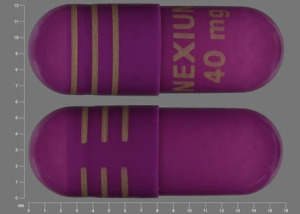
Nexium
Generic name: esomeprazole magnesium (oral) [ ee-so-MEP-ra-zol ]
Drug class: Proton pump inhibitors
What is Nexium?
Nexium is a proton pump inhibitor that decreases the amount of acid produced in the stomach.
Nexium is used to treat symptoms of gastroesophageal reflux disease (GERD) and other conditions involving excessive stomach acid such as Zollinger-Ellison syndrome. It is also used to promote healing of erosive esophagitis (damage to your esophagus caused by stomach acid).
Nexium may also be given to prevent gastric ulcer caused by infection with Helicobacter pylori (H. pylori), or by the use of nonsteroidal anti-inflammatory drugs (NSAIDs).
Nexium is not for immediate relief of heartburn symptoms.
Warnings
Nexium can cause kidney problems. Tell your doctor if you are urinating less than usual, or if you have blood in your urine.
Diarrhea may be a sign of a new infection. Call your doctor if you have diarrhea that is watery or has blood in it.
Esomeprazole may cause new or worsening symptoms of lupus. Tell your doctor if you have joint pain and a skin rash on your cheeks or arms that worsens in sunlight.
You may be more likely to have a broken bone while taking this medicine long term or more than once per day.
Before taking this medicine
You should not use Nexium if you are allergic to esomeprazole or to similar medicines such as lansoprazole (Prevacid), omeprazole (Prilosec, Zegerid), pantoprazole (Protonix), or rabeprazole (AcipHex).
Heartburn can mimic early symptoms of a heart attack. Get emergency medical help if you have chest pain that spreads to your jaw or shoulder and you feel anxious or light-headed.
You should not use this medicine if you have had kidney problems.
Tell your doctor if you have ever had:
-
severe liver disease;
-
osteoporosis or low bone mineral density (osteopenia); or
-
low levels of magnesium in your blood.
You may be more likely to have a broken bone in your hip, wrist, or spine while taking a proton pump inhibitor long-term or more than once per day. Talk with your doctor about ways to keep your bones healthy.
Ask a doctor before using this medicine if you are pregnant or breastfeeding.
How should I take Nexium?
Use Nexium exactly as directed on the label, or as prescribed by your doctor.
Take each dose with a full glass (8 ounces) of water.
Nexium should be taken at least one hour before a meal.
Do not crush or chew a delayed-release capsule. However to make swallowing easier, you may open the capsule and sprinkle the medicine into a spoonful of pudding or applesauce. Swallow right away without chewing. Do not save the mixture for later use.
The capsule can be given through a nasogastric (NG) feeding tube. Read and carefully follow any Instructions for Use provided with your medicine. Ask your doctor or pharmacist if you do not understand these instructions.
Esomeprazole is usually given for 4 to 8 weeks only. Your doctor may recommend a second course of treatment if you need additional healing time.
Use this medicine for the full prescribed length of time, even if your symptoms quickly improve.
Call your doctor if your symptoms do not improve or if they get worse while you are taking this medicine.
This medicine can affect the results of certain medical tests. Tell any doctor who treats you that you are using esomeprazole.
Some conditions are treated with a combination of esomeprazole and antibiotics. Use all medications as directed.
Store at room temperature away from moisture and heat.
What happens if I miss a dose?
Use the medicine as soon as you can, but skip the missed dose if it is almost time for your next dose. Do not use two doses at one time.
What happens if I overdose?
Seek emergency medical attention or call the Poison Help line at 1-800-222-1222.
What to avoid
This medicine can cause diarrhea, which may be a sign of a new infection. If you have diarrhea that is watery or bloody, call your doctor before using anti-diarrhea medicine.
Nexium side effects
Get emergency medical help if you have signs of an allergic reaction ro Nexium: hives; difficulty breathing; swelling of your face, lips, tongue, or throat.
Call your doctor at once if you have:
-
severe stomach pain, diarrhea that is watery or bloody;
-
seizure (convulsions);
-
kidney problems - fever, rash, nausea, loss of appetite, joint pain, urinating less than usual, blood in your urine, weight gain;
-
low magnesium - dizziness, fast or irregular heart rate, tremors (shaking) or jerking muscle movements, feeling jittery, muscle cramps, muscle spasms in your hands and feet, cough or choking feeling; or
-
new or worsening symptoms of lupus - joint pain, and a skin rash on your cheeks or arms that worsens in sunlight.
Taking esomeprazole long-term may cause you to develop stomach growths called fundic gland polyps. Talk with your doctor about this risk.
If you use esomeprazole for longer than 3 years, you could develop a vitamin B-12 deficiency. Talk to your doctor about how to manage this condition if you develop it.
Common Nexium side effects may include:
-
diarrhea;
-
nausea, stomach pain, gas, constipation; or
-
dry mouth.
This is not a complete list of side effects and others may occur. Call your doctor for medical advice about side effects. You may report side effects to FDA at 1-800-FDA-1088.
Related/similar drugs
Protonix
Protonix (pantoprazole) is used to treat erosive esophagitis and other conditions involving excess ...
Prilosec
Prilosec (omeprazole) is used to treat symptoms of GERD and other conditions caused by excess ...
Botox
Botox is used for cosmetic purposes and to treat overactive bladder symptoms, urinary incontinence ...
Prevacid
Prevacid is used to treat and prevent stomach and intestinal ulcers. Learn about side effects ...
Dexilant
Dexilant is used for barrett's esophagus, erosive esophagitis, GERD
Aciphex
Aciphex is used to treat gastroesophageal reflux disease (GERD) and other conditions involving ...
Dexlansoprazole
Dexlansoprazole is used for barrett's esophagus, erosive esophagitis, GERD
Rabeprazole
Rabeprazole is used for barrett's esophagus, duodenal ulcer, duodenal ulcer prophylaxis, erosive ...
Lansoprazole
Lansoprazole is used to treat stomach and intestinal ulcers, erosive esophagitis and ...
What other drugs will affect Nexium?
Tell your doctor about all your current medicines. Many drugs can affect esomeprazole, especially:
-
iron-containing medicines (ferrous fumarate, ferrous gluconate, ferrous sulfate, and others);
-
antifungal medication - ketoconazole, voriconazole; or
-
HIV/AIDS medication - atazanavir, nelfinavir, saquinavir.
This list is not complete and many other drugs may interact with esomeprazole. This includes prescription and over-the-counter medicines, vitamins, and herbal products. Not all possible drug interactions are listed here.
Frequently asked questions
More about Nexium (esomeprazole)
- Check interactions
- Compare alternatives
- Pricing & coupons
- Reviews (211)
- Drug images
- Side effects
- Dosage information
- Patient tips
- During pregnancy
- Generic availability
- Support group
- Drug class: proton pump inhibitors
- Breastfeeding
- En español
Patient resources
- Nexium (Esomeprazole Delayed-Release Capsules) patient information
- Nexium (Esomeprazole Powder for Suspension)
Other brands
Professional resources
Other formulations
Related treatment guides
Further information
Remember, keep this and all other medicines out of the reach of children, never share your medicines with others, and use Nexium only for the indication prescribed.
Always consult your healthcare provider to ensure the information displayed on this page applies to your personal circumstances.
Copyright 1996-2025 Cerner Multum, Inc. Version: 19.01.