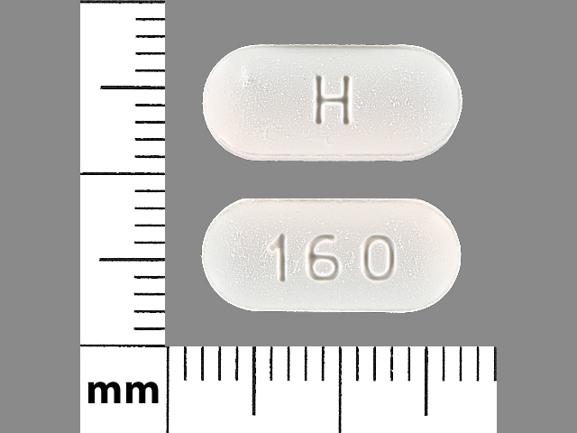
Irbesartan (Monograph)
Brand name: Avapro
Drug class: Angiotensin II Receptor Antagonists
Warning
- Fetal/Neonatal Morbidity and Mortality
-
May cause fetal and neonatal morbidity and mortality if used during pregnancy.
-
If pregnancy is detected, discontinue as soon as possible.
Introduction
Angiotensin II receptor type 1 (AT1) antagonist (i.e., angiotensin II receptor blocker, ARB).
Uses for Irbesartan
Hypertension
Treatment of hypertension (alone or in combination with other classes of antihypertensive agents).
Angiotensin II receptor antagonists are recommended as one of several preferred pharmacologic agents for initial management of hypertension in adults; other preferred options include ACE inhibitors, calcium-channel blockers, and thiazide or thiazide-like diuretics. While there may be individual differences with respect to recommendations for initial drug selection and use in specific patient populations, current evidence indicates that these antihypertensive drug classes all generally produce comparable cardiovascular risk reduction benefits.
Individualize choice of therapy; consider patient characteristics (e.g., age, ethnicity/race, comorbidities, cardiovascular risk) as well as drug-related factors (e.g., ease of administration, availability, adverse effects, cost).
Angiotensin II receptor antagonists or ACE inhibitors may be particularly useful in the management of hypertension in patients with certain coexisting conditions such as diabetes mellitus or chronic kidney disease (CKD); angiotensin II receptor antagonists also may be preferred, generally as an alternative to ACE inhibitors, in hypertensive patients with heart failure or ischemic heart disease and/or following MI.
Specific guidelines for the management of hypertension in pregnancy have been published by experts such as the American Heart Association (AHA) and the American College of Obstetrics and Gynecologists (ACOG).
Specific guidelines for the management of high BP in children and adolescents have been published by the American Academy of Pediatrics (AAP).
Diabetic Nephropathy
Treatment of diabetic nephropathy (with elevated serum creatinine and proteinuria >300 mg/day) in patients with type 2 diabetes mellitus and hypertension.
The Kidney Disease: Improving Global Outcomes (KDIGO) guideline recommends an ACE inhibitor or angiotensin II receptor antagonist in patients with diabetes mellitus, hypertension, and moderately to severely elevated albuminuria (i.e., urine to creatinine ratio >30 mg/g). An ACE inhibitor or angiotensin II receptor antagonist also may be considered in patients with diabetes and albuminuria who are normotensive† [off-label]. Current standards of care from the American Diabetes Association provide similar management recommendations for patients with diabetes mellitus and CKD.
Angiotensin II receptor antagonists have been used in the management of nondiabetic CKD with moderately or severely increased albuminuria† [off-label] to prevent progression of CKD.
KDIGO guidelines state that angiotensin II receptor antagonists may be considered in patients with CKD and normal to mildly increased albuminuria† [off-label] (i.e., urinary albumin to creatinine ratio <30 mg/g) when other compelling indications (e.g., hypertension, heart failure, or low ejection fraction) present.
Acute Coronary Syndrome (ACS)
Angiotensin II receptor antagonists have been used in the management of acute coronary syndromes† [off-label] (non-ST-segment elevation MI [non-STEMI] and STEMI).
Current guidelines on the management of patients with ACS (including unstable angina, non-STEMI, STEMI) discuss treatment strategies for ACS (non-STEMI and STEMI), including analgesics, antiplatelets/anticoagulants, and lipid reduction agents. In high-risk patients with ACS, an ACE inhibitor, angiotensin receptor antagonist, or a mineralocorticoid receptor antagonist may be recommended to reduce all-cause death and major adverse cardiovascular events.
Irbesartan Dosage and Administration
General
Pretreatment Screening
-
Verify pregnancy status in females of reproductive potential.
-
Evaluate and correct sodium or volume depletion.
-
In patients being treated for hypertension, obtain baseline BP measurements.
Patient Monitoring
-
In patients being treated for hypertension, follow-up evaluation of adherence and response to drug treatment should occur at monthly intervals until BP control is achieved. Periodically reinforce adherence to lifestyle modifications (e.g., heart-healthy diet, sodium intake reduction, increased physical activity).
-
Monitor renal function periodically.
-
Monitor serum potassium periodically.
Administration
Oral Administration
Administer orally without regard to meals. Available as tablets.
Also commercially available as a fixed-combination tablet containing irbesartan and hydrochlorothiazide; see full prescribing information for administration of this combination product.
Dosage
Pediatric Patients
Hypertension
Oral
Manufacturer states that some irbesartan dosages used in a clinical study did not effectively lower BP in pediatric patients 6–16 years of age.
Children 6–12 years of age: Experts recommend initial dosage of 75 mg once daily; dosage may be increased every 2–4 weeks until BP controlled, maximum dosage reached (150 mg once daily), or adverse effects occur.
Children ≥13 years of age: Experts recommend initial dosage of 150 mg once daily; dosage may be increased every 2–4 weeks until BP controlled, maximum dosage reached (300 mg once daily), or adverse effects occur.
Adults
Hypertension
Oral
Individualize dosage and adjust according to BP response.
Adults without intravascular volume depletion: recommended initial dosage is 150 mg once daily.
Adults with possible depletion of intravascular volume (e.g., on diuretic therapy): recommended initial dosage is 75 mg once daily.
May increase to maximum of 300 mg once daily if needed for BP control.
Diabetic Nephropathy
Oral
300 mg once daily.
Special Populations
Hepatic Impairment
No dosage adjustments necessary.
Renal Impairment
No dosage adjustments necessary in adults with mild to severe renal impairment or on hemodialysis unless patient is also volume-depleted.
Geriatric Patients
No dosage adjustments necessary.
Cautions for Irbesartan
Contraindications
-
Known hypersensitivity to irbesartan or any ingredient in the formulation.
-
Concomitant use with aliskiren in patients with diabetes mellitus.
Warnings/Precautions
Warnings
Fetal/Neonatal Morbidity and Mortality
Risk of fetal harm when administered to pregnant women. (See Boxed Warning.) Possible reduction in fetal renal function and increase in fetal and neonatal morbidity and mortality when drugs that act on the renin-angiotensin system (RAS) are used during the second and third trimesters of pregnancy. Oligohydramnios caused by drugs that act on the RAS can result in fetal lung hypoplasia, skeletal deformations (including skull hypoplasia), anuria, hypotension, renal failure, and death.
Discontinue irbesartan as soon as possible when pregnancy detected. If there is no appropriate alternative therapy, apprise mother of potential risk to the fetus.
If irbesartan is used during pregnancy, perform serial ultrasound examinations to assess intra-amniotic environment; if oligohydramnios observed, consider alternative therapy. Oligohydramnios may not appear until after irreversible injury to the fetus.
Closely observe neonates exposed to irbesartan in utero for signs of hypotension, oliguria, hyperkalemia, and other symptoms of renal impairment. If oliguria or hypotension occurs, support BP and renal perfusion. Exchange transfusions or dialysis may be required.
Other Warnings and Precautions
Hypotension in Volume or Salt-depleted Patients
Possible symptomatic hypotension, particularly in volume- and/or salt-depleted patients (e.g., those treated with high doses of diuretics).
Correct volume or salt depletion prior to irbesartan administration or use lower initial dosage.
Impaired Renal Function
Changes in renal function, including acute renal failure, possible.
Patients with renal artery stenosis, CKD, severe heart failure, or volume depletion at higher risk of acute renal failure.
Monitor renal function periodically. Consider withholding or discontinuing irbesartan in patients who develop a clinically important reduction in renal function.
Intestinal Angioedema
Intestinal angioedema reported with angiotensin II receptor blockers, including irbesartan. If intestinal angioedema is diagnosed, discontinue irbesartan and initiate appropriate monitoring until symptom resolution occurs.
Use of Fixed Combinations
When used in fixed combination with hydrochlorothiazide, consider the cautions, precautions, and contraindications associated with both drugs. Consult the full prescribing information for the fixed combination preparation for specific information.
Specific Populations
Pregnancy
May cause fetal harm when administered to a pregnant woman. (See Boxed Warning and Fetal/Neonatal Morbidity and Mortality under Cautions.)
Discontinue irbesartan as soon as possible when pregnancy detected. If no appropriate alternative exists, apprise mother of potential risk to fetus. If irbesartan is used during pregnancy, perform serial ultrasound examinations to assess intra-amniotic environment; if oligohydramnios observed, consider alternative treatment. Oligohydramnios may not appear until after irreversible injury to the fetus.
Closely observe neonates exposed to irbesartan in utero for signs of hypotension, oliguria, hyperkalemia, and other signs of renal impairment. If oliguria or hypotension occurs, support BP and renal perfusion. Exchange transfusions or dialysis may be required.
Lactation
Distributed into milk in rats; not known whether distributed into human milk. Effects on breast-fed infant or milk production also unknown. Because of potential risk in nursing infants, use in breast-feeding women not recommended.
Pediatric Use
Dosages of up to 4.5 mg/kg once daily did not appear to effectively lower BP in pediatric patients 6–16 years of age.
Not studied in children <6 years of age.
If oliguria or hypotension occurs in neonates with a history of in utero exposure to irbesartan, support BP and renal function; exchange transfusions or dialysis may be required.
Geriatric Use
No substantial differences in safety or efficacy relative to younger adults, but increased sensitivity cannot be ruled out.
Hepatic Impairment
Pharmacokinetics of irbesartan not significantly affected in patients with mild to moderate liver cirrhosis.
Renal Impairment
Pharmacokinetics of irbesartan not altered in patients with renal impairment or on hemodialysis. Deterioration of renal function may occur.
Common Adverse Effects
Patients with diabetic nephropathy: hyperkalemia, dizziness, orthostatic dizziness, orthostatic hypotension. Intestinal angioedema also reported.
Drug Interactions
Metabolized principally by CYP2C9. Does not substantially induce or inhibit CYP1A1, 1A2, 2A6, 2B6, 2D6, 2E1, or 3A4.
Drugs Affecting Hepatic Microsomal Enzymes
Potential pharmacokinetic interaction (decreased irbesartan metabolism) with CYP2C9 substrates or inhibitors.
Drugs that Increase Serum Potassium
Possible hyperkalemia with concomitant administration; monitor serum potassium concentrations.
Specific Drugs
|
Drug |
Interaction |
Comments |
|---|---|---|
|
ACE Inhibitors |
Increased risk of renal impairment, hyperkalemia, and hypotension |
Generally avoid concomitant use Monitor BP, renal function, and electrolytes if used concomitantly |
|
Aliskiren |
Increased risk of renal impairment, hyperkalemia, and hypotension |
Monitor BP, renal function, and electrolytes if used concomitantly Concomitant use contraindicated in patients with diabetes mellitus Avoid concomitant use in patients with GFR <60 mL/minute |
|
Digoxin |
Pharmacologic and/or pharmacokinetic interactions unlikely |
|
|
Hydrochlorothiazide |
Pharmacokinetic interactions unlikely Additive hypotensive effects |
|
|
Lithium |
Elevations in lithium concentrations and lithium toxicity reported |
Carefully monitor serum lithium concentrations ` |
|
Nifedipine |
Decreased irbesartan metabolism in vitro; alteration of irbesartan pharmacokinetics not observed in vivo |
|
|
NSAIAs, including selective cyclooxygenase-2 (COX-2) inhibitors |
Possible deterioration of renal function in geriatric, volume-depleted, or renally impaired patients Possible reduced antihypertensive effects |
Monitor renal function periodically |
|
Warfarin |
Pharmacologic and/or pharmacokinetic interaction unlikely |
Irbesartan Pharmacokinetics
Absorption
Bioavailability
Rapidly and completely absorbed following oral administration.
Peak plasma concentration generally achieved 1.5–2 hours after oral dose. Absolute bioavailability is about 60–80%.
Pharmacokinetics are linear over therapeutic dose range.
Food
Food does not affect bioavailability.
Distribution
Extent
Crosses the blood-brain barrier weakly.
Not known whether distributed into human milk.
Plasma Protein Binding
90% (principally albumin and α1-acid glycoprotein).
Elimination
Metabolism
Undergoes hepatic metabolism by glucuronide conjugation and oxidation (principally by CYP2C9) to inactive metabolites.
Elimination Route
Eliminated in urine and feces (via bile).
Half-life
Terminal elimination half-life: 11–15 hours.
Special Populations
Not removed by hemodialysis. Pharmacokinetics not substantially altered by hemodialysis or renal impairment.
No sex-based differences in half-life or accumulation; plasma concentration 11-44% higher in females compared to males.
AUC values approximately 25% higher in Black patients compared to White patients; no differences in maximum serum concentration.
Stability
Storage
Oral
Tablets
25°C; excursions permitted to 15–30°C.
Actions
-
Nonpeptide tetrazole derivative; specific competitive inhibitor of the angiotensin II receptor (type AT1).
-
Blocks the physiologic actions of angiotensin II, including vasoconstrictor and aldosterone-secreting effects.
-
Does not inhibit ACE or renin; does not bind to or block other hormone receptors or ion channels known to be important in cardiovascular regulation.
Advice to Patients
-
Advise patients receiving irbesartan not to use potassium supplements or salt substitutes containing potassium without consulting their healthcare provider.
-
Advise patients to inform their clinician if they are or plan to become pregnant or plan to breast-feed. Advise female patients of childbearing age about the consequences of exposure to irbesartan during pregnancy. Patients should be asked to report pregnancies to their physicians as soon as possible.
-
Advise patients to inform their clinician of existing or contemplated concomitant therapy, including prescription and OTC drugs and dietary and herbal supplements, as well as any concomitant illnesses.
-
Advise patients of other important precautionary information.
Additional Information
The American Society of Health-System Pharmacists, Inc. represents that the information provided in the accompanying monograph was formulated with a reasonable standard of care, and in conformity with professional standards in the field. Readers are advised that decisions regarding use of drugs are complex medical decisions requiring the independent, informed decision of an appropriate health care professional, and that the information contained in the monograph is provided for informational purposes only. The manufacturer’s labeling should be consulted for more detailed information. The American Society of Health-System Pharmacists, Inc. does not endorse or recommend the use of any drug. The information contained in the monograph is not a substitute for medical care.
Preparations
Excipients in commercially available drug preparations may have clinically important effects in some individuals; consult specific product labeling for details.
Please refer to the ASHP Drug Shortages Resource Center for information on shortages of one or more of these preparations.
* available from one or more manufacturer, distributor, and/or repackager by generic (nonproprietary) name
|
Routes |
Dosage Forms |
Strengths |
Brand Names |
Manufacturer |
|---|---|---|---|---|
|
Oral |
Tablets, film-coated |
75 mg* |
Irbesartan Tablets |
|
|
150 mg* |
Avapro |
Sanofi-Aventis |
||
|
Irbesartan Tablets |
||||
|
300 mg* |
Avapro |
Sanofi-Aventis |
||
|
Irbesartan Tablets |
* available from one or more manufacturer, distributor, and/or repackager by generic (nonproprietary) name
|
Routes |
Dosage Forms |
Strengths |
Brand Names |
Manufacturer |
|---|---|---|---|---|
|
Oral |
Tablets |
150 mg with Hydrochlorothiazide 12.5 mg* |
Avalide |
Sanofi-Aventis |
|
Irbesartan and Hydrochlorothiazide Tablets |
||||
|
300 mg with Hydrochlorothiazide 12.5 mg* |
Avalide |
Sanofi-Aventis |
||
|
Irbesartan and Hydrochlorothiazide Tablets |
AHFS DI Essentials™. © Copyright 2025, Selected Revisions September 10, 2025. American Society of Health-System Pharmacists, Inc., 4500 East-West Highway, Suite 900, Bethesda, Maryland 20814.
† Off-label: Use is not currently included in the labeling approved by the US Food and Drug Administration.
Reload page with references included
Related/similar drugs
More about irbesartan
- Check interactions
- Compare alternatives
- Pricing & coupons
- Reviews (111)
- Drug images
- Latest FDA alerts (6)
- Side effects
- Dosage information
- During pregnancy
- Drug class: angiotensin receptor blockers
- Breastfeeding
- En español