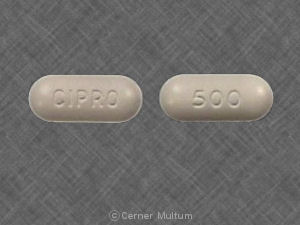
Cipro and Alcohol/Food Interactions
There are 3 alcohol/food/lifestyle interactions with Cipro (ciprofloxacin).
Ciprofloxacin Caffeine
Moderate Drug Interaction
Using caffeine together with ciprofloxacin may increase the effects of caffeine. Contact your doctor if you experience headache, tremor, restlessness, nervousness, insomnia, and increased blood pressure or heart rate. If your doctor does prescribe these medications together, you may need a dose adjustment or special test to safely use both medications. It is important to tell your doctor about all other medications you use, including vitamins and herbs. Do not stop using any medications without first talking to your doctor.
Ciprofloxacin Multivitamins With Minerals
Moderate Drug Interaction
Consumer information for this interaction is not currently available.
GENERALLY AVOID: The oral bioavailability of quinolone and tetracycline antibiotics may be reduced by concurrent administration of preparations containing polyvalent cations such as aluminum, calcium, iron, magnesium, and zinc. Therapeutic failure may result. The proposed mechanism is chelation of quinolone and tetracycline antibiotics by di- and trivalent cations, forming an insoluble complex that is poorly absorbed from the gastrointestinal tract. Reduced gastrointestinal absorption of the cations should also be considered.
MANAGEMENT: Concomitant administration of oral quinolone and tetracycline antibiotics with preparations containing aluminum, calcium, iron, magnesium, and/or zinc salts should generally be avoided. Otherwise, the times of administration should be staggered by as much as possible to minimize the potential for interaction. Quinolones should typically be dosed either 2 to 4 hours before or 4 to 6 hours after polyvalent cation preparations, depending on the quinolone and formulation. Likewise, tetracyclines and polyvalent cation preparations should typically be administered 2 to 4 hours apart. The prescribing information for the antibiotic should be consulted for more specific dosing recommendations.
Ciprofloxacin Food/Lifestyle
Moderate Food Interaction
Do not take ciprofloxacin with dairy products such as milk or yogurt, or with calcium-fortified foods (e.G., cereal, juice). You may eat or drink dairy products or calcium-fortified foods with a regular meal, but do not use them alone when taking ciprofloxacin. They could make the medication less effective. When ciprofloxacin tablets are given with enteral (tube) feedings, ciprofloxacin may not work as well. You could interrupt the feeding for 1 hour before and 2 hours after the ciprofloxacin dose, or your doctor may decide to switch to a different treatment. Ciprofloxacin oral suspension should not be given via nasogastric tubes or feeding tubes. It is important to tell your doctor about all other medications you use, including vitamins and herbs. Do not stop using any medications without first talking to your doctor.
Switch to professional interaction data
Cipro drug interactions
There are 724 drug interactions with Cipro (ciprofloxacin).
Cipro disease interactions
There are 10 disease interactions with Cipro (ciprofloxacin) which include:
- colitis
- CNS disorders
- myasthenia gravis
- peripheral neuropathy
- QT interval prolongation
- tendonitis
- crystalluria
- diabetes
- hemodialysis
- renal dysfunction
Report options

More about Cipro (ciprofloxacin)
- Cipro consumer information
- Check interactions
- Compare alternatives
- Pricing & coupons
- Reviews (319)
- Drug images
- Side effects
- Dosage information
- Patient tips
- During pregnancy
- Generic availability
- Support group
- Drug class: quinolones and fluoroquinolones
- Breastfeeding
- En español
Related treatment guides
Drug Interaction Classification
| Highly clinically significant. Avoid combinations; the risk of the interaction outweighs the benefit. | |
| Moderately clinically significant. Usually avoid combinations; use it only under special circumstances. | |
| Minimally clinically significant. Minimize risk; assess risk and consider an alternative drug, take steps to circumvent the interaction risk and/or institute a monitoring plan. | |
| No interaction information available. |
See also:
Further information
Always consult your healthcare provider to ensure the information displayed on this page applies to your personal circumstances.