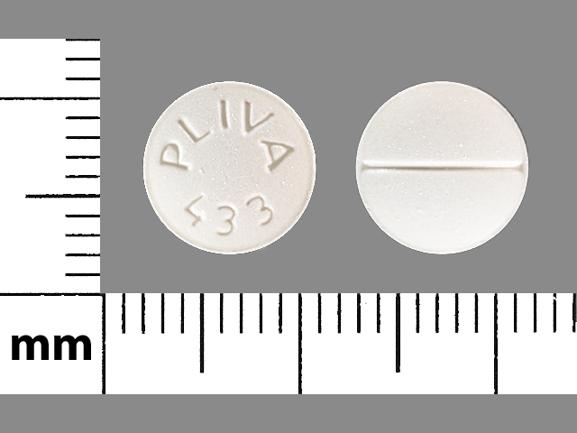
Trazodone Disease Interactions
There are 8 disease interactions with trazodone.
- Angle closure glaucoma
- Mania
- Seizures
- Suicidality
- Cardiovascular disease
- Hyponatremia
- Hypotension
- Renal/liver disease
Antidepressants (applies to trazodone) angle closure glaucoma
Moderate Potential Hazard, Moderate plausibility. Applicable conditions: Glaucoma (Narrow Angle)
Some antidepressants exert mydriatic activity that can induce increased intraocular pressure and result in angle-closure (narrow-angle) glaucoma in a patient with anatomically narrow angles who does not have a patent iridectomy. Prior to initiating therapy with these agents, patients should be examined to determine whether they are susceptible to angle closure, and have a prophylactic procedure (e.g., iridectomy), if they are susceptible. The use of these drugs in patients with untreated anatomically narrow angles should be avoided.
Antidepressants (applies to trazodone) mania
Moderate Potential Hazard, Moderate plausibility. Applicable conditions: Bipolar Disorder
All antidepressants may occasionally cause mania or hypomania, particularly in patients with bipolar disorder. Therapy with antidepressants should be administered cautiously in patients with a history of mania/hypomania.
Nefazodone/trazodone (applies to trazodone) seizures
Moderate Potential Hazard, Moderate plausibility.
The use of most antidepressants is associated with a risk of seizures. There have been only rare reports of convulsions, including grand mal seizures, following the administration of nefazodone or trazodone. Although a causal relationship has not been established, therapy with these agents should be administered cautiously in patients with a history of seizures.
Phenylpiperazine antidepressants (applies to trazodone) suicidality
Moderate Potential Hazard, Moderate plausibility. Applicable conditions: Bipolar Disorder, Depression
Adults, young adults and children patients with depression and other psychiatric disorders may experience worsening of their symptoms and may have the emergence of suicidal thoughts and behavior. Patients should be monitored appropriately and observed closely for worsening of their symptoms, suicidality or changes in their behavior, especially during the first few months of treatment, and at times of dose changes. Discontinuing the medication should be considered if symptoms are persistently worse, or abrupt in onset. Phenylpiperazine antidepressants are not approved for use in pediatric patients.
Trazodone (applies to trazodone) cardiovascular disease
Moderate Potential Hazard, Moderate plausibility. Applicable conditions: Hyperthyroidism, Arrhythmias
Although less cardiotoxic than the tricyclic antidepressants, trazodone may be arrhythmogenic in some patients with cardiac disease. The use of trazodone has been associated with the occurrence of arrhythmias, including PVCs, ventricular couplets, ventricular tachycardia, atrial fibrillation, and heart block. Myocardial infarction has been reported. Trazodone should not be used during the acute recovery phase following myocardial infarction, and should be administered only with extreme caution in patients with hyperthyroidism and/or cardiovascular disease. Close monitoring of cardiovascular status, including ECG changes, is recommended at all dosages. Many of the newer antidepressants, including bupropion and the selective serotonin reuptake inhibitors (SSRIs), are considerably less or minimally cardiotoxic and may be appropriate alternatives.
Trazodone (applies to trazodone) hyponatremia
Moderate Potential Hazard, Moderate plausibility. Applicable conditions: Dehydration, SIADH
Treatment with trazodone may cause hyponatremia, in many cases secondary to development of the syndrome of inappropriate secretion of antidiuretic hormone (SIADH). Caution should be used when treating patients at greater risk of developing hyponatremia such as elderly patients, patients taking diuretics or those who are volume-depleted. Discontinuation of trazodone should be considered in patients with symptomatic hyponatremia and appropriate medical intervention should be instituted.
Trazodone (applies to trazodone) hypotension
Moderate Potential Hazard, Moderate plausibility. Applicable conditions: Dehydration, Ischemic Heart Disease, History - Myocardial Infarction, Diarrhea, Vomiting, Cerebrovascular Insufficiency, History - Cerebrovascular Disease
Trazodone has alpha-1 adrenergic blocking activity and may cause hypotension (including orthostatic hypotension) in approximately 5% of patients. Therapy with trazodone should be administered cautiously in patients with hypotension or conditions that could be exacerbated by hypotension, such as a history of myocardial infarction, angina, or ischemic stroke. Patients with dehydration (e.g., due to severe diarrhea or vomiting) may be predisposed to hypotension and should also be managed carefully during therapy with trazodone. Blood pressure should be monitored at regular intervals, particularly during dosage escalation or whenever dosage has been altered, and patients should be advised not to rise abruptly from a sitting or recumbent position.
Trazodone (applies to trazodone) renal/liver disease
Moderate Potential Hazard, Moderate plausibility. Applicable conditions: Renal Dysfunction
Trazodone undergoes metabolism in the liver. The metabolites, at least one of which is pharmacologically active, are excreted by the kidney. There are no data available concerning the pharmacokinetic disposition of trazodone or its metabolites in patients with renal and/or liver disease. Therapy with trazodone should be administered cautiously in patients with significantly impaired renal or hepatic function. Dosage adjustments may be necessary.
Switch to professional interaction data
Trazodone drug interactions
There are 675 drug interactions with trazodone.
Trazodone alcohol/food interactions
There is 1 alcohol/food interaction with trazodone.
Report options

More about trazodone
- trazodone consumer information
- Check interactions
- Compare alternatives
- Pricing & coupons
- Reviews (1,440)
- Drug images
- Latest FDA alerts (2)
- Side effects
- Dosage information
- Patient tips
- During pregnancy
- Support group
- Drug class: phenylpiperazine antidepressants
- Breastfeeding
- En español
Related treatment guides
Drug Interaction Classification
| Highly clinically significant. Avoid combinations; the risk of the interaction outweighs the benefit. | |
| Moderately clinically significant. Usually avoid combinations; use it only under special circumstances. | |
| Minimally clinically significant. Minimize risk; assess risk and consider an alternative drug, take steps to circumvent the interaction risk and/or institute a monitoring plan. | |
| No interaction information available. |
See also:
Auvelity
Auvelity (dextromethorphan and bupropion) is used to treat major depressive disorder. Includes ...
Lexapro
Lexapro is used to treat anxiety and major depressive disorder. Learn about side effects ...
Vraylar
Vraylar is a once a day antipsychotic medication used to treat mental health or mood disorders ...
Zoloft
Zoloft is an antidepressant used to treat major depression, obsessive-compulsive disorder, panic ...
Seroquel
Seroquel is used to treat the symptoms of schizophrenia, bipolar disorder and major depressive ...
Prozac
Prozac (fluoxetine) is an SSRI antidepressant used to treat depression, OCD, panic disorder ...
Cymbalta
Cymbalta (duloxetine) is used to treat major depressive disorder, general anxiety disorder and ...
Wellbutrin
Wellbutrin (bupropion) is used to treat major depressive disorder and seasonal affective disorder ...
Celexa
Celexa (citalopram) is an antidepressant in a group of drugs called selective serotonin reuptake ...
Further information
Always consult your healthcare provider to ensure the information displayed on this page applies to your personal circumstances.