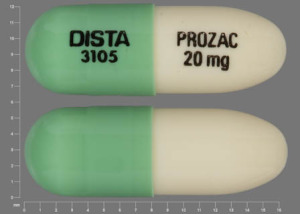
Prozac
Generic name: fluoxetine [ floo-OX-e-teen ]
Other brand names of fluoxetine include: Prozac, Prozac Weekly
Drug class: Selective serotonin reuptake inhibitors
What is Prozac?
Prozac is a selective serotonin reuptake inhibitor (SSRI) antidepressant. Fluoxetine affects certain chemical messengers (neurotransmitters) that communicate between brain cells and helps people with depression, panic, anxiety, or obsessive-compulsive symptoms.
Prozac is used to treat major depressive disorder, bulimia nervosa (an eating disorder), obsessive-compulsive disorder, panic disorder, and premenstrual dysphoric disorder (PMDD).
Prozac is sometimes used together with another medication called olanzapine (Zyprexa) to treat manic depression caused by bipolar disorder. This combination is also used to treat depression after at least 2 other medications have been tried without successful treatment of symptoms.
If you also take olanzapine (Zyprexa), read the Zyprexa medication guide and all patient warnings and instructions provided with that medication.
Warnings
You should not use Prozac if you also take pimozide or thioridazine, or if you are being treated with methylene blue injection.
Do not use Prozac if you have used an MAO inhibitor in the past 14 days (such as isocarboxazid, rasagiline, selegiline, phenelzine, or transcypromine). Do not use fluoxetine with thioridazine, linezolid, pimozide, or methylene blue injection.
You must wait at least 14 days after stopping an MAO inhibitor before you take Prozac. You must wait 5 weeks after stopping Prozac before you can take thioridazine or an MAOI.
Some young people have thoughts about suicide when first taking an antidepressant. Stay alert to changes in your mood or symptoms.
Prozac could impair judgment, thinking, or motor skills. Use caution when operating machinery.
Report any new or worsening symptoms to your doctor, such as: mood or behavior changes, anxiety, panic attacks, trouble sleeping, or if you feel impulsive, irritable, agitated, hostile, aggressive, restless, hyperactive (mentally or physically), more depressed, or have thoughts about suicide or hurting yourself.
Do not stop using Prozac without first asking your doctor.
Before taking this medicine
You should not use Prozac if you are allergic to fluoxetine, if you also take pimozide or thioridazine.
Do not use Prozac if you have used an MAO inhibitor in the past 14 days. A dangerous drug interaction could occur. MAO inhibitors include isocarboxazid, linezolid, methylene blue injection, phenelzine, rasagiline, selegiline, and tranylcypromine. You must wait at least 14 days after stopping an MAO inhibitor before you take fluoxetine. You must wait 5 weeks after stopping fluoxetine before you can take thioridazine or an MAOI.
Tell your doctor about all other antidepressants you take, especially Celexa, Cymbalta, Desyrel, Effexor, Lexapro, Luvox, Oleptro, Paxil, Pexeva, Symbyax, Viibryd, or Zoloft.
To make sure Prozac is safe for you, tell your doctor if you have ever had:
-
cirrhosis of the liver;
-
urination problems;
-
diabetes;
-
narrow-angle glaucoma;
-
sexual problems;
-
bipolar disorder (manic depression);
-
drug abuse or suicidal thoughts; or
-
electroconvulsive therapy (ECT).
Some young people have thoughts about suicide when first taking an antidepressant. Your doctor should check your progress at regular visits. Your family or other caregivers should also be alert to changes in your mood or symptoms.
Older adults may be more sensitive to the effects of this medicine.
Ask your doctor about taking this medicine if you are pregnant. Taking an SSRI antidepressant during late pregnancy may cause serious medical complications in the baby. However, you may have a relapse of depression if you stop taking your antidepressant. Tell your doctor right away if you become pregnant. If you are pregnant, your name may be listed on a pregnancy registry to track the effects of fluoxetine on the baby.
If you are breastfeeding, tell your doctor if you notice agitation, fussiness, feeding problems, or poor weight gain in the nursing baby.
How should I take Prozac?
Take Prozac exactly as prescribed by your doctor. Follow all directions on your prescription label and read all medication guides or instruction sheets. Your doctor may occasionally change your dose.
Do not crush, chew, break, or open a delayed-release Prozac Weekly capsule. Swallow the capsule whole.
It may take up to 4 weeks before your symptoms improve. Keep using the medication as directed and tell your doctor if your symptoms do not improve.
Tell your doctor if you have any changes in sexual function, such as loss of interest in sex, trouble having an orgasm, or (in men) problems with erections or ejaculation. Some sexual problems can be treated.
Do not stop using Prozac suddenly, or you could have unpleasant withdrawal symptoms. Ask your doctor how to safely stop using this medicine.
Store at room temperature away from moisture and heat.
What happens if I miss a dose?
Take the medicine as soon as you can, but skip the missed dose if it is almost time for your next dose. Do not take two doses at one time.
If you miss a dose of Prozac Weekly, take the missed dose as soon as you remember and take the next dose 7 days later. However, if it is almost time for the next regularly scheduled weekly dose, skip the missed dose and take the next one as directed. Do not take extra medicine to make up the missed dose.
What happens if I overdose?
Seek emergency medical attention or call the Poison Help line at 1-800-222-1222.
What to avoid
Drinking alcohol can increase certain side effects of fluoxetine.
Avoid driving or hazardous activity until you know how this medicine will affect you. Your reactions could be impaired.
Prozac side effects
Get emergency medical help if you have signs of an allergic reaction to Prozac (hives, difficult breathing, swelling in your face or throat) or a severe skin reaction (fever, sore throat, burning eyes, skin pain, red or purple skin rash with blistering and peeling).
Report any new or worsening symptoms to your doctor, such as: mood or behavior changes, anxiety, panic attacks, trouble sleeping, or if you feel impulsive, irritable, agitated, hostile, aggressive, restless, hyperactive (mentally or physically), more depressed, or have thoughts about suicide or hurting yourself.
Prozac may cause serious side effects. Call your doctor at once if you have:
- blurred vision, tunnel vision, eye pain or swelling, or seeing halos around lights;
- fast or pounding heartbeats, fluttering in your chest, shortness of breath, and sudden dizziness (like you might pass out);
- low levels of sodium in the body - headache, confusion, slurred speech, severe weakness, vomiting, loss of coordination, feeling unsteady; or
- severe nervous system reaction - very stiff (rigid) muscles, high fever, sweating, confusion, fast or uneven heartbeats, tremors, feeling like you might pass out.
Seek medical attention right away if you have symptoms of serotonin syndrome, such as: agitation, hallucinations, fever, sweating, shivering, fast heart rate, muscle stiffness, twitching, loss of coordination, nausea, vomiting, or diarrhea.
Common side effects of Prozac may include:
- sleep problems (insomnia), strange dreams;
- headache, dizziness, drowsiness, vision changes;
- tremors or shaking, feeling anxious or nervous;
- pain, weakness, yawning, tired feeling;
- upset stomach, loss of appetite, nausea, vomiting, diarrhea;
- dry mouth, sweating, hot flashes;
- changes in weight or appetite;
- stuffy nose, sinus pain, sore throat, flu symptoms; or
- decreased sex drive, impotence, or difficulty having an orgasm.
This is not a complete list of side effects and others may occur. Call your doctor for medical advice about side effects. You may report side effects to FDA at 1-800-FDA-1088.
Related/similar drugs
What other drugs will affect Prozac?
Fluoxetine may cause a side effect called QT prolongation, which affects your heart. Your risk of QT prolongation may be higher if you also use certain other medicines for infections, asthma, heart problems, high blood pressure, depression, mental illness, cancer, malaria, or HIV. Your risk may be higher if you also use certain other medicines for infections, asthma, heart problems, high blood pressure, depression, mental illness, cancer, malaria, or HIV.
Using Prozac with other drugs that make you drowsy can worsen this effect. Ask your doctor before using opioid medication, a sleeping pill, a muscle relaxer, or medicine for anxiety or seizures.
Ask your doctor before taking a nonsteroidal anti-inflammatory drug (NSAID) such as aspirin, ibuprofen (Advil, Motrin), naproxen (Aleve), celecoxib (Celebrex), diclofenac, indomethacin, meloxicam, and others. Using an NSAID with Prozac may cause you to bruise or bleed easily.
Tell your doctor about all your current medicines. Many drugs can interact with fluoxetine, especially:
-
any other antidepressant;
-
tryptophan (sometimes called L-tryptophan);
-
medicine to treat anxiety, mood disorders, thought disorders, or mental illness - amitriptyline, buspirone, desipramine, lithium, nortriptyline, and many others;
-
medicine to treat ADHD or narcolepsy - Adderall, Concerta, Ritalin, Vyvanse, Zenzedi, and others;
-
migraine headache medicine - rizatriptan, sumatriptan, zolmitriptan, and others; or
This list is not complete and many other drugs may interact with fluoxetine. This includes prescription and over-the-counter medicines, vitamins, and herbal products. Not all possible drug interactions are listed here.
Popular FAQ
What does Prozac feel like when it starts working?
Most people feel lower levels of anxiety, restlessness and tiredness when Prozac first starts to work. Your sleep, energy and appetite may improve over the first month and you may have a better focus on daily tasks. However, a depressed mood can take 6 to 8 weeks to fully respond to treatment. Continue reading
Does Prozac cause weight gain or loss?
Initially, you may lose a small amount of weight, about 1 kg (2.2 lb) on average, when you first start taking Prozac, but over the long-term you may gain that weight back or even add on extra weight up to 6 kgs (13.2 ibs). Studies suggest this may be due to a recovery of your appetite after your symptoms subside. Weight changes may vary between patients, but in general Prozac is not usually associated with serious weight gain (over 7%). Continue reading
Prozac vs Xanax: How do they compare?
Prozac (fluoxetine) and Xanax (alprazolam) are both prescription medications used to treat mental health conditions, but they work in different ways. Drowsiness is more common from taking Xanax, while Prozac tends to cause insomnia and nausea as side effects.
Continue readingHow long does it take for Prozac to work?
When taking Prozac, it may take up to 4 to 6 weeks for your symptoms to fully improve. Some people may start to feel better in 1 to 2 weeks, while others may need 8 weeks or longer to feel the effects. In a clinical research study, over 50% of people who responded to treatment with Prozac had a positive effect by the second week. Continue reading
Is Prozac (fluoxetine) safe for dogs?
Studies have shown fluoxetine (Prozac, Reconcile), when prescribed by your veterinarian, is usually a safe and effective medicine for dogs for the treatment of behavioral disorders like separation anxiety. It is most effective when used in conjunction with a behavior modification plan for your pet. Do not give your dog Prozac or fluoxetine unless it has been prescribed by your veterinarian. Continue reading
Is Prozac a controlled substance / addictive?
Prozac (fluoxetine) is not classified as a controlled substance by the DEA and does not have physically addictive or abuse properties like an opioid or benzodiazepine. However, as with many medicines, some patients may feel psychologically dependent or experience withdrawal symptoms upon discontinuation. Continue reading
More FAQ
- SSRIs vs SNRIs - What's the difference between them?
- Prozac vs Zoloft - What are the Differences & Similarities?
- Taking fluoxetine, what can I use for a bad cough from cold or strep throat?
More about Prozac (fluoxetine)
- Check interactions
- Compare alternatives
- Pricing & coupons
- Reviews (1,247)
- Drug images
- Side effects
- Dosage information
- Patient tips
- During pregnancy
- Generic availability
- Support group
- Drug class: selective serotonin reuptake inhibitors
- Breastfeeding
- En español
Patient resources
Other brands
Professional resources
Other brands
Related treatment guides
Further information
Remember, keep this and all other medicines out of the reach of children, never share your medicines with others, and use Prozac only for the indication prescribed.
Always consult your healthcare provider to ensure the information displayed on this page applies to your personal circumstances.
Copyright 1996-2025 Cerner Multum, Inc. Version: 25.02.