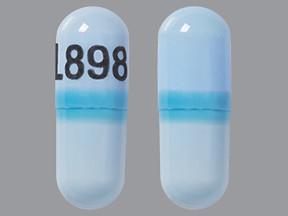
Esomeprazole Side Effects
Medically reviewed by Drugs.com. Last updated on Mar 19, 2024.
Applies to esomeprazole: oral capsule delayed release, oral packet, oral tablet delayed release.
Other dosage forms:
Precautions
It is very important that your doctor check your or your child's progress at regular visits. This will allow your doctor to see if the medicine is working properly and to decide if you should continue to take it. Blood, urine, and other laboratory tests may be needed to check for unwanted effects. If your condition does not improve, or if it becomes worse, check with your doctor.
Do not use esomeprazole if you are also using medicines containing rilpivirine (Edurant®, Complera®). Using these medicines together may cause unwanted side effects.
Esomeprazole may cause a serious type of allergic reaction when used in patients with conditions treated with antibiotics. Call your doctor right away if you or your child has itching, trouble breathing or swallowing, or any swelling of your hands, face, or mouth.
This medicine is sometimes given together with amoxicillin (Amoxil®) and clarithromycin (Biaxin®) to treat ulcers caused by H. pylori infection. Be sure you understand the risks and proper use of any other medicines your doctor prescribes.
Check with your doctor right away if you have a change in frequency of urination or amount of urine, blood in the urine, fever, joint pain, loss of appetite, nausea, skin rash, swelling of the body, feet, or ankles, unusual tiredness or weakness, or unusual weight gain after using this medicine. These could be symptoms of a serious kidney problem called acute tubulointerstitial nephritis.
Taking this medicine for a long time may make it harder for your body to absorb vitamin B12. Tell your doctor if you have concerns about vitamin B12 deficiency.
Serious stomach conditions may occur while taking this medicine alone or together with antibiotics. Check with your doctor immediately if you or your child has stomach cramps, bloated feeling, watery and severe diarrhea which may also be bloody sometimes, fever, nausea or vomiting, or unusual tiredness or weakness.
This medicine may increase your risk of having fractures of the hip, wrist, and spine. This is more likely if you are 50 years of age and older, use high doses, or use it for one year or more. Call your doctor right away if you have severe bone pain or are unable to walk or sit normally.
This medicine may cause serious skin reactions, including Stevens-Johnson syndrome, toxic epidermal necrolysis, acute generalized exanthematous pustulosis, and drug reaction with eosinophilia and systemic symptoms (DRESS). Check with your doctor right away if you have black, tarry stools, blistering, peeling, or loosening of the skin, chest pain, chills, cough, diarrhea, itching, joint or muscle pain, painful or difficult urination, red irritated eyes, red skin lesions, often with a purple center, sore throat, sores, ulcers, or white spots in the mouth or on the lips, swollen glands, unusual bleeding or bruising, or unusual tiredness or weakness.
This medicine may cause hypomagnesemia (low magnesium in the blood). This is more likely to occur if you are using this medicine for more than one year, or if you are using it together with digoxin (Lanoxin®) or certain diuretics (water pills). Check with your doctor right away if you have convulsions (seizures), a fast, racing, or uneven heartbeat, muscle spasms (tetany), tremors, or unusual tiredness or weakness.
Cutaneous or systemic lupus erythematosus may occur or gets worse in lupus patients and are taking PPI. Call your doctor right away if you or your child have a joint pain or skin rash on your cheeks or arms that gets worse when exposed in the sun.
This medicine may increase your risk for fundic gland polyps (abnormal tissue growth in the upper part of your stomach). This is more likely if you are using this medicine for more than 1 year. Talk to your doctor if you have concerns.
Do not stop using this medicine without first checking with your doctor, or unless told to do so by your doctor.
Make sure any doctor or dentist who treats you knows that you or your child are using this medicine. This medicine may affect the results of certain medical tests.
Do not take other medicines unless they have been discussed with your doctor. This includes prescription (eg, clopidogrel, atazanavir, nelfinavir, Plavix®, Reyataz®, Viracept®) or nonprescription (over-the-counter [OTC]) medicines and herbal (eg, St. John's wort) or vitamin supplements.
Common side effects of esomeprazole
Some side effects of esomeprazole may occur that usually do not need medical attention. These side effects may go away during treatment as your body adjusts to the medicine. Also, your health care professional may be able to tell you about ways to prevent or reduce some of these side effects.
Check with your health care professional if any of the following side effects continue or are bothersome or if you have any questions about them:
More common side effects
- bad, unusual, or unpleasant (after) taste
- change in taste
Less common side effects
- sleepiness or unusual drowsiness
Rare side effects
- acne
- back pain
Incidence not known
- agitation
- decreased interest in sexual intercourse
- excess air or gas in the stomach or bowels
- full feeling
- inability to have or keep an erection
- increased sensitivity of the skin to sunlight
- loss in sexual ability, desire, drive, or performance
- loss or thinning of the hair
- muscular weakness
- passing gas
- redness or other discoloration of the skin
- seeing, hearing, or feeling things that are not there
- severe sunburn
- swelling of the breasts or breast soreness in both females and males
- swelling or inflammation of the mouth
- swollen joints
Serious side effects of esomeprazole
Along with its needed effects, esomeprazole may cause some unwanted effects. Although not all of these side effects may occur, if they do occur they may need medical attention.
Check with your doctor immediately if any of the following side effects occur while taking esomeprazole:
Incidence not known
- black, tarry stools
- blistering, peeling, or loosening of the skin
- bloating
- chest pain or tightness
- chills
- confusion
- constipation
- cough
- darkened urine
- decreased urine
- difficulty with swallowing
- dizziness
- drowsiness
- dry mouth
- fast heartbeat
- fever
- indigestion
- joint or muscle pain
- loss of appetite
- mood or mental changes
- muscle cramps in the hands, arms, feet, legs, or face
- muscle spasms (tetany) or twitching
- nausea
- numbness and tingling around the mouth, fingertips, or feet
- painful or difficult urination
- pains in the stomach, side, or abdomen, possibly radiating to the back
- puffiness or swelling of the eyelids or around the eyes, face, lips, or tongue
- red skin lesions, often with a purple center
- red, irritated eyes
- seizures
- skin rash, hives, itching
- sore throat
- sores, ulcers, or white spots in the mouth or on the lips
- stomach cramps
- swollen glands
- trouble breathing
- trembling
- unusual bleeding or bruising
- unusual tiredness or weakness
- vomiting
- yellow eyes or skin
See also:
Protonix
Protonix (pantoprazole) is used to treat erosive esophagitis and other conditions involving excess ...
Nexium
Nexium is used to treat GERD and other conditions involving excessive stomach acid. Learn about ...
Botox
Botox is used cosmetically to reduce facial lines and wrinkles and for medical purposes for ...
Prilosec
Prilosec (omeprazole) is used to treat symptoms of GERD and other conditions caused by excess ...
Dexilant
Dexilant is used for barrett's esophagus, erosive esophagitis, GERD
Prevacid
Prevacid is used to treat and prevent stomach and intestinal ulcers. Learn about side effects ...
Aciphex
Aciphex is used to treat gastroesophageal reflux disease (GERD) and other conditions involving ...
Dexlansoprazole
Dexlansoprazole is used for barrett's esophagus, erosive esophagitis, GERD
Rabeprazole
Rabeprazole is used for barrett's esophagus, duodenal ulcer, duodenal ulcer prophylaxis, erosive ...
Lansoprazole
Lansoprazole is used to treat stomach and intestinal ulcers, erosive esophagitis and ...
For healthcare professionals
Applies to esomeprazole: intravenous powder for injection, oral delayed release capsule, oral delayed release tablet, oral powder for reconstitution delayed release.
General adverse events
The most frequently occurring adverse reactions were headache and diarrhea.
The most frequently reported adverse reactions for patients who received triple therapy for 10 days were diarrhea, taste perversion, and abdominal pain.[Ref]
Nervous system
- Very common (10% or more): Headache (up to 10.9%)
- Common (1% to 10%): Dizziness, somnolence, taste disturbance/perversion, vertigo
- Uncommon (0.1% to 1%): Paresthesia
- Very rare (less than 0.01%): Hepatic encephalopathy
- Frequency not reported: Hypertonia, hypoesthesia, migraine/aggravated migraine, parosmia, taste loss, tremor[Ref]
Gastrointestinal
- Very common (10% or more): Flatulence (up to 10.3%)
- Common (1% to 10%): Abdominal pain, benign fundic gland polyps, constipation/constipation aggravated, diarrhea, dry mouth, duodenal ulcer hemorrhage, epigastric pain/aggravated epigastric pain, gastritis/aggravated gastritis, nausea/aggravated nausea, regurgitation, tooth disorder, vomiting/aggravated vomiting
- Rare (0.01% to 0.1%): Gastrointestinal (GI) candidiasis, stomatitis
- Very rare (less than 0.01%): Microscopic colitis
- Frequency not reported: Aggravated acid-related symptoms, Barrett's esophagus, benign polyps or nodules, bowel irregularity, duodenitis, dyspepsia, dysphagia, dysplasia GI, enlarged abdomen, eructation, esophagitis, esophageal disorder, esophageal stricture, esophageal ulceration, esophageal varices, frequent stools, gastric ulcer, gastroenteritis, GI hemorrhage, GI symptoms not otherwise specified, hernia, hiccup, melena, mouth disorder, mucosal discoloration, pharynx disorder, rebound hypersecretion, rectal disorder, tongue disorder, tongue edema, ulcerative stomatitis
- Postmarketing reports: Clostridium difficile associated diarrhea, fundic gland polyps, hemorrhagic necrotic gastritis (in children), pancreatitis[Ref]
Respiratory
- Common (1% to 10%): Cough, respiratory infection, sinusitis, tachypnea (in pediatrics)
- Uncommon (0.1% to 1%): Epistaxis
- Rare (0.01% to 0.1%): Bronchospasm
- Frequency not reported: Asthma aggravated, dyspnea, larynx edema, pharyngitis, rhinitis[Ref]
Other
- Common (1% to 10%): Accident or injury, fever/pyrexia
- Rare (0.01% to 0.1%): Malaise
- Frequency not reported: Asthenia, earache, facial edema, fatigue, leg edema, otitis media, pain, rigors, tinnitus[Ref]
Dermatologic
- Common (1% to 10%): Pruritus
- Uncommon (0.1% to 1%): Dermatitis, rash, urticaria
- Rare (0.01% to 0.1%): Alopecia, increased sweating/hyperhidrosis, photosensitivity
- Very rare (less than 0.01): Erythema multiforme, Stevens-Johnson syndrome, toxic epidermal necrolysis (TEN)/ fatal TEN
- Frequency not reported: Acne, erythema, pruritus ani, rash erythematous, rash maculo-papular, skin inflammation, subacute cutaneous lupus erythematosus (SCLE)
- Postmarketing reports: Cutaneous lupus erythematosus, systemic lupus erythematosus[Ref]
Cardiovascular
- Common (1% to 10%): Hypertension/aggravated hypertension
- Uncommon (0.1% to 1%): Peripheral edema
- Frequency not reported: Chest pain, flushing, generalized edema/swelling/inflammation, hot flush, hypertension, irregular heartbeat, phlebitis, substernal chest pain, superficial phlebitis, tachycardia, thrombophlebitis[Ref]
Musculoskeletal
- Common (1% to 10%): Back pain
- Uncommon (0.1% to 1%): Fracture of the hip, wrist or spine
- Rare (0.01% to 0.1%): Arthralgia, myalgia
- Very rare (less than 0.01%): Muscular weakness
- Frequency not reported: Arthritis aggravated, arthropathy, cramps, fibromyalgia syndrome, hernia, hyperuricemia/increased uric acid, polymyalgia rheumatica
- Postmarketing reports: Bone fracture[Ref]
An increased risk of hip fracture has been reported in a cohort study. The risk was significantly increased among patients prescribed long-term high PPIs.[Ref]
Endocrine
- Common (1% to 10%): Increased serum gastrin
- Very rare (less than 0.01%): Gynecomastia
- Frequency not reported: Decreased/increased thyroxine, goiter, increased thyroid stimulating hormone[Ref]
Local
- Common (1% to 10%): Administration/injection site reactions
- Postmarketing reports: Tissue inflammatory reaction[Ref]
Immunologic
- Common (1% to 10%): Viral infection
- Frequency not reported: Flu-like disorder, fungal infection[Ref]
Hepatic
- Common (1% to 10%): ALT increased
- Uncommon (0.1% to 1%): Increased liver enzymes
- Rare (0.01% to 0.1%): Hepatitis with/without jaundice
- Very rare (less than 0.01%): Hepatic failure
- Frequency not reported: Abnormal hepatic function, AST increased, bilirubinemia, increased alkaline phosphatase, increased total bilirubin[Ref]
Ocular
- Uncommon (0.1% to 1%): Blurred vision
- Rare (0.01% to 0.1%): Visual accommodation disorder/disturbances, visual field defect
- Frequency not reported: Abnormal vision, conjunctivitis
- Postmarketing reports: Irreversible visual impairment, loss of vision[Ref]
Psychiatric
- Uncommon (0.1% to 1%): Insomnia, irritability
- Rare (0.01% to 0.1%): Agitation, confusion, depression/aggravated depression
- Very rare (less than 0.01%): Aggression, hallucinations
- Frequency not reported: Apathy, nervousness, sleep disorder[Ref]
Hematologic
- Rare (0.01% to 0.1%): Leukopenia, thrombocytopenia
- Very rare (less than 0.01%): Agranulocytosis, pancytopenia
- Frequency not reported: Anemia, anemia hypochromic, cervical lymphadenopathy, decreased/increased hemoglobin, decreased/increased platelets, decreased/increased white blood cell count, leukocytosis[Ref]
Metabolic
- Rare (0.01% to 0.1%): Hyponatremia
- Very rare (less than 0.01%): Hypomagnesemia with or without hypocalcemia and/or hypokalemia, severe hypomagnesemia
- Frequency not reported: Anorexia, decreased/increased potassium, increased sodium, increased appetite, vitamin B12 (cyanocobalamin) deficiency, thirst, weight decrease/increase[Ref]
Hypersensitivity
- Rare (0.01% to 0.1%): Anaphylactic reaction/shock, angioedema, hypersensitivity reactions
- Frequency not reported: Allergic reaction[Ref]
Renal
- Very rare (less than 0.01%): Interstitial nephritis with/without renal failure
- Frequency not reported: Glycosuria
- Postmarketing reports: Acute interstitial nephritis, impaired renal function, increased creatinine, nephrosis[Ref]
Genitourinary
- Frequency not reported: Abnormal urine, albuminuria, cystitis, dysmenorrhea, dysuria, genital moniliasis, hematuria, impotence, menstrual disorder, micturition frequency, moniliasis, polyuria, vaginitis[Ref]
References
1. (2001) "Product Information. Nexium (esomeprazole)." Astra-Zeneca Pharmaceuticals
2. Cerner Multum, Inc. "UK Summary of Product Characteristics."
3. Cerner Multum, Inc. "Australian Product Information."
4. (2014) "Product Information. NexIUM I.V. (esomeprazole)." Astra-Zeneca Pharmaceuticals
5. (2014) "Product Information. Esomeprazole Strontium (esomeprazole)." Amneal Pharmaceuticals
Frequently asked questions
More about esomeprazole
- Check interactions
- Compare alternatives
- Pricing & coupons
- Reviews (276)
- Drug images
- Dosage information
- Patient tips
- During pregnancy
- Support group
- Drug class: proton pump inhibitors
- Breastfeeding
Patient resources
- Esomeprazole drug information
- Esomeprazole injection
- Esomeprazole Delayed-Release Tablets
- Esomeprazole Delayed-Release Capsules
- Esomeprazole Powder for Suspension
Other brands
Nexium, Nexium 24HR, Nexium IV
Professional resources
- Esomeprazole monograph
- Esomeprazole (FDA)
- Esomeprazole Capsules (FDA)
- Esomeprazole Injection (FDA)
- Esomeprazole ODT (FDA)
Other brands
Related treatment guides
Further information
Esomeprazole side effects can vary depending on the individual. Always consult your healthcare provider to ensure the information displayed on this page applies to your personal circumstances.
Note: Medication side effects may be underreported. If you are experiencing side effects that are not listed, submit a report to the FDA by following this guide.