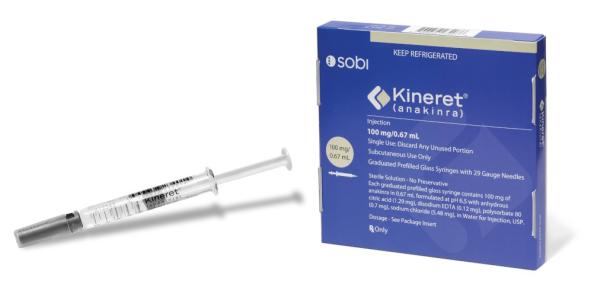
Anakinra Side Effects
Applies to anakinra: subcutaneous solution.
Precautions
If you will be using this medicine for a long time, it is important that your doctor check the progress of you or your child at regular visits. This will allow your doctor to see if the medicine is working properly and to decide whether you should continue to use it. Blood tests may be needed to check for unwanted effects.
Tell your doctor if you or anyone in your home has ever had a positive reaction to a tuberculosis skin test.
Your body's ability to fight infection may be reduced while you are being treated with anakinra, it is very important that you call your doctor at the first signs of any infection (for example, if you get a fever or chills).
Do not use this medicine together with adalimumab (Humira®), certolizumab pegol (Cimzia®), etanercept (Enbrel®), golimumab (Simponi®), or infliximab (Remicade®).
Anakinra may cause serious allergic reactions, including anaphylaxis or angioedema, which can be life-threatening and requires immediate medical attention. Check with your doctor right away if you or your child have a rash, itching, large, hive-like swelling on face, eyelids, lips, tongue, throat, hands, legs, feet, or sex organs, trouble breathing, or chest pain after you receive the medicine.
This medicine may increase your risk of developing infections. Tell your doctor if you have any kind of infection before you start using this medicine. Also tell your doctor if you have ever had an infection that would not go away or an infection that kept coming back.
Do not have any live vaccines (immunizations) while you or your child are being treated with anakinra. Be sure to ask your child's doctor if you have any questions about this.
This medicine lowers the number of some types of blood cells in your body. Because of this, you may get infections more easily. To help with these problems, avoid being near people who are sick or have infections. Wash your hands often.
This medicine may cause severe tenderness and pain at the site of the injection. Call your doctor right away if you have bleeding, blistering, burning, coldness, discoloration of the skin, feeling of pressure, hives, infection, inflammation, itching, lumps, numbness, pain, rash, redness, scarring, soreness, stinging, swelling, tenderness, tingling, ulceration, or warmth at the injection site.
Serious side effects of anakinra
Along with its needed effects, anakinra may cause some unwanted effects. Although not all of these side effects may occur, if they do occur they may need medical attention.
Check with your doctor immediately if any of the following side effects occur while taking anakinra:
More common side effects
- agitation
- coma
- confusion
- decreased urine output
- diarrhea
- dizziness
- fast heartbeat
- fever or chills
- headache
- itching, pain, redness, swelling, tenderness or warmth on the skin
- irritability
- joint pain
- lethargy
- muscle aches, pains, and twitching
- nausea or vomiting
- nervousness
- numbness or tingling in the hands, feet, or lips
- restlessness
- runny nose or sneezing
- seizures
- sore throat
- stomach pain
- stupor
- swelling of the face, ankles, or hands
- swelling of the feet or lower legs
- trouble breathing
- unusual tiredness or weakness
- weakness or heaviness of the legs
Less common side effects
- black, tarry stools
- cough
- difficulty with swallowing
- hives, itching, or rash
- painful or difficult urination
- pale skin
- swelling of the face or lips
- ulcers, sores, or white spots in the mouth
- unusual bruising or bleeding
Incidence not known
- bleeding gums
- blood in the urine or stools
- large, hive-like swelling on the face, eyelids, lips, tongue, throat, hands, legs, feet, or sex organs
- pinpoint red spots on the skin
- puffiness or swelling of the eyelids or around the eyes, face, lips or tongue
Other side effects of anakinra
Some side effects of anakinra may occur that usually do not need medical attention. These side effects may go away during treatment as your body adjusts to the medicine. Also, your health care professional may be able to tell you about ways to prevent or reduce some of these side effects.
Check with your health care professional if any of the following side effects continue or are bothersome or if you have any questions about them:
More common side effects
- bleeding, blistering, burning, coldness, discoloration of skin, feeling of pressure, hives, infection, inflammation, itching, lumps, numbness, pain, rash, redness, scarring, soreness, stinging, swelling, tenderness, tingling, ulceration, or warmth at the injection site
- difficulty with moving
- headache
- muscle aches or stiffness
See also:
For healthcare professionals
Applies to anakinra: subcutaneous solution.
General adverse events
The most common side effects reported in patients with rheumatoid arthritis (RA) were injection site reaction, worsening of RA, upper respiratory tract infection, headache, nausea, diarrhea, sinusitis, arthralgia, influenza-like symptoms, and abdominal pain. The most common side effects reported in patients with neonatal-onset multisystem inflammatory disease (NOMID) during the first 6 months of therapy were injection site reaction, headache, vomiting, arthralgia, pyrexia, and nasopharyngitis; the most common side effects after the first 6 months of therapy included arthralgia, headache, pyrexia, upper respiratory tract infections, nasopharyngitis, and rash. The most common side effects reported in patients with deficiency of interleukin-1 receptor antagonist (DIRA) were upper respiratory tract infections, rash, pyrexia, influenza-like illness, and gastroenteritis.[Ref]
Cardiovascular
- Common (1% to 10%): Hypertension
Dermatologic
- Common (1% to 10%): Ecchymosis, rash (including maculopapular rash, urticarial rash), pruritus
Gastrointestinal
- Very common (10% or more): Vomiting (up to 14%)
- Common (1% to 10%): Nausea, diarrhea, abdominal pain, dyspepsia
- Frequency not reported: Gastroenteritis
Genitourinary
- Common (1% to 10%): Urinary tract infection
Hematologic
- Common (1% to 10%): Neutropenia, thrombocytopenia, decreased total WBC count, decreased platelets, increased eosinophil differential percentage
- Postmarketing reports: Thrombocytopenia (including severe thrombocytopenia)
In controlled trials, decreases in total WBC counts of at least 1 WHO toxicity grade occurred in 8% of patients treated with this drug, compared with 2% of placebo-treated patients. Neutropenia (absolute neutrophil count [ANC] less than 1 x 10[9]/L) developed in 0.4% of patients treated with this drug. Increases in eosinophil differential percentage of at least 1 WHO toxicity grade occurred in 9% of patients treated with this drug, compared with 3% of placebo-treated patients. Of patients treated concurrently with this drug and etanercept, 2% developed neutropenia (ANC less than 1 x 10[9]/L). While neutropenic, 1 patient developed cellulitis which recovered with antibiotic therapy. Decreases in platelets (WHO toxicity grade 1) occurred in 2% of patients treated with this drug, compared with 0% of placebo-treated patients.
During postmarketing experience, thrombocytopenia has been reported, including occasional case reports indicating severe thrombocytopenia (i.e., platelet counts less than 10 x 10[9]/L).
Hepatic
- Uncommon (0.1% to 1%): Hepatic enzyme increased
- Postmarketing reports: Noninfectious hepatitis, elevations of transaminases
Hypersensitivity
- Uncommon (0.1% to 1%): Allergic reactions (including anaphylactic reactions, angioedema, urticaria, pruritus)
Immunologic
- Very common (10% or more): Antidrug antibodies positive (up to 49%)
- Common (1% to 10%): Neutralizing antibodies positive
- Postmarketing reports: Macrophage activation syndrome
Local
- Very common (10% or more): Injection site reaction (including erythema, ecchymosis, inflammation, pain; up to 71.2%)
The most common and consistently reported therapy-related side effect associated with this drug was injection site reaction (characterized by erythema, ecchymosis, inflammation and/or pain). In general, injection site reactions were reported within the first 2 to 4 weeks of therapy and lasted for 2 to 6 weeks. Injection site reactions were reported as mild, moderate, and severe in 72.6%, 24.1%, and 3.2% of patients, respectively.
Musculoskeletal
- Very common (10% or more): Worsening of RA (up to 19.1%), arthralgia (up to 11.6%)
- Common (1% to 10%): Limb pain, back pain, myalgia, fracture
Nervous system
- Very common (10% or more): Headache (up to 14%)
- Common (1% to 10%): Dizziness
Oncologic
- Frequency not reported: Lymphomas, malignancies (including breast, respiratory system, digestive system)
Other
- Very common (10% or more): Infection (up to 39%), pyrexia (up to 11.6%), increased blood cholesterol
- Common (1% to 10%): Influenza-like symptoms, peripheral edema, injury, fever, chest pain, fatigue, serious infections (primarily bacterial [e.g., cellulitis, pneumonia, bone and joint infections, sepsis])
- Frequency not reported: Death
In clinical trials during the first 6 months of therapy, infection was reported in 39% of patients treated with this drug and 37% of patients treated with placebo. Over 6 and 12 months, respectively, serious infections were reported in 2% and 3% of patients treated with this drug and 1% and 2% of placebo-treated patients; these infections were primarily bacterial (e.g., cellulitis, pneumonia, bone and joint infections). Most patients (73%) continued on study drug after the infection resolved. No serious opportunistic infections were reported. Patients with asthma were at higher risk of developing serious infection when treated with this drug (8 of 177 patients [4.5%]) compared to placebo (0 of 50 patients [0%]).
In extension trials, the overall rate of serious infection was stable over time and comparable to that observed in controlled trials. In clinical trials and postmarketing experience, cases of opportunistic infections were reported and included fungal, mycobacterial, viral, and bacterial pathogens. Infections have been observed in all organ systems and have been reported with this drug alone or in combination with immunosuppressive agents.
Serious infections were reported in 7% of patients treated with this drug and etanercept for up to 24 weeks. The most common infections were bacterial pneumonia (4 cases) and cellulitis (4 cases); 1 patient with pulmonary fibrosis and pneumonia died due to respiratory failure.
In 2 long-term safety studies of RA over 3 years, 4 deaths due to serious infections (1 pneumonia and 3 sepsis) were reported; these deaths were considered related to this drug.
Psychiatric
- Common (1% to 10%): Insomnia, depression
Respiratory
- Very common (10% or more): Upper respiratory tract infection (up to 14%), nasopharyngitis (up to 11.6%)
- Common (1% to 10%): Sinusitis, bronchitis, cough, sore throat, upper respiratory tract congestion, dyspnea
References
1. (2020) "Product Information. Kineret (anakinra)." Sobi Inc, SUPPL-5189
2. (2021) "Product Information. Kineret (anakinra)." A Menarini Australia Pty Ltd, vA12-0
3. (2022) "Product Information. Kineret (anakinra)." Swedish Orphan Biovitrum Ltd
Frequently asked questions
More about anakinra
- Check interactions
- Compare alternatives
- Reviews (18)
- Dosage information
- During pregnancy
- Drug class: antirheumatics
- Breastfeeding
- En español
Patient resources
Other brands
Professional resources
Other brands
Related treatment guides
Further information
Anakinra side effects can vary depending on the individual. Always consult your healthcare provider to ensure the information displayed on this page applies to your personal circumstances.
Note: Medication side effects may be underreported. If you are experiencing side effects that are not listed, submit a report to the FDA by following this guide.