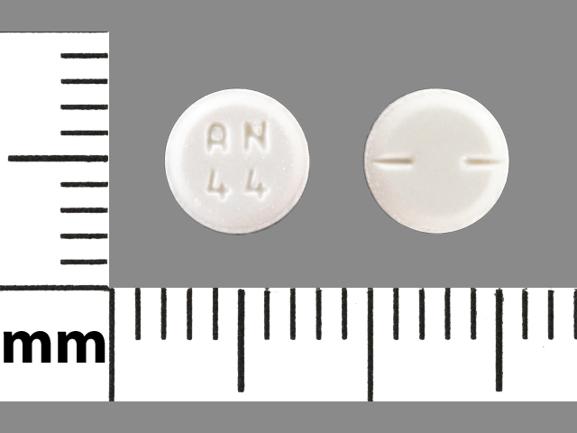
Primidone (Monograph)
Brand name: Mysoline
Drug class: Barbiturates
VA class: CN400
Chemical name: 5-ethyldihydro-5-phenyl-4,6(1H, 5H)-pyrimidinedione
CAS number: 125-33-7
Introduction
Anticonvulsant; a structural analog of phenobarbital; related to barbiturate-derivative anticonvulsants.
Uses for Primidone
Used alone or with other anticonvulsants (e.g., phenytoin, phenobarbital); however, some clinicians do not recommend concurrent use of primidone and phenobarbital because of possible increased sedation.
Generalized Seizures
Prophylactic management of tonic-clonic (grand mal) seizures, particularly those refractory to other anticonvulsant therapy.
Prophylactic management of other partial seizures (e.g., those with autonomic symptoms), including atonic (also known as akinetic) seizures.
Partial Seizures
Prophylactic management of partial seizures with complex symptomatology (psychomotor seizures).
Prophylactic management of other partial seizures, including focal seizures.
Primidone Dosage and Administration
General
-
Closely monitor patients receiving anticonvulsant therapy for notable changes in behavior that could indicate emergence or worsening of suicidal thoughts or behavior or depression. (See Suicidality Risk under Cautions.)
-
When primidone therapy is discontinued, withdraw the drug slowly to avoid precipitating seizures or status epilepticus.
-
When a patient is transferred to primidone from another anticonvulsant, gradually increase primidone dosage over a period of at least 2 weeks while gradually decreasing dosage of the other anticonvulsant, to maintain adequate seizure control.
Administration
Oral Administration
Administer orally.
Dosage
Adjust dosage carefully according to individual requirements and response. In some cases, determination of blood concentrations of the drug may be needed to achieve optimal dosage adjustment.
May require several weeks of therapy before therapeutic efficacy can be assessed.
Pediatric Patients
Generalized and Partial Seizures
Oral
Anticonvulsant-naive children <8 years of age: Initially, 50 mg at bedtime (days 1–3), increase to 50 mg twice daily (days 4–6), then increase to 100 mg twice daily (days 7–9). Follow with a maintenance dosage of 125–250 mg 3 times daily or 10–25 mg/kg daily given in divided doses. Alternatively, some clinicians recommend 1.25 g/m2 daily in 2–4 divided doses.
Anticonvulsant-naive children ≥8 years of age: Initially, 100–125 mg at bedtime (days 1–3), increase to 100–125 mg twice daily (days 4–6), then increase to 100–125 mg 3 times daily (days 7–9). Follow with a maintenance dosage of 250 mg 3 or 4 times daily. Do not exceed 500 mg 4 times daily.
Children ≥8 years of age receiving other anticonvulsants: Initially, 100–125 mg (primidone) at bedtime; increase dosage (primidone) slowly to maintenance level while gradually decreasing dosage of other anticonvulsant. Continue this regimen until satisfactory dosage achieved with the combination, or the other drug is withdrawn. If primidone monotherapy is the objective, gradually increase primidone dosage while decreasing dosage of the drug being discontinued over a period of at least 2 weeks.
Adults
Generalized and Partial Seizures
Oral
Anticonvulsant therapy-naive adults: Initially, 100–125 mg at bedtime (days 1–3), increase to 100–125 mg twice daily (days 4–6), then increase to 100–125 mg 3 times daily (days 7–9). Follow with a maintenance dosage of 250 mg 3 or 4 times daily. Do not exceed 500 mg 4 times daily.
Adults receiving other anticonvulsants: Initially, 100–125 mg (primidone) at bedtime; increase dosage (primidone) slowly to maintenance level while gradually decreasing dosage of other anticonvulsant. Continue this regimen until satisfactory dosage is achieved with the combination, or the other drug is withdrawn. If primidone monotherapy is the objective, gradually increase primidone dosage while decreasing dosage of the drug being discontinued over a period of at least 2 weeks.
Prescribing Limits
Pediatric Patients
Generalized and Partial Seizures
Oral
Children ≥8 years of age: Maximum 2 g daily given in divided doses (e.g., 500 mg 4 times daily).
Adults
Generalized and Partial Seizures
Oral
Maximum 2 g daily given in divided doses (e.g., 500 mg 4 times daily).
Special Populations
No special population dosage recommendations at this time.
Cautions for Primidone
Contraindications
-
Porphyria.
-
Known hypersensitivity to phenobarbital.
Warnings/Precautions
Warnings
Shares the toxic potentials of the barbiturate-derivative anticonvulsants; observe the usual precautions of anticonvulsant therapy.
Suicidality Risk
Increased risk of suicidality (suicidal ideation or behavior) observed in an analysis of studies using various anticonvulsants in patients with epilepsy, psychiatric disorders (e.g., bipolar disorder, depression, anxiety), and other conditions (e.g., migraine, neuropathic pain); risk in patients receiving anticonvulsants (0.43%) was approximately twice that in patients receiving placebo (0.24%). Increased suicidality risk was observed ≥1 week after initiation of anticonvulsant therapy and continued through 24 weeks. Risk was higher for patients with epilepsy compared with those receiving anticonvulsants for other conditions.
Closely monitor all patients currently receiving or beginning anticonvulsant therapy for changes in behavior that may indicate emergence or worsening of suicidal thoughts or behavior or depression. Anxiety, agitation, hostility, hypomania, and mania may be precursors to emerging suicidality.
Balance risk of suicidality with the risk of untreated illness. Epilepsy and other illnesses treated with anticonvulsants are themselves associated with morbidity and mortality and an increased risk of suicidality. If suicidal thoughts or behavior emerge during anticonvulsant therapy, consider whether these symptoms may be related to the illness itself. (See Advice to Patients.)
Withdrawal Effects
Abrupt withdrawal may result in increased seizure frequency or status epilepticus.
Fetal/Neonatal Morbidity and Mortality
May cause fetal harm.
Reports suggest an association between use of anticonvulsants in pregnant, epileptic women and an increased incidence of birth defects in children born to these women; however, causal relationship to many anticonvulsants not established.
Neurologic manifestations (overactivity, tumors) reported in neonates whose mothers received primidone during pregnancy.
Do not discontinue anticonvulsants in pregnant women in whom the drugs are administered to prevent major seizures because of the strong possibility of precipitating status epilepticus with attendant hypoxia and threat to life.
Carefully weigh these considerations when treating or counseling epileptic women of childbearing potential.
Neonatal hemorrhage (with a coagulation defect resembling vitamin K deficiency) reported in newborns whose mothers were receiving primidone during pregnancy. Administer prophylactic vitamin K to pregnant women taking primidone for one month prior to and during delivery. Additionally, administer vitamin K to the neonate immediately after birth.
General Precautions
Laboratory Monitoring
Perform baseline CBC and a sequential multiple analysis-12 (SMA-12) test every 6 months during primidone therapy.
Hematologic Effects
Granulocytopenia, agranulocytosis, red-cell hypoplasia and aplasia rarely reported; may require discontinuance of primidone.
Megaloblastic anemia may occur as a rare idiosyncrasy. Administer folic acid.
Specific Populations
Pregnancy
Category D. Safety during pregnancy not established. (See Fetal/Neonatal Morbidity and Mortality under Cautions.)
North American Antiepileptic Drug (NAAED) Pregnancy Registry at 888-233-2334 (for patients); registry information also available on the website [Web].
Lactation
Distributed into milk. Discontinue nursing or drug if excessive somnolence or drowsiness is observed in nursing infants of women receiving the drug.
Pediatric Use
Safety and efficacy established in pediatric patients.
Possible paradoxical excitement and hyperactivity or an exacerbation of existing hyperactivity in children.
Geriatric Use
Possible excitement, confusion, or depression.
Common Adverse Effects
Drowsiness, ataxia, vertigo, lethargy, anorexia, nausea, vomiting.
Drug Interactions
Specific Drugs
|
Drug |
Interaction |
Comments |
|---|---|---|
|
Contraceptives (oral) |
Possible increased metabolism of both the estrogenic and progestinic components of oral contraceptives |
Consider alternate methods of contraception |
|
Phenobarbital |
Possible increased sedation |
Use with caution, if at all |
|
Phenytoin |
Possible increase in amount of primidone converted to phenobarbital and increased sedation |
|
|
Valproic acid |
Increased plasma phenobarbital concentrations and excessive somnolence |
Observe patient for possible neurologic toxicity and monitor plasma concentrations of phenobarbital; decrease dosage of primidone if needed |
Primidone Pharmacokinetics
Absorption
Bioavailability
Approximately 60–80% absorbed from GI tract.
Onset
Following oral administration, peak serum concentrations are reached in about 4 hours.
Plasma Concentrations
Limited data indicate that serum primidone concentrations should be maintained at 5–12 mcg/mL to adequately control seizures and minimize risk of adverse effects.
Distribution
Extent
Distributed into milk in substantial quantities.
Elimination
Metabolism
Slowly metabolized by the liver. Approximately 15–25% of an oral dose metabolized to phenobarbital.
Elimination Route
Slowly excreted in urine as phenylethylmalonamide (PEMA), phenobarbital, and p-hydroxyphenobarbital.
During chronic therapy, approximately 15–25% excreted in urine unchanged and approximately 50–70% excreted as PEMA.
Half-life
Primidone: One manufacturer stated 21 hours; other clinicians suggested 10–12 hours.
PEMA: 24–48 hours.
Special Populations
Removed by hemodialysis.
Stability
Storage
Oral
Tablets
Tight, light-resistant containers at 20–25°C.
Actions
-
Shares the actions of barbiturate-derivative anticonvulsants and has sedative properties similar to phenobarbital.
-
Exact mechanism of antiepileptic action is unknown; primidone and its metabolites (phenobarbital and PEMA) have anticonvulsant activity.
-
Effective in subhypnotic doses.
Advice to Patients
-
Risk of suicidality (anticonvulsants may increase risk of suicidal thoughts or actions in about 1 in 500 people). Importance of patients, family, and caregivers being alert to day-to-day changes in mood, behavior, and actions and immediately informing clinician of any new or worrisome behaviors (e.g., talking or thinking about wanting to hurt oneself or end one’s life, withdrawing from friends and family, becoming depressed or experiencing worsening of existing depression, becoming preoccupied with death and dying, giving away prized possessions).
-
Importance of informing patients that several weeks of therapy may be required before therapeutic efficacy can be assessed.
-
Importance of informing patients not to stop primidone therapy abruptly; may precipitate seizures or status epilepticus.
-
Importance of informing clinicians of existing or contemplated concomitant therapy, including prescription and OTC drugs and herbal products, as well as any concomitant illnesses.
-
Importance of women informing clinicians if they are or plan to become pregnant or plan to breast-feed; advise pregnant women of possible risk to fetus. Importance of clinicians informing women about the existence of and encouraging enrollment in pregnancy registries (see Pregnancy under Cautions).
-
Importance of informing patients of other important precautionary information. (See Cautions.)
Preparations
Excipients in commercially available drug preparations may have clinically important effects in some individuals; consult specific product labeling for details.
Please refer to the ASHP Drug Shortages Resource Center for information on shortages of one or more of these preparations.
* available from one or more manufacturer, distributor, and/or repackager by generic (nonproprietary) name
|
Routes |
Dosage Forms |
Strengths |
Brand Names |
Manufacturer |
|---|---|---|---|---|
|
Oral |
Tablets |
50 mg* |
Mysoline (scored) |
Valeant |
|
Primidone Tablets |
||||
|
250 mg* |
Mysoline (scored) |
Valeant |
||
|
Primidone Tablets |
AHFS DI Essentials™. © Copyright 2025, Selected Revisions October 3, 2014. American Society of Health-System Pharmacists, Inc., 4500 East-West Highway, Suite 900, Bethesda, Maryland 20814.
Reload page with references included
Related/similar drugs
Lamictal
Lamictal is an anti-epileptic medication used treat seizures in adults and children over 2 years ...
Carbamazepine
Carbamazepine is used to treat epileptic seizures and nerve pain such as trigeminal neuralgia ...
Botox
Botox is used cosmetically to reduce facial lines and wrinkles and for medical purposes for ...
Levetiracetam
Levetiracetam is used for bipolar disorder, epilepsy, hyperekplexia, neuralgia, new daily ...
Lyrica
Lyrica is used to control seizures, treat nerve pain and fibromyalgia. Learn about side effects ...
Topiramate
Learn about topiramate, an anticonvulsant used for seizures, migraine prevention, and weight loss ...
Diazepam
Diazepam is used to treat anxiety disorders, alcohol withdrawal symptoms, or muscle spasms. Learn ...
Lorazepam
Lorazepam is in a group of drugs called benzodiazepines and is used to treat anxiety disorders ...
Pregabalin
Pregabalin may be used to treat certain types of pain and used in combination with other ...
Lamotrigine
Lamotrigine is used for anxiety, bipolar disorder, borderline personality disorder, cyclothymic ...
More about primidone
- Check interactions
- Compare alternatives
- Pricing & coupons
- Reviews (109)
- Drug images
- Side effects
- Dosage information
- During pregnancy
- Drug class: barbiturate anticonvulsants
- Breastfeeding
- En español