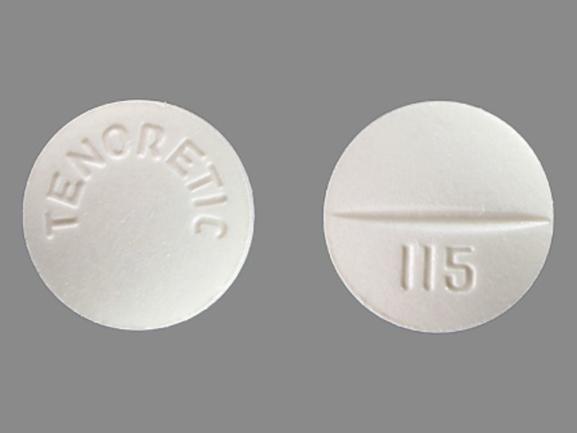
Tenoretic 50 Side Effects
Generic name: atenolol / chlorthalidone
Medically reviewed by Drugs.com. Last updated on Feb 17, 2024.
Note: This document provides detailed information about Tenoretic 50 Side Effects associated with atenolol / chlorthalidone. Some dosage forms listed on this page may not apply specifically to the brand name Tenoretic 50.
Applies to atenolol / chlorthalidone: oral tablet.
Precautions
It is very important that your doctor check your progress at regular visits to make sure this medicine is working properly and to check for unwanted effects .
Using this medicine while you are pregnant can harm your unborn baby. Use an effective form of birth control to keep from getting pregnant. If you think you have become pregnant while using the medicine, tell your doctor right away .
This medicine may cause heart failure in some patients. Check with your doctor right away if you are having chest pain or discomfort; dilated neck veins; extreme fatigue; irregular breathing; an irregular heartbeat; shortness of breath; swelling of the face, fingers, feet, or lower legs; weight gain; or wheezing .
This medicine may cause changes in your blood sugar levels. Also, this medicine may cover up signs of low blood sugar, such as a rapid pulse rate. Check with your doctor if you have these problems or if you notice a change in the results of your blood or urine sugar tests .
Make sure any doctor or dentist who treats you knows that you are using this medicine. You may need to stop using this medicine several days before having surgery or medical tests .
Serious side effects of Tenoretic 50
Along with its needed effects, atenolol/chlorthalidone may cause some unwanted effects. Although not all of these side effects may occur, if they do occur they may need medical attention.
Check with your doctor immediately if any of the following side effects occur while taking atenolol / chlorthalidone:
More common side effects
- cold arms or legs
- difficult or labored breathing
- shortness of breath
- tightness in chest
- wheezing
Less common side effects
- chest pain or discomfort
- chills
- cold sweats
- confusion
- dizziness, faintness, or lightheadedness when getting up from lying or sitting position
- leg pain
- lightheadedness, dizziness, or fainting
- slow or irregular heartbeat
- unusual tiredness or weakness
Incidence not determined
- black, tarry stools
- bleeding gums
- blood in urine or stools
- feeling that others are watching you or controlling your behavior
- feeling that others can hear your thoughts
- fever
- general feeling of discomfort, illness, or weakness
- paleness or cold feeling in fingertips and toes
- pinpoint red spots on skin
- seeing, hearing, or feeling things that are not there
- severe mood or mental changes
- skin irritation or rash, including rash that looks like psoriasis
- tingling or pain in fingers or toes when exposed to cold
- unusual behavior
- unusual bleeding or bruising
Get emergency help immediately if any of the following symptoms of overdose occur while taking atenolol / chlorthalidone:
Symptoms of overdose
- blurred vision
- decreased urination
- dry mouth
- increase in heart rate
- muscle cramps or pain
- numbness, tingling, pain, or weakness in hands or feet
- rapid breathing
- seizures
- sunken eyes
- sweating
- thirst
- trembling
- weakness and heaviness of legs
- wrinkled skin
Other side effects of Tenoretic 50
Some side effects of atenolol / chlorthalidone may occur that usually do not need medical attention. These side effects may go away during treatment as your body adjusts to the medicine. Also, your health care professional may be able to tell you about ways to prevent or reduce some of these side effects.
Check with your health care professional if any of the following side effects continue or are bothersome or if you have any questions about them:
More common side effects
- discouragement
- feeling sad or empty
- irritability
- lack of appetite
- loss of interest or pleasure
- tiredness
- trouble concentrating
- trouble sleeping
Less common side effects
- diarrhea
- feeling of constant movement of self or surroundings
- nausea
- sensation of spinning
- unusual drowsiness, dullness, or feeling of sluggishness
Incidence not determined
- decreased interest in sexual intercourse
- disturbed color perception
- double vision
- hair loss, thinning of hair
- halos around lights
- headache
- inability to have or keep an erection
- loss in sexual ability, desire, drive, or performance
- loss of vision
- night blindness
- overbright appearance of lights
- pain of penis on erection
- tunnel vision
See also:
For healthcare professionals
Applies to atenolol / chlorthalidone: oral tablet.
General adverse events
The most common adverse reactions were bradycardia, cold extremities, gastrointestinal disturbances, fatigue, hyperuricemia, hyponatremia, hypokalemia, and impaired glucose tolerance.[Ref]
Metabolic
- Common (1% to 10%): Hyperuricemia, hyponatremia, hypokalemia, impaired glucose tolerance
Chlorthalidone (chlortalidone):
- Frequency not reported: Anorexia, hyperglycemia, hyperuricemia[Ref]
Cardiovascular
- Common (1% to 10%): Bradycardia, cold extremities
- Rare (less than 0.1%): Heart failure deterioration, heart block precipitation, postural hypotension, intermittent claudication increased, Raynaud's phenomenon
Atenolol:
- Very common (10% or more): Cold extremities (up to 12%)
- Common (1% to 10%): Bradycardia, postural hypotension
- Postmarketing reports: Sick sinus syndrome, Raynaud's phenomenon
Chlorthalidone (chlortalidone):
- Frequency not reported: Orthostatic hypotension, necrotizing angiitis[Ref]
Gastrointestinal
- Common (1% to 10%): Gastrointestinal disturbances
- Rare (less than 0.1%): Dry mouth
- Frequency not reported: Constipation
Atenolol:
- Common (1% to 10%): Diarrhea, nausea
- Postmarketing reports: Dry mouth
Chlorthalidone (chlortalidone):
- Frequency not reported: Gastric irritation, vomiting, cramping, constipation, pancreatitis[Ref]
Other
- Common (1% to 10%): Fatigue
Atenolol:
- Very common (10% or more): Tiredness (up to 26%)
- Common (1% to 10%): Fatigue, lethargy
Chlorthalidone (chlortalidone):
- Frequency not reported: Weakness[Ref]
Psychiatric
- Uncommon (0.1% to 1%): Sleep disturbances
- Rare (less than 0.1%): Mood changes, nightmares, confusion, psychoses, hallucinations
Atenolol:
- Very common (10% or more): Depression (up to 12%)
- Common (1% to 10%): Dreaming
- Postmarketing reports: Hallucinations, psychoses
Chlorthalidone (chlortalidone):
- Frequency not reported: Restlessness[Ref]
Hepatic
- Uncommon (0.1% to 1%): Transaminase levels increased
- Rare (less than 0.1%): Hepatic toxicity
Atenolol:
- Postmarketing reports: Liver enzymes elevated, bilirubin elevated
Chlorthalidone (chlortalidone):
- Frequency not reported: Intrahepatic cholestatic jaundice[Ref]
Dermatologic
- Rare (less than 0.1%): Purpura, alopecia, psoriasiform skin reaction, psoriasis exacerbation, skin rashes
- Frequency not reported: Angioedema, urticaria
Atenolol:
- Postmarketing reports: Psoriasiform rash, psoriasis exacerbation, purpura, reversible alopecia
Chlorthalidone (chlortalidone):
- Frequency not reported: Purpura, photosensitivity, rash, urticaria, cutaneous vasculitis, toxic epidermal necrolysis[Ref]
Nervous system
- Rare (less than 0.1%): Dizziness, headache, paresthesia
Atenolol:
- Very common (10% or more): Dizziness (up to 13%)
- Common (1% to 10%): Vertigo, lightheadedness, drowsiness
- Postmarketing reports: Headache
Chlorthalidone (chlortalidone):
- Frequency not reported: Vertigo, paresthesia[Ref]
Hematologic
- Rare (less than 0.1%): Thrombocytopenia, leukopenia
Atenolol:
- Postmarketing reports: Thrombocytopenia
Chlorthalidone (chlortalidone):
- Frequency not reported: Leukopenia, agranulocytosis, thrombocytopenia, aplastic anemia[Ref]
Ocular
- Rare (less than 0.1%): Dry eyes, visual disturbances
Atenolol:
- Postmarketing reports: Visual disturbance
Chlorthalidone (chlortalidone):
- Frequency not reported: Xanthopsia[Ref]
Respiratory
- Rare (less than 0.1%): Bronchospasm
Atenolol:
- Common (1% to 10%): Wheeziness, dyspnea[Ref]
Genitourinary
- Rare (less than 0.1%): Impotence
Atenolol:
- Postmarketing reports: Impotence, Peyronie's disease
Chlorthalidone (chlortalidone):
- Frequency not reported: Glycosuria[Ref]
Immunologic
- Very rare (less than 0.01%): Antinuclear antibodies increased
- Frequency not reported: Hypersensitivity reactions
Atenolol:
- Postmarketing reports: Development of antinuclear antibodies[Ref]
Musculoskeletal
- Frequency not reported: Lupus-like syndrome
Atenolol:
- Common (1% to 10%): Leg pain
- Postmarketing reports: Lupus syndrome
Chlorthalidone (chlortalidone):
- Frequency not reported: Muscle spasm[Ref]
References
1. (2001) "Product Information. Tenoretic (atenolol-chlorthalidone)." Astra-Zeneca Pharmaceuticals
2. Cerner Multum, Inc. "UK Summary of Product Characteristics."
More about Tenoretic 50 (atenolol / chlorthalidone)
- Check interactions
- Compare alternatives
- Pricing & coupons
- Reviews (1)
- Drug images
- Dosage information
- During pregnancy
- Generic availability
- Drug class: beta blockers with thiazides
- En español
Patient resources
Professional resources
Other formulations
Related treatment guides
Further information
Tenoretic 50 side effects can vary depending on the individual. Always consult your healthcare provider to ensure the information displayed on this page applies to your personal circumstances.
Note: Medication side effects may be underreported. If you are experiencing side effects that are not listed, submit a report to the FDA by following this guide.