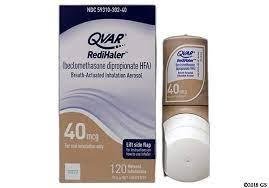
Qvar RediHaler Side Effects
Generic name: beclomethasone
Medically reviewed by Drugs.com. Last updated on Feb 27, 2025.
Note: This document provides detailed information about Qvar RediHaler Side Effects associated with beclomethasone. Some dosage forms listed on this page may not apply specifically to the brand name Qvar RediHaler.
Applies to beclomethasone: inhalation aerosol liquid.
Precautions
If you will be using this medicine for a long time, it is very important that your doctor check the progress of you or your child at regular visits. This will allow your doctor to see if the medicine is working properly and to check for any unwanted effects.
This medicine may cause fungus infection of the mouth or throat (thrush). Tell your doctor right away if you or your child have white patches in the mouth or throat, or pain when eating or swallowing.
You should not use this medicine if your asthma attack has already started. Your doctor will prescribe another medicine (eg, a short-acting inhaler) for you to use in case of an acute asthma attack. Make sure you understand how to use the short-acting inhaler. Talk to your doctor if you need instructions.
Talk with your doctor or get medical care right away if:
- Your or your child's symptoms do not improve after using this medicine for 2 weeks or if they become worse.
- You or your child have a big decrease in your peak flow when measured as directed by your doctor.
Using too much of this medicine or using it for a long time may cause problems with your adrenal gland. Talk to your doctor if you or your child have more than one of these symptoms while you are using this medicine: darkening of the skin, diarrhea, dizziness, fainting, loss of appetite, mental depression, nausea, skin rash, unusual tiredness or weakness, or vomiting.
Follow your doctor's directions carefully if you are switching from an oral corticosteroid to this medicine.
Your doctor may want you to carry a medical identification (ID) card stating that you or your child are using this medicine. The card will say that you may need additional medicine during an emergency, a severe asthma attack or other illness, or unusual stress.
This medicine may cause paradoxical bronchospasm, which means your breathing or wheezing will get worse. This may be life-threatening. Check with your doctor right away if you or your child are having a cough, difficulty with breathing, shortness of breath, or wheezing after using this medicine. Use a short acting inhaler right away to treat your symptoms.
If you or your child develop a skin rash, hives, or any allergic reaction to this medicine, check with your doctor as soon as possible.
This medicine may cause children to grow more slowly than usual. Talk to your child's doctor if you have any concerns.
This medicine may decrease bone mineral density when used for a long time. A low bone mineral density can cause weak bones or osteoporosis. If you have any questions about this, ask your doctor.
Check with your doctor right away if blurred vision, difficulty in reading, or any other change in vision occurs during or after treatment. Your doctor may want you or your child to have your eyes checked by an ophthalmologist (eye doctor).
Do not take other medicines unless they have been discussed with your doctor. This includes prescription or nonprescription (over-the-counter [OTC]) medicines and herbal or vitamin supplements.
Serious side effects of Qvar RediHaler
Along with its needed effects, beclomethasone (the active ingredient contained in Qvar RediHaler) may cause some unwanted effects. Although not all of these side effects may occur, if they do occur they may need medical attention.
Check with your doctor immediately if any of the following side effects occur while taking beclomethasone:
More common side effects
- body aches or pain
- congestion
- cough
- difficulty with breathing
- dryness or soreness of the throat
- fever
- hoarseness
- runny nose
- tender, swollen glands in the neck
- trouble swallowing
- voice changes
Incidence not known
- attack, assault, or force
- blindness
- blurred vision
- changes in behavior
- chills
- darkening of the skin
- decreased vision
- diarrhea
- dizziness
- eye pain
- fainting
- headache
- loss of appetite
- lower back or side pain
- mental depression
- nausea
- painful or difficult urination
- skin rash
- sore mouth or tongue
- tearing
- thoughts of killing oneself
- unusual tiredness or weakness
- vomiting
- white patches in the mouth or on the tongue
Other side effects of Qvar RediHaler
Some side effects of beclomethasone may occur that usually do not need medical attention. These side effects may go away during treatment as your body adjusts to the medicine. Also, your health care professional may be able to tell you about ways to prevent or reduce some of these side effects.
Check with your health care professional if any of the following side effects continue or are bothersome or if you have any questions about them:
Less common side effects
- cramps
- heavy bleeding
- pain
- pain or tenderness around the eyes and cheekbones
- stuffy or runny nose
- tightness of the chest
See also:
Xolair
Xolair injection (omalizumab) is used to help improve allergic asthma, nasal polyps, and chronic ...
Symbicort
Symbicort (budesonide and formoterol) is used to prevent bronchospasm in people with asthma or ...
Dupixent
Dupixent is used to treat eczema, eosinophilic or oral-corticosteroid-dependent asthma, chronic ...
Ventolin
Ventolin is used for asthma, acute, asthma, maintenance, bronchiectasis, bronchospasm prophylaxis ...
Ventolin HFA
Ventolin HFA (albuterol) is used to treat or prevent breathing problems in patients who have asthma ...
Breo Ellipta
Breo Ellipta (fluticasone and vilanterol) is used to prevent airflow obstruction or bronchospasm in ...
Spiriva
Spiriva (tiotropium) is used to prevent bronchospasm in people with bronchitis, emphysema, or COPD ...
Xopenex
Xopenex is a short-acting bronchodilator used to treat or prevent bronchospasm in asthma and other ...
Dulera
Dulera Inhalers (formoterol and mometasone) are used to treat asthma. Includes Dulera side effects ...
Spiriva Respimat
Spiriva Respimat is used for asthma, maintenance, COPD, Maintenance
For healthcare professionals
Applies to beclomethasone: compounding powder, inhalation aerosol, inhalation aerosol with adapter.
General adverse events
The most commonly reported adverse reactions have included headache, pharyngitis, rhinitis, inhalation site and taste sensation.[Ref]
Endocrine
- Common (1% to 10%): Dysmenorrhea
- Uncommon (0.1% to 1%): Menorrhagia
- Very rare (less than 0.01%): Adrenal suppression, Cushing syndrome, cushingoid features[Ref]
Oral therapy:
Following 4 weeks of oral therapy for ulcerative colitis, a reduction of plasma cortisol levels has been observed in up to 25% of patients; HPA-axis function recovery is expected to be transient, however follow up data is lacking.[Ref]
Respiratory
- Very common (10% or more): Pharyngitis (up to 27%)
- Common (1% to 10%): Rhinitis, hoarseness, throat irritation, upper respiratory tract infection, dysphonia
- Uncommon (0.1% to 1%): Bronchitis, coughing, epistaxis
- Rare (0.01% to 0.1%): Acute asthma episode, hemoptysis, respiratory disorder, sinusitis
- Very rare (less than 0.01%): Paradoxical bronchospasm with wheezing
- Frequency not reported: Eosinophilic pneumonia[Ref]
Gastrointestinal
- Common (1% to 10%): Oral candidiasis of mouth and throat
- Uncommon (0.1% to 1%): Abdominal pain, constipation
- Rare (0.01% to 0.1%): Dyspepsia, unspecified gastrointestinal disorders, nausea, tongue discoloration, toothache[Ref]
Hypersensitivity
- Uncommon (0.1% to 1%): Hypersensitivity reactions including rashes, urticaria, pruritus, erythema
- Very rare (less than 0.01%): Hypersensitivity reactions including edema of the eyes, face, lips, and throat (angioedema), anaphylaxis and anaphylactoid reactions[Ref]
Ocular
- Frequency not reported: Glaucoma, cataracts
- Postmarketing reports: Blurred vision, central serous chorioretinopathy[Ref]
Psychiatric
- Uncommon (0.1% to 1%): Anxiety
- Rare (0.01% to 0.1%): Depression, insomnia, sleep disorders, hyperactivity, aggression, irritability (mostly in children)
- Postmarketing reports: Suicidal ideation[Ref]
Nervous system
- Very common (10% or more): Headache (up to 25%)
- Uncommon (0.1% to 1%): Dizziness, dysphonia, migraine
- Rare (0.01% to 0.1%): Neuropathy, tremor, vertigo[Ref]
Dermatologic
- Uncommon (0.1% to 1%): Rash, purpura
- Rare (0.01% to 0.1%): Photosensitivity reaction, skin disorder, urticaria
- Frequency not reported: Easy bruising, skin thinning[Ref]
Musculoskeletal
- Uncommon (0.1% to 1%): Myalgia, muscle cramps, back pain
- Very rare (less than 0.01%): Growth retardation, decrease in bone mineral density[Ref]
Cardiovascular
- Uncommon (0.1% to 1%): Chest pain, edema
- Rare (0.01% to 0.1%): Hypertension, palpitations, angina pectoris[Ref]
Local
- Common (1% to 10%): Inhalation site sensation and taste sensation[Ref]
Metabolic
- Uncommon (0.1% to 1%): Increased weight[Ref]
References
1. Cerner Multum, Inc. "UK Summary of Product Characteristics."
2. Cerner Multum, Inc. "Australian Product Information."
3. (2013) "Product Information. Qvar (beclomethasone)." Teva Pharmaceuticals USA
Frequently asked questions
More about Qvar RediHaler (beclomethasone)
- Check interactions
- Compare alternatives
- Pricing & coupons
- Reviews (188)
- Drug images
- Dosage information
- During pregnancy
- Drug class: inhaled corticosteroids
- Breastfeeding
- En español
Patient resources
Other brands
Professional resources
Related treatment guides
Further information
Qvar RediHaler side effects can vary depending on the individual. Always consult your healthcare provider to ensure the information displayed on this page applies to your personal circumstances.
Note: Medication side effects may be underreported. If you are experiencing side effects that are not listed, submit a report to the FDA by following this guide.