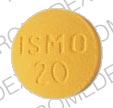
Ismo Side Effects
Generic name: isosorbide mononitrate
Medically reviewed by Drugs.com. Last updated on Jul 10, 2025.
Note: This document provides detailed information about Ismo Side Effects associated with isosorbide mononitrate. Some dosage forms listed on this page may not apply specifically to the brand name Ismo.
Applies to isosorbide mononitrate: oral tablet, oral tablet extended release.
Precautions
If you will be taking this medicine for a long time, it is very important that your doctor check your progress at regular visits to make sure that this medicine is working properly. Blood tests may be needed to check for unwanted effects.
Do not take riociguat (Adempas®), sildenafil (Viagra®), tadalafil (Cialis®), or vardenafil (Levitra®) while you are using this medicine. Using these medicines together may lower your blood pressure and cause blurred vision, dizziness, lightheadedness, or fainting. If you are taking these medicines and you experience an angina attack, you must go to the hospital right away.
This medicine may cause headaches. These headaches are a sign that the medicine is working. Do not stop using the medicine or change the time you use it in order to avoid the headaches. If you have severe pain, talk with your doctor.
Dizziness, lightheadedness, or faintness may occur, especially when you get up quickly from a lying or sitting position. Getting up slowly may help.
Dizziness, lightheadedness, or fainting is also more likely to occur if you drink alcohol, stand for long periods of time, exercise, or if the weather is hot. While you are taking this medicine, be careful to limit the amount of alcohol you drink. Also, use extra care during exercise or hot weather or if you must stand for long periods of time.
Do not stop using this medicine without checking first with your doctor. Your doctor may want you to gradually reduce the amount you are using before stopping it completely.
Make sure any doctor or dentist who treats you knows that you are using this medicine. You may need to stop using this medicine several days before you have medical tests.
Do not take other medicines unless they have been discussed with your doctor. This includes prescription or nonprescription (over-the-counter [OTC]) medicines and herbal or vitamin supplements.
Serious side effects of Ismo
Along with its needed effects, isosorbide mononitrate (the active ingredient contained in Ismo) may cause some unwanted effects. Although not all of these side effects may occur, if they do occur they may need medical attention.
Check with your doctor immediately if any of the following side effects occur while taking isosorbide mononitrate:
Less common side effects
- abnormal heart sound
- absence of or decrease in body movement
- arm, back, or jaw pain
- black, tarry stools
- bladder pain
- bleeding after defecation
- bleeding gums
- blood in the urine or stools
- blurred vision
- body aches or pain
- burning while urinating
- burning, crawling, itching, numbness, prickling, "pins and needles", or tingling feelings
- chest pain or discomfort
- chest tightness or heaviness
- chills
- cold sweats
- colds
- confusion
- convulsions
- cough or hoarseness
- decreased urine
- diarrhea
- difficult or labored breathing
- difficult, burning, or painful urination
- dilated neck veins
- dizziness
- dizziness, faintness, or lightheadedness when getting up suddenly from a lying or sitting position
- dry mouth
- ear congestion
- extra heartbeats
- fainting
- fast, slow, irregular, pounding, or racing heartbeat or pulse
- fever or chills
- flu-like symptoms
- frequent urge to urinate
- frequent urination
- general feeling of discomfort or illness
- headache
- headache, severe and throbbing
- heart murmur
- increased need to urinate
- increased sweating
- increased thirst
- increased volume of pale, dilute urine
- irregular breathing
- itching, pain, redness, or swelling on the leg
- joint pain, stiffness, or swelling
- lightheadedness
- loss of appetite
- loss of voice
- lower back, side, or stomach pain
- muscle aches and pains
- muscle cramps
- nasal congestion
- nausea or vomiting
- nervousness
- numbness or tingling in the hands, feet, or lips
- pain or discomfort in the arms, jaw, back, or neck
- pain, tension, and weakness upon walking that subsides during periods of rest
- partial or slight paralysis
- passing urine more often
- pinpoint red or purple spots on the skin
- pounding in the ears
- runny nose
- shakiness in the legs, arms, hands, or feet
- shivering
- sneezing
- sore on the leg
- sore throat
- sudden decrease in the amount of urine
- sweating
- swelling
- swelling of the face, fingers, feet, or lower legs
- tightness in the chest
- trembling or shaking of the hands or feet
- trouble sleeping
- troubled breathing
- uncomfortable swelling around the anus
- unusual bleeding or bruising
- unusual tiredness or weakness
- vomiting of blood or material that looks like coffee grounds
- weakness
- weight gain
Rare side effects
- bluish-colored lips, fingernails, or palms
- dark urine
- pale skin
- rapid heart rate
Get emergency help immediately if any of the following symptoms of overdose occur while taking isosorbide mononitrate:
Symptoms of overdose
- blurred or loss of vision
- bulging soft spot on the head of an infant
- change in consciousness
- change in the ability to see colors, especially blue or yellow
- cold, clammy skin
- disturbed color perception
- double vision
- feeling of constant movement of self or surroundings
- halos around lights
- headache, severe and throbbing
- loss of consciousness
- night blindness
- overbright appearance of lights
- paralysis
- sensation of spinning
- tunnel vision
Other side effects of Ismo
Some side effects of isosorbide mononitrate may occur that usually do not need medical attention. These side effects may go away during treatment as your body adjusts to the medicine. Also, your health care professional may be able to tell you about ways to prevent or reduce some of these side effects.
Check with your health care professional if any of the following side effects continue or are bothersome or if you have any questions about them:
Less common side effects
- acid or sour stomach
- anxiety
- back pain
- belching
- blemishes on the skin
- bloated
- breast pain
- burning feeling in the chest or stomach
- burning, dry, or itching eyes
- change in color vision
- changes in vision
- cold sweats
- congestion
- constipation
- continuing ringing or buzzing or other unexplained noise in the ears
- cough producing mucus
- decreased interest in sexual intercourse
- difficulty seeing at night
- difficulty with moving
- discharge, excessive tearing
- double vision
- drooping upper eyelids
- dull ache or feeling of pressure or heaviness in the legs
- earache
- excess air or gas in the stomach or intestines
- feeling of constant movement of self or surroundings
- feeling of warmth
- feeling unusually cold
- frequent urge to defecate
- frozen shoulder
- full feeling
- hearing loss
- heartburn
- hyperventilation
- inability to have or keep an erection
- increased appetite
- increased sensitivity of the eyes to sunlight
- increased sputum
- indigestion
- irritability
- itching skin near damaged veins
- lack or loss of strength
- loss in sexual ability, desire, drive, or performance
- muscle or bone pain
- muscle stiffness or weakness
- nightmares
- noisy breathing
- pain or tenderness around the eyes and cheekbones
- passing gas
- pimples
- poor concentration
- rash
- redness of the face, neck, arms, and occasionally, upper chest
- redness, pain, swelling of the eye, eyelid, or inner lining of the eyelid
- redness, swelling, or soreness of the tongue
- restlessness
- seeing double
- sensation of spinning
- sleepiness or unusual drowsiness
- small clicking, bubbling, or rattling sounds in the lung when listening with a stethoscope
- small lumps under the skin
- sore mouth or tongue
- stiff neck
- stomach bloating, burning, cramping, or pain
- stomach discomfort or upset
- straining while passing stool
- stuffy nose
- sudden sweating
- swollen feet and ankles
- tender, swollen glands in the neck
- tenderness in the stomach area
- terrifying dreams causing sleep disturbances
- tooth disorder
- trouble swallowing
- uncontrolled twisting movements of the neck
- voice changes
- weight loss
- white patches in the mouth, tongue, or throat
See also:
For healthcare professionals
Applies to isosorbide mononitrate: oral tablet, oral tablet extended release.
General adverse events
The most common adverse effects are headache and dizziness.[Ref]
Nervous system
- Very common (10% or more): Headache (up to 57%), dizziness (up to 11%)
- Common (1% to 10%): Light-headedness
- Frequency not reported: Bitter taste, paresthesia, impaired concentration, tremor, hypoesthesia, migraine, neuritis, paresis, somnolence, fainting, drowsiness
- Postmarketing reports: Syncope[Ref]
Cardiovascular
- Common (1% to 10%): Cardiovascular disorder, flushing, hypotension
- Frequency not reported: Acute myocardial infarction, apoplexy, arrhythmias, bradycardia, edema, hypertension, pallor, palpitations, tachycardia, hot flushes, cardiac failure, arrhythmia, arrhythmia atrial, atrial fibrillation, bundle branch block, extrasystole, ventricular tachycardia, angina pectoris aggravated, heart murmur, heart sound abnormal, myocardial infarction, Q wave abnormality, intermittent claudication, varicose vein, reflex tachycardia, collapse, bradyarrhythmia, paroxysmal bradycardia, orthostatic hypotension[Ref]
Gastrointestinal
- Common (1% to 10%): Nausea, abdominal pain, diarrhea, gastrointestinal disturbances
- Frequency not reported: Dry mouth, dyspepsia, vomiting, constipation, flatulence, gastric ulcer, gastritis, glossitis, hemorrhagic gastric ulcer, hemorrhoids, loose stools, melena, heartburn[Ref]
Hypersensitivity
- Common (1% to 10%): Allergic reaction[Ref]
Hematologic
- Frequency not reported: Methemoglobinemia, thrombocytopenia, hypochromic anemia[Ref]
Other
- Common (1% to 10%): Fatigue, pain, chest pain, tiredness
- Frequency not reported: Susurrus aurium, vertigo, asthenia, fever, flu-like symptoms, malaise, rigors, earache, tinnitus, tympanic membrane perforation, breast pain, feeling of weakness[Ref]
Respiratory
- Common (1% to 10%): Upper respiratory infection, increased cough
- Frequency not reported: Asthma, dyspnea, sinusitis, bronchitis, bronchospasm, coughing, increased sputum, nasal congestion, pharyngitis, pneumonia, pulmonary infiltration, rales, rhinitis, hypoxia[Ref]
Dermatologic
- Common (1% to 10%): Rash, pruritus
- Frequency not reported: Sweating, purpura, acne, hair texture abnormal, increased sweating, skin nodule, leg ulcer, exfoliative dermatitis, excessive perspiration, allergic dermatitis, hyperhidrosis[Ref]
Psychiatric
- Common (1% to 10%): Emotional lability, sleep disturbances
- Frequency not reported: Anxiety, depression, insomnia, nervousness, nightmares, restlessness, confusion, decreased libido, paroniria[Ref]
Musculoskeletal
- Very rare (less than 0.01%): Myalgia
- Frequency not reported: Back pain, muscle cramps, neck pain, arthralgia, frozen shoulder, muscle weakness, musculoskeletal pain, myositis, tendon disorder, torticollis[Ref]
Metabolic
- Frequency not reported: Anorexia, thirst, decreased weight, hyperuricemia, hypokalemia, poor appetite[Ref]
Genitourinary
- Frequency not reported: Prostatic disorder, impotence, atrophic vaginitis, polyuria, urinary tract infection[Ref]
Ocular
- Frequency not reported: Amblyopia, ptosis, conjunctivitis, photophobia, vision abnormal[Ref]
Immunologic
- Frequency not reported: Bacterial infection, moniliasis, viral infection[Ref]
Hepatic
- Frequency not reported: Serum glutamic oxaloacetic transaminase (SGOT) increased, serum glutamate-pyruvate transaminase (SGPT) increased[Ref]
Endocrine
- Frequency not reported: Pituitary hemorrhage[Ref]
Renal
- Frequency not reported: Renal calculus[Ref]
References
1. (2002) "Product Information. ISMO (isosorbide mononitrate)." Wyeth-Ayerst Laboratories
2. Cerner Multum, Inc. "UK Summary of Product Characteristics."
3. Cerner Multum, Inc. "Australian Product Information."
More about Ismo (isosorbide mononitrate)
- Check interactions
- Compare alternatives
- Drug images
- Dosage information
- During pregnancy
- Drug class: antianginal agents
Patient resources
Other brands
Professional resources
Other brands
Related treatment guides
Further information
Ismo side effects can vary depending on the individual. Always consult your healthcare provider to ensure the information displayed on this page applies to your personal circumstances.
Note: Medication side effects may be underreported. If you are experiencing side effects that are not listed, submit a report to the FDA by following this guide.