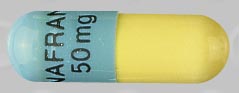
Anafranil Side Effects
Generic name: clomipramine
Medically reviewed by Drugs.com. Last updated on Dec 30, 2024.
Note: This document provides detailed information about Anafranil Side Effects associated with clomipramine. Some dosage forms listed on this page may not apply specifically to the brand name Anafranil.
Applies to clomipramine: oral capsule.
Important warnings
This medicine can cause some serious health issues
Oral route (capsule)
Antidepressants increased the risk of suicidal thinking and behavior in children, adolescents, and young adults in short-term studies with major depressive disorder (MDD) and other psychiatric disorders.
Short-term studies did not show an increase in the risk of suicidality with antidepressants compared to placebo in adults beyond age 24, and there was a reduction in risk with antidepressants compared to placebo in adults aged 65 and older.
Monitor patients closely for clinical worsening, suicidality, or unusual changes in behavior.
These risks must be balanced with clinical need.
Families and caregivers should closely observe the patient and stay in close contact with the prescriber.
This drug is not approved for use in pediatric patients except for those with obsessive compulsive disorder (OCD).
Precautions
It is very important that your doctor check your or your child's progress at regular visits to allow for changes in your dose and to make sure this medicine is working properly. Blood and urine tests may be needed to check for unwanted effects.
Clomipramine may cause some people to be agitated, irritable, or display other abnormal behaviors. It may also cause some children, teenagers, and young adults to have suicidal thoughts and tendencies or to become more depressed. Some people may have trouble sleeping, get upset easily, have a big increase in energy, or start to act reckless. Also tell the doctor if you or your child have sudden or strong feelings, such as feeling nervous, angry, restless, violent, or scared. If you, or your caregiver notice any of these side effects, tell your doctor right away. Let the doctor know if you, your child, or anyone in your family has bipolar disorder (manic-depressive) or has tried to commit suicide.
Do not use clomipramine (the active ingredient contained in Anafranil) with a monoamine oxidase (MAO) inhibitor (eg, isocarboxazid [Marplan®], linezolid (Zyvox®), phenelzine [Nardil®], selegiline [Eldepryl®], tranylcypromine [Parnate®]). Do not start using clomipramine during the 2 weeks after you stop an MAO inhibitor. Wait for 2 weeks after stopping clomipramine before you start using an MAO inhibitor. If you take them together or do not wait 2 weeks, you may develop confusion, agitation, restlessness, stomach or bowel symptoms, a sudden high body temperature, an extremely high blood pressure, or severe convulsions (seizures).
Clomipramine may cause a serious condition called serotonin syndrome if taken together with some medicines. Do not use clomipramine with buspirone (Buspar®), fentanyl (Abstral®, Duragesic®), lithium (Eskalith®, Lithobid®), tryptophan, St. John's wort, or some pain or migraine medicines (eg, sumatriptan, tramadol, Frova®, Maxalt®, Relpax®, Zomig®). Check with your doctor first before taking any other medicines with clomipramine.
This medicine may cause some people to become dizzy, drowsy, or less alert than they are normally. Do not drive or do anything else that could be dangerous until you know how this medicine affects you.
Check with your doctor right away if you have a fever, chills, cough, sore throat, swollen, painful, or tender lymph glands in the neck, armpit, or groin, or yellow skin or eyes while using this medicine. These could be symptoms of a serious condition called drug reaction with eosinophilia and systemic symptoms (DRESS).
Clomipramine may lower the number of some types of blood cells in your body. Because of this, you may bleed or get infections more easily. To help with these problems, avoid being near people who are sick or have infections. Wash your hands often. Stay away from rough sports or other situations where you could be bruised, cut, or injured. Brush and floss your teeth gently. Be careful when using sharp objects, including razors and fingernail clippers.
Check with your doctor before using this medicine with alcohol or other medicines that affect the central nervous system (CNS). The use of alcohol or other medicines that affect the CNS with clomipramine may worsen the side effects of this medicine, such as dizziness, poor concentration, drowsiness, unusual dreams, and trouble with sleeping. Some examples of medicines that affect the CNS are antihistamines or medicine for allergies or colds, sedatives, tranquilizers, or sleeping medicines, medicine for depression, medicine for anxiety, prescription pain medicine or narcotics, medicine for attention deficit and hyperactivity disorder, medicine for seizures or barbiturates, muscle relaxants, or anesthetics, including some dental anesthetics.
Check with your doctor right away if you have pain or tenderness in the upper stomach, pale stools, dark urine, loss of appetite, nausea, vomiting, or yellow eyes or skin. These could be symptoms of a serious liver problem.
This medicine may cause men to have problems with sex. Check with your doctor if you are having an abnormal ejaculation or decreased sexual performance or desire.
Weight changes may occur during treatment with this medicine. Talk with your doctor if this is a concern for you.
Before having any kind of surgery, dental treatment, or emergency treatment, tell the medical doctor or dentist in charge that you are using this medicine. Taking clomipramine together with medicines used during surgery or emergency treatment may increase the risk of side effects.
Do not stop using this medicine without checking first with your doctor. Your doctor may want you to gradually reduce the amount you are using before stopping it completely. This may help prevent possible worsening of your condition and reduce the possibility of withdrawal symptoms such as dizziness, headache, nausea, vomiting, trouble sleeping, irritability, high fever, or a general feeling of discomfort or illness.
This medicine may make it more difficult for your body to cool itself down. Use care not to become overheated during exercise or hot weather since overheating may result in heat stroke.
Do not take other medicines unless they have been discussed with your doctor. This includes prescription or nonprescription (over-the-counter [OTC]) medicines and herbal or vitamin supplements.
Serious side effects of Anafranil
Along with its needed effects, clomipramine may cause some unwanted effects. Although not all of these side effects may occur, if they do occur they may need medical attention.
Check with your doctor immediately if any of the following side effects occur while taking clomipramine:
More common side effects
- bladder pain
- bloody or cloudy urine
- blurred vision
- body aches or pain
- burning, crawling, itching, numbness, prickling, "pins and needles", or tingling feelings
- confusion
- difficult, burning, or painful urination
- dizziness, faintness, or lightheadedness when getting up suddenly from a lying or sitting position
- excessive muscle tone
- fear or nervousness
- feeling sad or empty
- fever
- hearing changes
- hives or welts, skin rash
- irritability
- lower back or side pain
- muscle stiffness, tension, or tightness
- poor concentration
- rhythmic movement of muscles
- sneezing
- tightness of the chest
- trouble breathing
- unusual tiredness or weakness
- voice changes
Less common side effects
- anger that is hard to control
- anxiety
- breast enlargement
- changes in vision
- chest pain or discomfort
- chills
- decrease in the frequency of urination
- deep or fast breathing with dizziness
- difficulty in speaking
- dry mouth
- fast, irregular, pounding, or racing heartbeat or pulse
- headache, severe and throbbing
- nausea
- numbness of the feet, hands, and around the mouth
- numbness, tingling, pain, or weakness in the hands or feet
- pain during sexual intercourse
- paranoia
- rapidly changing moods
- restlessness
- shaking
- sores, ulcers, or white spots on the lips or tongue or inside the mouth
- sweating
- swelling of the face, fingers, feet, or lower legs
- vomiting
Incidence not known
- agitation
- blindness
- cough
- decreased awareness or responsiveness
- depression
- dizziness
- eye pain
- hostility
- increased thirst
- loss of consciousness
- muscle pain, cramps, or twitching
- rapid weight gain
- seizures
- severe sleepiness
- sore throat
- swollen, painful, or tender lymph glands in the neck, armpit, or groin
- tearing
- unusual drowsiness, dullness, or feeling of sluggishness
- yellow skin or eyes
Other side effects of Anafranil
Some side effects of clomipramine may occur that usually do not need medical attention. These side effects may go away during treatment as your body adjusts to the medicine. Also, your health care professional may be able to tell you about ways to prevent or reduce some of these side effects.
Check with your health care professional if any of the following side effects continue or are bothersome or if you have any questions about them:
More common side effects
- blistering, crusting, irritation, itching, or reddening of the skin
- change in taste
- constipation
- cracked, dry, or scaly skin
- change in interest in sexual intercourse
- diarrhea
- dry skin
- heartburn
- inability to have or keep an erection
- increased interest in sexual intercourse
- joint pain or swelling
- pimples
- redness of the face, neck, arms, and occasionally, upper chest
- shakiness in the legs, arms, hands, or feet
- stomach discomfort, upset, or pain
- swelling
- trembling or shaking of the hands or feet
Less common side effects
- absent, missed, or irregular menstrual periods
- breast pain
See also:
Zoloft
Zoloft is an antidepressant used to treat major depression, obsessive-compulsive disorder, panic ...
Prozac
Prozac (fluoxetine) is an SSRI antidepressant used to treat depression, OCD, panic disorder ...
Botox
Botox is used cosmetically to reduce facial lines and wrinkles and for medical purposes for ...
Paxil
Paxil is used to treat depression, obsessive-compulsive disorder and anxiety. Learn about side ...
Luvox
Luvox is used for anxiety and stress, obsessive compulsive disorder
Paxil CR
Paxil CR is used for anxiety, depression, dysautonomia, generalized anxiety disorder, major ...
Luvox CR
Luvox CR is used for anxiety and stress, obsessive compulsive disorder, social anxiety disorder
Prozac Weekly
Prozac Weekly is used for anxiety and stress, bulimia, depression, major depressive disorder ...
Fluvoxamine
Fluvoxamine is used for anorexia/feeding problems, anxiety and stress, body dysmorphic disorder ...
Paroxetine
Paroxetine is used treat depression, obsessive-compulsive disorder and anxiety disorders. Learn ...
For healthcare professionals
Applies to clomipramine: oral capsule.
General adverse events
The most commonly reported side effects included dry mouth, dizziness, somnolence, tremor, and constipation.[Ref]
Gastrointestinal
- Very common (10% or more): Dry mouth (up to 84%), constipation (up to 47%), nausea (up to 33%), dyspepsia (up to 22%), abdominal pain (up to 13%), diarrhea (up to 13%)
- Common (1% to 10%): Abdominal disorders, eructation, esophagitis, flatulence, gastrointestinal disorder, halitosis, tooth disorder, ulcerative stomatitis, vomiting
- Uncommon (0.1% to 1%): Blood in stool, colitis, duodenitis, gastric ulcer, gastritis, gastroesophageal reflux, gingivitis, glossitis, hemorrhoids, increased saliva, irritable bowel syndrome, peptic ulcer, rectal hemorrhage, tongue ulceration, tooth caries
- Rare (0.01% to 0.1%): Cheilitis, chronic enteritis, discolored feces, gastric dilatation, gingival bleeding
- Very rare (less than 0.01%): Paralytic ileus, parotid swelling[Ref]
Nervous system
- Very common (10% or more): Dizziness (up to 54%), somnolence (up to 54%), tremor (up to 54%), headache (up to 52%), myoclonus (up to 13%)
- Common (1% to 10%): Disturbance in attention, drowsiness, dysgeusia, hypertonia, impaired concentration, memory impairment, migraine, muscle hypertonia, mydriasis, nervousness, paresis, paresthesia, speech disorder, syncope, taste perversion, twitching, vertigo, vestibular disorder
- Uncommon (0.1% to 1%): Abnormal coordination, abnormal electroencephalogram (EEG), abnormal gait, ataxia, coma, convulsions, dyskinesia, encephalopathy, extrapyramidal disorder, hyperkinesia, hypokinesia, neuralgia, parosmia, sensory disturbance, stimulation, taste loss
- Rare (0.01% to 0.1%): Anticholinergic syndrome, aphasia, apraxia, cerebral hemorrhage, cholinergic syndrome, choreoathetosis, dystonia, generalized spasm, hemiparesis, hyperesthesia, hyperreflexia, hypoesthesia, neuropathy, nystagmus, stupor
- Very rare (less than 0.01%): Akathisia, neuroleptic malignant syndrome, peripheral neuropathy, serotonin syndrome, stroke, tardive dyskinesia[Ref]
Genitourinary
- Very common (10% or more): Ejaculation failure (up to 42%), impotence (up to 20%), micturition disorder (up to 14%), dysmenorrhea (up to 12%)
- Common (1% to 10%): Amenorrhea, breast enlargement, breast pain, dysuria, erectile dysfunction, galactorrhea, leukorrhea, menstrual disorder, micturition frequency, nonpuerperal lactation, urinary retention, urinary tract infection, vaginitis
- Uncommon (0.1% to 1%): Endometriosis, epididymitis, genital pruritus, hematuria, nocturia, ovarian cyst, perineal pain, polyuria, prostatic disorder, urethral disorder, urinary incontinence, uterine hemorrhage, vaginal hemorrhage
- Rare (0.01% to 0.1%): Albuminuria, breast engorgement, cervical dysplasia, endometrial hyperplasia, intestinal obstruction, oral edema, paralytic ileus, pharyngeal edema, premature ejaculation, pyuria, salivary gland enlargement, uterine inflammation, vaginal bleeding, vulvar disorder
- Very rare (less than 0.01%): Testicular swelling
- Postmarketing reports: Ejaculation delayed[Ref]
Other
- Very common (10% or more): Fatigue (up to 39%)
- Common (1% to 10%): Asthenia, chills, fever/hyperpyrexia, otitis media, pain, tinnitus
- Uncommon (0.1% to 1%): Cyst, deafness, earache, foreign body sensation, hyperacusis, malaise
- Rare (0.01% to 0.1%): Dependent edema, labyrinth disorders
- Very rare (less than 0.01%): Sudden death[Ref]
Dermatologic
- Very common (10% or more): Increased sweating/hyperhidrosis (up to 29%)
- Common (1% to 10%): Abnormal skin odor, allergic dermatitis, acne, dermatitis, dry skin, photosensitivity reaction, pruritus, rash/skin rash, urticaria
- Uncommon (0.1% to 1%): Alopecia, cellulitis, eczema, erythematous rash, maculopapular rash, psoriasis, pustular rash, skin discoloration
- Rare (0.01% to 0.1%): Chloasma, folliculitis, hypertrichosis, lupus erythematosus rash, piloerection, seborrhea, skin hypertrophy, skin ulceration
- Postmarketing reports: Drug rash with eosinophilia and systemic symptom (DRESS)[Ref]
Psychiatric
- Very common (10% or more): Insomnia (up to 25%), libido change (up to 21%), nervousness (up to 18%)
- Common (1% to 10%): Abnormal dreaming, abnormal thinking, aggression, aggressive reaction, agitation, anxiety, confusional state, confusion, delirium, depression/aggravation of depression, depersonalization, disorientation, emotional lability, female orgasmic impotence, hallucinations, irritability, hypomania, libido disorder, mania, nightmares, panic reaction, psychosomatic disorder, restlessness, sleep disorder, withdrawal symptoms, worsening of psychiatric status
- Uncommon (0.1% to 1%): Activation of psychotic symptoms, apathy, delusion, euphoria, hostility, hyperagogic hallucinations, manic reaction, paranoia, phobic disorder, psychosis, somnambulism, suicidal ideation, suicide attempt, teeth grinding
- Rare (0.01% to 0.1%): Anorgasmy, catalepsy, illusion, impaired impulse control, indecisiveness, mutism, schizophrenic reaction, suicide, withdrawal syndrome
- Very rare (less than 0.01%): Suicidal behaviors[Ref]
Hallucinations occurred more frequently in elderly patients and in those with Parkinson's disease.[Ref]
Metabolic
- Very common (10% or more): Anorexia (up to 22%), weight increased (up to 18%), increased appetite (up to 11%)
- Common (1% to 10%): Alkaline phosphatase increased, blood sugar changes, decreased appetite, thirst, weight decrease
- Uncommon (0.1% to 1%): Dehydration, diabetes mellitus, gout, hypercholesterolemia, hyperglycemia, hyperuricemia, hypokalemia
- Rare (0.01% to 0.1%): Fat intolerance[Ref]
Ocular
- Very common (10% or more): Abnormal vision (up to 18%)
- Common (1% to 10%): Abnormal lacrimation, accommodation disorder, anisocoria, blepharospasm, blurred vision, conjunctivitis, ocular allergy
- Uncommon (0.1% to 1%): Abnormal accommodation, diplopia, eye pain, photophobia, scleritis
- Rare (0.01% to 0.1%): Oculogyric crisis, oculomotor nerve paralysis
- Very rare (less than 0.01%): Blepharitis, chromatopsia, conjunctival hemorrhage, exophthalmos, glaucoma, keratitis, night blindness, retinal disorders, strabismus, visual field defect
- Postmarketing reports: Angle-closure glaucoma[Ref]
Respiratory
- Very common (10% or more): Pharyngitis (up to 14%), rhinitis (up to 12%)
- Common (1% to 10%): Bronchospasm, coughing, dyspnea, epistaxis, laryngitis, sinusitis, yawning
- Uncommon (0.1% to 1%): Bronchitis, dysphonia, hyperventilation, increased sputum, pneumonia
- Rare (0.01% to 0.1%): Hemoptysis, hiccup, hypoventilation, laryngismus
- Very rare (less than 0.01%): Alveolitis allergic (pneumonitis) with/without eosinophilia[Ref]
Musculoskeletal
- Very common (10% or more): Myalgia (up to 13%)
- Common (1% to 10%): Arthralgia, back pain, muscle weakness
- Uncommon (0.1% to 1%): Arthrosis, leg cramps
- Rare (0.01% to 0.1%): Bruising, exostosis, myopathy, myositis, polyarteritis nodosa, torticollis
- Frequency not reported: Bone fractures, rhabdomyolysis[Ref]
Cardiovascular
- Common (1% to 10%): Chest pain, clinically irrelevant ECG changes (e.g., T- and ST- wave changes in patients of normal cardiac status), flushing, hot flushes, local edema, orthostatic hypotension, palpitation, postural hypotension, sinus tachycardia, tachycardia
- Uncommon (0.1% to 1%): Abnormal ECG, arrhythmia, blood pressure increased, bradycardia, cardiac arrest, extrasystoles, general edema, pallor
- Rare (0.01% to 0.1%): Aneurysm, atrial flutter, bundle branch block, cardiac failure, cyanosis, heart block, myocardial infarction, myocardial ischemia, peripheral ischemia, thrombophlebitis, vasospasm, ventricular tachycardia
- Very rare (less than 0.01%): Cardiomyopathy, conduction disorder, congestive cardiac failure, edema, hypotension, prolonged PR and QTc (QT/RR) intervals, Torsade de pointes, widening of QRS complex[Ref]
Hematologic
- Common (1% to 10%): Anemia, purpura
- Uncommon (0.1% to 1%): Lymphadenopathy
- Rare (0.01% to 0.1%): Leukemoid reaction, lymphoma-like disorder, marrow depression
- Very rare (less than 0.01%): Agranulocytosis, eosinophilia, leukopenia, thrombocytopenia
- Frequency not reported: Pancytopenia[Ref]
Renal
- Common (1% to 10%): Cystitis
- Uncommon (0.1% to 1%): Oliguria, renal calculus, renal pain
- Rare (0.01% to 0.1%): Glycosuria, pyelonephritis, renal cyst[Ref]
Hepatic
- Common (1% to 10%): Transaminases increased
- Uncommon (0.1% to 1%): Abnormal hepatic function, hepatitis
- Very rare (less than 0.01%): Acute hepatitis, hepatic necrosis, hepatitis with/without jaundice[Ref]
Hypersensitivity
- Common (1% to 10%): Allergy
- Very rare (less than 0.01%): Anaphylactic reaction, anaphylactoid reaction[Ref]
Endocrine
- Uncommon (0.1% to 1%): Hypothyroidism
- Rare (0.01% to 0.1%): Goiter, gynecomastia, hyperthyroidism
- Very rare (less than 0.01%): Syndrome of inappropriate antidiuretic hormone (SIADH) secretion
- Frequency not reported: Blood prolactin increased[Ref]
Immunologic
- Uncommon (0.1% to 1%): Increased susceptibility to infection[Ref]
Oncologic
- Rare (0.01% to 0.1%): Breast fibroadenosis[Ref]
References
1. (2001) "Product Information. Anafranil (clomipramine)." Basel Pharmaceuticals
2. Cerner Multum, Inc. "UK Summary of Product Characteristics."
3. Cerner Multum, Inc. "Australian Product Information."
Frequently asked questions
More about Anafranil (clomipramine)
- Check interactions
- Compare alternatives
- Pricing & coupons
- Reviews (100)
- Drug images
- Dosage information
- During pregnancy
- Generic availability
- Support group
- Drug class: tricyclic antidepressants
- Breastfeeding
- En español
Patient resources
Professional resources
Related treatment guides
Further information
Anafranil side effects can vary depending on the individual. Always consult your healthcare provider to ensure the information displayed on this page applies to your personal circumstances.
Note: Medication side effects may be underreported. If you are experiencing side effects that are not listed, submit a report to the FDA by following this guide.