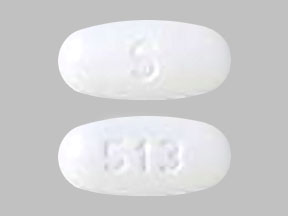
Telmisartan (Monograph)
Brand name: Micardis
Drug class: Angiotensin II Receptor Antagonists
VA class: CV805
Chemical name: 4′-[1(1,4′-Dimethyl-2′-propyl[2,6′-bi-1H-benzimidazol]-1′-yl)methyl]-[1,1′-biphenyl]-2-carboxylic acid
Molecular formula: C33H30N4O2
CAS number: 144701-48-4
Warning
-
May cause fetal and neonatal morbidity and mortality if used during pregnancy. (See Fetal/Neonatal Morbidity and Mortality under Cautions.)
-
If pregnancy is detected, discontinue as soon as possible.
Introduction
Angiotensin II receptor (AT1) antagonist (i.e., angiotensin II receptor blocker [ARB]).
Uses for Telmisartan
Hypertension
Management of hypertension (alone or in combination with other classes of antihypertensive agents); may be used in fixed combination with amlodipine or hydrochlorothiazide when such combined therapy is indicated.
Angiotensin II receptor antagonists are recommended as one of several preferred agents for the initial management of hypertension according to current evidence-based hypertension guidelines; other preferred options include ACE inhibitors, calcium-channel blockers, and thiazide diuretics. While there may be individual differences with respect to recommendations for initial drug selection and use in specific patient populations, current evidence indicates that these antihypertensive drug classes all generally produce comparable effects on overall mortality and cardiovascular, cerebrovascular, and renal outcomes.
Individualize choice of therapy; consider patient characteristics (e.g., age, ethnicity/race, comorbidities, cardiovascular risk) as well as drug-related factors (e.g., ease of administration, availability, adverse effects, cost).
A 2017 ACC/AHA multidisciplinary hypertension guideline classifies BP in adults into 4 categories: normal, elevated, stage 1 hypertension, and stage 2 hypertension. (See Table 1.)
Source: Whelton PK, Carey RM, Aronow WS et al. 2017 ACC/AHA/AAPA/ABC/ACPM/AGS/APhA/ASH/ASPC/NMA/PCNA guideline for the prevention, detection, evaluation, and management of high blood pressure in adults: a report of the American College of Cardiology/American Heart Association Task Force on Clinical Practice Guidelines. Hypertension. 2018;71:e13-115.
Individuals with SBP and DBP in 2 different categories (e.g., elevated SBP and normal DBP) should be designated as being in the higher BP category (i.e., elevated BP).
|
Category |
SBP (mm Hg) |
DBP (mm Hg) |
|
|---|---|---|---|
|
Normal |
<120 |
and |
<80 |
|
Elevated |
120–129 |
and |
<80 |
|
Hypertension, Stage 1 |
130–139 |
or |
80–89 |
|
Hypertension, Stage 2 |
≥140 |
or |
≥90 |
The goal of hypertension management and prevention is to achieve and maintain optimal control of BP. However, the BP thresholds used to define hypertension, the optimum BP threshold at which to initiate antihypertensive drug therapy, and the ideal target BP values remain controversial.
The 2017 ACC/AHA hypertension guideline generally recommends a target BP goal (i.e., BP to achieve with drug therapy and/or nonpharmacologic intervention) of <130/80 mm Hg in all adults regardless of comorbidities or level of atherosclerotic cardiovascular disease (ASCVD) risk. In addition, an SBP goal of <130 mm Hg is recommended for noninstitutionalized ambulatory patients ≥65 years of age with an average SBP of ≥130 mm Hg. These BP goals are based upon clinical studies demonstrating continuing reduction of cardiovascular risk at progressively lower levels of SBP.
Other hypertension guidelines generally have based target BP goals on age and comorbidities. Guidelines such as those issued by the JNC 8 expert panel generally have targeted a BP goal of <140/90 mm Hg regardless of cardiovascular risk and have used higher BP thresholds and target BPs in elderly patients compared with those recommended by the 2017 ACC/AHA hypertension guideline.
Some clinicians continue to support previous target BPs recommended by JNC 8 due to concerns about the lack of generalizability of data from some clinical trials (e.g., SPRINT study) used to support the 2017 ACC/AHA hypertension guideline and potential harms (e.g., adverse drug effects, costs of therapy) versus benefits of BP lowering in patients at lower risk of cardiovascular disease.
Consider potential benefits of hypertension management and drug cost, adverse effects, and risks associated with the use of multiple antihypertensive drugs when deciding a patient's BP treatment goal.
For decisions regarding when to initiate drug therapy (BP threshold), the 2017 ACC/AHA hypertension guideline incorporates underlying cardiovascular risk factors. ASCVD risk assessment recommended by ACC/AHA for all adults with hypertension.
ACC/AHA currently recommend initiation of antihypertensive drug therapy in addition to lifestyle/behavioral modifications at an SBP ≥140 mm Hg or DBP ≥90 mm Hg in adults who have no history of cardiovascular disease (i.e., primary prevention) and a low ASCVD risk (10-year risk <10%).
For secondary prevention in adults with known cardiovascular disease or for primary prevention in those at higher risk for ASCVD (10-year risk ≥10%), ACC/AHA recommend initiation of antihypertensive drug therapy at an average SBP ≥130 mm Hg or an average DBP ≥80 mm Hg.
Adults with hypertension and diabetes mellitus, chronic kidney disease (CKD), or age ≥65 years are assumed to be at high risk for cardiovascular disease; ACC/AHA state that such patients should have antihypertensive drug therapy initiated at a BP ≥130/80 mm Hg. Individualize drug therapy in patients with hypertension and underlying cardiovascular and other risk factors.
In stage 1 hypertension, experts state that it is reasonable to initiate drug therapy using the stepped-care approach in which one drug is initiated and titrated and other drugs are added sequentially to achieve the target BP. Initiation of antihypertensive therapy with 2 first-line agents from different pharmacologic classes recommended in adults with stage 2 hypertension and average BP >20/10 mm Hg above BP goal.
Black hypertensive patients generally tend to respond better to monotherapy with calcium-channel blockers or thiazide diuretics than to angiotensin II receptor antagonists. However, the combination of an ACE inhibitor or an angiotensin II receptor antagonist with a calcium channel blocker or thiazide diuretic produces similar BP lowering in black patients as in other racial groups.
Angiotensin II receptor antagonists or ACE inhibitors may be particularly useful in hypertensive patients with diabetes mellitus or CKD; angiotensin II receptor antagonists also may be preferred, as an alternative to ACE inhibitors, in hypertensive patients with heart failure or ischemic heart disease and/or post-MI.
Diabetic Nephropathy
A recommended agent in the management of patients with diabetes mellitus and persistent albuminuria† [off-label] who have modestly elevated (30–300 mg/24 hours) or higher (>300 mg/24 hours) levels of urinary albumin excretion; slows rate of progression of renal disease in such patients.
Heart Failure
Angiotensin II receptor antagonists have been used in the management of heart failure† [off-label].
Because of their established benefits, ACE inhibitors have been the preferred drugs for inhibition of the renin-angiotensin-aldosterone (RAA) system in patients with heart failure and reduced left ventricular ejection fraction (LVEF); however, some evidence indicates that therapy with an ACE inhibitor (enalapril) may be less effective than angiotensin receptor-neprilysin inhibitor (ARNI) therapy (e.g., sacubitril/valsartan) in reducing cardiovascular death and heart failure-related hospitalization.
Angiotensin II receptor antagonists may be used as an alternative for those patients in whom an ACE inhibitor or ARNI is inappropriate.
No additional therapeutic benefit when angiotensin II receptor antagonist used in combination with an ACE inhibitor.
ACCF, AHA, and the Heart Failure Society of America (HFSA) recommend that patients with chronic symptomatic heart failure and reduced LVEF (NYHA class II or III) who are able to tolerate an ACE inhibitor or angiotensin II receptor antagonist be switched to therapy containing an ARNI to further reduce morbidity and mortality.
Telmisartan Dosage and Administration
General
BP Monitoring and Treatment Goals
-
Monitor BP regularly (i.e., monthly) during therapy and adjust dosage of the antihypertensive drug until BP controlled.
-
If unacceptable adverse effects occur, discontinue drug and initiate another antihypertensive agent from a different pharmacologic class.
-
If adequate BP response not achieved with a single antihypertensive agent, either increase dosage of single drug or add a second drug with demonstrated benefit and preferably a complementary mechanism of action (e.g., calcium-channel blocker, thiazide diuretic). Many patients will require ≥2 drugs from different pharmacologic classes to achieve BP goal; if goal BP still not achieved, add a third drug.
Administration
Oral Administration
Administer orally once daily without regard to meals.
Dosage
Adults
Hypertension
Telmisartan Therapy
OralInitially, 40 mg once daily in adults without intravascular volume depletion.
Usual dosage: 20–80 mg once daily; no additional therapeutic benefit with higher dosages.
Telmisartan/Amlodipine Fixed-combination Therapy
OralFixed-combination telmisartan/amlodipine tablets may be used for initial treatment of hypertension in patients likely to require combination therapy with multiple antihypertensive agents to control BP. Consider potential benefits and risks of initiating therapy with the fixed combination, including whether the patient is likely to tolerate the lowest available dosage of the combined drugs.
If the patient’s baseline BP is 160/110 mm Hg, the estimated probability of achieving SBP control (SBP <140 mm Hg) is 46, 69, or 79% and of achieving DBP control (DBP <90 mm Hg) is 26, 22, or 55% with telmisartan (80 mg daily) alone, amlodipine (10 mg daily) alone, or telmisartan combined with amlodipine (same dosages), respectively.
If BP is not adequately controlled by monotherapy with telmisartan (or another angiotensin II receptor antagonist) or amlodipine (or another dihydropyridine-derivative calcium-channel blocker), can switch to telmisartan/amlodipine fixed combination.
If dose-limiting adverse effects (e.g., edema) have developed during monotherapy with amlodipine 10 mg, can switch to the fixed-combination preparation containing telmisartan 40 mg and amlodipine 5 mg to achieve similar BP control; adjust dosage according to patient’s response after ≥2 weeks of therapy.
Can use the fixed combination as a substitute for the individually administered drugs. Can switch to the fixed-combination preparation containing the corresponding individual doses of telmisartan and amlodipine; alternatively, can increase the dosage of one or both components for additional antihypertensive effects.
When used for initial therapy of hypertension in patients likely to require combination therapy with multiple antihypertensive agents, usual initial dosage is telmisartan 40 mg and amlodipine 5 mg once daily; initial dosage of telmisartan 80 mg and amlodipine 5 mg once daily may be used in patients requiring larger BP reductions.
Increase dosage to maximum of telmisartan 80 mg and amlodipine 10 mg once daily, if needed, to control BP. May adjust dosage at intervals of ≥2 weeks, since most of the antihypertensive effect of a given dosage is achieved within 2 weeks after a change in dosage.
Telmisartan/Hydrochlorothiazide Fixed-combination Therapy
OralManufacturers state fixed-combination preparation should not be used for initial antihypertensive therapy.
If BP is not adequately controlled by monotherapy with telmisartan 80 mg daily, can switch to fixed-combination tablets (telmisartan 80 mg and hydrochlorothiazide 12.5 mg; then telmisartan 160 mg and hydrochlorothiazide 25 mg), administered once daily.
If BP is not adequately controlled by monotherapy with hydrochlorothiazide 25 mg or if BP is controlled but hypokalemia is problematic at this dosage, can use fixed-combination tablets containing telmisartan 80 mg and hydrochlorothiazide 12.5 mg, administered once daily. Can increase dosage to telmisartan 160 mg and hydrochlorothiazide 25 mg, if needed, to control BP.
Special Populations
Hepatic Impairment
Telmisartan: Initiate therapy under close medical supervision in patients with obstructive biliary disease or hepatic impairment.
Telmisartan/hydrochlorothiazide fixed combination: In patients with obstructive biliary disease or hepatic impairment, recommended initial dosage is telmisartan 40 mg and hydrochlorothiazide 12.5 mg daily. Use not recommended in those with severe hepatic impairment.
Telmisartan/amlodipine fixed combination: Amount of amlodipine exceeds recommended initial amlodipine dosage (2.5 mg daily) for patients with hepatic impairment.
Renal Impairment
Telmisartan: No initial dosage adjustments necessary in patients with Clcr >30 mL/minute. Manufacturers make no specific recommendations regarding telmisartan monotherapy in those with Clcr ≤30 mL/minute.
Telmisartan/hydrochlorothiazide fixed combination: Use not recommended in patients with Clcr <30 mL/minute.
Telmisartan/amlodipine fixed combination: Slowly titrate dosage in patients with severe renal impairment.
Geriatric Patients
Telmisartan: No initial dosage adjustments necessary.
Telmisartan/amlodipine fixed combination: Amount of amlodipine exceeds recommended initial amlodipine dosage (2.5 mg daily) for geriatric patients ≥75 years of age.
Volume- and/or Salt-Depleted Patients
Correct volume and/or salt depletion prior to initiation of therapy or initiate therapy under close medical supervision using lower initial dosage.
Cautions for Telmisartan
Contraindications
-
Known hypersensitivity (e.g., anaphylaxis or angioedema) to telmisartan or any ingredient in the formulation.
-
Concomitant use of telmisartan and aliskiren in patients with diabetes mellitus. (See Specific Drugs under Interactions.)
Warnings/Precautions
Warnings
Fetal/Neonatal Morbidity and Mortality
Possible fetal and neonatal morbidity and mortality when used during pregnancy. (See Boxed Warning.) Such potential risks occur throughout pregnancy, especially during the second and third trimesters.
Also may increase the risk of major congenital malformations when administered during the first trimester of pregnancy.
Discontinue as soon as possible when pregnancy is detected, unless continued use is considered lifesaving. Nearly all women can be transferred successfully to alternative therapy for the remainder of their pregnancy.
Sensitivity Reactions
Anaphylactoid reactions and/or angioedema possible; not recommended in patients with a history of angioedema associated with or unrelated to ACE inhibitor or angiotensin II receptor antagonist therapy.
Other Warnings and Precautions
Hypotension
Possible symptomatic hypotension, particularly in volume- and/or salt-depleted patients (e.g., those treated with diuretics or undergoing dialysis). (See Volume- and/or Salt-Depleted Patients under Dosage and Administration.)
Transient hypotension is not a contraindication to additional doses; may reinstate therapy cautiously after BP is stabilized (e.g., with volume expansion).
Malignancies
In July 2010, FDA initiated a safety review of angiotensin II receptor antagonists after a published meta-analysis found a modest but statistically significant increase in risk of new cancer occurrence in patients receiving an angiotensin II receptor antagonist compared with control. However, subsequent studies, including a larger meta-analysis conducted by FDA, have not shown such risk. Based on currently available data, FDA has concluded that angiotensin II receptor antagonists do not increase the risk of cancer.
Renal Effects
Possible oliguria, progressive azotemia and, rarely, acute renal failure and/or death in patients with severe heart failure.
Increases in BUN and Scr possible in patients with unilateral or bilateral renal artery stenosis.
Use of Fixed Combinations
When used in fixed combination with amlodipine or hydrochlorothiazide, consider the cautions, precautions, and contraindications associated with the concomitant agent.
Specific Populations
Pregnancy
Category D.
Can cause fetal and neonatal morbidity and death when administered to a pregnant woman. (See Boxed Warning.)
Lactation
Distributed into milk in rats; not known whether distributed into human milk. Discontinue nursing or the drug.
Pediatric Use
Safety and efficacy not established in children <18 years of age.
Geriatric Use
No substantial differences in safety or efficacy relative to younger adults, but increased sensitivity cannot be ruled out.
Hepatic Impairment
Plasma telmisartan concentrations may be increased in patients with obstructive biliary disease or hepatic impairment. (See Special Populations under Absorption, in Pharmacokinetics.) Dosage adjustments may be necessary. (See Hepatic Impairment under Dosage and Administration.)
Use of telmisartan in fixed combination with hydrochlorothiazide is not recommended in patients with severe hepatic impairment.
Renal Impairment
Deterioration of renal function may occur. (See Renal Effects under Cautions.)
Use of telmisartan in fixed combination with hydrochlorothiazide is not recommended in patients with Clcr <30 mL/minute.
Black Patients
BP reduction may be smaller in black patients than in patients of other races. (See Hypertension under Uses.)
Common Adverse Effects
Upper respiratory tract infection, sinusitis, pharyngitis, back pain, diarrhea.
Drug Interactions
Not metabolized by CYP isoenzymes; has no effect on CYP isoenzymes except for some inhibition of CYP2C19 in vitro.
Specific Drugs
|
Drug |
Interaction |
Comment |
|---|---|---|
|
Acetaminophen |
Interactions unlikely |
|
|
ACE inhibitors |
Increased risk of renal impairment, hyperkalemia, and hypotension |
Generally avoid concomitant use; monitor BP, renal function, and electrolytes if used concomitantly |
|
Aliskiren |
Increased risk of renal impairment, hyperkalemia, and hypotension |
Generally avoid concomitant use; monitor BP, renal function, and electrolytes if used concomitantly Concomitant use contraindicated in patients with diabetes mellitus Avoid concomitant use in patients with GFR <60 mL/minute |
|
Amlodipine |
Interactions unlikely |
|
|
Angiotensin II receptor antagonists |
Increased risk of renal impairment, hyperkalemia, and hypotension |
Generally avoid concomitant use; monitor BP, renal function, and electrolytes if used concomitantly |
|
Digoxin |
Increased plasma digoxin concentrations |
Monitor serum digoxin concentrations when telmisartan therapy is initiated, adjusted, or discontinued in patients stabilized on digoxin |
|
Glyburide |
Interactions unlikely |
|
|
Hydrochlorothiazide |
Additive hypotensive effects |
|
|
Ibuprofen |
Interactions unlikely |
|
|
Simvastatin |
Interactions unlikely |
|
|
Warfarin |
Possible decreased plasma warfarin concentrations; INR not affected |
Telmisartan Pharmacokinetics
Absorption
Bioavailability
Absolute bioavailability is dose dependent: 42% at 40 mg, 58% at 160 mg.
Peak plasma concentration generally reached at 0.5–1 hour following oral administration.
Onset
Antihypertensive effect evident within 2 weeks, with maximum BP reduction after 4 weeks.
Food
Food slightly reduces bioavailability.
Special Populations
In patients with hepatic insufficiency, plasma telmisartan concentrations are increased and absolute bioavailability approaches 100%.
Distribution
Extent
Crosses the placenta and is distributed in the fetus in animals.
Distributed into milk in rats; not known whether distributed into human milk.
Plasma Protein Binding
>99.5% (principally albumin and α1-acid glycoprotein).
Elimination
Metabolism
Metabolized in liver (via conjugation) to inactive metabolite.
Not metabolized by CYP isoenzymes.
Elimination Route
Eliminated mainly (>97%) as unchanged drug in feces (via bile); small amounts (<1%) eliminated in urine.
Half-life
Biphasic; terminal half-life is approximately 24 hours.
Special Populations
Not removed from blood by hemofiltration.
Stability
Storage
Oral
Tablets
25°C (may be exposed to 15–30°C). Do not remove tablets from blisters until immediately before administration.
Actions
-
Blocks the physiologic actions of angiotensin II, including vasoconstrictor and aldosterone-secreting effects.
-
Does not interfere with response to bradykinins and substance P.
-
Does not share the ACE inhibitor common adverse effect of dry cough.
-
When telmisartan is used in fixed combination with amlodipine or hydrochlorothiazide, advise patients of important precautionary information about the concomitant agent.
-
Risks of use during pregnancy.
-
Importance of instructing patients not to remove tablets from the blister package until immediately before administration.
-
Importance of women informing their clinician if they are or plan to become pregnant or plan to breast-feed.
-
Importance of informing clinicians of existing or contemplated concomitant therapy, including prescription and OTC drugs.
-
Importance of informing patients of other important precautionary information. (See Cautions.)
Preparations
Excipients in commercially available drug preparations may have clinically important effects in some individuals; consult specific product labeling for details.
Please refer to the ASHP Drug Shortages Resource Center for information on shortages of one or more of these preparations.
* available from one or more manufacturer, distributor, and/or repackager by generic (nonproprietary) name
|
Routes |
Dosage Forms |
Strengths |
Brand Names |
Manufacturer |
|---|---|---|---|---|
|
Oral |
Tablets |
20 mg* |
Micardis |
Boehringer Ingelheim |
|
Telmisartan Tablets |
||||
|
40 mg* |
Micardis |
Boehringer Ingelheim |
||
|
Telmisartan Tablets |
||||
|
80 mg* |
Micardis |
Boehringer Ingelheim |
||
|
Telmisartan Tablets |
* available from one or more manufacturer, distributor, and/or repackager by generic (nonproprietary) name
|
Routes |
Dosage Forms |
Strengths |
Brand Names |
Manufacturer |
|---|---|---|---|---|
|
Oral |
Tablets |
40 mg with Hydrochlorothiazide 12.5 mg* |
Micardis HCT |
Boehringer Ingelheim |
|
Telmisartan and Hydrochlorothiazide Tablets |
||||
|
80 mg with Hydrochlorothiazide 12.5 mg* |
Micardis HCT |
Boehringer Ingelheim |
||
|
Telmisartan and Hydrochlorothiazide Tablets |
||||
|
80 mg with Hydrochlorothiazide 25 mg* |
Micardis HCT |
Boehringer Ingelheim |
||
|
Telmisartan and Hydrochlorothiazide Tablets |
||||
|
Tablets, multilayer |
40 mg with Amlodipine Besylate 5 mg (of amlodipine)* |
Telmisartan and Amlodipine Besylate Tablets |
||
|
Twynsta |
Boehringer Ingelheim |
|||
|
40 mg with Amlodipine Besylate 10 mg (of amlodipine)* |
Telmisartan and Amlodipine Besylate Tablets |
|||
|
Twynsta |
Boehringer Ingelheim |
|||
|
80 mg with Amlodipine Besylate 5 mg (of amlodipine)* |
Telmisartan and Amlodipine Besylate Tablets |
|||
|
Twynsta |
Boehringer Ingelheim |
|||
|
80 mg with Amlodipine Besylate 10 mg (of amlodipine)* |
Telmisartan and Amlodipine Besylate Tablets |
|||
|
Twynsta |
Boehringer Ingelheim |
AHFS DI Essentials™. © Copyright 2025, Selected Revisions February 18, 2019. American Society of Health-System Pharmacists, Inc., 4500 East-West Highway, Suite 900, Bethesda, Maryland 20814.
† Off-label: Use is not currently included in the labeling approved by the US Food and Drug Administration.
Reload page with references included
Related/similar drugs
More about telmisartan
- Check interactions
- Compare alternatives
- Pricing & coupons
- Reviews (92)
- Drug images
- Latest FDA alerts (2)
- Side effects
- Dosage information
- During pregnancy
- Drug class: angiotensin receptor blockers
- Breastfeeding
- En español