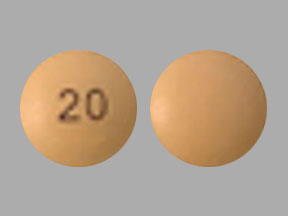
RABEprazole (Monograph)
Brand name: AcipHex
Drug class: Proton-pump Inhibitors
Introduction
Acid- or proton-pump inhibitor; gastric antisecretory agent.
Uses for RABEprazole
Gastroesophageal Reflux (GERD)
Short-term treatment of symptomatic GERD (e.g., heartburn) in patients without erosive esophagitis.
Short-term treatment of erosive esophagitis in patients with GERD.
Maintain healing and decrease recurrence of erosive esophagitis.
Duodenal Ulcer
Short-term treatment of active duodenal ulcer.
Treatment of Helicobacter pylori infection and duodenal ulcer disease. Used in conjunction with amoxicillin and clarithromycin (triple therapy).
Pathologic GI Hypersecretory Conditions
Long-term treatment of pathologic GI hypersecretory conditions (e.g., Zollinger-Ellison syndrome).
Crohn’s Disease-associated Ulcers
Some evidence for use of proton-pump inhibitors (e.g., omeprazole) for gastric acid suppressive therapy as an adjunct in the management of upper GI Crohn’s disease† [off-label], including esophageal† [off-label], gastroduodenal† [off-label], and jejunoileal† [off-label] disease.
RABEprazole Dosage and Administration
General
Dispensing and Administration Precautions
-
The Institute for Safe Medication Practices (ISMP) includes RABEprazole and ARIPiprazole on their ISMP List of Confused Drug Names, and recommends using special safeguards to ensure the accuracy of prescriptions for these drugs.
-
The 2023 American Geriatrics Society (AGS) Beers Criteria for Potentially Inappropriate Medication (PIM) Use in Older Adults includes rabeprazole on the list of PIMs that are best avoided by older adults in most circumstances or under specific situations, such as certain diseases, conditions, or care settings. The criteria are intended to apply to adults 65 years of age and older in all ambulatory, acute, and institutional settings of care, except hospice and end-of-life care settings. For proton-pump inhibitors including rabeprazole, the Beers Criteria Expert Panel recommends that scheduled use for more than 8 weeks generally be avoided with certain exceptions.
Administration
Oral Administration
Administer orally; may give without regard to meals, but manufacturer recommends administration after morning meal in patients with duodenal ulcer.
When used in combination with clarithromycin and amoxicillin for treatment of H. pylori infection and duodenal ulcer disease, take all 3 drugs twice daily with morning and evening meals.
Swallow tablets intact; do not chew, crush, or split.
Antacids may be used concomitantly as needed for pain relief.
Dosage
Available as rabeprazole sodium; dosage expressed in terms of the salt.
Pediatric Patients
GERD
Symptomatic GERD
OralAdolescents ≥12 years of age: 20 mg once daily for up to 8 weeks.
Adults
GERD
GERD without Erosive Esophagitis
Oral20 mg once daily for 4 weeks; may give additional 4 weeks if symptoms are not completely resolved.
Treatment of Erosive Esophagitis
Oral20 mg once daily for 4–8 weeks. If not healed after 8 weeks, consider additional 8 weeks of therapy (up to 16 weeks for a single course).
Maintenance of Healing of Erosive Esophagitis
Oral20 mg once daily. Chronic, lifelong therapy may be appropriate.
Duodenal Ulcer
Treatment of Active Duodenal Ulcer
Oral20 mg once daily for up to 4 weeks; some patients may require additional therapy.
Helicobacter pylori Infection and Duodenal Ulcer Disease
OralTriple therapy: 20 mg twice daily for 7 days in conjunction with amoxicillin and clarithromycin.
Pathologic GI Hypersecretory Conditions (e.g., Zollinger-Ellison Syndrome)
Oral
60 mg once daily. Dosages up to 100 mg once daily or 60 mg twice daily have been used. Divided doses may be required. Adjust dosage as needed, continue treatment as long as necessary. Has been used continuously for up to 1 year.
Cautions for RABEprazole
Contraindications
-
Known hypersensitivity to rabeprazole, any ingredient in the formulation, or other substituted benzimidazoles (e.g., esomeprazole, lansoprazole, pantoprazole, omeprazole).
Warnings/Precautions
Gastric Malignancy
Response to rabeprazole does not preclude presence of occult gastric neoplasm.
Clostridium difficile Infection
Proton-pump inhibitors associated with possible increased (1.4–2.75 times) risk of Clostridium difficile infection, including C. difficile-associated diarrhea and colitis (CDAD; also known as antibiotic-associated diarrhea and colitis or pseudomembranous colitis). Many patients also had other risk factors for CDAD. May be severe; colectomy and, rarely, death reported.
Use the lowest effective dosage and shortest duration of therapy appropriate for the patient's clinical condition.
Consider CDAD if persistent diarrhea develops and manage accordingly; initiate supportive therapy (e.g., fluid and electrolyte management), anti-infective therapy directed against C. difficile (e.g., metronidazole, vancomycin), and surgical evaluation as clinically indicated.
Respiratory Effects
Administration of proton-pump inhibitors has been associated with an increased risk for developing certain infections (e.g., community-acquired pneumonia).
Bone Fracture
Several observational studies suggest that use of proton-pump inhibitors, particularly in high dosages (i.e., multiple daily doses) and/or for prolonged periods of time (i.e., ≥1 year), may be associated with increased risk of osteoporosis-related fractures of the hip, wrist, or spine. Magnitude of risk is unclear; causality not established. FDA is continuing to evaluate this safety concern.
Use the lowest effective dosage and shortest duration of therapy appropriate for the patient’s clinical condition.
Individuals at risk for osteoporosis-related fractures should receive an adequate intake of calcium and vitamin D; assess and manage these patients’ bone health according to current standards of care.
Hypomagnesemia
Hypomagnesemia, symptomatic and asymptomatic, reported rarely in patients receiving long-term therapy (≥3 months or, in most cases, >1 year) with proton-pump inhibitors, including rabeprazole. Serious adverse effects include tetany, seizures, tremors, carpopedal spasm, arrhythmias (e.g., atrial fibrillation, supraventricular tachycardia), and abnormal QT interval. Paresthesia, muscle weakness, muscle cramps, lethargy, fatigue, and unsteadiness may occur. Most patients required magnesium replacement and discontinuance of the proton-pump inhibitor. Hypomagnesemia resolved within 1 week (median) following discontinuance and recurred within 2 weeks (median) of rechallenge.
In patients expected to receive long-term proton-pump inhibitor therapy or in patients currently receiving digoxin or drugs that may cause hypomagnesemia (e.g., diuretics), consider measuring serum magnesium concentrations prior to initiation of prescription proton-pump inhibitor therapy and periodically thereafter.
Specific Populations
Pregnancy
Category B.
Lactation
Not known whether rabeprazole is distributed into milk; discontinue nursing or the drug.
Pediatric Use
Safety and efficacy for short-term treatment of symptomatic GERD established in adolescents 12–16 years of age. Pharmacokinetic and adverse effect profiles similar to those in adults.
Safety and efficacy not established in children <12 years of age.
Geriatric Use
No substantial differences in safety or efficacy relative to younger adults, but increased sensitivity cannot be ruled out.
Hepatic Impairment
Use with caution in patients with severe impairment.
Common Adverse Effects
Pain, pharyngitis, flatulence, infection, constipation.
Drug Interactions
Metabolized in the liver, principally by CYP3A and 2C19 isoenzymes.
Drugs Metabolized by Cytochrome P-450 Enzymes
No clinically important interactions with some drugs that are metabolized by CYP isoenzymes under single dose conditions; effects of rabeprazole have not been studied under steady-state conditions.
Drugs that Cause Hypomagnesemia
Potential pharmacologic interaction (possible increased risk of hypomagnesemia). Consider monitoring magnesium concentrations prior to initiation of prescription proton-pump inhibitor therapy and periodically thereafter. (See Hypomagnesemia under Cautions.)
Specific Drugs
|
Drug |
Interaction |
Comments |
|---|---|---|
|
Amoxicillin |
Increased rabeprazole and 14-hydroxyclarithromycin AUC and plasma concentrations when administered with amoxicillin and clarithromycin |
Not expected to result in toxicity |
|
Antacids |
No clinically important effects on rabeprazole pharmacokinetics |
|
|
Atazanavir |
Possible altered oral absorption of atazanavir, resulting in decreased plasma atazanavir concentrations; possible loss of virologic response |
Manufacturer of rabeprazole states that concomitant administration with atazanavir is not recommended Antiretroviral treatment-naive patients: If a proton-pump inhibitor is used concomitantly with atazanavir, administer ritonavir-boosted atazanavir (atazanavir 300 mg and ritonavir 100 mg once daily with food); administer the proton-pump inhibitor approximately 12 hours before ritonavir-boosted atazanavir For treatment-naive patients, dosage of proton-pump inhibitor should not exceed omeprazole 20 mg daily (or equivalent) Antiretroviral treatment-experienced patients: Concomitant use of proton-pump inhibitors with atazanavir not recommended |
|
Clarithromycin |
Increased rabeprazole and 14-hydroxyclarithromycin AUC and plasma concentrations when administered with amoxicillin and clarithromycin |
Not expected to result in toxicity |
|
Clopidogrel |
Certain CYP2C19 inhibitors (e.g., omeprazole, esomeprazole) reduce exposure to clopidogrel’s active metabolite and decrease platelet inhibitory effect; potentially may reduce clopidogrel’s clinical efficacy Dexlansoprazole, lansoprazole, or pantoprazole had less effect on clopidogrel's antiplatelet activity than did omeprazole or esomeprazole |
Assess risks and benefits of concomitant proton-pump inhibitor and clopidogrel use in individual patients American College of Cardiology Foundation/American College of Gastroenterology/American Heart Association (ACCF/ACG/AHA) states that GI bleeding risk reduction with concomitant proton-pump inhibitor in patients with risk factors for GI bleeding (e.g., advanced age; concomitant use of warfarin, corticosteroids, or NSAIAs; H. pylori infection) may outweigh potential reduction in cardiovascular efficacy of antiplatelet treatment associated with a drug-drug interaction. In patients without such risk factors, ACCF/ACG/AHA states that risk/benefit balance may favor use of antiplatelet therapy without a proton-pump inhibitor. If concomitant therapy with a proton-pump inhibitor and clopidogrel is deemed necessary, consider using an agent with little or no CYP2C19-inhibitory activity; alternatively, consider using a histamine H2-receptor antagonist (ranitidine, famotidine, nizatidine) but not cimetidine (also a potent CYP2C19 inhibitor) |
|
Cyclosporine |
Rabeprazole inhibited cyclosporine metabolism in vitro |
|
|
Diazepam |
No pharmacokinetic interaction observed after single doses |
|
|
Digoxin |
Hypomagnesemia (e.g., resulting from long-term use of proton-pump inhibitors) sensitizes the myocardium to digoxin and, thus, may increase risk of digoxin-induced cardiotoxic effects See table entry for gastric pH-dependent drugs |
Consider monitoring magnesium concentrations prior to initiation of prescription proton-pump inhibitor therapy and periodically thereafter |
|
Diuretics (i.e., loop or thiazide diuretics) |
Possible increased risk of hypomagnesemia |
Consider monitoring magnesium concentrations prior to initiation of prescription proton-pump inhibitor therapy and periodically thereafter |
|
Fosamprenavir |
Use of esomeprazole with fosamprenavir (with or without ritonavir) did not substantially affect concentrations of amprenavir (active metabolite of fosamprenavir) |
No dosage adjustment required when proton-pump inhibitors used with fosamprenavir (with or without ritonavir) |
|
Gastric pH-dependent drugs (e.g., digoxin, ketoconazole) |
Rabeprazole may alter drug absorption |
Monitor if used concomitantly |
|
Lopinavir |
Lopinavir/ritonavir: Omeprazole had no clinically important effect on plasma concentrations or AUC of lopinavir |
No dosage adjustment required when proton-pump inhibitors used with lopinavir/ritonavir |
|
Methotrexate (high-dose) |
Possible delayed clearance and increased serum concentrations of methotrexate and/or its metabolite hydroxymethotrexate; possible methotrexate toxicity Reported mainly with high-dose methotrexate (300 mg/m2 to 12 g/m2), but also reported with low dosages (e.g., 15 mg per week) |
Manufacturer of rabeprazole recommends considering temporary discontinuance of proton-pump inhibitor therapy in some patients receiving high-dose methotrexate Some clinicians recommend withholding the proton-pump inhibitor for several days before and after administration of either high-dose or low-dose methotrexate or, alternatively, substituting a histamine H2-receptor antagonist for the proton-pump inhibitor |
|
Phenytoin |
No pharmacokinetic interaction observed after single doses |
|
|
Raltegravir |
Omeprazole increased peak plasma concentration and AUC of raltegravir |
No dosage adjustment recommended when proton-pump inhibitors used with raltegravir |
|
Rilpivirine |
Omeprazole decreased plasma concentrations and AUC of rilpivirine |
Concomitant use of rilpivirine and proton-pump inhibitors contraindicated |
|
Saquinavir |
Ritonavir-boosted saquinavir: Omeprazole increased peak plasma concentration and AUC of saquinavir |
Caution advised if proton-pump inhibitor used with ritonavir-boosted saquinavir; monitor for saquinavir toxicity |
|
Sucralfate |
Possible delayed proton-pump inhibitor absorption and decreased bioavailability |
Administer proton-pump inhibitor at least 30 minutes before sucralfate |
|
Theophylline |
No pharmacokinetic interaction observed after single doses |
|
|
Warfarin |
Potential for increased INR and PT |
Monitor PT and INR |
RABEprazole Pharmacokinetics
Absorption
Bioavailability
Absolute bioavailability with 20 mg dose is about 52%. Repeated dosing does not affect pharmacokinetics.
Onset
Within 1 hour. Median inhibition of 24-hour gastric acidity is 88% of maximum after first dose.
Food
High-fat meal may delay absorption but does not affect extent.
Special Populations
AUC increased 50–60% in Japanese males receiving a different rabeprazole formulation.
AUC doubled in patients with mild to moderate compensated cirrhosis. Peak plasma concentrations and AUCs increased 20% in patients with mild to moderate hepatic impairment.
In geriatric patients, peak plasma concentration increased by 60% and AUCs doubled.
Distribution
Extent
Not known whether rabeprazole crosses the placenta or is distributed into milk.
Prolonged binding to gastric parietal proton pump enzyme.
Plasma Protein Binding
Approximately 96%.
Elimination
Metabolism
Metabolized in the liver, principally by CYP3A and CYP2C19. Principal thioether and sulphone metabolites found in plasma are inactive.
Elimination Route
Excreted as metabolites in urine (90%); remainder in feces.
Half-life
1–2 hours.
Special Populations
In patients with mild to moderate compensated cirrhosis, elimination half-life was 2–3 times greater, and clearance decreased to less than one-half.
In patients with poor CYP2C19 metabolizer phenotype, metabolism is slower than in those with extensive (or rapid) metabolizer phenotype.
Stability
Storage
Oral
Tablets
25°C (may be exposed to 15–30°C). Protect from moisture.
Actions
-
Inhibits basal and stimulated gastric acid secretion.
-
Concentrates in acid conditions of parietal cell secretory canaliculi; forms active sulfenamide metabolite that binds to and inactivates hydrogen-potassium ATPase (proton- or acid-pump), blocking final step in secretion of hydrochloric acid. Sustained inactivation of hydrogen-potassium ATPase results in prolonged duration of action.
-
Suppresses gastric H. pylori in patients with duodenal ulcer and/or reflux esophagitis infected with the organism. Combined therapy with rabeprazole and one or more appropriate anti-infectives (e.g., amoxicillin, clarithromycin) can effectively eradicate H. pylori gastric infection.
Advice to Patients
-
Importance of swallowing tablets whole, without crushing or chewing.
-
Importance of advising patients that use of multiple daily doses of the drug for an extended period of time may increase the risk of fractures of the hip, wrist, or spine.
-
Risk of hypomagnesemia; importance of immediately reporting and seeking care for any cardiovascular or neurologic manifestations (e.g., palpitations, dizziness, seizures, tetany).
-
Importance of informing clinicians of existing or contemplated concomitant therapy, including prescription and OTC drugs. Antacids may be used concomitantly as needed for pain relief.
-
Possible increased risk of Clostridium difficile infection; importance of contacting clinician if persistent watery stools, abdominal pain, and fever occur.
-
Importance of women informing their clinicians if they are or plan to become pregnant or plan to breast-feed.
-
Importance of informing patients of other important precautionary information. (See Cautions.)
Additional Information
The American Society of Health-System Pharmacists, Inc. represents that the information provided in the accompanying monograph was formulated with a reasonable standard of care, and in conformity with professional standards in the field. Readers are advised that decisions regarding use of drugs are complex medical decisions requiring the independent, informed decision of an appropriate health care professional, and that the information contained in the monograph is provided for informational purposes only. The manufacturer’s labeling should be consulted for more detailed information. The American Society of Health-System Pharmacists, Inc. does not endorse or recommend the use of any drug. The information contained in the monograph is not a substitute for medical care.
Preparations
Excipients in commercially available drug preparations may have clinically important effects in some individuals; consult specific product labeling for details.
Please refer to the ASHP Drug Shortages Resource Center for information on shortages of one or more of these preparations.
|
Routes |
Dosage Forms |
Strengths |
Brand Names |
Manufacturer |
|---|---|---|---|---|
|
Oral |
Tablets, delayed-release (enteric-coated) |
20 mg |
AcipHex |
Eisai (also promoted by Janssen [formerly Ortho-McNeil-Janssen]) |
AHFS DI Essentials™. © Copyright 2025, Selected Revisions June 10, 2025. American Society of Health-System Pharmacists, Inc., 4500 East-West Highway, Suite 900, Bethesda, Maryland 20814.
† Off-label: Use is not currently included in the labeling approved by the US Food and Drug Administration.
Reload page with references included
Related/similar drugs
More about rabeprazole
- Check interactions
- Compare alternatives
- Pricing & coupons
- Reviews (85)
- Drug images
- Side effects
- Dosage information
- During pregnancy
- Drug class: proton pump inhibitors
- Breastfeeding
- En español