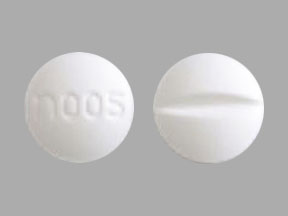
Oxybutynin (Monograph)
Brand names: Ditropan, Ditropan XL, Oxytrol
Drug class: Antimuscarinics
VA class: GU201
CAS number: 1508-65-2
Introduction
Genitourinary antispasmodic agent; a synthetic tertiary amine antimuscarinic agent.
Uses for Oxybutynin
Overactive Bladder
Relief of symptoms of bladder instability associated with voiding (i.e., urgency, frequency, urinary leakage, urge incontinence, dysuria) in adults and pediatric patients > 5 years of age with uninhibited neurogenic or reflex neurogenic bladder (conventional tablets or oral solution).
Treatment of overactive bladder with symptoms of urge urinary incontinence, urgency, and frequency (extended-release tablets or transdermal system).
Relief of symptoms of detrusor overactivity associated with a neurological condition (e.g., spina bifida) in pediatric patients ≥ 6 years of age (extended-release tablets).
Conventional tablets as effective as extended-release tablets.
Oxybutynin appears to be as effective as tolterodine (conventional tablets) in reducing urinary symptoms in patients with overactive bladder but is associated with a higher incidence of dry mouth.
Primary Nocturnal Enuresis† [off-label]
Has been used in children for the treatment of primary nocturnal enuresis† [off-label]; however one study has determined that oxybutynin is not effective for management of primary nocturnal enuresis† [off-label] in children with a history of nocturnal enuresis and normal bladders.
Oxybutynin Dosage and Administration
General
-
Discontinue therapy periodically to determine whether the patient can manage without the drug and to minimize any tendency for the patient to become resistant to the drug.
-
Adjust dosage according to individual requirements and response.
Administration
Administer orally or topically.
Oral Administration
Administer extended-release tablets without regard to meals.
Extended-release tablets should be swallowed intact with liquid, and should not be chewed, crushed, or broken.
Administer extended-release tablets at approximately the same time each day.
Topical Administration
After removal from protective pouch, apply transdermal system immediately to dry, intact skin on the abdomen, hip, or buttock.
A new application site should be selected with each new system; avoid reapplication to the same site within 7 days.
Used system should be discarded in a manner that prevents accidental application or ingestion by children, pets, or others.
Dosage
Conventional tablets, extended-release tablets, and oral solution available as oxybutynin chloride; dosage is expressed in terms of oxybutynin chloride.
Transdermal system available as oxybutynin; dosage is expressed in terms of oxybutynin.
Pediatric Patients
Overactive Bladder
Oral
Conventional tablets or oral solution: 5 mg twice daily for children ≥5 years of age.
Extended-release tablets: 5 mg once daily for children ≥6 years of age. Adjust dosage according to individual response and tolerance; increase dosage at 7-day intervals in increments of 5 mg up to maximum dosage of 20 mg once daily.
Adults
Overactive Bladder
Oral
Conventional tablets or oral solution: 5 mg 2–3 times daily.
Extended-release tablets: 5 or 10 mg once daily. Adjust daily dosage according to individual response and tolerance; increase dosage at 7-day intervals in increments of 5 mg up to maximum dosage of 30 mg once daily.
Topical
1 transdermal system (delivering 3.9 mg per day) twice weekly (every 3–4 days).
Prescribing Limits
Pediatric Patients
Overactive Bladder
Oral
Conventional tablets or oral solution: Maximum 5 mg 3 times daily.
Extended-release tablets: Maximum 20 mg once daily.
Adults
Overactive Bladder
Oral
Conventional tablets or oral solution: Maximum 5 mg 4 times daily.
Extended-release tablets: Maximum 30 mg once daily.
Special Populations
Geriatric Patients
A lower initial dosage (2.5 mg 2 or 3 times daily) of conventional tablets or oral solution is recommended for frail geriatric patients. (See Geriatric Use under Cautions.)
Cautions for Oxybutynin
Contraindications
- Conventional Tablets and Oral Solution
-
Patients with untreated angle-closure glaucoma or those with untreated narrow anterior chamber angles.
-
Obstructive uropathy.
-
Partial or complete obstruction of the GI tract, paralytic ileus, intestinal atony (in elderly or debilitated patients), megacolon, toxic megacolon complicating ulcerative colitis, or severe colitis.
-
Myasthenia gravis.
-
Unstable cardiovascular status in acute hemorrhage.
-
Known hypersensitivity to oxybutynin or any ingredient in the formulations.
- Extended-release Tablets and Transdermal System
-
Presence or risk of urinary retention.
-
Presence or risk of gastric retention and other severe decreased GI motility conditions.
-
Presence or risk of uncontrolled angle-closure glaucoma.
-
Known hypersensitivity to oxybutynin or any ingredient in the formulations.
Warnings/Precautions
Warnings
Risk of heat prostration (i.e., fever and heat stroke due to decreased sweating) when administered during hot weather.
Diarrhea may be a symptom of partial intestinal obstruction, especially in patients with ileostomies or colostomies; in this instance, treatment with oxybutynin would be inappropriate and possibly harmful.
General Precautions
Urinary Retention
Risk of urinary retention; use with caution in patients with clinically important bladder outflow obstruction.
GI Effects
Risk of gastric retention; use with caution in patients with GI obstructive disorders.
Risk of decreased GI motility; use with caution in patients with conditions such as ulcerative colitis or intestinal atony. Use in patients with ulcerative colitis may suppress intestinal motility, resulting in paralytic ileus and precipitating or exacerbating toxic megacolon.
Use with caution in patients who have gastroesophageal reflux (GERD) and/or in those who are concurrently receiving drugs that can cause or exacerbate esophagitis (e.g., bisphosphonates). (See Specific Drugs under Interactions.)
As with other nondeformable material, extended-release tablets should be used with caution in patients with preexisting severe GI narrowing (pathologic or iatrogenic) since obstruction may occur.
Myasthenia Gravis
Oxybutynin may increase risk of aggravating symptoms of myasthenia gravis. Use with caution in patients with myasthenia gravis.
Other Concomitant Diseases
Use with caution in patients with autonomic neuropathy. Use of oxybutynin may exacerbate manifestations of hyperthyroidism, CHD, CHF, cardiac arrhythmias, hiatal hernia, tachycardia, hypertension, and prostatic hypertrophy.
Specific Populations
Pregnancy
Category B.
Lactation
Not known whether distributed into milk. Caution if used in nursing women.
Pediatric Use
Safety and efficacy of conventional tablets and oral solution not established in children <5 years of age; use in these children not recommended.
Safety and efficacy of extended-release tablets not established in children <6 years of age. Use of this preparation not recommended in children who cannot swallow the tablet whole without chewing, dividing, or crushing.
Safety and efficacy of transdermal system not established in pediatric patients.
Geriatric Use
No substantial differences in safety and efficacy relative to younger adults, but increased sensitivity cannot be ruled out. Use with caution in frail geriatric patients.
Renal or Hepatic Impairment
Not studied in patients with renal or hepatic impairment; use with caution.
Common Adverse Effects
Conventional or extended-release tablets or oral solution: dry mouth, dizziness, constipation, somnolence, impaired urination, nausea, blurred vision, dyspepsia, asthenia, pain, abdominal pain, headache, rhinitis, dry eyes, diarrhea, increased post-void residual volume, urinary tract infection.
Transdermal system: application site reactions (e.g., pruritus, erythema, rash, vesicles, macules), dry mouth, constipation, diarrhea, abnormal vision, dysuria.
Drug Interactions
Metabolized principally by CYP3A4.
No formal drug interaction studies have been performed with transdermal system.
Drugs Affecting Hepatic Microsomal Enzymes
Inhibitors of CYP3A4: Potential pharmacokinetic interaction (increased oxybutynin concentrations).
Drugs Affected by GI Motility
Potential pharmacokinetic interaction (altered absorption because of decreased GI motility).
Specific Drugs
|
Drug |
Interaction |
Comment |
|---|---|---|
|
Antacids |
Concomitant administration of oxybutynin extended-release tablets with aluminum hydroxide, magnesium hydroxide, and simethicone did not substantially alter plasma concentrations of oxybutynin or desethyloxybutynin |
|
|
Anticholinergic Agents |
Possible increased frequency and/or severity of adverse anticholinergic effects (e.g., dry mouth, constipation, somnolence) |
|
|
Azole antifungals (itraconazole, ketoconazole, miconazole) |
Possible altered oxybutynin pharmacokinetics (e.g., increased oxybutynin concentrations) |
Use with caution |
|
Bisphosphonates |
Bisphosphonates may cause or exacerbate esophagitis |
Use with caution |
|
Macrolide antibiotics (erythromycin, clarithromycin) |
Possible altered oxybutynin pharmacokinetics (e.g., increased oxybutynin concentrations) |
Use with caution |
Oxybutynin Pharmacokinetics
Absorption
Bioavailability
Rapidly absorbed following oral administration (conventional tablets or oral solution); undergoes extensive first-pass metabolism. Absolute bioavailability of oxybutynin is approximately 6%.
Following oral administration of extended-release tablets, relative bioavailabilities of R- and S-oxybutynin are 156 and 187% respectively, compared with conventional oxybutynin formulations.
Absorption of oxybutynin is bioequivalent when the transdermal system is applied to the abdomen, buttocks, or hip.
Duration
Following oral administration (conventional tablets or oral solution), peak plasma concentrations are achieved within 1 hour.
Following oral administration of extended-release tablets, plasma oxybutynin concentrations increase gradually for 4–6 hours, peak within 12–13 hours, and are maintained for up to 24 hours. Steady-state concentrations are achieved by the third day. In pediatric patients 5–15 years of age, peak plasma concentrations are achieved within approximately 5 hours.
Following application of the transdermal system, oxybutynin plasma concentrations increase for approximately 24–48 hours, peak within 36–48 hours, and are maintained for up to 96 hours. Following multiple applications of the transdermal system, peak plasma concentrations are achieved within 10–28 hours. Steady-state concentrations are achieved with application of the second transdermal system.
Food
Food may delay absorption and increase bioavailability of oxybutynin oral solution by 25%. Food does not appear to affect absorption of extended-release tablets.
Distribution
Extent
Distributed in the brain, lungs, kidneys, and liver following oral administration in rats.
Not known whether oxybutynin is distributed into milk in humans.
Elimination
Metabolism
Metabolized to active (desethyloxybutynin) and inactive (phenylcyclohexylglycolic acid) metabolites principally via CYP3A4, which is found mainly in the liver and intestinal wall.
Elimination Route
Excreted principally in urine as metabolites; <0.1% excreted as unchanged drug and <0.1% excreted as desethyloxybutynin.
Half-life
Conventional tablets or oral solution: 2–3 hours
Extended-release tablets: 13.2 and 12.4 hours for the R- and S-isomers of oxybutynin, respectively.
Approximately 7–8 hours following removal of transdermal system.
Special Populations
Not studied in patients with renal or hepatic impairment.
Increased elimination half-life in frail geriatric patients.
Decreased metabolism in healthy Japanese individuals compared with Caucasians.
Stability
Storage
Oral
Conventional Tablets and Oral Solution
Tight, light resistant containers at 15–30°C .
Extended-release Tablets
25°C (may be exposed to 15–30°C). Protect from moisture and humidity.
Transdermal System
25°C (may be exposed to 15–30°C). Protect from moisture and humidity. Do not store outside sealed pouch.
Actions
-
Racemic mixture of R- and S-isomers. Antimuscarinic activity resides predominantly in the R-isomer. Free base (oxybutynin) pharmacologically equivalent to oxybutynin chloride.
-
Chemically and pharmacologically similar to some anticholinergic, antispasmodic, local anesthetic, and antihistaminic compounds.
-
Exerts a direct spasmolytic action and inhibits the muscarinic action of acetylcholine on smooth muscle.
-
Acts as a competitive antagonist of acetylcholine at postganglionic muscarinic receptors, resulting in relaxation of bladder smooth muscle. In patients with uninhibited neurogenic and reflex neurogenic bladders, oxybutynin diminishes the frequency of uninhibited contractions of the detrusor muscle and delays the initial desire to void, resulting in decreased urgency and the frequency of incontinent episodes and voluntary urination.
-
Does not appear to exhibit antinicotinic effects (i.e., block acetylcholine effects at skeletal myoneural junctions or at autonomic ganglia).
-
Risk of heat prostration (i.e., fever and heat stroke due to decreased sweating) when administered during hot weather.
-
Risk of blurred vision, drowsiness, or somnolence; importance of exercising caution when driving or operating machinery. Alcohol or other sedative drugs may enhance drowsiness caused by oxybutynin.
-
When dispensing extended-release tablets, advise patients not to become alarmed if they notice a tablet-like substance in their stools; this is normal since the tablet containing the drug is designed to remain intact and slowly release the drug from a nonabsorbable shell during passage through the GI tract.
-
When dispensing the transdermal system, provide patients with a copy of manufacturer’s patient information.
-
Importance of informing clinicians of existing or contemplated therapy, including prescription and OTC drugs and herbal supplements, as well as any concomitant illnesses (e.g., cardiovascular disease).
-
Importance of women informing their clinician if they are or plan to become pregnant or plan to breast-feed.
-
Importance of informing patients of other important precautionary information. (See Cautions.)
Preparations
Excipients in commercially available drug preparations may have clinically important effects in some individuals; consult specific product labeling for details.
Please refer to the ASHP Drug Shortages Resource Center for information on shortages of one or more of these preparations.
|
Routes |
Dosage Forms |
Strengths |
Brand Names |
Manufacturer |
|---|---|---|---|---|
|
Topical |
Transdermal System |
3.9 mg/day (36 mg/43 cm2) |
Oxytrol |
Watson |
* available from one or more manufacturer, distributor, and/or repackager by generic (nonproprietary) name
|
Routes |
Dosage Forms |
Strengths |
Brand Names |
Manufacturer |
|---|---|---|---|---|
|
Oral |
Solution |
5 mg/5 mL* |
Ditropan Syrup (with methylparaben) |
Ortho-McNeil |
|
Tablets |
5 mg* |
Ditropan (scored) |
Ortho-McNeil |
|
|
Tablets, extended-release |
5 mg |
Ditropan XL |
Ortho-McNeil |
|
|
10 mg |
Ditropan XL |
Ortho-McNeil |
||
|
15 mg |
Ditropan XL |
Ortho-McNeil |
AHFS DI Essentials™. © Copyright 2025, Selected Revisions August 1, 2005. American Society of Health-System Pharmacists, Inc., 4500 East-West Highway, Suite 900, Bethesda, Maryland 20814.
† Off-label: Use is not currently included in the labeling approved by the US Food and Drug Administration.
Reload page with references included
Related/similar drugs
More about oxybutynin
- Check interactions
- Compare alternatives
- Pricing & coupons
- Reviews (462)
- Drug images
- Side effects
- Dosage information
- Patient tips
- During pregnancy
- Support group
- Drug class: urinary antispasmodics
Patient resources
Professional resources
Other brands
Ditropan, Ditropan XL, Oxytrol, Gelnique