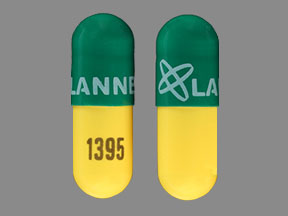
Loxapine (Monograph)
Brand name: Loxitane
Drug class: Dibenzoxapines
Warning
Risk Evaluation and Mitigation Strategy (REMS):
FDA approved a REMS for loxapine to ensure that the benefits outweigh the risks. The REMS may apply to one or more preparations of loxapine and consists of the following: elements to assure safe use and implementation system. See https://www.accessdata.fda.gov/scripts/cder/rems/.
Warning
- Increased Mortality in Geriatric Patients with Dementia-related Psychosis
-
Geriatric patients with dementia-related psychosis treated with antipsychotic agents are at an increased risk of death.
-
Analyses of 17 placebo-controlled trials in geriatric patients mainly receiving atypical antipsychotic agents revealed an approximate 1.6- to 1.7-fold increase in mortality compared with that in patients receiving placebo.
-
Most fatalities appeared to result from cardiovascular-related events (e.g., heart failure, sudden death) or infections (mostly pneumonia).
-
Observational studies suggest that conventional or first-generation antipsychotic agents also may increase mortality in such patients.
-
Antipsychotic agents, including loxapine, are not approved for the treatment of dementia-related psychosis.
Introduction
Tricyclic dibenzoxazepine-derivative, conventional (prototypical, first-generation) antipsychotic agent; structurally related to amoxapine, clozapine, and olanzapine.
Uses for Loxapine
Psychotic Disorders
Symptomatic management of psychotic disorders (i.e., schizophrenia).
Has been used in the management of refractory or treatment-resistant schizophrenia.
Loxapine Dosage and Administration
General
-
Adjust dosage carefully according to individual requirements and response; use the lowest possible effective dosage.
-
Periodically evaluate patients receiving long-term therapy to determine whether maintenance dosage can be decreased or drug therapy discontinued. (See Tardive Dyskinesia under Cautions.)
-
For symptomatic relief of psychotic disorders, initial therapeutic response to antipsychotic therapy usually occurs within 2–4 weeks and optimum therapeutic response occurs within 6 months or longer.
Administration
Oral Administration
Loxapine succinate is administered orally, usually in divided doses 2–4 times daily. Loxapine hydrochloride has been given orally and parenterally, but no longer is commercially available in the US.
Dosage
Available as loxapine succinate; dosage expressed in terms of loxapine.
Adults
Psychotic Disorders
Oral
Initially, 10 mg given twice daily.
In severely schizophrenic patients, an initial dosage of up to 50 mg daily may be preferable.
May increase dosage fairly rapidly during the first 7–10 days of therapy according to patient response and tolerance.
Usual maintenance dosage: 60–100 mg daily; some patients respond to a lower dosage and others require a higher dosage. For severely ill patients with chronic schizophrenia, some clinicians recommend maintenance dosages of 100–200 mg daily.
Prescribing Limits
Adults
Psychotic Disorders
Oral
Maximum 250 mg daily.
Special Populations
Geriatric Patients
No specific dosage recommendations for geriatric patients, but generally select dosage at the lower end of recommended range; increase dosage more gradually and monitor closely. (See Geriatric Use under Cautions.)
Cautions for Loxapine
Contraindications
-
Comatose or severe drug-induced (e.g., alcohol, barbiturates, narcotics) depressed states. (See Specific Drugs under Interactions.)
-
Known hypersensitivity to loxapine or other dibenzoxazepines (e.g., amoxapine).
Warnings/Precautions
Warnings
Shares the toxic potentials of other antipsychotic agents (e.g., phenothiazines); observe the usual precautions associated with therapy with these agents.
Increased Mortality in Geriatric Patients with Dementia-related Psychosis
Increased risk of death with use of either conventional (first-generation) or atypical (second-generation) antipsychotics in geriatric patients with dementia-related psychosis.
Antipsychotic agents, including loxapine, are not approved for the treatment of dementia-related psychosis. (See Increased Mortality in Geriatric Patients with Dementia-related Psychosis in Boxed Warning.)
Tardive Dyskinesia
Tardive dyskinesia, a syndrome of potentially irreversible, involuntary, dyskinetic movements, may develop in patients receiving antipsychotic agents, including loxapine. Consider reducing loxapine dosage or discontinuing drug and possibly switching to a second-generation (atypical) antipsychotic agent.
Neuroleptic Malignant Syndrome
Neuroleptic malignant syndrome (NMS), a potentially fatal syndrome requiring immediate discontinuance of the drug and intensive symptomatic treatment, has been reported with antipsychotic agents, including loxapine.
CNS Depression
May impair mental and/or physical abilities, especially during the first few days of therapy; use caution with activities requiring alertness (e.g., operating vehicles or machinery).
Response to CNS depressants and alcohol may be potentiated. (See Specific Drugs under Interactions.)
Possible Prescribing and Dispensing Errors
Ensure accuracy of prescription; similarity in spelling of Loxitane (loxapine succinate) and Soriatane (acitretin) and availability of same strengths and dosage forms may result in errors.
Sensitivity Reactions
Hypersensitivity and Cross-sensitivity
Possible sensitivity reactions (e.g., jaundice, hepatitis, blood dyscrasias, skin reactions [dermatitis, rashes, facial edema, pruritus]).
Possible cross-sensitivity with dibenzoxazepines (e.g., amoxapine). (See Contraindications.)
Photosensitivity
Consider that phototoxicity and/or photosensitivity reactions may occur with loxapine.
General Precautions
Seizures
Loxapine lowers seizure threshold; seizures reported even during maintenance of routine anticonvulsant therapy. Use with extreme caution in patients with a history of seizure disorders. (See Specific Drugs under Interactions.)
Extrapyramidal Effects
Extrapyramidal symptoms occur frequently and usually are reversible; persistent reactions usually can be controlled by concomitant therapy with an antiparkinsonian drug and subsequent dosage reduction.
Incidence of extrapyramidal symptoms may be greater with IM administration (IM dosage form of loxapine hydrochloride no longer commercially available in the US) than oral administration.
Cardiovascular Effects
Possible tachycardia and/or hypotension; use with caution in patients with cardiovascular disease.
If severe hypotension occurs, administer norepinephrine or phenylephrine; epinephrine or dopamine should not be used. (See Specific Drugs under Interactions.)
Prolactin Secretion
Elevated prolactin concentrations reported; elevation persists during chronic administration.
Clinical importance unknown; consider that approximately one-third of human breast cancers are prolactin dependent when prescribing loxapine in patients with previously detected breast cancer.
Galactorrhea, amenorrhea, gynecomastia, and impotence reported.
Anticholinergic Effects
Possible anticholinergic effects (e.g., dry mouth, blurred vision, mydriasis, constipation, urinary retention).
Use with caution in patients with glaucoma or a tendency toward urinary retention. (See Specific Drugs under Interactions.)
Ocular Effects
Pigmentary retinopathy and lenticular pigmentation reported with prolonged therapy with other antipsychotic agents; possibility of ocular toxicity with loxapine cannot be excluded. Periodic ophthalmologic examinations recommended in patients receiving prolonged loxapine therapy.
Other Precautions
Antiemetic effects may mask signs of overdosage of other drugs (e.g., antineoplastic agents) or obscure cause of vomiting in various disorders (e.g., intestinal obstruction, Reye’s syndrome, brain tumor).
Specific Populations
Pregnancy
Risk for extrapyramidal and/or withdrawal symptoms (e.g., agitation, hypertonia, hypotonia, tardive dyskinetic-like symptoms, tremor, somnolence, respiratory distress, feeding disorder) in neonates exposed to antipsychotic agents during the third trimester; monitor neonates exhibiting such symptoms. Symptoms were self-limiting in some neonates but varied in severity; some infants required intensive support and prolonged hospitalization.
Safe use of loxapine during pregnancy has not been established; avoid use in pregnant women or women who might become pregnant unless potential benefits outweigh the possible risk to the woman or fetus.
Lactation
Loxapine and its metabolites distributed into milk in dogs; not known whether distributed into human milk. Avoid loxapine in nursing women if clinically possible.
Pediatric Use
Safety and efficacy not established in pediatric patients.
Geriatric Use
Geriatric patients appear to be particularly sensitive to adverse CNS (e.g., tardive dyskinesia, parkinsonian manifestations, akathisia, sedation), anticholinergic, and cardiovascular (e.g., orthostatic hypotension) effects of antipsychotic agents. (See Geriatric Patients under Dosage and Administration.)
Geriatric patients with dementia-related psychosis treated with either conventional or atypical antipsychotic agents are at an increased risk of death. Loxapine is not approved for the treatment of patients with dementia-related psychosis. (See Boxed Warning.)
Common Adverse Effects
Extrapyramidal reactions (e.g., Parkinson-like symptoms, dystonia, akathisia, tardive dyskinesia), drowsiness or sedation, anticholinergic effects (e.g., dry mouth, blurred vision), orthostatic hypotension, tachycardia.
Drug Interactions
Drugs Affecting Hepatic Microsomal Enzymes
Pharmacokinetic interactions with inhibitors of CYP2D6, CYP3A4, or CYP1A2 are possible.
Specific Drugs
|
Drug |
Interaction |
Comments |
|---|---|---|
|
Alcohol |
Potential additive CNS depressant effects |
Use with caution |
|
Anticholinergic drugs |
Possible potentiated anticholinergic effects |
Use with caution |
|
Anticonvulsants (e.g., carbamazepine, phenobarbital, phenytoin) |
Anticonvulsants may decrease plasma loxapine concentrations Loxapine may lower seizure threshold Phenytoin: Loxapine may decrease serum phenytoin concentrations |
Dosage adjustment of anticonvulsants may be necessary during concomitant use |
|
Beta-blockers (e.g., propranolol) |
Possible further lowering of BP |
Use with caution and consider reduced loxapine dosage |
|
CNS depressants (e.g., antihistamines, barbiturates, general anesthetics, opiate analgesics, sedative/hypnotics) |
Possible additive effects or potentiated action of other CNS depressants |
Use with caution to avoid excessive sedation or CNS depression |
|
Epinephrine or dopamine |
Possible further lowering of BP |
Do not use epinephrine or dopamine for loxapine-induced hypotension (see Cardiovascular Effects under Cautions) |
|
Lithium |
An acute encephalopathic syndrome reported occasionally, especially when high serum lithium concentrations present |
Observe patients receiving combined therapy for evidence of adverse neurologic effects; promptly discontinue if such signs or symptoms appear |
|
Lorazepam |
Possible respiratory depression, stupor, and/or hypotension |
Loxapine Pharmacokinetics
Absorption
Bioavailability
Rapidly and almost completely absorbed from GI tract following oral administration. Almost completely absorbed following IM administration (IM dosage form of loxapine hydrochloride no longer commercially available in the US). Appears to undergo first-pass metabolism.
Peak serum concentrations generally attained within 1–3 hours after oral administration; considerable interindividual variation in peak concentrations reported.
Onset
Onset of sedation usually occurs within 20–30 minutes and is most pronounced within 1.5–3 hours following single-dose, oral administration.
Antipsychotic effects usually are apparent within 2–4 weeks after initiation of oral therapy, and optimum therapeutic response usually occurs within 6 months or longer.
Duration
Duration of sedation following single-dose, oral administration is approximately 12 hours.
Distribution
Extent
In animals, loxapine and/or its metabolites are widely distributed into body tissues, including lungs, brain, spleen, heart, liver, pancreas, and kidneys. Loxapine crosses blood-brain barrier.
Although no human data are available, animal studies indicate that loxapine crosses the placenta. Loxapine and its metabolites distribute into milk in dogs; not known whether distributed into human milk.
Elimination
Metabolism
Rapidly and extensively metabolized in the liver by aromatic hydroxylation, N-demethylation, and N-oxidation to active metabolites 8-hydroxyloxapine and 7-hydroxyloxapine and inactive metabolites 8-hydroxydesmethylloxapine, 7-hydroxydesmethylloxapine, and loxapine N-oxide. Significant amounts of the N-oxides of the hydroxyloxapines also present.
Elimination Route
Loxapine and its metabolites are excreted in urine and feces.
Half-life
Biphasic; half-life of initial phase is approximately 5 hours and half-life of terminal phase is approximately 19 hours.
Stability
Storage
Oral
Capsules
Tight, light-resistant containers at 15–30°C.
Actions
-
Produces pharmacologic effects similar to those of other conventional antipsychotic agents (e.g., phenothiazines, butyrophenones, thioxanthenes, molindone).
-
Precise mechanism(s) of antipsychotic action not determined, but may be principally related to antidopaminergic and antiserotonergic effects; other neurotransmitter systems may be involved.
-
Antagonism of α1-adrenergic receptors and cholinergic receptors may contribute to adverse effects (e.g., orthostatic hypotension, dry mouth, blurred vision).
Advice to Patients
-
Importance of advising patients and caregivers that geriatric patients with dementia-related psychosis treated with antipsychotic agents are at an increased risk of death. Inform patients and caregivers that loxapine is not approved for treating geriatric patients with dementia-related psychosis.
-
Potential for drug to impair mental alertness or physical coordination; use caution when driving or operating machinery until effects on individual are known.
-
Importance of avoiding alcohol during loxapine therapy.
-
Importance of clinicians informing patients in whom chronic use is contemplated of risk of tardive dyskinesia, taking into account clinical circumstances and competency of patient to understand information provided.
-
Importance of clinicians informing patients of risk of extrapyramidal reactions and providing reassurance that these reactions usually can be controlled by administration of antiparkinsonian drugs (e.g., benztropine) and by subsequent dosage reduction.
-
Importance of informing clinicians of existing or contemplated concomitant therapy, including prescription and OTC drugs, as well as any concomitant illnesses (e.g., cardiovascular disease, seizure disorder).
-
Importance of women informing clinicians if they are or plan to become pregnant or plan to breast-feed. Importance of clinicians informing patients about the benefits and risks of taking antipsychotics during pregnancy (see Pregnancy under Cautions). Importance of advising patients not to stop taking loxapine if they become pregnant without consulting their clinician; abruptly stopping antipsychotic agents may cause complications.
-
Importance of informing patients of other important precautionary information. (See Cautions.)
Additional Information
The American Society of Health-System Pharmacists, Inc. represents that the information provided in the accompanying monograph was formulated with a reasonable standard of care, and in conformity with professional standards in the field. Readers are advised that decisions regarding use of drugs are complex medical decisions requiring the independent, informed decision of an appropriate health care professional, and that the information contained in the monograph is provided for informational purposes only. The manufacturer’s labeling should be consulted for more detailed information. The American Society of Health-System Pharmacists, Inc. does not endorse or recommend the use of any drug. The information contained in the monograph is not a substitute for medical care.
Preparations
Excipients in commercially available drug preparations may have clinically important effects in some individuals; consult specific product labeling for details.
Please refer to the ASHP Drug Shortages Resource Center for information on shortages of one or more of these preparations.
* available from one or more manufacturer, distributor, and/or repackager by generic (nonproprietary) name
|
Routes |
Dosage Forms |
Strengths |
Brand Names |
Manufacturer |
|---|---|---|---|---|
|
Oral |
Capsules |
5 mg (of loxapine)* |
Loxapine Succinate Capsules |
Amide |
|
Loxitane |
Watson |
|||
|
10 mg (of loxapine)* |
Loxapine Succinate Capsules |
Amide |
||
|
Loxitane |
Watson |
|||
|
25 mg (of loxapine)* |
Loxapine Succinate Capsules |
Amide |
||
|
Loxitane |
Watson |
|||
|
50 mg (of loxapine)* |
Loxapine Succinate Capsules |
Amide |
||
|
Loxitane |
Watson |
AHFS DI Essentials™. © Copyright 2025, Selected Revisions June 10, 2024. American Society of Health-System Pharmacists, Inc., 4500 East-West Highway, Suite 900, Bethesda, Maryland 20814.
Reload page with references included
Related/similar drugs
Frequently asked questions
More about loxapine
- Check interactions
- Compare alternatives
- Pricing & coupons
- Reviews (22)
- Drug images
- Side effects
- Dosage information
- During pregnancy
- Drug class: miscellaneous antipsychotic agents
- Breastfeeding
- En español