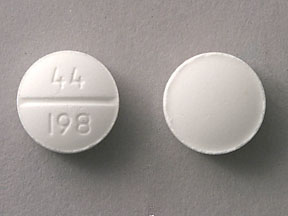
Dimenhydrinate (Monograph)
Brand names: DMH, Dramamine, TripTone
Drug class: Antihistamines
ATC class: A04AD
CAS number: 523-87-5
Introduction
Ethanolamine-derivative antihistamine containing a diphenhydramine moiety; antiemetic.
Uses for Dimenhydrinate
Motion Sickness
Used principally in the prevention and treatment of nausea, vomiting, and/or vertigo associated with motion sickness, although scopolamine, promethazine, or meclizine may be more effective.
Most effective when given prophylactically.
Ménière’s Disease and Other Vestibular Disturbances
Has been used for symptomatic treatment (e.g., nausea, vomiting, vertigo) of Ménière’s disease† [off-label] and other vestibular disturbances† [off-label].
Nausea and Vomiting
May be less effective than phenothiazines in controlling nausea and vomiting not related to vestibular stimulation.
Allergic Conditions
Although a histamine antagonist, use in allergic conditions† [off-label] has not been evaluated.
Dimenhydrinate Dosage and Administration
Administration
Administer orally or by IM or IV injection.
IV Injection
For solution and drug compatibility information, see Compatibility under Stability.
Dilution
Each 50 mg must be diluted with 10 mL of 0.9% sodium chloride injection.
Rate of Administration
Inject IV slowly over a period of 2 minutes.
Dosage
Pediatric Patients
Motion Sickness
Oral
For prevention, take 30 minutes before exposure to motion.
Children <2 Years of Age: Give only under the direction of a clinician.
Children 2 to <6 Years of Age: 12.5–25 mg every 6–8 hours, not to exceed 75 mg in 24 hours, or as directed by a clinician.
Children 6 to <12 Years of Age: 25–50 mg every 6–8 hours, not to exceed 150 mg in 24 hours, or as directed by a clinician.
Children ≥12 Years of Age: Usually, 50–100 mg every 4–6 hours, not to exceed 400 mg in 24 hours, or as directed by a clinician.
Children: Alternatively, 1.25 mg/kg or 37.5 mg/m2 4 times daily, up to a maximum of 300 mg daily.
IM
Children: 1.25 mg/kg or 37.5 mg/m2 4 times daily, up to a maximum of 300 mg daily.
IV
Not established for children.
Adults
Motion Sickness
Oral
For prevention, take 30 minutes before exposure to motion.
Usually 50–100 mg every 4–6 hours, not to exceed 400 mg in 24 hours, or as directed by a clinician.
IM
50–100 mg every 4–6 hours, not to exceed 400 mg in 24 hours, or as directed by a clinician.
IV
50–100 mg every 4–6 hours, not to exceed 400 mg in 24 hours, or as directed by a clinician.
Ménière’s Disease and Other Vestibular Disturbances
Maintenance of Symptomatic Relief
Oral25–50 mg has been given 3 times daily.
Acute Attacks
IM50 mg.
Prescribing Limits
Pediatric Patients
Motion Sickness
Oral
Children 2 to <6 Years of Age: Maximum 75 mg in 24 hours, or as directed by a clinician.
Children 6 to <12 Years of Age: Maximum 150 mg in 24 hours, or as directed by a clinician.
Children ≥12 Years of Age: Maximum 400 mg in 24 hours, or as directed by a clinician.
Children: Alternatively, maximum 300 mg daily when given as 1.25 mg/kg or 37.5 mg/m2.
IM
300 mg daily.
Adults
Motion Sickness
Oral
Maximum 400 mg in 24 hours, or as directed by a clinician.
IM
Maximum 400 mg in 24 hours, or as directed by a clinician.
IV
Maximum 400 mg in 24 hours, or as directed by a clinician.
Special Populations
Hepatic Impairment
No specific dosage recommendations for hepatic impairment.
Renal Impairment
No specific dosage recommendations for renal impairment.
Geriatric Patients
No specific geriatric dosage recommendations.
Cautions for Dimenhydrinate
Contraindications
-
Dimenhydrinate contains 53–55.5% diphenhydramine. Concomitant use with other preparations containing diphenhydramine, including oral and topical preparations, is contraindicated.
-
Known hypersensitivity to dimenhydrinate, other antihistamines with similar chemical structure, or any ingredient in the formulation.
Warnings/Precautions
Warnings
Concomitant Diseases
Patients with glaucoma, respiratory conditions (e.g., emphysema, chronic bronchitis), or difficulty urinating due to prostatic hypertrophy should consult a clinician before initiating therapy with dimenhydrinate.
Use with caution in patients with increased IOP, narrow-angle glaucoma, stenosing peptic ulcer, pyloroduodenal obstruction, bladder-neck obstruction, symptomatic prostatic hypertrophy, active or a history of lower respiratory disease (e.g., bronchial asthma), hyperthyroidism, or cardiovascular disease (e.g., hypertension).
CNS Effects
Risk of marked drowsiness. Among first generation antihistamines, ethanolamines (e.g., dimenhydrinate) considered the most sedating.
Performance of activities requiring mental alertness or physical coordination may be impaired.
Concurrent use of other CNS depressants may cause additive or potentiated CNS depression.
Diphenhydramine Toxicity
Dimenhydrinate contains 53–55.5% diphenhydramine. Risk of diphenhydramine toxicity. (See Pediatric Use under Cautions.) Do not use more often than directed for any condition or use concomitantly with other diphenhydramine-containing preparations, including oral and topical preparations.
Sensitivity Reactions
Tartrazine Sensitivity
Dramamine chewable tablets contain tartrazine (FD&C yellow No. 5), which may cause allergic reactions including bronchial asthma in susceptible individuals. Incidence of tartrazine sensitivity is low, but it frequently occurs in patients who are sensitive to aspirin.
General Precautions
Anticholinergic Effects
Consider anticholinergic effects in patients with conditions aggravated by anticholinergic therapy (e.g., angle-closure glaucoma, enlargement of the prostate gland). (See Concomitant Diseases under Cautions.)
Ototoxic Drugs
Symptoms of ototoxicity may be masked by dimenhydrinate; administer with caution in patients receiving known ototoxic drugs and closely monitor.
Seizure Disorders
Use with caution in seizure disorders.
Specific Populations
Pregnancy
Category C.
Lactation
Distributed into milk. Discontinue nursing or the drug.
Pediatric Use
Do not use in children <2 years of age unless directed by a clinician.
Risk of diminished mental alertness. Risk of excitation in young pediatric patients.
Risk of diphenhydramine toxicity (e.g., dilated pupils, flushed face, hallucinations, ataxic gait, urinary retention) when used concomitantly with other diphenhydramine-containing preparations, including oral and topical preparations. (See Diphenhydramine Toxicity under Cautions.)
Common Adverse Effects
Drowsiness, headache, blurred vision, tinnitus, dryness of the mouth and respiratory passages, incoordination, palpitation, dizziness, hypotension.
Paradoxical CNS stimulation in pediatric patients and occasionally in adults.
With IM injection: Pain at the injection site.
Because dimenhydrinate contains diphenhydramine, the possibility of other diphenhydramine-related adverse effects should also be considered.
Drug Interactions
Drugs Metabolized by Hepatic Microsomal Enzymes
Although dimenhydrinate has been reported to induce hepatic microsomal enzymes in animals, there is no clinical evidence that it influences the metabolism of other drugs in humans.
Specific Drugs
|
Drug |
Interaction |
Comments |
|---|---|---|
|
Anticholinergic drugs |
Anticholinergic effects may be potentiated |
|
|
Antidepressants, tricyclic |
Anticholinergic effects may be potentiated |
|
|
CNS depressants |
May enhance the effects of other CNS depressants, including alcohol |
Use concomitantly with caution |
|
Ototoxic drugs |
May mask the early manifestations of ototoxicity |
Use concomitantly with caution and closely monitor |
Dimenhydrinate Pharmacokinetics
Absorption
Bioavailability
Well absorbed after oral or parenteral administration.
Onset
IV injection: Antiemetic effects occur almost immediately.
Oral administration: Antiemetic effects within 15–30 minutes.
IM injection: Antiemetic effects within 20–30 minutes.
Duration
3–6 hours.
Distribution
Extent
Probably widely distributed into body tissues.
Crosses the placenta.
Small amounts are distributed into milk.
Elimination
Metabolism
Metabolized by the liver.
Elimination Route
Excreted in urine.
Stability
Storage
Well-closed containers at room temperature.
Oral
Solution
Tight containers. Avoid freezing.
Tablets
Well-closed containers at room temperature.
Parenteral
Injection
Avoid freezing.
Compatibility
Parenteral
Solution CompatibilityHID
|
Compatible |
|---|
|
Dextrose–Ringer’s injection combinations |
|
Dextrose–Ringer’s injection, lactated, combinations |
|
Dextrose–saline combinations |
|
Dextrose 5% in sodium chloride 0.9% |
|
Dextrose 2.5, 5, or 10% in water |
|
Ionosol products |
|
Ringer’s injection |
|
Ringer’s injection, lactated |
|
Sodium chloride 0.45 or 0.9% |
|
Sodium lactate (1/6) M |
Drug Compatibility
|
Compatible |
|---|
|
Amikacin sulfate |
|
Ammonium chloride |
|
Chloramphenicol sodium succinate |
|
Heparin sodium |
|
Hydroxyzine HCl |
|
Norepinephrine bitartrate |
|
Penicillin G potassium |
|
Pentobarbital sodium |
|
Phenobarbital sodium |
|
Potassium chloride |
|
Prochlorperazine edisylate |
|
Vancomycin HCl |
|
Variable |
|
Aminophylline |
|
Hydrocortisone sodium succinate |
|
Compatible |
|---|
|
Acyclovir sodium |
|
Ciprofloxacin |
|
Fluconazole |
|
Metronidazole |
|
Pantoprazole sodium |
Actions
-
Most actions are believed to result principally from its diphenhydramine moiety.
-
Has CNS depressant, anticholinergic, antiemetic, antihistaminic, and local anesthetic effects.
-
Has been shown to inhibit vestibular stimulation, acting first on the otolith system, and in larger doses on the semicircular canals.
-
Inhibits acetylcholine; this may be its primary mechanism of action, since cholinergic stimulation in the vestibular and reticular systems may be responsible for the nausea and vomiting of motion sickness.
-
Tolerance to CNS depressant effects usually occurs after a few days of treatment, and some decrease in antiemetic effectiveness may be noted after prolonged use.
Advice to Patients
-
Potential for drug to impair mental alertness or physical coordination; avoid driving or operating machinery until effects on individual are known.
-
Importance of warning patients with tartrazine or aspirin sensitivity that Dramamine chewable tablets contain the dye tartrazine (FD&C yellow No. 5), which may cause allergic reactions including bronchial asthma. .
-
Importance of not using multiple diphenhydramine-containing preparations (either oral or topical) simultaneously because of risk of toxicity. (See Diphenhydramine Toxicity under Cautions.)
-
Importance of informing clinicians of existing or contemplated concomitant therapy, including prescription and OTC drugs as well as any concomitant illnesses.
-
Importance of women informing clinicians if they are or plan to become pregnant or plan to breast-feed.
-
Importance of informing patients of other important precautionary information. (See Cautions.)
Preparations
Excipients in commercially available drug preparations may have clinically important effects in some individuals; consult specific product labeling for details.
Please refer to the ASHP Drug Shortages Resource Center for information on shortages of one or more of these preparations.
* available from one or more manufacturer, distributor, and/or repackager by generic (nonproprietary) name
|
Routes |
Dosage Forms |
Strengths |
Brand Names |
Manufacturer |
|---|---|---|---|---|
|
Oral |
Solution |
12.5 mg/5 mL* |
DMH Syrup |
Alra |
|
Dramamine Children’s |
Pfizer |
|||
|
Tablets |
50 mg* |
Dramamine (scored) |
Pfizer |
|
|
Tablets, chewable |
50 mg |
Dramamine Children’s (scored) |
Pfizer |
|
|
Tablets, film-coated |
50 mg |
TripTone Caplets (scored) |
Del |
|
|
Parenteral |
Injection |
50 mg/mL* |
dimenhyDRINATE Injection |
AHFS DI Essentials™. © Copyright 2025, Selected Revisions June 20, 2013. American Society of Health-System Pharmacists, Inc., 4500 East-West Highway, Suite 900, Bethesda, Maryland 20814.
† Off-label: Use is not currently included in the labeling approved by the US Food and Drug Administration.
Reload page with references included
Related/similar drugs
More about dimenhydrinate
- Check interactions
- Compare alternatives
- Pricing & coupons
- Reviews (80)
- Drug images
- Side effects
- Dosage information
- During pregnancy
- Drug class: anticholinergic antiemetics
- Breastfeeding