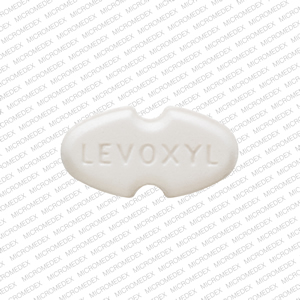
Levoxyl
Generic name: levothyroxine [ LEE-voe-thye-ROX-een ]
Drug class: Thyroid drugs
What is Levoxyl?
Levoxyl is a thyroid medicine that replaces a hormone normally produced by your thyroid gland to regulate the body's energy and metabolism. Levothyroxine is given when your thyroid does not produce enough of this hormone on its own.
Levoxyl is a prescription medicine used to treat hypothyroidism (low thyroid hormone).
Levoxyl is also used to treat or prevent goiter (enlarged thyroid gland), which can be caused by hormone imbalances, radiation treatment, surgery, or cancer.
Levoxyl is also used in patients who need surgery and radioiodine therapy to manage a type of thyroid cancer called well-differentiated thyroid cancer.
Warnings
You may not be able to take Levoxyl if you have certain medical conditions. Tell your doctor if you have an untreated or uncontrolled adrenal gland disorder, a thyroid disorder called thyrotoxicosis, or if you have any recent or current symptoms of a heart attack.
Levoxyl should not be used to treat obesity or weight problems. Dangerous side effects or death can occur from the misuse of this medicine, especially if you are taking any other weight-loss medications or appetite suppressants.
Before taking this medicine
Levoxyl should not be used to treat obesity or weight problems. Dangerous side effects or death can occur from the misuse of levothyroxine, especially if you are taking any other weight-loss medications or appetite suppressants.
Since thyroid hormone occurs naturally in the body, almost anyone can take Levoxyl. However, you may not be able to take this medicine if you have certain medical conditions.
To make sure Levoxyl is safe for you, tell your doctor if you have ever had:
-
an untreated or uncontrolled adrenal gland disorder;
-
a thyroid disorder called thyrotoxicosis; or
-
symptoms of a heart attack (chest pain or heavy feeling, pain spreading to the jaw or shoulder, nausea, sweating, general ill feeling).
-
a thyroid nodule;
-
heart problems such as a heart attack, stroke, blood clot or blood clotting disorder;
-
diabetes (your diabetes medicine may need to be adjusted);
-
anemia (low red blood cells);
-
weak bones (osteoporosis), or low bone mineral density;
-
problems with your pituitary gland;
-
any food or drug allergies;
-
plan to have surgery;
-
recently received radiation therapy with iodine (such as I-131); or
-
kidney disease.
If you become pregnant while taking Levoxyl, do not stop taking the medicine without your doctor's advice. Having low thyroid hormone levels during pregnancy could harm both mother and baby. Your dose needs may be different during pregnancy.
Tell your doctor if you are breast-feeding. Your dose needs may be different while you are nursing.
Do not give Levoxyl to a child without medical advice.
How should I take Levoxyl?
Take Levoxyl exactly as it was prescribed for you. Follow all directions on your prescription label and read all medication guides or instruction sheets. Your doctor may occasionally change your dose.
Levoxyl is taken by mouth.
Levoxyl works best if you take it on an empty stomach, 30 to 60 minutes before breakfast. Follow your doctor's dosing instructions and try to take the medicine at the same time each day.
Swallow the tablet whole, with a full glass (8 ounces) of water. The Levoxyl tablet may dissolve very quickly and could swell in your throat.
When giving Levoxyl to infants and children who cannot swallow tablets the tablets may be crushed. Place the freshly crushed tablet in a small amount (5 mL to 10 mL or 1 to 2 teaspoonfuls) of water and immediately give the medicine by spoon or dropper. Do not store the mixed medicine or mix it with foods that decrease the absorption of levothyroxine, such as soybean-based infant formula.
It may take several weeks before your body starts to respond to levothyroxine. Keep using Levoxyl even if you feel well. You may need to use for the rest of your life.
You may need frequent medical tests. Tell any doctor, dentist, or surgeon who treats you that you are using .
Store at room temperature away from moisture and heat.
Do not share Levoxyl with another person, even if they have the same symptoms you have.
What happens if I miss a dose?
Take the medicine as soon as you can, but skip the missed dose if it is almost time for your next dose. Do not take two doses at one time.
What happens if I overdose?
Seek emergency medical attention or call the Poison Help line at 1-800-222-1222.
Overdose symptoms may include headache, leg cramps, tremors, feeling nervous or irritable, chest pain, shortness of breath, and fast or pounding heartbeats.
What to avoid
Avoid the following food products, which can make your body absorb less levothyroxine: grapefruit juice, infant soy formula, soybean flour, cotton seed meal, walnuts, and high-fiber foods.
side effects
Get emergency medical help if you have signs of an allergic reaction to Levoxyl: hives; difficult breathing; swelling of your face, lips, tongue, or throat.
Call your doctor at once if you have:
-
fast or irregular heartbeats;
-
chest pain, pain spreading to your jaw or shoulder;
-
shortness of breath;
-
fever, hot flashes, sweating;
-
tremors, or if you feel unusually cold;
-
weakness, tiredness, sleep problems (insomnia);
-
memory problems, feeling depressed or irritable;
-
headache, leg cramps, muscle aches;
-
feeling nervous or irritable;
-
dryness of your skin or hair, hair loss;
-
irregular menstrual periods; or
Certain side effects may be more likely in older adults.
Common Levoxyl side effects may include:
-
chest pain, irregular heartbeats;
-
shortness of breath;
-
headache, leg cramps, muscle pain or weakness;
-
tremors, feeling nervous or irritable, trouble sleeping;
-
increased appetite;
-
feeling hot;
-
changes in your menstrual periods;
-
diarrhea; or
-
skin rash, partial hair loss.
This is not a complete list of side effects and others may occur. Call your doctor for medical advice about side effects. You may report side effects to FDA at 1-800-FDA-1088.
Related/similar drugs
Synthroid
Synthroid (levothyroxine) treats hypothyroidism (low thyroid hormone) and different types of ...
Armour Thyroid
Armour Thyroid is used for hashimoto's disease, hypothyroidism, after thyroid removal, thyroid ...
Breztri Aerosphere
Breztri (budesonide/glycopyrrolate/formoterol fumarate) is a combination inhaler that may be used ...
Tirosint
Tirosint is used for hashimoto's disease, hypothyroidism, after thyroid removal, myxedema coma ...
Euthyrox
Euthyrox (levothyroxine) is used to treat hypothyroidism and to treat or prevent goiter. Includes ...
NP Thyroid
NP Thyroid is used for hashimoto's disease, hypothyroidism, after thyroid removal, thyroid cancer ...
Cytomel
Cytomel is used for hypothyroidism, after thyroid removal, myxedema, myxedema coma, thyroid ...
Unithroid
Unithroid is used for hashimoto's disease, hypothyroidism, after thyroid removal, myxedema coma ...
Levothroid
Levothroid is used for hashimoto's disease, hypothyroidism, after thyroid removal, myxedema coma ...
Thyroid desiccated
Thyroid desiccated is taken to replace the body's natural thyroid hormones and is used to prevent ...
What other drugs will affect ?
Many other medicines can be affected by your thyroid hormone levels. Certain other medicines may also increase or decrease the effects of levothyroxine.
Certain medicines can make levothyroxine less effective if taken at the same time. If you use any of the following drugs, avoid taking them within 4 hours before or 4 hours after you take :
-
calcium carbonate (Alka-Mints, Caltrate, Os-Cal, Oyster Shell Calcium, Rolaids Soft Chew, Tums, and others);
-
ferrous sulfate iron supplement;
-
sodium polystyrene sulfonate (Kalexate, Kayexalate, Kionex);
-
stomach acid reducers - esomeprazole, lansoprazole, omeprazole, rabeprazole, Nexium, Prilosec, Prevacid, Protonix, Zegerid, and others; or
-
antacids that contain aluminum or magnesium - Gaviscon, Maalox, Milk of Magnesia, Mintox, Mylanta, Pepcid Complete, and others.
Many drugs can interact with levothyroxine. This includes prescription and over-the-counter medicines, vitamins, and herbal products. Not all possible interactions are listed here. Tell your doctor about all your current medicines and any medicine you start or stop using.
Popular FAQ
What is the difference between Levoxyl and Synthroid?
Levoxyl and Synthroid are brand names for the drug levothyroxine. Both medications contain the same active ingredient, levothyroxine, but they contain different inactive ingredients. Continue reading
Who makes Levoxyl and where is it manufactured?
Levoxyl is made by Pfizer, Inc, a pharmaceutical company located in New York, NY, USA. You can contact Pfizer at 1-800-TRY-FIRST (+1-800-879-3477), Monday through Friday 9:00 a.m. to 7:00 p.m. EST, or online. Continue reading
Is Levoxyl a brand or a generic?
Levoxyl is a brand of levothyroxine, made by Pfizer Laboratories. Continue reading
Does levothyroxine cause weight gain or loss?
In most cases, levothyroxine causes some weight loss. According to the American Thyroid Association, when this medication is started, you may lose up to 10% of your weight. This weight is mainly water weight, since being hypothyroid makes you retain water. Continue reading
What can I eat for breakfast after taking levothyroxine?
Most foods are considered fine to eat for breakfast as long as they are eaten 30 to 60 minutes after taking levothyroxine. Levothyroxine should be taken once a day on an empty stomach in the morning. Continue reading
Can I take other medications with levothyroxine?
Levothyroxine is known to interact with many other medications (called a drug-drug interaction), but there are different kinds of drug-drug interactions. Some interactions require that drugs not be taken at the same time, while other interactions require more frequent laboratory testing or monitoring of your disease symptoms. Continue reading
Does levothyroxine cause hair loss?
Yes, levothyroxine, the main treatment for a sluggish thyroid gland, may cause hair loss in addition to other side effects. You may experience partial hair loss in the first few months of treatment, but this often resolves and goes back to normal in a short time. Continue reading
How long after taking levothyroxine can you drink milk?
You should avoid drinking milk until at least 4 hours after taking levothyroxine. Dairy products—including milk, cheese and yogurt—contain high calcium levels, which affect how levothyroxine is absorbed into your body. Continue reading
More FAQ
References
More about Levoxyl (levothyroxine)
- Check interactions
- Compare alternatives
- Pricing & coupons
- Reviews (38)
- Drug images
- Side effects
- Dosage information
- During pregnancy
- Drug class: thyroid drugs
- Breastfeeding
- En español
Patient resources
Other brands
Synthroid, Tirosint, Euthyrox, Unithroid, ... +3 more
Professional resources
Other brands
Synthroid, Tirosint, Euthyrox, Unithroid, ... +5 more
Related treatment guides
Further information
Remember, keep this and all other medicines out of the reach of children, never share your medicines with others, and use Levoxyl only for the indication prescribed.
Always consult your healthcare provider to ensure the information displayed on this page applies to your personal circumstances.
Copyright 1996-2025 Cerner Multum, Inc. Version: 17.01.