
Hyperthyroidism
Medically reviewed by Drugs.com. Last updated on Sep 1, 2024.
What is hyperthyroidism?
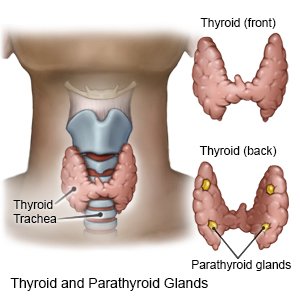
Hyperthyroidism is a condition that develops when your thyroid hormone levels are high. Thyroid hormones help control body temperature, heart rate, growth, and weight.
 |
What causes hyperthyroidism?
If you have a family member with hyperthyroidism, your risk is increased. Any of the following can cause hyperthyroidism:
- Autoimmune disease, such as Graves disease or Plummer disease
- Certain medicines, such as lithium, amiodarone, or aspirin
- Viral infection
- Thyroid inflammation or thyroid cancer
- High iodine levels
What are the signs and symptoms of hyperthyroidism?
The signs and symptoms may develop slowly, sometimes over several years.
- Weight loss, increased appetite, diarrhea, or constipation
- Increased sweating and heat intolerance
- Nervousness, restlessness, tremors, and difficulty sleeping
- Fast heart rate and fast breathing, even at rest
- Painful lump in your neck or bulging eyes
- Fatigue and muscle weakness
- Decreased or absent monthly periods
What is a thyroid storm?
Thyroid storm happens if your thyroid hormone levels get too high. Your temperature may go very high, your heart may beat very fast, and you may have problems thinking. You may have increased sweating, vomiting, or diarrhea. You may have seizures or go into a coma. Thyroid storm may happen if you have hyperthyroidism and get an infection or stop taking your thyroid medicine. Injuries, burns, and certain medicines can also cause a thyroid storm.
How is hyperthyroidism diagnosed?
Your healthcare provider will ask about your symptoms and what medicines you take. Your provider will ask about your medical history and if anyone in your family has thyroid disease. A blood test will show your TSH level.
How is hyperthyroidism treated?
You may not need any treatment, or you may need any of the following:
- Antithyroid medicines decrease thyroid hormone levels and your symptoms.
- Radioactive iodine is given to damage or kill some thyroid gland cells. This may decrease the amount of thyroid hormone produced. Tell your healthcare provider if you know or think you are pregnant. This medicine can be harmful to an unborn baby.
- Surgery may be done to remove all or part of the thyroid gland.
Treatment options
The following list of medications are related to or used in the treatment of this condition.
Call 911 for any of the following:
- You have sudden chest pain or shortness of breath.
- You have a seizure.
- Your heart is beating faster than usual.
- You feel like you are going to faint.
When should I contact my healthcare provider?
- You have a fever.
- You feel nervous and restless.
- You have chills, a cough, or feel weak and achy.
- You run out of medicine or have stopped taking it.
- You have questions or concerns about your condition or care.
Care Agreement
You have the right to help plan your care. Learn about your health condition and how it may be treated. Discuss treatment options with your healthcare providers to decide what care you want to receive. You always have the right to refuse treatment. The above information is an educational aid only. It is not intended as medical advice for individual conditions or treatments. Talk to your doctor, nurse or pharmacist before following any medical regimen to see if it is safe and effective for you.© Copyright Merative 2024 Information is for End User's use only and may not be sold, redistributed or otherwise used for commercial purposes.
Learn more about Hyperthyroidism
Treatment options
Care guides
Symptoms and treatments
Further information
Always consult your healthcare provider to ensure the information displayed on this page applies to your personal circumstances.