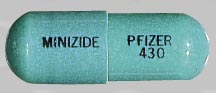
Polythiazide / Prazosin Side Effects
Applies to polythiazide / prazosin: oral capsule.
Precautions
It is important that your doctor check your progress at regular visits to make sure this medicine is working properly.
Do not take other medicines unless they have been discussed with your doctor. This especially includes over-the-counter (nonprescription) medicine for appetite control, asthma, colds, cough, hay fever, or sinus problems, since they may tend to increase your blood pressure.
This medicine may cause a loss of potassium from your body.
- To help prevent this, your doctor may want you to:
- eat or drink foods that have a high potassium content (for example, orange or other citrus fruit juices), or
- take a potassium supplement, or
- take another medicine to help prevent the loss of the potassium in the first place.
- It is very important to follow these directions. Also, it is important not to change your diet on your own. This is more important if you are already on a special diet (as for diabetes), or if you are taking a potassium supplement or a medicine to reduce potassium loss. Extra potassium may not be necessary and, in some cases, too much potassium could be harmful.
Check with your doctor if you become sick and have severe or continuing vomiting or diarrhea. These problems may cause you to lose additional water and potassium.
Dizziness, lightheadedness, or sudden fainting may occur after you take this medicine, especially when you get up from a lying or sitting position. These effects are more likely to occur when you take the first dose of this medicine. Taking the first dose at bedtime may prevent problems. However, be especially careful if you need to get up during the night. These effects may also occur with any doses you take after the first dose. Getting up slowly may help lessen this problem. If you feel dizzy, lie down so that you do not faint. Then sit for a few moments before standing to prevent the dizziness from returning.
Make sure you know how you react to this medicine before you drive, use machines, or do anything else that could be dangerous if you are dizzy or are not alert. After you have taken several doses of this medicine, these effects should lessen.
The dizziness, lightheadedness, or fainting is also more likely to occur if you drink alcohol, stand for a long time, exercise, or if the weather is hot. While you are taking this medicine, be careful to limit the amount of alcohol you drink. Also, use extra care during exercise or hot weather or if you must stand for a long time.
For diabetic patients:
- Polythiazide (contained in this combination medicine) may raise blood sugar levels. While you are using this medicine, be especially careful in testing for sugar in your blood or urine. If you have any questions about this, check with your doctor.
Some people who take this medicine may become more sensitive to sunlight than they are normally. Exposure to sunlight, even for brief periods of time, may cause a skin rash, itching, redness or other discoloration of the skin, or a severe sunburn. When you begin taking this medicine:
- Stay out of direct sunlight, especially between the hours of 10:00 a.m. and 3:00 p.m., if possible.
- Wear protective clothing, including a hat and sunglasses.
- Apply a sun block product that has a skin protection factor (SPF) of at least 15. Some patients may require a product with a higher SPF number, especially if they have a fair complexion. If you have any questions about this, check with your health care professional.
- Do not use a sunlamp or tanning bed or booth.
- Apply a sun block lipstick that has an SPF of at least 15 to protect your lips.
If you have a severe reaction from the sun, check with your doctor.
Serious side effects
Along with its needed effects, polythiazide / prazosin may cause some unwanted effects. Although not all of these side effects may occur, if they do occur they may need medical attention.
Check with your doctor as soon as possible if any of the following side effects occur while taking polythiazide / prazosin:
Signs and symptoms of too much potassium loss
- dryness of mouth (severe)
- increased thirst
- irregular heartbeat (continuing)
- mood or mental changes
- muscle cramps or pain
- nausea or vomiting
- unusual tiredness or weakness
- weak pulse
Signs and symptoms of too much sodium loss
- confusion
- convulsions
- decreased mental activity
- irritability
- muscle cramps
- unusual tiredness or weakness
More common side effects
- dizziness or lightheadedness, especially when getting up from a lying or sitting position
- sudden fainting
Less common side effects
- inability to control urination
- irregular heartbeat
- pounding heartbeat
- swelling of feet or lower legs
- weight gain
Rare side effects
- black, tarry stools
- blood in urine or stools
- chest pain
- cough or hoarseness
- fever or chills
- joint pain
- lower back or side pain
- painful or difficult urination
- painful, inappropriate erection of penis, continuing
- pinpoint red spots on skin
- shortness of breath
- skin rash or hives
- stomach pain (severe) with nausea and vomiting
- unusual bleeding or bruising
- yellow eyes or skin
Other side effects
Some side effects of polythiazide / prazosin may occur that usually do not need medical attention. These side effects may go away during treatment as your body adjusts to the medicine. Also, your health care professional may be able to tell you about ways to prevent or reduce some of these side effects.
Check with your health care professional if any of the following side effects continue or are bothersome or if you have any questions about them:
Less common side effects
- decreased sexual ability
- diarrhea
- drowsiness
- headache
- increased sensitivity of skin to sunlight
- lack of energy
- loss of appetite
- nervousness
- stomach upset or pain
Rare side effects
- frequent urge to urinate
- nausea
See also:
For healthcare professionals
Applies to polythiazide / prazosin: oral capsule.
Cardiovascular adverse events
Cardiovascular side effects are common during initial therapy. A postural hypotension "first dose effect" occurs in up to 10% to 70% of patients who are taking prazosin. For this reason, it is recommended that therapy be started with the patient supine, preferably at bedtime. Dizziness or syncope is reported in 10% and 1% of patients, respectively. Other side effects include palpitations in 7% to 14% of patients, fluid retention in 5% of patients, and rare cases of angina or sinus bradycardia. Cardiac arrhythmias, including ventricular ectopy and complete AV heart block, have been associated with thiazide-induced hypokalemia.[Ref]
Although all patients are susceptible to prazosin-polythiazide-induced postural hypotension, risk factors include higher doses, coadministration of beta-blockers, and preexisting serum sodium depletion.
Animal studies reveal that prazosin exerts a negative chronotropic action on the sinus node of the dog. There is evidence that this may be important in humans. A 50-year-old man with benign prostatic hypertrophy developed presyncope, described as "lightheadedness within 45 minutes after taking prazosin." The patient was referred for pacemaker placement, but, because he was convinced that the drug was causing his problem, he stopped it and became asymptomatic. A follow-up electrocardiogram revealed normal sinus rhythm at 55 beats per minute, and the pacemaker placement was cancelled. The author of this case report has located two other such cases that were reported to the United Kingdom Committee on Safety of Medicines over a 30-year period.[Ref]
Nervous system
Nervous system side effects are most likely due to prazosin, and include headache in 8% to 18% (more common in patients with a history of migraine), fatigue in 8%, and blurred vision in less than 5% of patients.[Ref]
Hallucinations, irritability, and confusion have been reported in less than 1% of patients who were taking prazosin. A rare cases of hypothermia has been associated with prazosin.[Ref]
Metabolic
The metabolic side effects of polythiazide, as with other thiazide diuretics, include hypokalemia, hyponatremia, hypochloremia, hypercalcemia, hypercholesterolemia, and hyperuricemia. Significant reductions in the serum potassium concentration (decreases of 0.5 mEq/L or more) have been observed in up to 50% of patients who are taking moderate doses of thiazide diuretics. This reduction in serum potassium can predispose some patients to develop cardiac arrhythmias.[Ref]
Some of the metabolic changes associated with thiazides may be significant in patients with underlying cardiac arrhythmias (hypokalemia), coronary artery disease (hypercholesterolemia), gout (hyperuricemia), or liver disease (hyponatremia or hypokalemia).[Ref]
Hypersensitivity
Hypersensitivity reactions to thiazide diuretics are reported in less than 1% of patients. While most allergic reactions present as rash with nausea and vomiting, rare cases of acute pulmonary edema, interstitial cystitis, interstitial nephritis, and anaphylaxis have been associated with the use of some thiazides. Hypersensitivity reactions to prazosin are rare, and include urticaria and a single report of a serum sickness-like reaction (fever, arthralgias, cold sweats).[Ref]
Genitourinary
Urinary incontinence associated with prazosin is due to alpha-adrenergic blockade of the urinary sphincter.[Ref]
Genitourinary symptoms associated with prazosin include urinary frequency or incontinence. Impotence occurs in less than 1% of male patients. Priapism has rarely been associated with prazosin, and may be more likely in patients with renal insufficiency.[Ref]
Dermatologic
Dermatologic reactions to thiazides include erythema annular centrifugum, acute eczematous dermatitis, and morbilliform or leukocytoclastic vasculitis. Thiazides may induce phototoxic dermatitis. In addition, a rare, distinct entity with clinical and laboratory features indistinguishable from those of subacute cutaneous lupus erythematosus has been associated with a related drug, hydrochlorothiazide.[Ref]
Renal
Renal side effects including new or worsened renal insufficiency may occur due to polythiazide-induced intravascular volume depletion. Rare cases of interstitial nephritis have been associated with the use of some thiazides.[Ref]
Endocrine
Endocrinologic problems associated with thiazide diuretics include glucose intolerance and a potentially deleterious effect on the lipid profile. This may be important in some patients with or who are at risk for diabetes or coronary artery disease.[Ref]
A prospective study of 34 patients who received oral thiazide diuretics for 14 years without interruption revealed an increased mean fasting blood glucose level after treatment. Withdrawal of thiazide therapy for 7 months in 10 of the patients resulted in mean reductions of 10% in fasting blood glucose and 25% in the 2-hour glucose tolerance test values. A control group was not reported.[Ref]
Hematologic
Hematologic side effects are rare. Cases of immune-complex hemolytic anemia, aplastic anemia, and thrombocytopenia have been associated either with polythiazide or related thiazide agents.[Ref]
A 2.5-year-old male with anasarca developed cyanosis and oral ulcerations association with laboratory evidence of pancytopenia 15 days after beginning polythiazide (dose not available). A bone marrow aspiration revealed general hypoplasia with absence of megakaryocytes and blast cells. The child died from persistent hemorrhaging and infections despite prednisolone and antimicrobial therapy.[Ref]
Gastrointestinal
Gastrointestinal side effects include nausea in approximately 5% of patients. Constipation and diarrhea occur in less than 4% of patients. Xerostomia is less commonly seen with prazosin than with less selective alpha-adrenergic receptor blockers. There have been rare cases of pancreatitis and acute cholecystitis associated with thiazide diuretics.[Ref]
Thiazide diuretics may increase serum cholesterol and triglycerides, resulting in an increased risk of cholesterol gallstone formation. Reports of bowel strictures associated with thiazide ingestion have been reported in the 1960's, although these patients were taking a combination hydrochlorothiazide-potassium product.
A single case of fecal incontinence, thought to be due to alpha-adrenergic blockade of the anal sphincter (due to prazosin) has been reported.[Ref]
Respiratory
Respiratory system side effects associated with prazosin have included nasal congestion, seen in less than 4% of patients.[Ref]
Psychiatric
Psychiatric side effects including depression have been associated with the use of thiazide diuretics. These data are uncontrolled observations and have not been substantiated.[Ref]
References
1. Graham RM, Pettinger WA (1979) "Prazosin." N Engl J Med, 300, p. 232-6
2. Curtis JR, Bateman FJ (1975) "Use of prazosin in management of hypertension in patients with chronic renal failure and in renal transplant recipients." Br Med J, 4, p. 432-4
3. Glass AR, Ballou R (1982) "Pheochromocytoma, prazosin, and hypotension." Ann Intern Med, 97, p. 455
4. Kobrin I, Stressman J, Yagil Y, Ben-Ishay D (1983) "Prazosin-induced bradycardia in acute treatment of hypertension." Arch Intern Med, 143, 2019, 2023
5. Melkild A (1984) "Prazosin (peripress): a long-term study." Curr Med Res Opin, 9, p. 219-28
6. Hankey GJ, Gubbay SS (1987) "Focal cerebral ischaemia and infarction due to antihypertensive therapy." Med J Aust, 146, p. 412-4
7. Papademetriou V, Fletcher R, Khatri IM, Freis ED (1983) "Diuretic-induced hypokalemia in uncomplicated systemic hypertension: effect of plasma potassium correction on cardiac arrhythmias." Am J Cardiol, 52, p. 1017-22
8. Ragnarsson J, Hardarson T, Snorrason SP (1987) "Ventricular dysrhythmias in middle-aged hypertensive men treated either with a diuretic agent or a beta-blocker." Acta Med Scand, 221, p. 143-8
9. Hollifield JW, Slaton PE (1981) "Thiazide diuretics, hypokalemia and cardiac arrhythmias." Acta Med Scand Suppl, 647, p. 67-73
10. Krishna GG, Narins RG (1988) "Hemodynamic consequences of diuretic-induced hypokalemia." Am J Kidney Dis, 12, p. 329-31
11. Mahabir RN, Laufer ST (1969) "Clinical evaluation of diuretics in congestive heart failure. A detailed study in four patients." Arch Intern Med, 124, p. 1-7
12. Holland OB, Kuhnert L, Pollard J, Padia M, Anderson RJ, Blomqvist G (1988) "Ventricular ectopic activity with diuretic therapy." Am J Hypertens, 1, p. 380-5
13. Mouallem M, Friedman E, Shemesh Y, Mayan H, Pauzner R, Farfel Z (1991) "Cardiac conduction defects associated with hyponatremia." Clin Cardiol, 14, p. 165-8
14. Grunwald MH, Halevy S, Livni E (1989) "Allergic vasculitis induced by hydrochlorothiazide: confirmation by mast cell degranulation test." Isr J Med Sci, 25, p. 572-4
15. Graham RM, Thornell IR, Gain JM, Bagnoli C, Oates HF, Stokes GS (1976) "Prazosin: the first-dose phenomenon." Br Med J, 2, p. 1293-4
16. Young JB, Leon CA, Pratt CM (1987) "Potentially deleterious effects of long-term vasodilator therapy in patients with heart failure." Chest, 91, p. 737-44
17. Kosman ME (1977) "Evaluation of a new antihypertensive agent: prazosin hydrochloride (Minipress)." JAMA, 238, p. 157-9
18. New Zealand Hypertension Study Group. (1977) "Initial experience with prazosin in New Zealand: a multicentre report." Med J Aust, 2, p. 23-6
19. (1977) "Prazosin (Minipress) for hypertension." Med Lett Drugs Ther, 19, p. 1-2
20. Charness ME, Fishman JA, Robertson D (1979) "Exacerbation of angina pectoris by prazosin." South Med J, 72, p. 1213-4
21. Salim SS, Mtui EP, Makene WJ (1977) "An open evaluation of the efficacy and toleration of prazosin in patients with hypertension." East Afr Med J, 54, p. 429-33
22. Gould BA, Hornung RS, Kieso HA, Cashman PM, Raftery EB (1983) "Prazosin alone and combined with a beta-adrenoreceptor blocker in treatment of hypertension." J Cardiovasc Pharmacol, 5, p. 678-84
23. Ball J (1994) "Symptomatic sinus bradycardia due to prazosin." Lancet, 343, p. 121
24. O'Brien ET, MacKinnon J (1972) "Propranolol and polythiazide in treatment of hypertension." Br Heart J, 34, p. 1042-4
25. Oh MS, Carroll HJ, Cruz WM, Whang ES, Lejano RF (1975) "Treatment of hypertension with a combination of prazosin and polythiazide." Postgrad Med, Spec No, p. 77-80
26. Pitkajarvi T, Kyostila S, Kontro J (1977) "Antihypertensive action of drug combination: polythiazide, prazosin and tolamolol." Curr Ther Res Clin Exp, 21, p. 169-76
27. Marinkovic M, Vrhovac B, Kuzmanic D, Radonic M (1979) "Comparative study with prazosin, methyldopa and polythiazide in arterial hypertension." Int J Clin Pharmacol Biopharm, 17, p. 38-47
28. Woeltjen AE, Gordon AJ (1981) "Sustained antihypertensive response with Minizide: long-term follow- up in a multicentre study." J Int Med Res, 9, p. 309-14
29. Gordon AJ, Woeltjen AE (1981) "Treatment of Essential hypertension with single daily doses of a prazosin-polythiazide combination: a multicentre study with Minizide." J Int Med Res, 9, p. 303-8
30. De Leeuw PW, Birkenhager WH (1980) "Hypothermia: a possible side effect of prazosin." Br Med J, 281, p. 1181
31. Aldrich MS, Rogers AE (1989) "Exacerbation of human cataplexy by prazosin." Sleep, 12, p. 254-6
32. Singleton W, Dix RK, Monsen L, et al. (1989) "Efficacy and safety of minipress XL, a new once-a-day formulation of prazosin." Am J Med, 87, s45-52
33. Gould L, Reddy CV, Zen B, Singh BK (1980) "Life-threatening reaction to thiazides." N Y State J Med, 80, p. 1975-6
34. Rosenberg L, Shapiro S, Slone D, Kaufman DW, Miettinen OS, Stolley PD (1980) "Thiazides and acute cholecystitis." N Engl J Med, 303, p. 546-8
35. Kuller L, Farrier N, Caggiula A, Borhani N, Dunkle S (1985) "Relationship of diuretic therapy and serum magnesium levels among participants in the Multiple Risk Factor Intervention Trial." Am J Epidemiol, 122, p. 1045-59
36. Fichman MP, Vorherr H, Kleeman CR, Telfer N (1971) "Diuretic-induced hyponatremia." Ann Intern Med, 75, p. 853-63
37. Papademetriou V, Price M, Notargiacomo A, Gottdiener J, Fletcher RD, Freis ED (1985) "Effect of diuretic therapy on ventricular arrhythmias in hypertensive patients with or without left ventricular hypertrophy." Am Heart J, 110, p. 595-9
38. Polanska AI, Baron DN (1978) "Hyponatraemia associated with hydrochlorothiazide treatment ." Br Med J, 1, p. 175-6
39. Pinnock CA (1978) "Hyponatraemia associated with hydrochlorothiazide treatment ." Br Med J, 1, p. 48
40. Hakim R, Tolis G, Goltzman D, Meltzer S, Friedman R (1979) "Severe hypercalcemia associated with hydrochlorothiazide and calcium carbonate therapy." Can Med Assoc J, 121, p. 591-4
41. Bain PG, Egner W, Walker PR (1986) "Thiazide-induced dilutional hyponatraemia masquerading as subarachnoid haemorrhage ." Lancet, 2, p. 634
42. Benfield GF, Haffner C, Harris P, Stableforth DE (1986) "Dilutional hyponatraemia masquerading as subarachnoid haemorrhage in patient on hydrochlorothiazide/amiloride/timolol combined drug ." Lancet, 2, p. 341
43. Duarte CG, Winnacker JL, Becker KL, Pace A (1971) "Thiazide-induced hypercalcemia." N Engl J Med, 284, p. 828-30
44. Diamond MT (1972) "Hyperglycemic hyperosmolar coma associated with hydrochlorothiazide and pancreatitis." N Y State J Med, 72, p. 1741-2
45. Klimiuk PS, Davies M, Adams PH (1981) "Primary hyperparathyroidism and thiazide diuretics." Postgrad Med J, 57, p. 80-3
46. Seelig CB (1990) "Magnesium deficiency in two hypertensive patient groups." South Med J, 83, p. 739-42
47. Peters RW, Hamilton J, Hamilton BP (1989) "Incidence of cardiac arrhythmias associated with mild hypokalemia induced by low-dose diuretic therapy for hypertension." South Med J, 82, 966-9,
48. Kone B, Gimenez L, Watson AJ (1986) "Thiazide-induced hyponatremia." South Med J, 79, p. 1456-7
49. Fager G, Berglund G, Bondjers G, Elmfeldt D, Lager I, Olofsson SO, Smith U, Wiklund O (1983) "Effects of anti-hypertensive therapy on serum lipoproteins. Treatment with metoprolol, propranolol and hydrochlorothiazide." Artery, 11, p. 283-96
50. Jones IG, Pickens PT (1967) "Diabetes mellitus following oral diuretics." Practitioner, 199, p. 209-10
51. Kaur J, Wahi PL (1967) "Polythiazide as a diuretic. A clinical trial." J Indian Med Assoc, 48, p. 13-7
52. Murphy MB, Kohner E, Lewis PJ, Schumer B, Dollery CT (1982) "Glucose intolerance in hypertensive patients treated with diuretics: a fourteen-year follow-up." Lancet, 2, p. 1293-5
53. Bell DS (1993) "Insulin resistance. An often unrecognized problem accompanying chronic medical disorders." Postgrad Med, 93, 99-103,
54. Berlin I (1993) "Prazosin, diuretics, and glucose intolerance." Ann Intern Med, 119, p. 860
55. Nilsson G (1980) "Symptomatic diabetes mellitus cured by potassium and withdrawal of polythiazide in a hypokalemic hypertensive woman." Acta Med Scand, 208, p. 129-30
56. Ghose RR (1977) "Reset osmostat after diuretic treatment." Br Med J, 2, p. 1063
57. Smith WM (1979) "Diuretics and cholesterol elevation." JAMA, 242, p. 1612
58. Ghose RR (1975) "Letter: Hyponatraemia and diuretics." Lancet, 1, p. 578-9
59. Larson E, Dominguez CJ, Scheib R (1965) "Thiazide therapy: experience with parenteral administration." Curr Ther Res Clin Exp, 7, p. 617-24
60. Ramirez EA, Tristani FE (1965) "Clinical evaluation of parenteral polythiazide (P-2525) administration." Curr Ther Res Clin Exp, 7, p. 528-35
61. Ruzicka T, Ring J (1983) "Hypersensitivity to prazosin." Lancet, Feb, p. 473-4
62. Magil AB, Ballon HS, Cameron EC, Rae A (1980) "Acute interstitial nephritis associated with thiazide diuretics. Clinical and pathologic observations in three cases." Am J Med, 69, p. 939-43
63. Hoss DM, Nierenberg DW (1988) "Severe shaking chills and fever following hydrochlorothiazide administration." Am J Med, 85, p. 747
64. Klein MD (1987) "Noncardiogenic pulmonary edema following hydrochlorothiazide ingestion." Ann Emerg Med, 16, p. 901-3
65. Beaudry C, Laplante L (1973) "Severe allergic pneumonitis from hydrochlorothiazide." Ann Intern Med, 78, p. 251-3
66. Robinson HN, Morison WL, Hood AF (1985) "Thiazide diuretic therapy and chronic photosensitivity." Arch Dermatol, 121, p. 522-4
67. Hoegholm A, Rasmussen SW, Kristensen KS (1990) "Pulmonary oedema with shock induced by hydrochlorothiazide: a rare side effect mimicking myocardial infarction." Br Heart J, 63, p. 186
68. Biron P, Dessureault J, Napke E (1991) "Acute allergic interstitial pneumonitis induced by hydrochlorothiazide [published erratum appears in Can Med Assoc J 1991 Sep 1;145(5):391]." Can Med Assoc J, 145, p. 28-34
69. Dorn MR, Walker BK (1981) "Noncardiogenic pulmonary edema associated with hydrochlorothiazide therapy." Chest, 79, p. 482-3
70. Magil AB (1983) "Drug-induced acute interstitial nephritis with granulomas." Hum Pathol, 14, p. 36-41
71. Prupas HM, Brown D (1983) "Acute idiosyncratic reaction to hydrochlorothiazide ingestion." West J Med, 138, p. 101-2
72. Grace AA, Morgan AD, Strickland NH (1989) "Hydrochlorothiazide causing unexplained pulmonary oedema." Br J Clin Pract, 43, p. 79-81
73. Levay ID (1984) "Hydrochlorothiazide-induced pulmonary edema." Drug Intell Clin Pharm, 18, p. 238-9
74. Goette DK, Beatrice E (1988) "Erythema annulare centrifugum caused by hydrochlorothiazide-induced interstitial nephritis." Int J Dermatol, 27, p. 129-30
75. Alted E, Navarro M, Cantalapiedra JA, Alvarez JA, Blasco MA, Nunez A (1987) "Non-cardiogenic pulmonary edema after oral ingestion of hydrochlorothiazide ." Intensive Care Med, 13, p. 364-5
76. Cairns SA, Jordan SC (1976) "Prazosin treatment complicated by acute febrile polyarthritis." Br Med J, 2, p. 1424-5
77. Ylitalo P, Pasternack A (1983) "Priapism: side-effect of prazosin in patients with renal failure." Acta Med Scand, 213, p. 319-20
78. Lameire N, Gordts J (1986) "A pharmacokinetic study of prazosin in patients with varying degrees of chronic renal failure." Eur J Clin Pharmacol, 31, p. 333-7
79. Delevett AF, Recalde M (1973) "Diuretic-induced renal colic." JAMA, 225, p. 992
80. Thien T, Delaere KP, Debruyne FM, Koene RA (1978) "Urinary incontinence caused by prazosin." Br Med J, 1, p. 622-3
81. Bjornberg A, Gisslen H (1965) "Thiazides: A cause of necrotising vasculitis?" Lancet, 2, p. 982-3
82. Reed BR, Huff JC, Jones SK, Orton PW, Lee LA, Norris DA (1985) "Subacute cutaneous lupus erythematosus associated with hydrochlorothiazide therapy." Ann Intern Med, 103, p. 49-51
83. Diffey BL, Langtry J (1989) "Phototoxic potential of thiazide diuretics in normal subjects." Arch Dermatol, 125, p. 1355-8
84. Parodi A, Romagnoli M, Rebora A (1989) "Subacute cutaneous lupus erythematosus-like eruption caused by hydrochlorothiazide." Photodermatol, 6, p. 100-2
85. Goodrich AL, Kohn SR (1993) "Hydrochlorothiazide-induced lupus erythematosus: a new variant?" J Am Acad Dermatol, 28, p. 1001-2
86. Paloyan E, Farland M, Pickleman JR (1969) "Hyperparathyroidism coexisting with hypertension and prolonged thiazide administration." JAMA, 210, p. 1243-5
87. Garratty G, Houston M, Petz LD, Webb M (1981) "Acute immune intravascular hemolysis due to hydrochlorothiazide." Am J Clin Pathol, 76, p. 73-8
88. Eisner EV, Crowell EB (1971) "Hydrochlorothiazide-dependent thrombocytopenia due to IgM antibody." JAMA, 215, p. 480-2
89. Srivastava G, Agarwal KN (1967) "Thiazide-induced bone-marrow aplasia. Report of a case." Indian J Pediatr, 34, p. 407-9
90. Holmes SA, Christmas TJ, Wood JJ, Kirby RS (1990) "Faecal incontinence resulting from a1-adrenoceptor blockade." Lancet, 336, p. 685-6
91. Dietz MW (1967) "Iatrogenic jejunal ulcer." Am J Roentgenol Radium Ther Nucl Med, 99, p. 136-8
92. Reinus FZ, Weinberger HA, Fischer WW (1966) "Medication-induced ulceration of the small bowel." Am J Surg, 112, p. 97-101
93. Wagner W, Longerbeam JK, Smith LL, Feikes HL (1967) "Drug-induced ulcers of the small bowel causing intestinal obstruction or perforation." Am Surg, 33, p. 7-11
94. Campbell JR, Knapp RW (1966) "Small bowel ulceration associated with thiazide and potassium therapy: review of 13 cases." Ann Surg, 163, p. 291-6
95. Smith BL, Tedeschi A, Lane CD (1988) "Pancreatitis with a twist." Hosp Pract (Off Ed), 23, 150,
96. Holland GW (1965) "Stenosing ulcers of the small bowel associated with thiazide and potassium therapy." N Z Med J, 64, p. 383-5
97. Chin DK, Ho AK, Tse CY (1986) "Neuropsychiatric complications related to use of prazosin in patients with renal failure." Br Med J, 293, p. 1347
98. Okada F (1985) "Depression after treatment with thiazide diuretics for hypertension." Am J Psychiatry, 142, p. 1101-2
More about polythiazide / prazosin
- Check interactions
- Compare alternatives
- Dosage information
- During pregnancy
- Drug class: antiadrenergic agents (peripheral) with thiazides
Related treatment guides
Further information
Polythiazide/prazosin side effects can vary depending on the individual. Always consult your healthcare provider to ensure the information displayed on this page applies to your personal circumstances.
Note: Medication side effects may be underreported. If you are experiencing side effects that are not listed, submit a report to the FDA by following this guide.