
Cholecystitis
Medically reviewed by Drugs.com. Last updated on Aug 4, 2025.
What is cholecystitis?
Cholecystitis is inflammation of your gallbladder. Your gallbladder stores bile, which helps break down the fat that you eat. Your gallbladder becomes inflamed if it is not able to release bile. You may have a sudden, severe symptoms (acute cholecystitis) or mild symptoms over a period of time (chronic cholecystitis).
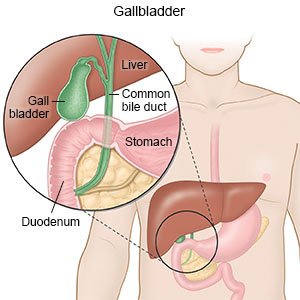 |
What causes cholecystitis?
- Gallstones
- Gallbladder damage from surgery or illness
- A bacterial infection
- Narrowing of the bile duct (bile flows from your gallbladder to your intestine through the bile duct)
- One or more tumors
What increases my risk for cholecystitis?
- Age older than 40
- Being female or pregnant
- Obesity
- A high-fat diet or total parenteral nutrition (TPN)
- Certain conditions such as diabetes or HIV
- Rapid weight loss
What are the signs and symptoms of cholecystitis?
- Pain in your upper right abdomen, often after you eat a big meal with fatty foods
- Pain that moves to your shoulder or back
- Fever or chills
- Nausea or vomiting
Related medications
How is cholecystitis diagnosed?
Your healthcare provider will ask you about your signs and symptoms. Your provider will press on your abdomen to find out where it hurts. You may also need any of the following:
- Blood and urine tests may show infection or liver damage.
- An ultrasound or CT may show one or more gallstones. You may be given contrast liquid to help the gallbladder show up better in the pictures. Tell the healthcare provider if you have ever had an allergic reaction to contrast liquid.
How is cholecystitis treated?
Treatment depends on whether your cholecystitis is mild, moderate, or severe.
- Medicines may be used to treat or prevent pain or a bacterial infection.
- A procedure or surgery may be needed. Surgery is done to remove your gallbladder. If you are not able to have surgery, bile may be drained over several days or weeks through a tube.
Treatment options
The following list of medications are related to or used in the treatment of this condition.
When should I seek immediate care?
- You have severe pain in your abdomen.
- You cannot stop vomiting.
When should I call my doctor?
- You have a fever or chills.
- Your skin or the whites of your eyes turn yellow.
- You have questions or concerns about your condition or care.
Care Agreement
You have the right to help plan your care. Learn about your health condition and how it may be treated. Discuss treatment options with your healthcare providers to decide what care you want to receive. You always have the right to refuse treatment. The above information is an educational aid only. It is not intended as medical advice for individual conditions or treatments. Talk to your doctor, nurse or pharmacist before following any medical regimen to see if it is safe and effective for you.© Copyright Merative 2025 Information is for End User's use only and may not be sold, redistributed or otherwise used for commercial purposes.
Learn more about Cholecystitis
Treatment options
- Medications for Acute Cholecystitis
- Medications for Cholecystitis
- Medications for Gallbladder Disease
Symptoms and treatments
Further information
Always consult your healthcare provider to ensure the information displayed on this page applies to your personal circumstances.