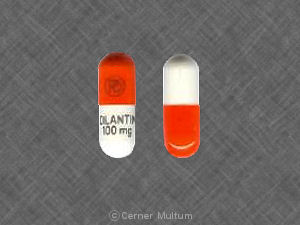
Dilantin Side Effects
Generic name: phenytoin
Medically reviewed by Drugs.com. Last updated on Jun 30, 2024.
Note: This document provides detailed information about Dilantin Side Effects associated with phenytoin. Some dosage forms listed on this page may not apply specifically to the brand name Dilantin.
Applies to phenytoin: oral capsule extended release, oral suspension, oral tablet chewable.
Other dosage forms:
Precautions
It is very important that your doctor check your or your child's progress at regular visits while using this medicine to see if it is working properly and to allow for a change in the dose. Blood and urine tests may be needed to check for any unwanted effects.
Using this medicine while you are pregnant can harm your unborn baby. Use an effective form of birth control to keep from getting pregnant. If you think you have become pregnant while using the medicine, tell your doctor right away.
Do not use this medicine if you or your child are also using delavirdine (Rescriptor®). Using these medicines together may cause unwanted effects.
Lymph node problems may occur while using this medicine. Check with your doctor right away if you or your child have swollen, painful, or tender lymph glands in your neck, armpit, or groin.
Do not suddenly stop using this medicine without checking first with your doctor. Stopping the medicine suddenly may cause your seizures to return or to occur more often. Your doctor may want you or your child to gradually reduce the amount you are using before stopping it completely.
This medicine may cause serious allergic reactions, including angioedema, which can be life-threatening and require immediate medical attention. Tell your doctor right away if you or your child have large, hive-like swelling on the face, eyelids, lips, tongue, throat, hands, legs, feet, or sex organs after using this medicine.
Serious skin reactions (eg, Stevens-Johnson syndrome, toxic epidermal necrolysis, and acute generalized exanthematous pustulosis) can occur while using this medicine. Check with your doctor right away if you have blistering, peeling, or loosening of the skin, chills, cough, diarrhea, itching, joint or muscle pain, red irritated eyes, red skin lesions, often with a purple center, sore throat, sores, ulcers, or white spots in the mouth or on the lips, or unusual tiredness or weakness with this medicine.
Tell your doctor right away if you or your child develop a fever, rash, swollen, painful, or tender lymph glands in the neck, armpit, or groin, unusual bleeding or bruising, or yellow eyes or skin after using this medicine. These may be symptoms of a serious and life-threatening condition called drug reaction with eosinophilia and systemic symptoms (DRESS).
Phenytoin may cause heart problems, including a slow heartbeat. Check with your doctor right away if you have chest pain, dizziness, or tiredness.
This medicine may cause liver problems. Check with your doctor right away if you have pain or tenderness in the upper stomach, pale stools, dark urine, loss of appetite, nausea, vomiting, or yellow eyes or skin.
Phenytoin can temporarily lower the number of white blood cells in your blood, increasing the chance of getting an infection. It can also lower the number of platelets, which are necessary for proper blood clotting. If this occurs, there are certain precautions you can take, especially when your blood count is low, to reduce the risk of infection or bleeding:
- If you can, avoid people with infections. Check with your doctor immediately if you think you are getting an infection or if you get a fever or chills, cough or hoarseness, lower back or side pain, or painful or difficult urination.
- Check with your doctor immediately if you notice any unusual bleeding or bruising, black, tarry stools, blood in the urine or stools, or pinpoint red spots on your skin.
- Be careful when using a regular toothbrush, dental floss, or toothpick. Your medical doctor, dentist, or nurse may recommend other ways to clean your teeth and gums. Check with your medical doctor before having any dental work done.
- Do not touch your eyes or the inside of your nose unless you have just washed your hands and have not touched anything else in the meantime.
- Be careful not to cut yourself when you are using sharp objects such as a safety razor or fingernail or toenail cutters.
- Avoid contact sports or other situations where bruising or injury could occur.
This medicine may decrease the density of bones, which can make your bones weak. Talk with your doctor if you have any concerns about this.
This medicine may affect blood sugar levels. If you or your child notice a change in the results of your blood or urine sugar tests or if you have any questions, check with your doctor.
This medicine may cause some people to be agitated, irritable, or display other abnormal behaviors. It may also cause some people to have suicidal thoughts and tendencies or to become more depressed. Make sure the doctor knows if you have trouble sleeping, get upset easily, have a big increase in energy, or start to act reckless. Also tell the doctor if you have sudden or strong feelings, such as feeling nervous, angry, restless, violent, or scared. If you, your child, or your caregiver notice any of these side effects, tell your doctor right away.
In some patients (usually younger patients), tenderness, swelling, or bleeding of the gums (gingival hyperplasia) may appear soon after phenytoin (the active ingredient contained in Dilantin) treatment is started. To help prevent this, brush and floss your teeth carefully and regularly and massage your gums. Also, see your dentist every 6 months to have your teeth cleaned. If you have any questions about how to take care of your teeth and gums, or if you notice any tenderness, swelling, or bleeding of your gums, check with your doctor or dentist.
Before you have any medical tests, tell the medical doctor in charge that you or your child are taking this medicine. The results of some tests may be affected by this medicine.
This medicine may cause drowsiness, trouble thinking, or trouble in controlling movements. Make sure you know how you or your child react to this medicine before you drive, use machines, climb in high places, swim, or do anything else that could be dangerous if you are not alert, well-coordinated, or able to think or see well.
Avoid drinking alcohol while you are using this medicine.
Using this medicine together with valproate (Depacon®, Depakene®) may increase the risk of having hyperammonemia (too much ammonia in your blood), which may damage the brain and can be life-threatening. Check with your doctor right away if you or your child have nausea or vomiting that continues, an increase in the frequency of seizures, loss of appetite, swelling of the face, tiredness and weakness, or yellow eyes or skin.
Do not take other medicines unless they have been discussed with your doctor. This includes prescription or nonprescription (over-the-counter [OTC]) medicines and herbal or vitamin supplements.
Serious side effects of Dilantin
Along with its needed effects, phenytoin may cause some unwanted effects. Although not all of these side effects may occur, if they do occur they may need medical attention.
Check with your doctor immediately if any of the following side effects occur while taking phenytoin:
More common side effects
- decreased coordination
- mental confusion
- nervousness
- slurred speech
- trouble with breathing, speaking, or swallowing
- unsteadiness, trembling, or other problems with muscle control or coordination
Rare side effects
- inability to move the eyes
- increased blinking or spasms of the eyelid
- shakiness and unsteady walk
- shakiness in the legs, arms, hands, or feet
- sticking out of the tongue
- trembling or shaking of the hands or feet
- twitching, twisting, or uncontrolled repetitive movements of the tongue, lips, face, arms, or legs
- uncontrolled twisting movements of the neck, trunk, arms, or legs
- unusual facial expressions
Incidence not known
- bleeding gums
- blistering, peeling, or loosening of the skin
- blisters, hives, itching, skin rash
- bloating of the abdomen or stomach
- blood in the urine or stools
- bloody, black, or tarry stools
- chest pain or discomfort
- chills
- cough
- dark urine
- diarrhea
- difficulty with moving
- fainting spells
- fever with or without chills
- general feeling of discomfort or illness
- hair loss
- headache
- high fever
- hoarseness
- irritation in the mouth
- joint or muscle pain
- light-colored stools
- lightheadedness or dizziness
- lower back or side pain
- muscle stiffness
- nausea
- numbness, tingling, or pain in the hands or feet
- painful or difficult urination
- pale skin
- pinpoint red spots on the skin
- red skin lesions, often with a purple center
- red, irritated eyes
- redness and swelling of the gums
- slow or irregular heartbeat
- sore throat
- sores, ulcers, or white spots on the lips or in the mouth
- stomach pain
- swollen, painful, or tender lymph glands in the neck, armpit, or groin
- unusual bleeding or bruising
- unusual tiredness or weakness
- upper right abdominal or stomach pain
- vomiting
- weight loss
- yellow eyes or skin
Other side effects of Dilantin
Some side effects of phenytoin may occur that usually do not need medical attention. These side effects may go away during treatment as your body adjusts to the medicine. Also, your health care professional may be able to tell you about ways to prevent or reduce some of these side effects.
Check with your health care professional if any of the following side effects continue or are bothersome or if you have any questions about them:
More common side effects
- trouble sleeping
- uncontrolled eye movements
Incidence not known
- difficulty having a bowel movement
- enlarged lips
- feeling of constant movement of self or surroundings
- increased hair growth on the forehead, back, arms, or legs
- pain of the penis on erection
- sensation of spinning
See also:
Lamictal
Lamictal is an anti-epileptic medication used treat seizures in adults and children over 2 years ...
Carbamazepine
Carbamazepine is used to treat epileptic seizures and nerve pain such as trigeminal neuralgia ...
Botox
Botox is used cosmetically to reduce facial lines and wrinkles and for medical purposes for ...
Levetiracetam
Levetiracetam is used for bipolar disorder, epilepsy, hyperekplexia, neuralgia, new daily ...
Lyrica
Lyrica is used to control seizures, treat nerve pain and fibromyalgia. Learn about side effects ...
Topiramate
Learn about topiramate, an anticonvulsant used for seizures, migraine prevention, and weight loss ...
Diazepam
Diazepam is used to treat anxiety disorders, alcohol withdrawal symptoms, or muscle spasms. Learn ...
Lorazepam
Lorazepam is in a group of drugs called benzodiazepines and is used to treat anxiety disorders ...
Pregabalin
Pregabalin may be used to treat certain types of pain and used in combination with other ...
Lamotrigine
Lamotrigine is used for anxiety, bipolar disorder, borderline personality disorder, cyclothymic ...
For healthcare professionals
Applies to phenytoin: compounding powder, injectable solution, oral capsule, oral capsule extended release, oral suspension, oral tablet chewable.
Cardiovascular adverse events
- Common (1% to 10%): Hypotension, vasodilation, tachycardia
- Uncommon (0.1% to 1%): Shock, cardiac arrest, syncope, cerebral hemorrhage, palpitation, sinus bradycardia, atrial flutter, bundle branch block, cardiomegaly, cerebral infarct, postural hypotension, pulmonary embolus, QT interval prolongation, thrombophlebitis, ventricular extrasystoles, congestive heart failure
- Frequency not reported: Cardiovascular collapse, severe cardiotoxic reactions with atrial and ventricular conduction depression (including bradycardia and all degrees of heart block), asystole ventricular fibrillation, periarteritis nodosa[Ref]
Dermatologic
- Very common (10% or more): Rash (more serious and rare forms have included bullous, exfoliative or purpuric dermatitis, lupus erythematosus, Stevens-Johnson syndrome and toxic epidermal necrolysis), pruritus
- Common (1% to 10%): Maculopapular rash, urticaria, sweating, skin discoloration, contact dermatitis, pustular rash, skin nodule, ecchymosis
- Frequency not reported: Hirsutism, hypertrichosis, coarsening of the facial features, enlargement of the lips, Peyronie's disease. Dupuytren's contracture and drug rash with eosinophilia and systemic symptoms (DRESS), erythema multiforme, SJS/TEN risk in patients of Asian ancestry who have HLA-B 1502[Ref]
Endocrine
- Frequency not reported: Decreased serum T4 and FT4, increased serum estradiol levels, gynecomastia, alterations in vitamin D metabolism[Ref]
Gastrointestinal
- Very common (10% or more): Nausea (13%)
- Common (1% to 10%): Tongue disorder, dry mouth, vomiting, constipation
- Uncommon (0.1% to 1%): Dyspepsia, diarrhea, anorexia, GI hemorrhage, increased salivation, tenesmus, tongue edema, dysphagia, flatulence, gastritis, ileus
- Frequency not reported: Hypoesthesia of the tongue, gingival hyperplasia[Ref]
Genitourinary
- Uncommon (0.1% to 1%): Urinary retention, oliguria, dysuria, vaginitis, albuminuria, genital edema, polyuria, urethral pain, urinary incontinence, vaginal moniliasis
- Frequency not reported: Feeling of warmth or tingling in the groin, Peyronie's disease[Ref]
Hematologic
- Common (1% to 10%): Ecchymosis
- Uncommon (0.1% to 1%): Thrombocytopenia, anemia, leukocytosis, cyanosis, hypochromic anemia, leukopenia, lymphadenopathy, petechia
- Frequency not reported: Granulocytopenia, agranulocytosis, pancytopenia (with or without bone marrow suppression), aplastic anemia[Ref]
Hepatic
- Uncommon (0.1% to 1%): Liver function tests abnormal, kidney failure
- Frequency not reported: Toxic hepatitis, hepatocellular damage[Ref]
Hypersensitivity
- Frequency not reported: Hypersensitivity syndrome, periarteritis nodosa
- Postmarketing reports: Anaphylactoid reaction, anaphylaxis[Ref]
Immunologic
- Uncommon (0.1% to 1%): Sepsis, flu syndrome, cryptococcosis
- Frequency not reported: Immunoglobulin abnormalities[Ref]
Local
- Common (1% to 10%): Injection site reaction, injection site pain
- Uncommon (0.1% to 1%): Injection site inflammation, injection site edema, injection site hemorrhage[Ref]
Metabolic
- Uncommon (0.1% to 1%): Generalized edema, cachexia, diabetes insipidus
- Frequency not reported: Hyperglycemia, appetite disorder, hypokalemia[Ref]
Musculoskeletal
- Common (1% to 10%): Back pain, chills, myasthenia
- Uncommon (0.1% to 1%): Myopathy, leg cramps, arthralgia, myalgia, muscular weakness, muscle twitching, muscle spasms
- Frequency not reported: Systemic lupus erythematosus, polyarthritis, Purple Glove Syndrome[Ref]
Nervous system
- Very common (10% or more): Nystagmus (59%), dizziness (31%), somnolence (27%), ataxia (18%)
- Common (1% to 10%): Headache, stupor, incoordination, paresthesia, extrapyramidal syndrome, tremor, vertigo, brain edema, tinnitus, taste perversion (including metallic taste), taste loss, reflexes decreased, reflexes increased, migraine, slurred speech, dysarthria, intracranial hypertension, hyperesthesia, hyporeflexia
- Uncommon (0.1% to 1%): Twitching, Babinski sign positive, circumoral paresthesia, hemiplegia, hypotonia, convulsion, meningitis, CNS depression, hypokinesia, hyperkinesia, brain edema, paralysis, aphasia, coma, myoclonus, acute brain syndrome, encephalitis, subdural hematoma, encephalopathy, akathisia
- Frequency not reported: CNS depression, dyskinesia (including chorea), dystonia and asterixis similar to those induced by phenothiazines or other neuroleptic drugs, drowsiness, motor twitching, tonic seizures, sensory peripheral polyneuropathy (in patients receiving long-term therapy)[Ref]
Ocular
- Common (1% to 10%): Diplopia, amblyopia, blurred vision, visual impairment
- Uncommon (0.1% to 1%): Photosensitivity reaction, photophobia, eye pain, mydriasis, visual field defect[Ref]
Other
- Common (1% to 10%): Asthenia, deafness, accidental injury, fever, face edema, hyperacusis, parosmia, ear pain
- Uncommon (0.1% to 1%): Malaise[Ref]
Renal
- Common (1% to 10%): Pelvic pain
- Uncommon (0.1% to 1%): Kidney failure[Ref]
Respiratory
- Common (1% to 10%): Pneumonia
- Uncommon (0.1% to 1%): Pharyngitis, sinusitis, hyperventilation, rhinitis, apnea, aspiration pneumonia, asthma, dyspnea, atelectasis, cough increased, sputum increased, epistaxis, hypoxia, pneumothorax, hemoptysis, bronchitis
- Postmarketing reports: Respiratory arrest (sometimes fatal)[Ref]
Psychiatric
- Common (1% to 10%): Agitation, thinking abnormal, nervousness, depression
- Uncommon (0.1% to 1%): Confusion, insomnia, depersonalization, psychosis, emotional lability, personality disorder, hostility, amnesia, neurosis, euphoric mood[Ref]
References
1. (2001) "Product Information. Dilantin (phenytoin)." Parke-Davis
2. Cerner Multum, Inc. "UK Summary of Product Characteristics."
3. Pharmaceutical Society of Australia (2006) APPGuide online. Australian prescription products guide online. http://www.appco.com.au/appguide/default.asp
More about Dilantin (phenytoin)
- Check interactions
- Compare alternatives
- Pricing & coupons
- Reviews (78)
- Drug images
- Dosage information
- During pregnancy
- Generic availability
- Drug class: hydantoin anticonvulsants
- Breastfeeding
Patient resources
Other brands
Phenytek, Phenytoin Sodium, Prompt
Professional resources
- Dilantin prescribing information
- Dilantin Infatabs (FDA)
- Dilantin-125 (FDA)
- Phenytoin, Phenytoin Sodium (AHFS Monograph)
Other brands
Related treatment guides
Further information
Dilantin side effects can vary depending on the individual. Always consult your healthcare provider to ensure the information displayed on this page applies to your personal circumstances.
Note: Medication side effects may be underreported. If you are experiencing side effects that are not listed, submit a report to the FDA by following this guide.