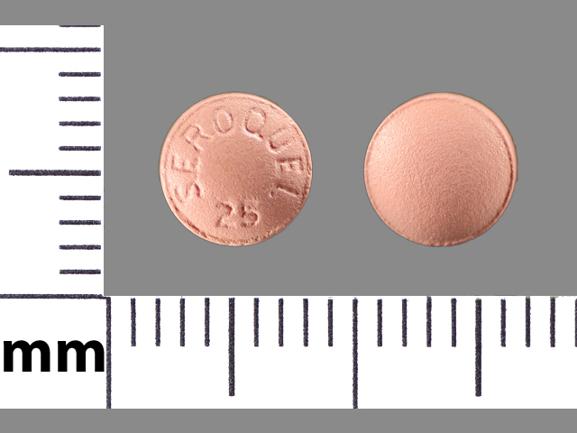
Seroquel Side Effects
Generic name: quetiapine
Medically reviewed by Drugs.com. Last updated on Mar 20, 2025.
Note: This document provides detailed information about Seroquel Side Effects associated with quetiapine. Some dosage forms listed on this page may not apply specifically to the brand name Seroquel.
Applies to quetiapine: oral tablet, oral tablet extended release.
Important warnings
This medicine can cause some serious health issues
Oral route (tablet; tablet, extended release)
Increased Mortality in Elderly Patients with Dementia-Related Psychosis. Elderly patients with dementia-related psychosis treated with antipsychotic drugs are at an increased risk of death.
Quetiapine fumarate is not approved for the treatment of patients with dementia-related psychosis.Suicidal Thoughts and Behaviors. Increased risk of suicidal thoughts and behavior in children, adolescents and young adults taking antidepressants.Monitor for worsening and emergence of suicidal thoughts and behaviors.
Precautions
It is very important that your doctor check your or your child's progress at regular visits to make sure this medicine is working properly. Blood and urine tests may be needed to check for unwanted effects. You may also need to have your eyes tested on a regular basis.
This medicine may add to the effects of alcohol and other CNS depressants (medicines that make you drowsy or less alert). Some examples of CNS depressants are antihistamines or medicine for hay fever, other allergies, or colds, sedatives, tranquilizers, or sleeping medicine, prescription pain medicine or narcotics, medicine for seizures or barbiturates, muscle relaxants, or anesthetics, including some dental anesthetics. Check with your doctor before taking any of the above while you are using quetiapine (the active ingredient contained in Seroquel).
For some patients, this medicine can increase thoughts of suicide. Tell your doctor right away if you start to feel more depressed and have thoughts about hurting yourself. Report any unusual thoughts or behaviors that trouble you, especially if they are new or are getting worse quickly. Make sure the doctor knows if you have trouble sleeping, get upset easily, have a big increase in energy, or start to act reckless. Also tell the doctor if you have sudden or strong feelings, such as feeling nervous, angry, restless, violent, or scared. Let the doctor know if you or anyone in your family has bipolar disorder (manic-depressive illness) or has tried to commit suicide.
Quetiapine may cause drowsiness, trouble with thinking, trouble with controlling body movements, or trouble with your vision (especially during the first week of use), which may lead to falls, fractures, or other injuries. Do not drive or do anything else that could be dangerous until you know how this medicine affects you.
This medicine may increase the amount of sugar in your blood. Check with your doctor right away if you have increased thirst or urination. If you have diabetes, the results of your urine or blood sugar tests may change. Check your blood sugar closely and talk with your doctor if you have any questions.
Check with your doctor right away if you have convulsions (seizures), difficulty breathing, a fast heartbeat, high fever, high or low blood pressure, increased sweating, loss of bladder control, severe muscle stiffness, unusually pale skin, or tiredness. These could be symptoms of a serious condition called neuroleptic malignant syndrome (NMS).
Dizziness, lightheadedness, or fainting may occur, especially when you get up suddenly from a lying or sitting position. Getting up slowly may help. If the problem continues or gets worse, check with your doctor.
Quetiapine can temporarily lower the number of white blood cells in your blood, increasing the chance of getting an infection. It can also lower the number of platelets, which are necessary for proper blood clotting. If this occurs, there are certain precautions you can take, especially when your blood count is low, to reduce the risk of infection or bleeding:
- If you can, avoid people with infections. Check with your doctor immediately if you think you are getting an infection or if you get a fever or chills, cough or hoarseness, lower back or side pain, or painful or difficult urination.
- Check with your doctor immediately if you notice any unusual bleeding or bruising, black, tarry stools, blood in the urine or stools, or pinpoint red spots on your skin.
- Be careful when using a regular toothbrush, dental floss, or toothpick. Your medical doctor, dentist, or nurse may recommend other ways to clean your teeth and gums. Check with your medical doctor before having any dental work done.
- Do not touch your eyes or the inside of your nose unless you have just washed your hands and have not touched anything else in the meantime.
- Be careful not to cut yourself when you are using sharp objects such as a safety razor or fingernail or toenail cutters.
- Avoid contact sports or other situations where bruising or injury could occur.
This medicine may cause tardive dyskinesia (a movement disorder). Check with your doctor right away if you have lip smacking or puckering, puffing of the cheeks, rapid or worm-like movements of the tongue, uncontrolled chewing movements, or uncontrolled movements of the arms and legs.
Quetiapine may increase your cholesterol and fats in the blood. If this condition occurs, your doctor may give you medicine to lower the cholesterol and fats in the blood.
This medicine may increase your weight. Your doctor may need to check your weight on a regular basis while you are using this medicine.
You will need to have your blood pressure measured before starting this medicine and while you are using it. If you notice any changes to your recommended blood pressure, call your doctor right away. If you have questions about this, talk to your doctor.
This medicine can cause changes in your heart rhythm, such as a condition called QT prolongation. It may change the way your heart beats and cause fainting or serious side effects. Contact your doctor right away if you have symptoms of heart rhythm problems, such as a fast, pounding, or uneven heartbeat.
Quetiapine may make it more difficult for your body to cool down. It might reduce how much you sweat. Your body could get too hot if you do not sweat enough. If your body gets too hot, you might feel dizzy, weak, tired, or confused. You might vomit or have an upset stomach. Do not get too hot while you are exercising. Avoid places that are very hot. Call your doctor if you are too hot and can not cool down.
Do not suddenly Stop taking quetiapine without checking first with your doctor. Your doctor may want you to gradually reduce the amount you are using before stopping it completely. This will decrease the chance of having withdrawal symptoms such as nausea, vomiting, insomnia, dizziness, irritability, or headache.
Before you have any medical tests, tell the medical doctor in charge that you are taking this medicine. The results of some tests (eg, urine drug screens) may be affected by this medicine.
Do not take other medicines unless they have been discussed with your doctor. This includes prescription or nonprescription (over-the-counter [OTC]) medicines and herbal (eg, St. John's wort) or vitamin supplements.
Serious side effects of Seroquel
Along with its needed effects, quetiapine may cause some unwanted effects. Although not all of these side effects may occur, if they do occur they may need medical attention.
Check with your doctor immediately if any of the following side effects occur while taking quetiapine:
More common side effects
- chills
- cold sweats
- confusion
- dizziness, faintness, or lightheadedness when getting up suddenly from a lying or sitting position
- sleepiness or unusual drowsiness
Less common side effects
- black, tarry stools
- blurred vision
- changes in patterns and rhythms of speech
- chest pain
- cough
- drooling
- fever
- inability to move the eyes
- inability to sit still
- increased blinking or spasms of the eyelid
- lip smacking or puckering
- loss of balance control
- mask-like face
- muscle aches
- need to keep moving
- painful or difficult urination
- puffing of the cheeks
- rapid or worm-like movements of the tongue
- restlessness
- shakiness in the legs, arms, hands, or feet
- shuffling walk
- slowed movements
- slurred speech
- sore throat
- sores, ulcers, or white spots on the lips or in the mouth
- sticking out of the tongue
- stiffness of the arms or legs
- sweating
- swelling of the face, arms, hands, feet, or lower legs
- swollen glands
- trembling and shaking of the hands and fingers
- trouble with breathing, speaking, or swallowing
- uncontrolled chewing movements
- uncontrolled movements of the arms and legs
- uncontrolled twisting movements of the neck, trunk, arms, or legs
- unusual bleeding or bruising
- unusual facial expressions
- unusual tiredness or weakness
Rare side effects
- dry, puffy skin
- fast, pounding, or irregular heartbeat
- loss of appetite
- menstrual changes
- unusual secretion of milk (in females)
- weight gain
Incidence not known
- aching or discomfort in the lower legs or sensation of crawling in the legs
- agitation
- bed-wetting
- blistering, peeling, or loosening of the skin
- bloating
- bluish lips or skin
- chest discomfort
- constipation
- dark urine
- decreased awareness or responsiveness
- decreased urine output
- depression
- diarrhea
- difficulty breathing
- difficulty in passing urine (dribbling)
- difficulty swallowing
- dizziness
- faintness
- general feeling of tiredness or weakness
- headache
- hives, itching, skin rash
- hoarseness
- increased thirst
- indigestion
- irritability
- joint or muscle pain
- light-colored stools
- loss of consciousness
- lower back or side pain
- muscle cramps, spasms, stiffness, or twitching
- nausea
- painful or prolonged erection of the penis
- painful urination
- pains in the stomach, side, or abdomen, possibly radiating to the back
- puffiness or swelling of the eyelids or around the eyes, face, lips, or tongue
- red skin lesions, often with a purple center
- red, irritated eyes
- seizures
- severe constipation
- severe sleepiness
- severe vomiting
- sore throat
- stomach pain, continuing
- tightness in the chest
- tingling of the hands or feet
- unusual bleeding or bruising unusual drowsiness, dullness, or feeling of sluggishness
- unusual weight gain or loss
- upper right abdominal pain
- vomiting
- yellow eyes or skin
Other side effects of Seroquel
Some side effects of quetiapine may occur that usually do not need medical attention. These side effects may go away during treatment as your body adjusts to the medicine. Also, your health care professional may be able to tell you about ways to prevent or reduce some of these side effects.
Check with your health care professional if any of the following side effects continue or are bothersome or if you have any questions about them:
Less common side effects
- abnormal vision
- belching
- decreased appetite
- decreased strength and energy
- heartburn
- increased appetite
- increased muscle tone
- increased sweating
- indigestion
- sneezing
- stomach discomfort or upset
- stuffy or runny nose
See also:
For healthcare professionals
Applies to quetiapine: oral tablet, oral tablet extended release.
General adverse events
IR Formulations: The most commonly reported side effects included somnolence, dry mouth, weight gain, elevated triglycerides, headache, and agitation.
XR/XL Tablets: The most commonly reported side effects included somnolence, dry mouth, and sedation.[Ref]
Nervous system
IR Formulations:
- Very common (10% or more): Somnolence (up to 57%), headache (up to 21%), dizziness (up to 19%), sedation (up to 18.3%), extrapyramidal symptoms (up to 12.9%)
- Common (1% to 10%): Akathisia, ataxia, balance disorder, dysarthria, dyskinesia, dyskinetic event, dystonic event, extrapyramidal disorder, hypersomnia, hypertonia, hypoesthesia, incoordination, lethargy, other extrapyramidal event, paresthesia, parkinsonism, restless legs syndrome, seizure, speech disorder, syncope, tardive dyskinesia, tremor
- Uncommon (0.1% to 1%): Amnesia, cerebrovascular accident, hemiplegia, hyperkinesia, involuntary movements, migraine, myoclonus, stupor, taste perversion, vertigo
- Rare (0.01% to 0.1%): Aphasia, cerebral ischemia, choreoathetosis, neuralgia, neuroleptic malignant syndrome (NMS), subdural hematoma
- Frequency not reported: Stroke
- Postmarketing reports: Cerebrovascular accident, retrograde amnesia
XR/XL Tablets:
- Very common (10% or more): Somnolence (up to 53%), sedation (up to 31.9%), dizziness (up to 18%), headache (up to 17.5%), extrapyramidal symptoms (up to 11.2%)
- Common (1% to 10%): Akathisia, disturbance in attention, dysarthria, dyskinetic event, dystonic event, hypersomnia, lethargy, mental impairment, migraine, other extrapyramidal event, paresthesia, parkinsonism, restless legs syndrome, sinus headache, syncope, tremor, vertigo
- Uncommon (0.1% to 1%): Seizure, tardive dyskinesia
- Rare (0.01% to 0.1%): NMS
- Frequency not reported: Akinesia, cerebrovascular adverse reactions, choreoathetosis, cognitive impairment, cogwheel rigidity, drooling, dyskinesia, dystonia, extrapyramidal disorder, hypertonia, hypokinesia, motor impairment, movement disorder, parkinsonian gait, psychomotor agitation, psychomotor hyperactivity, stroke
- Postmarketing reports: Cerebrovascular accident, retrograde amnesia[Ref]
Somnolence usually occurred during the first 2 weeks and resolved with continued therapy.[Ref]
Metabolic
IR Formulations:
- Very common (10% or more): Weight gain (up to 45%), elevated triglycerides (up to 23%), decreased fasting high-density lipoprotein (HDL) cholesterol (up to 18.3%), total cholesterol elevations (up to 16%), increased appetite (up to 10%)
- Common (1% to 10%): Anorexia, blood glucose increased to hyperglycemic levels, thirst
- Uncommon (0.1% to 1%): Alcohol intolerance, alkaline phosphatase increased, dehydration, diabetes mellitus, exacerbation of pre-existing diabetes, hyperglycemia, hyperlipidemia, hypoglycemia, hyponatremia, weight loss
- Rare (0.01% to 0.1%): Gout, hypokalemia, metabolic syndrome, water intoxication
XR/XL Tablets:
- Very common (10% or more): Triglyceride elevations (up to 18%), total cholesterol elevations (up to 17%), increased appetite (up to 12%)
- Common (1% to 10%): Blood glucose increased to hyperglycemic levels, decreased appetite, increased blood glucose, weight gain/weight increased
- Uncommon (0.1% to 1%): Diabetes mellitus, exacerbation of pre-existing diabetes, hyponatremia
- Rare (0.01% to 0.1%): Metabolic syndrome[Ref]
Atypical antipsychotic drugs have been associated with metabolic changes that include hyperglycemia/diabetes mellitus, dyslipidemia, and weight gain. While these effects have been shown as a class effect, each agent has its own profile.
Hyperglycemia: Adults: In controlled clinical trials of 12 weeks or less, 2.4% of patients with normal (less than 100 mg/dL) fasting plasma glucose (FPG) had at least 1 FPG reading of 126 mg/dL or greater (vs. placebo 1.4%) during treatment. For patients with baseline borderline to high FPG (100 mg/dL or higher), 11.7% had at least 1 FPG reading of 126 mg/dL or greater (vs. placebo, 11.8%). In 2 longer-term trials, the mean change in blood glucose from baseline in patients treated with this drug (mean exposure 213 days; n=646) was 5 mg/dL (vs. placebo -0.05 mg/dL). Among patients with major depressive disorder receiving the extended-release formulation of this drug, a FBG greater than 126 mg/dL occurred in 7%, 12%, and 6% of those receiving 150 mg, 300 mg, or placebo. In a study of patients 10 to 17 years old with bipolar mania, the mean change in fasting glucose was 3.62 mg/dL (n=170). No patients with a baseline fasting glucose level lower than 126 mg/dL had a treatment-emergent blood glucose level greater than 126 mg/dL.
Dyslipidemia: Across indications, adult patients who experienced shifts in total cholesterol, triglycerides, LDL-cholesterol, and HDL-cholesterol from baseline to clinically significant levels occurred in up to 18%, 22%, 6%, and 14% of patients receiving this drug compared with up to 7%, 16%, 5%, and 14% receiving placebo, respectively. For pediatric patients, the shifts were up to 12%, 22%, 8%, and 15% compared to up to 3%, 13%, 5%, and 19% for this drug and placebo, respectively.
Weight gain: Logistic regression analysis has shown a positive dose response for weight gain. Five to 10% of adult patients experienced a weight gain of 7% or greater (vs. up to 5% in placebo). Among children and adolescents, a weight gain of 7% or greater occurred in 7% to 21% of patients receiving this drug compared with up to 7% in placebo patients. Mean change in body weight was 1.7 to 2 kg in 3- to 6-week trials and 4.4 kg in 26-week trials. These results were not adjusted for normal growth.[Ref]
Gastrointestinal
IR Formulations:
- Very common (10% or more): Dry mouth (up to 44%), vomiting (up to 10.8%), constipation (up to 10%), nausea (up to 10%)
- Common (1% to 10%): Abdominal pain, diarrhea, dyspepsia, dysphagia, gastroenteritis, gastroesophageal reflux disease (GERD), stomach discomfort, stomatitis, tooth abscess
- Uncommon (0.1% to 1%): Fecal incontinence, flatulence, gastritis, gingivitis, gum hemorrhage, hemorrhoids, increased salivation, rectal hemorrhage, tongue edema, tooth caries, mouth ulceration
- Rare (0.01% to 0.1%): Abdomen enlarged, buccoglossal syndrome, glossitis, hematemesis, intestinal ileus, intestinal obstruction, melena, pancreatitis
XR/XL Tablets:
- Very common (10% or more): Dry mouth (up to 40%), nausea (up to 13.3%), constipation (up to 11%)
- Common (1% to 10%): Diarrhea, dyspepsia, toothache, viral gastroenteritis, vomiting
- Uncommon (0.1% to 1%): Dysphagia
- Rare (0.01% to 0.1%): Intestinal ileus, intestinal obstruction, pancreatitis[Ref]
Logistic regression analysis has shown a positive dose response for dyspepsia and abdominal pain.[Ref]
Other
IR Formulations:
- Very common (10% or more): Asthenia (up to 17.6%), fatigue (up to 14%)
- Common (1% to 10%): Accidental overdose, ear pain, fever, heaviness, mild asthenia, pain, pyrexia
- Uncommon (0.1% to 1%): Abnormal gait, chills, malaise, tinnitus
- Rare (0.01% to 0.1%): Hypothermia, deafness
- Frequency not reported: Falls, increased mortality
XR/XL Tablets:
- Very common (10% or more): Fatigue (up to 14%)
- Common (1% to 10%): Ear pain, fall, mild asthenia, pyrexia, sluggishness
- Rare (0.01% to 0.1%): Hypothermia
- Frequency not reported: Increased mortality[Ref]
Psychiatric
IR Formulations:
- Very common (10% or more): Agitation (up to 20%), discontinuation symptoms (up to 16%)
- Common (1% to 10%): Abnormal dreams, aggression, anxiety, depression, insomnia, irritability, nightmares, suicidal behavior, suicidal ideation, suicide-related events, thinking abnormal
- Uncommon (0.1% to 1%): Apathy, bruxism, catatonic reaction, confusion, delusions, depersonalization, hallucinations, libido increased, manic reaction, paranoid reaction, psychosis, suicide attempt
- Rare (0.01% to 0.1%): Delirium, emotional lability, euphoria, libido decreased, neonatal withdrawal, sleep-related eating disorder, sleep talking, somnambulism and other related events, stuttering
- Frequency not reported: Drug withdrawal syndrome neonatal
- Postmarketing reports: Nocturnal enuresis
XR/XL Tablets:
- Common (1% to 10%): Abnormal dreams, anxiety, confusional state, depression, discontinuation/withdrawal symptoms, disorientation, insomnia, irritability, libido decreased, nightmares, restlessness, schizophrenia, suicidal behavior, suicidal ideation, suicide-related events
- Rare (0.01% to 0.1%): Sleep-related eating disorder, sleep talking, somnambulism and related reactions
- Frequency not reported: Drug withdrawal syndrome neonatal
- Postmarketing reports: Nocturnal enuresis[Ref]
Cardiovascular
Immediate-Release (IR) Formulations:
- Very common (10% or more): Postural hypotension (up to 12.2%), tachycardia (up to 11%)
- Common (1% to 10%): Hypotension, hypertension, increased blood pressure, orthostatic hypotension, pallor, palpitations, peripheral edema, sinus tachycardia
- Uncommon (0.1% to 1%): Bradycardia, bundle branch block, cyanosis, deep thrombophlebitis, irregular pulse, QT interval prolonged, T wave abnormality, T wave inversion, vasodilation
- Rare (0.01% to 0.1%): Angina pectoris, atrial fibrillation, atrioventricular (AV) block first degree, congestive heart failure, hand edema, increased QRS duration, ST abnormality, ST elevated, thrombophlebitis, T wave flattening, venous thromboembolism
- Postmarketing reports: Cardiomyopathy, myocarditis
Extended-Release (XR)/Prolonged-release (XL) Tablets:
- Common (1% to 10%): Heart rate increased, hypotension, increases in blood pressure, orthostatic hypotension, palpitations, peripheral edema, tachycardia
- Uncommon (0.1% to 1%): Bradycardia, QT prolongation
- Rare (0.01% to 0.1%): Venous thromboembolism
- Postmarketing reports: Cardiomyopathy, myocarditis[Ref]
Collective data gathered from 17 placebo-controlled clinical studies (n=5106) involving the use of atypical antipsychotic agents, including this drug, for the treatment of behavioral disorders in the elderly patient with dementia showed a risk of death 1.6 to 1.7 times greater in the drug treated patient than in the placebo treated patient. The average length of duration for the trials was 10 weeks with the cause of death in the majority of cases, though not all, reported as either cardiovascular (e.g., heart failure, sudden death) or infectious (e.g., pneumonia) in nature. Similar results (i.e., increased risk of mortality with atypical antipsychotics) were reported in another meta-analysis involving elderly dementia patients that consisted of 15 randomized, placebo-controlled trials (n=3353) of 10 to 12 weeks in duration. This drug should not be used to treat behavioral disorders in elderly patients with dementia.
An increased risk of mortality, possibly due to heart failure or sudden death, has been reported with the use of atypical antipsychotic agents in the treatment of behavioral disorders in the elderly patient with dementia.
The results of a large retrospective cohort study appear to indicate that atypical antipsychotic agents (e.g., clozapine, olanzapine, risperidone, this drug) increase the risk of venous thromboembolism in elderly patients; however, these events seem to be rare.
Blood pressure elevations described as systolic elevations of 20 mmHg or greater and diastolic elevations of 10 mmHg or greater were observed in 15.2% and 40.6% of children and adolescents, respectively. A child with a history of hypertension experienced a hypertensive crisis.
QT intervals have not been systematically evaluated. During clinical trials, persistent increases in QT intervals were not identified; however there have been postmarketing reports of QT prolongation in patients who overdosed on this drug, in patients with concomitant illness, and in patients taking drugs that are known to cause electrolyte imbalance or QT interval prolongation.[Ref]
Hematologic
IR Formulations:
- Very common (10% or more): Decreased hemoglobin (Up to 11%)
- Common (1% to 10%): Decreased neutrophil count, eosinophils increased, leukopenia, neutropenia
- Uncommon (0.1% to 1%): Anemia, eosinophilia, hypochromic anemia, leukocytosis, lymphadenopathy, platelet count decreased, severe neutropenia, thrombocytopenia
- Rare (0.01% to 0.1%): Agranulocytosis, hemolysis
XR/XL Tablets:
- Very common (10% or more): Decreased hemoglobin (up to 11%)
- Common (1% to 10%): Decreased neutrophil count, eosinophils increased, leukopenia
- Uncommon (0.1% to 1%): Anemia, neutropenia, platelet count decreased, thrombocytopenia
- Rare (0.01% to 0.1%): Agranulocytosis[Ref]
Respiratory
IR Formulations:
- Common (1% to 10%): Cough, cough increased, dyspnea, epistaxis, nasal congestion, nasopharyngitis, pharyngitis, rhinitis, sinus congestion, sinusitis, upper respiratory tract infection
- Uncommon (0.1% to 1%): Asthma, pneumonia
- Rare (0.01% to 0.1%): Hiccup, hyperventilation
XR/XL Tablets:
- Common (1% to 10%): Dyspnea, nasal congestion, nasopharyngitis, sinus congestion, sinusitis, upper respiratory tract infection
- Uncommon (0.1% to 1%): Rhinitis[Ref]
Endocrine
IR Formulations:
- Common (1% to 10%): Decreased total T3, decreased free T4, decreased total T4, hormone levels altered, hyperprolactinemia, hypothyroidism, increased thyroid stimulating hormone (TSH), serum prolactin elevations
- Uncommon (0.1% to 1%): Decreased free T3
- Rare (0.01% to 0.1%): Gynecomastia, hyperthyroidism
- Postmarketing reports: Syndrome of inappropriate antidiuretic hormone secretion (SIADH)
XR/XL Tablets:
- Common (1% to 10%): Decreased free T4, decreased total T3, decreased total T4, elevations in serum prolactin, hyperprolactinemia, increased TSH
- Uncommon (0.1% to 1%): Decreased free T3, hypothyroidism
- Very rare (less than 0.01%): SIADH[Ref]
In adults, dose-related decreases in thyroid hormone levels have been observed. It appears that maximal reductions in total and free thyroxine (T4) occur in the first 6 weeks of treatment and are maintained without adaptation or progression during chronic therapy. Upon therapy discontinuation, these effects mostly return to baseline values. The mechanism by which this drug affects the thyroid axis is unclear.[Ref]
Musculoskeletal
IR Formulations:
- Common (1% to 10%): Arthralgia, back pain, muscle rigidity, musculoskeletal stiffness, pain in extremity, twitching
- Uncommon (0.1% to 1%): Arthritis, bone pain, leg cramps, neck pain, myasthenia, pathological fracture
- Rare (0.01% to 0.1%): Elevations in blood creatine phosphokinase
- Very rare (less than 0.01%): Rhabdomyolysis
XR/XL Tablets:
- Common (1% to 10%): Arthralgia, back pain, muscle spasms, myalgia, neck pain
- Rare (0.01% to 0.1%): Elevations in blood creatine phosphokinase
- Very rare (less than 0.01%): Rhabdomyolysis
- Frequency not reported: Muscle rigidity, neck rigidity, nuchal rigidity[Ref]
Hepatic
IR Formulations:
- Common (1% to 10%): ALT increased, AST increased, GGT increased
- Rare (0.01% to 0.1%): Hepatitis, jaundice
- Postmarketing reports: Cholestatic liver injury, hepatic failure/fatal hepatic failure, hepatic steatosis, mixed liver injury
XR/XL Tablets:
- Common (1% to 10%): Elevations in ALT, elevations in GGT, transaminase elevations
- Uncommon (0.1% to 1%): Elevations in AST
- Rare (0.01% to 0.1%): Hepatitis, jaundice
- Postmarketing reports: Cholestatic liver injury, hepatic failure/fatal hepatic failure, hepatic steatosis, mixed liver injury[Ref]
Dermatologic
IR Formulations:
- Common (1% to 10%): Acne, rash, sweating
- Uncommon (0.1% to 1%): Allergic skin reactions, contact dermatitis, ecchymosis, eczema, face edema, maculopapular rash, photosensitivity reaction, pruritus, seborrhea, skin ulcer
- Rare (0.01% to 0.1%): Exfoliative dermatitis, psoriasis, skin discoloration
- Very rare (less than 0.01%): Stevens-Johnson syndrome (SJS)
- Frequency not reported: Drug reaction with eosinophilia and systemic symptoms (DRESS), erythema multiforme, toxic epidermal necrolysis (TEN)
XR/XL Tablets:
- Common (1% to 10%): Hyperhidrosis
- Uncommon (0.1% to 1%): Allergic skin reactions
- Very rare (less than 0.01%): SJS
- Frequency not reported: DRESS, erythema multiforme, TEN[Ref]
Immunologic
IR Formulations:
- Common (1% to 10%): Flu syndrome, infection
- Uncommon (0.1% to 1%): Moniliasis
XR/XL Tablets:
- Common (1% to 10%): Influenza, seasonal allergy[Ref]
Ocular
IR Formulations:
- Common (1% to 10%): Amblyopia, vision blurred
- Uncommon (0.1% to 1%): Abnormal vision, blepharitis, conjunctivitis, dry eyes, eye pain
- Rare (0.01% to 0.1%): Abnormality of accommodation, glaucoma
- Postmarketing reports: Cataract
XR/XL Tablets:
- Common (1% to 10%): Vision blurred
- Frequency not reported: Oculogyration
- Postmarketing reports: Cataract[Ref]
Genitourinary
IR Formulations:
- Common (1% to 10%): Urinary tract infection
- Uncommon (0.1% to 1%): Abnormal ejaculation, amenorrhea, cystitis, dysmenorrhea, dysuria, female lactation, impotence, leukorrhea, metrorrhagia, orchitis, pelvic pain, sexual dysfunction, urinary frequency, urinary incontinence, urinary retention, vaginal hemorrhage, vaginal moniliasis, vaginitis, vulvovaginitis
- Rare (0.01% to 0.1%): Breast swelling, galactorrhea, menstrual disorder, nocturia, polyuria, priapism
XR/XL Tablets:
- Common (1% to 10%): Pollakiuria
- Uncommon (0.1% to 1%): Sexual dysfunction, urinary retention
- Rare (0.01% to 0.1%): Breast swelling, galactorrhea, menstrual disorder, priapism[Ref]
Hypersensitivity
IR Formulations:
- Uncommon (0.1% to 1%): Hypersensitivity
- Very rare (less than 0.01%): Anaphylactic reaction, angioedema
XR/XL Tablets:
- Uncommon (0.1% to 1%): Hypersensitivity
- Very rare (less than 0.01%): Anaphylactic reaction, angioedema[Ref]
Renal
IR Formulations:
- Uncommon (0.1% to 1%): Creatinine increased
- Rare (0.01% to 0.1%): Acute kidney failure, glycosuria[Ref]
References
1. (2001) "Product Information. Seroquel (quetiapine)." Astra-Zeneca Pharmaceuticals
2. Cerner Multum, Inc. "UK Summary of Product Characteristics."
3. (2007) "Product Information. Seroquel XR (quetiapine)." Astra-Zeneca Pharmaceuticals
4. Cerner Multum, Inc. "Australian Product Information."
Frequently asked questions
- Does Seroquel (quetiapine) help you sleep?
- Can you overdose on Seroquel?
- Does Seroquel cause weight gain?
- How does Vraylar compare with Seroquel?
- What drugs cause tardive dyskinesia?
- What are the strongest sleeping pills?
More about Seroquel (quetiapine)
- Check interactions
- Compare alternatives
- Pricing & coupons
- Reviews (698)
- Drug images
- Dosage information
- Patient tips
- During pregnancy
- Generic availability
- Support group
- Drug class: atypical antipsychotics
- Breastfeeding
- En español
Patient resources
Professional resources
Other formulations
Related treatment guides
Further information
Seroquel side effects can vary depending on the individual. Always consult your healthcare provider to ensure the information displayed on this page applies to your personal circumstances.
Note: Medication side effects may be underreported. If you are experiencing side effects that are not listed, submit a report to the FDA by following this guide.