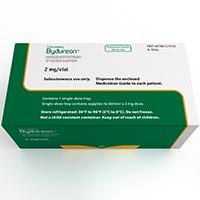
Exenatide (Monograph)
Brand names: Bydureon, Byetta
Drug class: Incretin Mimetics
Warning
- Thyroid C-cell Tumors
-
Extended-release exenatide causes thyroid C-cell tumors at clinically relevant exposures in rats. Unknown whether the drug causes thyroid C-cell tumors, including medullary thyroid carcinoma (MTC), in humans, as relevance to humans has not been determined.
Extended-release exenatide is contraindicated in patients with a personal or family history of MTC and in patients with multiple endocrine neoplasia syndrome type 2 (MEN 2).
Counsel patients regarding potential risk of MTC and inform them about symptoms of thyroid tumors.
Introduction
Antidiabetic agent; synthetic, human glucagon-like peptide-1 (GLP-1) receptor agonist (incretin mimetic).
Uses for Exenatide
Type 2 Diabetes Mellitus
Used as an adjunct to diet and exercise to improve glycemic control in patients with type 2 diabetes mellitus.
Available as an injection for twice-daily administration (Byetta) in adults and as an extended-release injection for once-weekly administration (Bydureon Bcise) in adults and pediatric patients ≥10 years of age.
Exenatide has been used as monotherapy or in combination with metformin, a sulfonylurea, or a thiazolidinedione; in combination with metformin and a sulfonylurea or thiazolidinedione; or in combination with insulin glargine with or without metformin and/or a thiazolidinedione.
Twice-daily exenatide improves glycemic control (e.g., as determined by changes in HbA1c) more than placebo and similar to that of titrated insulin lispro or insulin aspart 70/30.
Extended-release exenatide has been used as monotherapy or in combination with metformin, a sulfonylurea, or a thiazolidinedione; in combination with metformin and a sulfonylurea; in combination with metformin and a thiazolidinedione; in combination with an SGLT2 inhibitor and metformin; or in combination with basal insulin.
Once-weekly extended-release exenatide generally as effective for glycemic control as metformin or pioglitazone and more effective than sitagliptin, titrated insulin glargine, insulin detemir, or twice-daily exenatide; such improvements maintained during long-term therapy.
Current guidelines for the treatment of type 2 diabetes mellitus generally recommend metformin as first-line therapy in addition to lifestyle modifications in patients with recent-onset type 2 diabetes mellitus or mild hyperglycemia because of its well-established safety and efficacy (i.e., beneficial effects on glycosylated hemoglobin [hemoglobin A1c; HbA1c], weight, and cardiovascular mortality).
Extended-release exenatide formulation not recommended as first-line therapy in patients with inadequate glycemic control on diet and exercise because of uncertain relevance to humans of thyroid C-cell tumors found in rodents given the drug. (See Boxed Warning.)
In patients with metformin contraindications or intolerance (e.g., risk of lactic acidosis, GI intolerance) or in selected other patients, some experts suggest that initial therapy with a drug from another class of antidiabetic agents (e.g., a GLP-1 receptor agonist, sodium-glucose cotransporter 2 [SGLT2] inhibitor, dipeptidyl peptidase-4 [DPP-4] inhibitor, sulfonylurea, thiazolidinedione, basal insulin) may be acceptable based on patient factors.
May need to initiate therapy with 2 agents (e.g., metformin plus another drug) in patients with high initial HbA1c (>7.5% or ≥1.5% above target). In such patients with metformin intolerance, some experts suggest initiation of therapy with 2 drugs from other antidiabetic drug classes with complementary mechanisms of action.
Consider early initiation of combination therapy for the treatment of type 2 diabetes mellitus to extend the time to treatment failure and more rapidly attain glycemic goals.
For patients with inadequate glycemic control on metformin monotherapy, consider patient comorbidities (e.g., atherosclerotic cardiovascular disease [ASCVD], established kidney disease, heart failure), hypoglycemia risk, impact on weight, cost, risk of adverse effects, and patient preferences when selecting additional antidiabetic agents for combination therapy.
Consider early introduction of insulin for severe hyperglycemia (e.g., blood glucose ≥300 mg/dL or HbA1c >9–10%), especially if accompanied by catabolic manifestations (e.g., weight loss, hypertriglyceridemia, ketosis) or symptoms of hyperglycemia.
Experts recommend that patients with type 2 diabetes mellitus who have established (or are at a high risk for) ASCVD, established kidney disease, or heart failure receive a GLP-1 receptor agonist or SGLT2 inhibitor with demonstrated cardiovascular disease benefit. In patients with these comorbidities, consider GLP-1 receptor agonist or SGLT2 inhibitor therapy independently of patient's HbA1c.
In patients with type 2 diabetes mellitus and CKD, consider a GLP-1 receptor agonist or SGLT2 inhibitor shown to reduce the risk of CKD progression, cardiovascular events, or both, in addition to metformin therapy or in those in whom metformin cannot be used.
In patients on metformin monotherapy without established ASCVD or indicators of high ASCVD risk, heart failure, or CKD, base decision regarding addition of other antidiabetic agents on avoidance of adverse effects, cost, and individual patient factors.
Exenatide is not indicated for treatment of type 1 diabetes mellitus.
Not studied in patients with a history of pancreatitis; consider other antidiabetic agents in such patients.
Do not use exenatide (Byetta) and extended-release exenatide (Bydureon Bcise) concomitantly.
Exenatide Dosage and Administration
General
Patient Monitoring
-
Patients should be monitored regularly (e.g., blood glucose determinations, HbA1c) to determine therapeutic response.
Administration
Administer by sub-Q injection.
Sub-Q Administration of Exenatide (Byetta)
Administer sub-Q into abdomen, thigh, or upper arm using prefilled injection pen. Safety and efficacy of IV or IM administration not established.
Administer twice daily, prior to (i.e., within 60 minutes of) morning and evening meals.
Alternatively, administer before 2 main meals of the day, approximately ≥6 hours apart.
Do not administer after a meal.
If a dose is missed, omit that dose and administer next dose at regularly scheduled time.
Do not transfer drug from injection pen to syringe or vial.
Do not mix with insulin in same syringe or vial even if taken at same time.
Consult manufacturer's instructions for use regarding additional details about preparation and administration.
Sub-Q Administration of Extended-release Exenatide (Bydureon Bcise)
Administer sub-Q into abdomen, thigh, or back of upper arm region using prefilled injection pen; must not administer IV or IM. Rotate injection sites with each weekly dose when injecting in the same region.
Patients and caregivers must be trained on proper preparation and administration.
Remove autoinjector from refrigerator 15 minutes prior to administration. Prepare the autoinjector by shaking vigorously for at least 15 seconds to mix the solution. Administer immediately.
May administer at any time during day, with or without a meal.
May change day of weekly administration if necessary, provided the last dose was administered ≥3 days previously.
If a dose is missed, administer missed dose as soon as noticed provided there are ≥3 days until the next scheduled dose; may then resume the usual regimen (once weekly).
If a dose is missed and the next regularly scheduled dose is due in 1 or 2 days, do not administer the missed dose; instead, resume dosing on the next regularly scheduled day.
Consult manufacturer's instructions for use regarding additional details about preparation and administration.
Dosage
If exenatide or extended-release exenatide used in combination with a sulfonylurea, may require reduction of sulfonylurea dosage.
If exenatide is used in combination with insulin, evaluate insulin dosage; consider reduction of insulin dosage in patients at increased risk of hypoglycemia. In a clinical trial, dosage of concomitant insulin glargine reduced by 20% in exenatide-treated patients with HbA1c concentrations ≤8%; relative safety and efficacy of this approach may not apply to patients with baseline HbA1c concentrations <7%, those with a recent history of major hypoglycemia, or those receiving long-acting GLP-1 receptor agonists.
Prior treatment with immediate-release exenatide not required when initiating extended-release exenatide therapy.
If decision is made to initiate extended-release exenatide in a patient already receiving immediate-release exenatide, discontinue the immediate-release formulation.
Patients changing therapy from exenatide to extended-release exenatide may experience transient (approximately 2–4 weeks) elevations in blood glucose concentrations.
Pediatric Patients
Type 2 Diabetes Mellitus in Pediatric Patients ≥10 Years of Age
Sub-Q
Extended-release exenatide: 2 mg once every 7 days (weekly).
Immediate-release formulation not FDA-labeled for use in pediatric patients.
Adults
Type 2 Diabetes Mellitus in Adults
Sub-Q
Exenatide: Initially, 5 mcg twice daily. If needed, may increase to 10 mcg twice daily after 1 month.
Extended-release exenatide: 2 mg once every 7 days (weekly).
Special Populations
Hepatic Impairment
Exenatide dosage adjustments do not appear to be required.
Renal Impairment
Immediate-release Exenatide
Mild renal impairment (Clcr 50–80 mL/minute): No adjustment of exenatide dosage required.
Moderate renal impairment (Clcr 30–50 mL/minute): Use caution when initiating exenatide or increasing dosage from 5 mcg twice daily to 10 mcg twice daily.
End-stage renal disease (ESRD) or severe renal impairment (Clcr <30 mL/minute): Do not use. Use exenatide with caution in patients who have undergone renal transplantation.
Extended-release Exenatide
Mild renal impairment: Manufacturer makes no recommendation about modification of extended-release exenatide dosage in patients with mild renal impairment. Monitor patients for adverse effects (e.g., nausea and vomiting) that may lead to hypovolemia.
eGFR <45 mL/minute per 1.73 m2 or ESRD: Use not recommended. Closely monitor for adverse effects that may lead to hypovolemia in patients who have undergone renal transplantation.
Geriatric Patients
Careful selection of exenatide dosage recommended due to possible age-related decrease in renal function and concomitant disease and drug therapy; however, dosage requirements generally similar in geriatric patients and younger adults. Use caution when initiating extended-release exenatide in geriatric patients.
Obese Patients
Adjustment of exenatide dosage not required.
Cautions for Exenatide
Contraindications
Known hypersensitivity to exenatide or any ingredient in the formulation.
History of drug-induced immune-mediated thrombocytopenia from exenatide use.
Extended-release exenatide: Personal or family history of medullary thyroid carcinoma (MTC) or diagnosis of multiple endocrine neoplasia syndrome type 2 (MEN 2).
Warnings/Precautions
Warnings
Risk of Thyroid C-cell Tumors with Extended-release Exenatide
Dose-related and treatment-duration-dependent increase in the incidence of thyroid C-cell tumors (adenomas and/or carcinomas) at clinically relevant exposures in rats.
Not known whether extended-release exenatide causes thyroid C-cell tumors, including MTC, in humans.
Serum calcitonin, a biologic marker of MTC, not assessed in clinical trials of extended-release exenatide. Patients with MTC generally have serum calcitonin concentrations >50 ng/L.
Refer patients to endocrinologist for further evaluation if thyroid nodules noted on physical examination or neck imaging.
Although routine monitoring of serum calcitonin or use of thyroid ultrasound for early detection of MTC in patients receiving extended-release exenatide is of uncertain value, refer patient to endocrinologist for further evaluation if serum calcitonin is measured and found to be elevated.
Sensitivity Reactions
Hypersensitivity Reactions
Generalized pruritus and/or urticaria, macular or papular rash, and angioedema reported during postmarketing experience. Anaphylactic reaction also reported.
If a hypersensitivity reaction occurs, discontinue exenatide or extended-release exenatide and other suspect agents; patients should promptly seek medical advice.
Closely monitor for allergic reactions in patients who have a history of anaphylaxis or angioedema with another GLP-1 receptor agonist; unknown whether such patients will be predisposed to anaphylaxis with extended-release exenatide.
Other Warnings and Precautions
Risks During General Anesthesia and Deep Sedation
GLP-1 agonists are associated with adverse GI effects such as nausea, vomiting, and delayed gastric emptying.
Delayed gastric emptying from GLP-1 agonists can increase the risk of regurgitation and pulmonary aspiration of gastric contents during general anesthesia and deep sedation.
The American Society of Anesthesiologists (ASA) Task Force on Preoperative Fasting has issued a consensus-based guidance for management of GLP-1 receptor agonists prior to elective surgery. The task force suggests that for patients on daily GLP-1 agonist dosing (irrespective of indication, dose, or type of surgery), consider holding the drug on the day of procedure/surgery. For patients on weekly dosing (irrespective of indication, dose, or type of surgery), consider holding the GLP-1 agonist a week prior to procedure/surgery. If GLP-1 agonists prescribed for diabetes management are held for longer than the dosing schedule, consider consulting an endocrinologist for bridging the antidiabetic therapy to avoid hyperglycemia.
For patients requiring urgent or emergent procedures, the task force states to proceed and treat the patient as ‘full stomach’ and manage accordingly.
Pancreatitis and Pancreatic Precancerous Changes
Acute pancreatitis, including fatal and nonfatal hemorrhagic or necrotizing pancreatitis requiring hospitalization, reported during postmarketing experience.
Hallmark symptom of acute pancreatitis is persistent, severe abdominal pain, which sometimes radiates to the back and may be accompanied by vomiting. Most patients who developed pancreatitis during exenatide therapy had at least one other risk factor for acute pancreatitis (e.g., gallstones, severe hypertriglyceridemia, alcohol use) and required hospitalization. Serious complications include dehydration and renal failure, suspected ileus, phlegmon, and ascites; most patients have improved upon discontinuance of exenatide.
Carefully observe patients for signs and symptoms of acute pancreatitis (e.g., unexplained, persistent, severe abdominal pain that may radiate to the back; nausea; vomiting; elevated serum amylase or lipase concentrations).
If pancreatitis is suspected, promptly discontinue therapy and initiate appropriate therapy.
Do not resume exenatide if pancreatitis confirmed.
Data are lacking on use of exenatide in patients with a history of pancreatitis; consider other antidiabetic therapies in such patients.
Use with Drugs Known to Cause Hypoglycemia
Increased risk of hypoglycemia with exenatide and concomitant insulin or insulin secretatogogue; may require reduction of insulin or insulin secretogogue.
Renal Effects
Deterioration of renal function (e.g., increased Scr, renal impairment/insufficiency, worsened chronic renal failure, acute renal failure sometimes requiring hemodialysis or kidney transplantation) reported rarely. In some patients, presence of other factors (nausea, vomiting, and/or diarrhea with or without dehydration; concomitant use of other agents known to affect renal function or hydration status [e.g., ACE inhibitors, NSAIAs, diuretics]) may have contributed to development of altered renal function.
Exenatide not directly nephrotoxic in preclinical or clinical studies. Altered renal function may result from diabetes mellitus, independent of any risk associated with exenatide.
Because exenatide or extended-release exenatide may induce nausea and vomiting with transient hypovolemia, this drug may worsen renal function.
Closely monitor patients for signs and symptoms of renal dysfunction; consider discontinuing exenatide if renal dysfunction suspected and cannot be explained by other causes. Renal effects usually reversible with supportive treatment and discontinuance of potentially causative agents, including exenatide.
GI Effects
Adverse GI effects (e.g., nausea, vomiting, diarrhea) reported frequently with exenatide or extended-release exenatide; use not recommended in patients with severe GI disease (e.g., gastroparesis).
Immunogenicity
Development of antibodies reported. Antibody formation associated with attenuated glycemic response in some patients.
Treatment-emergent cross-reactive antibodies to GLP-1 and/or glucagon not observed in a group of patients with anti-exenatide antibodies in clinical trials.
If worsening glycemic control or failure to achieve targeted glycemic control occurs, consider alternative antidiabetic therapy.
Injection-site Reactions
Serious injection-site reactions (e.g., abscess, cellulitis, necrosis) with or without sub-Q nodules reported in patients receiving extended-release exenatide during postmarketing experience; surgical intervention required in isolated cases.
Risk Associated with Sharing of Injection Pens
Do not share exenatide or extended-release exenatide injection pens among patients, even if the needle has been changed; sharing poses risk for transmission of blood-borne pathogens.
Acute Gallbladder Disease
Cholelithiasis and cholecystitis reported with use of GLP-1 receptor agonists, including extended-release exenatide, during clinical studies. If cholelithiasis is suspected, manufacturer states that gallbladder studies and appropriate clinical follow-up are indicated.
Drug-Induced Thrombocytopenia
Serious bleeding, which may be fatal, from drug-induced immune-mediated thrombocytopenia reported with exenatide use. Platelet destruction is caused by presence of exenatide-dependent antiplatelet antibodies.
Discontinue exenatide if drug-induced thrombocytopenia is suspected; do not re-expose the patient to the drug. Following discontinuance of extended-release exenatide, thrombocytopenia can persist due to the prolonged exenatide exposure (approximately 10 weeks).
Specific Populations
Pregnancy
Data lacking on the use of exenatide or extended-release exenatide in pregnant women. Reproduction studies in mice, rabbits, and rats identified increased adverse fetal and neonatal outcomes from exposure to exenatide or extended-release exenatide during pregnancy and/or lactation. Use during pregnancy only if potential benefit justifies potential risk to the fetus.
Lactation
Distributed into milk in mice; not known whether distributed into human milk. Consider benefits of breast-feeding and importance of exenatide or extended-release exenatide to the woman along with any potential adverse effects on the breast-fed infant from the drug or from the underlying maternal condition.
Pediatric Use
Safety and efficacy of immediate-release exenatide not established in pediatric patients.
Safety and efficacy of extended-release exenatide not established in pediatric patients <10 years of age.
Geriatric Use
No substantial differences in safety and efficacy nor in pharmacokinetics relative to younger adults. Geriatric patients are more likely to have decreased renal function; use caution when initiating drug in such patients.
Hepatic Impairment
Pharmacokinetics of exenatide or extended-release exenatide not evaluated, but impact of hepatic impairment should be minimal.
Renal Impairment
Because exenatide or extended-release exenatide may induce nausea and vomiting with transient hypovolemia, this drug may worsen renal function.
Decreased clearance of exenatide in patients with ESRD receiving dialysis; possible decreased tolerance to therapy due to adverse GI effects. In such patients, single doses of exenatide 5 mcg were not well tolerated due to adverse GI effects. Data lacking on use of extended-release exenatide in patients with ESRD or severe renal impairment.
Do not use exenatide or extended-release exenatide in patients with ESRD or severe renal impairment (Clcr <30 mL/minute for exenatide or eGFR <45 mL/minute per 1.73 m2 for extended-release exenatide); use with caution in patients who have undergone renal transplantation.
Use caution when initiating exenatide or increasing dosage from 5 mcg twice daily to 10 mcg twice daily in patients with moderate renal impairment (Clcr 30–50 mL/minute). Use extended-release exenatide with caution in such patients.
No adjustment of exenatide or extended-release exenatide dosage required in patients with mild renal impairment (Clcr 50–80 mL/minute). Monitor patients with mild renal impairment who are receiving extended-release exenatide for adverse effects (e.g., nausea and vomiting) that may lead to hypovolemia.
Common Adverse Effects
Most common adverse effects (≥5%) with exenatide injection: nausea, hypoglycemia, vomiting, diarrhea, feeling jittery, dizziness, headache, dyspepsia, constipation, asthenia.
Most common adverse effects (≥5%) with extended-release exenatide: injection-site nodule, nausea.
Drug Interactions
GI Absorption of Other Drugs
Possible decreased rate and extent of absorption of concomitantly administered oral drugs; use caution with oral drugs that have a narrow therapeutic index or require rapid GI absorption.
With oral drugs for which efficacy depends on threshold concentrations, administer ≥1 hour before exenatide. If such drugs need to be administered with food, administer them with a meal or snack (e.g., lunch) at a time when exenatide is not administered.
Specific Drugs
|
Drug |
Interaction |
Comments |
|---|---|---|
|
Acetaminophen |
Exenatide: Decreased AUC and peak plasma concentration and increased time to peak plasma concentration of acetaminophen when administered simultaneously with or at 1, 2, or 4 hours after exenatide Exenatide: Acetaminophen AUC, peak plasma concentration, and time to peak plasma concentration not appreciably changed when acetaminophen administered 1 hour before exenatide Extended-release exenatide: Acetaminophen AUC not appreciably changed but acetaminophen peak plasma concentration decreased (effect greater in fasting than fed state) and time to peak concentration increased; effects generally less than those observed when acetaminophen given with or 1–4 hours after exenatide |
|
|
Anti-infective agents, oral |
Possible decreased rate and extent of anti-infective absorption with concomitant exenatide |
Administer oral anti-infective ≥1 hour before exenatide |
|
Digoxin |
Decreased peak plasma concentration and delayed time to peak concentration of digoxin when exenatide administered 30 minutes before digoxin; no change in digoxin steady-state AUC and renal clearance |
|
|
Insulin |
Increased risk of hypoglycemia with concurrent insulin |
Consider reduced concurrent insulin dosage in patients at increased risk of hypoglycemia |
|
Insulin secretagogue (e.g., sulfonylurea) |
Increased risk of hypoglycemia |
Consider reduction of concurrent sulfonylurea dosage |
|
Lisinopril |
Delayed steady-state time to peak plasma lisinopril concentrations; no change in steady-state AUC or peak plasma lisinopril concentrations or in mean 24-hour SBP and DBP |
|
|
Lovastatin |
Decreased AUC and peak plasma concentration and delayed time to peak plasma concentration of lovastatin when exenatide administered 30 minutes before lovastatin; no consistent changes in lipid profiles |
|
|
Oral contraceptives |
Ethinyl estradiol/levonorgestrel given 30 minutes after exenatide: Decreased peak plasma concentration and delayed time to peak plasma concentration of ethinyl estradiol and levonorgestrel; increased mean trough concentration of ethinyl estradiol; mean trough concentrations of levonorgestrel not altered Ethinyl estradiol/levonorgestrel given 1 hour before exenatide: Decreased mean peak plasma concentration of ethinyl estradiol; mean peak plasma levonorgestrel concentration not substantially changed Effect of exenatide on ethinyl estradiol/levonorgestrel pharmacokinetics confounded by possible effect of food |
Administer oral contraceptive ≥1 hour before exenatide |
|
Warfarin |
Exenatide: Delayed time to peak plasma concentration of warfarin; no clinically important change in AUC or peak plasma warfarin concentrations or INR; however, some reports of increased INR, sometimes associated with bleeding Extended-release exenatide: Data lacking |
Monitor PT more frequently after initiating or altering exenatide therapy; once a stable PT achieved, PT may be monitored at intervals usually recommended for patients receiving warfarin Monitor INR more frequently after initiating extended-release exenatide therapy; once a stable INR achieved, INR may be monitored at intervals generally recommended for patients receiving warfarin |
Exenatide Pharmacokinetics
Absorption
Bioavailability
Following sub-Q administration of exenatide, peak plasma concentration usually attained in 2.1 hours.
Absorption of exenatide is similar when injected into abdomen, thigh, or arm.
Following sub-Q administration of extended-release exenatide, drug is released from the microspheres over approximately 10 weeks. Initial release of surface-bound exenatide is followed by gradual release from microspheres; peak concentrations occur at approximately week 2 and week 6–7.
Steady-state plasma concentrations achieved 6–7 weeks after weekly (once every 7 days) sub-Q administration of extended-release exenatide. Approximately 10 weeks after discontinuance, concentrations generally undetectable.
Special Populations
Extended-release exenatide: Steady-state concentrations not affected by sex or race.
Distribution
Extent
Distributed into milk in mice; not known whether distributed into human milk.
Elimination
Metabolism
Principally proteolytic degradation after glomerular filtration.
Elimination Route
Excreted principally in urine. Clearance of exenatide is independent of dose.
Half-life
Exenatide: 2.4 hours.
Special Populations
Exenatide: Manufacturer states pharmacokinetics are independent of dose, age, sex, race, and BMI.
Exenatide: Decreased clearance and increased exposure in patients with ESRD receiving dialysis. Exposure in patients with mild to moderate renal impairment (Clcr 30–80 mL/minute) similar to that in individuals with normal renal function.
Extended-release exenatide: Increased exposure in patients with mild or moderate renal impairment; data lacking in patients with severe renal impairment.
Stability
Storage
Parenteral
Injection
Exenatide: Before use, 2–8°C in original carton. After first use, ≤25ºC. Do not freeze; protect from light. Discard pen 30 days after first use.
Extended-release exenatide: 2–8°C up to the expiration date or until preparation for use. May store at temperature ≤25°C for 4 weeks, if necessary. Do not freeze; protect from light.
Actions
-
Exenatide, a synthetic analog of a naturally occurring peptide isolated from the saliva of Heloderma suspectum (Gila monster), is a glucagon-like peptide-1 (GLP-1) mimetic (incretin mimetic).
-
Structurally and pharmacologically unrelated to insulin, sulfonylureas, meglitinides, biguanides, thiazolidinediones, and α-glucosidase inhibitors.
-
Lowers fasting and postprandial glucose concentrations in patients with type 2 diabetes mellitus.
-
Improves pancreatic β-cell function by increasing glucose-dependent insulin synthesis, secretion, and acute β-cell responsiveness (i.e., first phase insulin response).
-
Inhibits inappropriately high glucagon secretion (e.g., after a meal) in patients with type 2 diabetes mellitus; does not impair normal glucagon response to hypoglycemia.
-
Slows gastric emptying, which reduces the rate of glucose absorption from a meal, reduces food intake, and is associated with weight loss.
-
Does not appear to be associated with clinically important prolongation of the corrected QT interval (QTc, Bazett's formula).
Advice to Patients
-
Importance of instructing patients on proper use and storage of the exenatide or extended-release exenatide injection pen or autoinjector, including proper injection technique to ensure delivery of a full dose, proper disposal of injection pens and autoinjectors using puncture-resistant containers, how and when to set up a new injection pen, and that only one setup step is necessary at initial use of exenatide.
-
Importance of patient reading medication guide and the injection pen user manual before initiating therapy and each time drug is dispensed.
-
Importance of patients not self-administering exenatide or extended-release exenatide if they are blind or unable to see well.
-
Importance of informing patients regarding potential risks and advantages of exenatide or extended-release exenatide therapy and of alternative modes of therapy. Importance of not using exenatide or extended-release exenatide in patients with type 1 diabetes mellitus or diabetic ketoacidosis.
-
Importance of providing instruction regarding diabetes self-management practices, such as regular physical activity, adhering to meal planning, periodic blood glucose monitoring, HbA1c testing, recognition and management of hypoglycemia and hyperglycemia, and assessment of other diabetic complications.
-
Importance of informing patients that extended-release exenatide causes benign and malignant thyroid C-cell tumors in rats and that the relevance of this finding in humans is unknown. Importance of not using extended-release exenatide in patients with a personal or family history of medullary thyroid cancer (MTC) or diagnosis of multiple endocrine neoplasia syndrome type 2 (MEN 2). Importance of advising patients to report symptoms that may be suggestive of thyroid cancer (e.g., lump or swelling in neck, hoarseness, dysphagia, dyspnea).
-
Importance of patients discontinuing exenatide or extended-release exenatide and other suspect drugs and seeking medical assistance immediately if signs and symptoms of a serious hypersensitivity reaction (e.g., anaphylaxis, angioedema) occur. Importance of patients informing their clinician if they have experienced a sensitivity reaction to exenatide or any ingredient in the formulations.
-
Importance of informing patient of the potential risk of acute pancreatitis, which may be severe or fatal. Importance of patient informing clinicians about a history of pancreatitis, gallstones, alcoholism, or high triglyceride levels. Importance of patients discontinuing exenatide or extended-release exenatide and promptly informing clinician if unexplained, persistent, severe abdominal pain that may radiate to the back and may or may not be accompanied by nausea and vomiting occurs. If pancreatitis is suspected, discontinue exenatide or extended-release exenatide; do not restart if pancreatitis confirmed.
-
Importance of informing patients of the potential risk for worsening renal function and about signs and symptoms of altered renal function (e.g., increased Scr; changes in color, frequency, or amount of urination; unexplained swelling in extremities; increases in BP; lethargy; changes in appetite or digestion; dull ache in the middle to lower back). Importance of patient informing clinician about development of nausea, vomiting, or diarrhea, which may contribute to dehydration and consequent altered renal function. Importance of informing patients that chronic conditions such as hypertension or pancreatitis and concomitant therapy with NSAIAs, diuretics, or antihypertensive agents can increase the risk of developing altered renal function with exenatide therapy.
-
Importance of informing patients that drug-induced immune-mediated thrombocytopenia has been reported with exenatide use. Importance of informing patients to discontinue exenatide and promptly seek medical advice if symptoms of thrombocytopenia occur.
-
Importance of informing patients receiving exenatide that the dosage of concomitant insulin may need to be reduced in those at increased risk of hypoglycemia.
-
Increased risk of hypoglycemia when exenatide or extended-release exenatide is used with an agent that induces hypoglycemia, such as a sulfonylurea or other insulin secretagogue (e.g., meglitinide); lower dosage of sulfonylurea or other insulin secretagogue may be required to reduce risk of hypoglycemia.
-
Importance of reviewing with patients the symptoms, treatment, and conditions that predispose to development of hypoglycemia when initiating exenatide or extended-release exenatide treatment, especially when exenatide is used with a sulfonylurea or insulin; importance of clinician reinforcing instructions for management of hypoglycemia.
-
Importance of advising patient to seek medical advice if symptomatic sub-Q nodules or any signs or symptoms of abscess, cellulitis, or necrosis occur.
-
Importance of informing patients of the potential risk for cholelithiasis or cholecystitis. Importance of instructing patients to contact a clinician for appropriate clinical follow-up if cholelithiasis or cholecystitis is suspected.
-
Importance of informing patients that reduced appetite, food intake, and/or body weight may occur with exenatide or extended-release exenatide therapy but do not require modification of dosage regimen. Importance of informing patient about occurrence of nausea, particularly upon initiation of exenatide or extended-release exenatide therapy, and that nausea decreases over time as the drug is continued.
-
Importance of informing patients that injection pens should not be shared with another person, even if the needle has been changed. Such sharing may pose a risk of transmitting or acquiring infection.
-
Importance of informing patients regarding the timing of exenatide or extended-release exenatide administration with concomitant oral drugs (e.g., oral contraceptives, anti-infective agents) because of slowing of gastric emptying with these exenatide formulations.
-
Importance of not mixing exenatide with insulin.
-
Importance of advising patients what to do if a dose of exenatide or extended-release exenatide is missed.
-
Importance of informing patient to administer extended-release exenatide at any time on the dosing day, with or without meals. The day of once-weekly administration (once every 7 days) can be changed if necessary, provided the last dose was administered 3 or more days previously.
-
Importance of informing patients to discontinue exenatide once extended-release exenatide is initiated. Importance of informing patients that transient elevations in blood glucose concentrations may occur but generally improve within the first 2 weeks after initiation of extended-release exenatide therapy.
-
Importance of women informing clinicians if they are or plan to become pregnant or plan to breast-feed. Importance of informing women about enrolling in the pregnancy registry for exenatide or extended-release exenatide if they use the drugs at any time during pregnancy.
-
Importance of informing clinicians of existing or contemplated concomitant therapy, including prescription and OTC drugs, vitamins, and herbal supplements, as well as any concomitant illnesses (e.g., hypertension, history of liver disease, gastroparesis or serious digestive problems, severe kidney disease or kidney transplant).
-
Inform patients of other important precautionary information.
Additional Information
The American Society of Health-System Pharmacists, Inc. represents that the information provided in the accompanying monograph was formulated with a reasonable standard of care, and in conformity with professional standards in the field. Readers are advised that decisions regarding use of drugs are complex medical decisions requiring the independent, informed decision of an appropriate health care professional, and that the information contained in the monograph is provided for informational purposes only. The manufacturer’s labeling should be consulted for more detailed information. The American Society of Health-System Pharmacists, Inc. does not endorse or recommend the use of any drug. The information contained in the monograph is not a substitute for medical care.
Preparations
Excipients in commercially available drug preparations may have clinically important effects in some individuals; consult specific product labeling for details.
Please refer to the ASHP Drug Shortages Resource Center for information on shortages of one or more of these preparations.
|
Routes |
Dosage Forms |
Strengths |
Brand Names |
Manufacturer |
|---|---|---|---|---|
|
Parenteral |
Injection, for subcutaneous use |
250 mcg/mL |
Byetta (available as 5 mcg per dose 1.2-mL prefilled pen or 10 mcg per dose 2.4-mL prefilled pen) |
AstraZeneca |
|
Injection, extended-release, for subcutaneous use |
2 mg/0.85 mL |
Bydureon (available as single-dose autoinjector) |
AstraZeneca |
AHFS DI Essentials™. © Copyright 2025, Selected Revisions October 16, 2023. American Society of Health-System Pharmacists, Inc., 4500 East-West Highway, Suite 900, Bethesda, Maryland 20814.
Reload page with references included
Related/similar drugs
Frequently asked questions
- Which GLP-1 drug is best for weight loss?
- How long can Bydureon be unrefrigerated?
- How long does it take for Bydureon Bcise to take effect?
- How do you use the Bydureon pen?
- How does Bydureon work?
- How do you use the Bydureon Bcise autoinjector?
More about exenatide
- Check interactions
- Compare alternatives
- Pricing & coupons
- Reviews (417)
- Latest FDA alerts (3)
- Side effects
- Dosage information
- During pregnancy
- Drug class: GLP-1 Agonists (Incretin Mimetics)
- Breastfeeding
Patient resources
Professional resources
Other brands
Byetta, Bydureon, Bydureon BCise