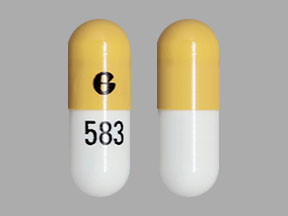
Aprepitant, Fosaprepitant Dimeglumine (Monograph)
Brand name: Emend
Drug class: Neurokinin-1 Receptor Antagonists
VA class: GA605
Introduction
Antiemetic; aprepitant is a selective, high-affinity antagonist at substance P/neurokinin-1 (NK1) receptors; fosaprepitant dimeglumine is a lyophilized prodrug of aprepitant.
Uses for Aprepitant, Fosaprepitant Dimeglumine
Cancer Chemotherapy-induced Nausea and Vomiting
Prevention of acute and delayed nausea and vomiting associated with initial and repeat courses of highly emetogenic cancer chemotherapy, including high-dose cisplatin therapy. Used in combination with other antiemetic agents.
Prevention of nausea and vomiting associated with initial and repeat courses of moderately emetogenic cancer chemotherapy. Used in combination with other antiemetic agents.
For prevention of nausea and vomiting associated with highly emetogenic chemotherapy regimens (including an anthracycline plus cyclophosphamide), ASCO recommends a 3-drug antiemetic regimen consisting of an NK1 receptor antagonist (e.g., either oral aprepitant or IV fosaprepitant), a 5-HT3 receptor antagonist (e.g., dolasetron, granisetron, ondansetron, palonosetron), and dexamethasone. ASCO states that fixed-combination netupitant and palonosetron plus dexamethasone is an additional treatment option.
For moderately emetogenic chemotherapy regimens, ASCO recommends a 2-drug antiemetic regimen preferably consisting of palonosetron and dexamethasone. If palonosetron is not available, a first-generation 5-HT3 receptor antagonist (preferably granisetron or ondansetron) may be substituted. Limited evidence suggests that aprepitant may be added to this regimen; in such cases, use of any 5-HT3 receptor antagonist is appropriate.
For chemotherapy regimens with a low emetogenic risk, ASCO recommends administration of a single dose of dexamethasone prior to chemotherapy.
For chemotherapy regimens with minimal emetogenic risk, ASCO states that routine antiemetic administration is not necessary.
Safety and efficacy for chronic use or for treatment of established nausea and vomiting not established.
Postoperative Nausea and Vomiting
Prevention of postoperative nausea and vomiting.
Safety and efficacy for chronic use or for treatment of established nausea and vomiting not established.
Aprepitant, Fosaprepitant Dimeglumine Dosage and Administration
Administration
Dispensing and Administration Precautions
Because of similarities in spelling and/or pronunciation between Emend (the trade name for aprepitant) and Amen (a former trade name for medroxyprogesterone acetate; no longer commercially available under this trade name in the US) or Vfend (the trade name for voriconazole), exercise extra care in ensuring the accuracy of prescriptions for these drugs. (See Possible Prescribing and Dispensing Errors under Cautions.)
Oral Administration
Administer aprepitant orally without regard to meals.
IV Administration
Administer fosaprepitant dimeglumine by IV infusion.
For solution and drug compatibility information, see Compatibility under Stability.
Reconstitution and Dilution
Reconstitute powder for injection with 5 mL of 0.9% sodium chloride for injection; avoid jetting saline into the vial. Gently swirl solution; do not shake.
Withdraw entire volume from vial and transfer into infusion bag containing 110 mL of 0.9% sodium chloride, yielding a total volume of 115 mL (1 mg/mL). Mix solutions by gentle inversion of the bag 2–3 times.
Rate of Administration
Infuse over 15 minutes.
Dosage
Dosage of fosaprepitant dimeglumine is expressed in terms of fosaprepitant.
Adults
Cancer Chemotherapy-induced Nausea and Vomiting
Administer as part of a regimen that includes a 5-HT3 receptor antagonist and a corticosteroid.
Highly Emetogenic Cancer Chemotherapy
OralAdminister 125 mg of aprepitant 1 hour before chemotherapy on day 1, and follow with 80 mg once daily in the morning on days 2 and 3 of the treatment regimen.
In clinical studies, aprepitant was administered with IV ondansetron (32 mg 30 minutes before chemotherapy on day 1) and oral dexamethasone (12 mg 30 minutes before chemotherapy on day 1, followed by 8 mg once daily in the morning on days 2–4).
IVAdminister 115 mg of fosaprepitant over 15 minutes, 30 minutes prior to chemotherapy as an alternative to oral aprepitant (125 mg) on day 1 only of 3-day regimen. Follow fosaprepitant with oral aprepitant 80 mg once daily in the morning on days 2 and 3 of the treatment regimen.
Moderately Emetogenic Cancer Chemotherapy
OralAdminister 125 mg of aprepitant 1 hour before chemotherapy on day 1, and follow with 80 mg once daily in the morning on days 2 and 3 of the treatment regimen.
In a clinical study, aprepitant was administered with oral ondansetron (8 mg 30–60 minutes before chemotherapy on day 1, followed by 8 mg 8 hours after the first dose) and oral dexamethasone (12 mg 30 minutes before chemotherapy on day 1).
IVAdminister 115 mg of fosaprepitant over 15 minutes, 30 minutes prior to chemotherapy as an alternative to oral aprepitant (125 mg) on day 1 only of 3-day regimen. Follow fosaprepitant with oral aprepitant 80 mg once daily in the morning on days 2 and 3 of the treatment regimen.
Postoperative Nausea and Vomiting
Oral
Administer 40 mg of aprepitant within 3 hours before induction of anesthesia.
Special Populations
Hepatic Impairment
No dosage adjustment necessary in patients with mild to moderate hepatic impairment. Not adequately studied in patients with severe hepatic impairment (Child-Pugh score >9).
Renal Impairment
No dosage adjustment necessary in patients with renal impairment or end-stage renal disease requiring hemodialysis.
Geriatric Patients
No dosage adjustment necessary.
Cautions for Aprepitant, Fosaprepitant Dimeglumine
Contraindications
-
Concomitant use with astemizole (no longer commercially available in the US), cisapride (currently commercially available in the US only under a limited-access protocol), pimozide, or terfenadine (no longer commercially available in the US).
-
Known hypersensitivity to fosaprepitant, aprepitant, polysorbate 80, or any ingredient in the formulations.
Warnings/Precautions
Sensitivity Reactions
Stevens-Johnson syndrome reported in 1 patient receiving aprepitant with antineoplastic agents. Hypersensitivity reactions, including anaphylaxis, hives, rash, itching, and urticaria, reported in patients receiving aprepitant or fosaprepitant; may be serious and can cause difficulty in breathing or swallowing. Angioedema reported in 1 patient.
General Precautions
Drug Interaction Potential
Drug-interaction potential could be altered with chronic use (see Interactions); safety of chronic use not established.
Possible Prescribing and Dispensing Errors
Ensure accuracy of prescription; similarity in spelling and/or pronunciation of Emend (trade name for aprepitant) and Amen (former trade name for medroxyprogesterone acetate) or Vfend (trade name for voriconazole) may result in errors.
Specific Populations
Pregnancy
Category B.
Lactation
Aprepitant is distributed into milk in rats; not known whether distributed into human milk. Discontinue nursing or the drug.
Pediatric Use
Safety and efficacy of fosaprepitant and aprepitant not established in children <18 years of age.
Geriatric Use
No substantial differences in safety, efficacy, or pharmacokinetics of oral aprepitant relative to younger adults, but increased sensitivity cannot be ruled out.
Hepatic Impairment
Oral aprepitant has not been adequately studied in patients with severe hepatic impairment (Child-Pugh score >9); caution advised in these patients.
Fosaprepitant metabolized by extrahepatic tissue; hepatic insufficiency not expected to alter conversion of fosaprepitant to aprepitant.
Common Adverse Effects
Aprepitant capsules: Asthenia and/or fatigue, dizziness, hypoesthesia, nausea, anorexia, diarrhea, constipation, heartburn, abdominal pain, epigastric discomfort, dyspepsia, gastritis, stomatitis, pharyngolaryngeal pain, hiccups, perforating duodenal ulcer, enterocolitis, neutropenia, dehydration, hot flush, pruritus, hypotension, hypertension, sinus tachycardia, neutropenic sepsis, pneumonia, alopecia, bradycardia.
Fosaprepitant injection: Infusion site reactions (e.g., pain, induration), headache. Since fosaprepitant dimeglumine for injection is converted into aprepitant, adverse effects associated with aprepitant also may be expected to occur with the injection.
Drug Interactions
Drug interactions following fosaprepitant administration likely to occur with agents that interact with aprepitant.
Aprepitant is extensively metabolized, principally by CYP3A4 and to a lesser extent by CYP1A2 and CYP2C19. The drug is a weak-to-moderate, dose-dependent inhibitor and an inducer of CYP3A4; also an inducer of CYP2C9.
Drugs Metabolized by Hepatic Microsomal Enzymes
CYP3A4 substrates: Possible altered metabolism of CYP3A4 substrates. Aprepitant may inhibit or induce CYP3A4. Inhibition of CYP3A4 is dose-dependent and moderate with the 125-mg/80-mg aprepitant regimen and weak with the single-dose, 40-mg regimen. Possible increased plasma concentrations of concomitantly administered drugs, especially possible with higher aprepitant dosages (i.e., in a regimen consisting of 125 mg on day 1 followed by 80 mg on days 2 and 3) or with repeat administration at any aprepitant dose. Aprepitant (at a dosage level of 125 mg on day 1 followed by 80 mg on days 2 and 3) may increase plasma concentrations of a CYP3A4 substrate to lesser extent when the substrate is given IV rather than orally. Use with caution; dosage adjustment of the CYP3A4 substrate may be necessary.
CYP2C9 substrates: Possible increased metabolism and decreased plasma concentrations of the CYP2C9 substrate.
Drugs Affecting Hepatic Microsomal Enzymes
CYP3A4 inhibitors: Possible decreased aprepitant metabolism, resulting in increased plasma aprepitant concentrations. Use with caution.
CYP3A4 inducers: Possible increased aprepitant metabolism. Potential for decreased aprepitant efficacy with strong CYP3A4 inducers.
Specific Drugs
|
Drug |
Interaction |
Comments |
|---|---|---|
|
Antiemetics, 5-HT3 receptor antagonists (e.g., dolasetron, granisetron, ondansetron) |
No clinically important effects on 5-HT3 receptor antagonist pharmacokinetics |
|
|
Antifungals, azoles (e.g., itraconazole, ketoconazole) |
Possible increased plasma aprepitant concentrations |
Use with caution |
|
Antineoplastic agents (e.g., etoposide, ifosfamide, imatinib, irinotecan, paclitaxel, vinblastine, vincristine) |
Possible increased plasma concentrations of antineoplastic agents metabolized by CYP3A4 |
Use caution; careful monitoring required |
|
Astemizole (no longer commercially available in US) |
Increased plasma astemizole concentrations; potential for serious or life-threatening reaction |
Concomitant use contraindicated |
|
Benzodiazepines (e.g., alprazolam, midazolam, triazolam) |
Possible increased plasma concentrations of benzodiazepines metabolized by CYP3A4 |
Consider potential effect of increased plasma benzodiazepine concentrations IV midazolam: Dosage adjustment may be necessary when concurrently administered with oral aprepitant regimen of 125 mg on day 1 followed by 80 mg on days 2 and 3 Interaction not clinically important when midazolam administered with single dose of fosaprepitant 100 mg or single 40-mg dose of aprepitant |
|
Carbamazepine |
Possible decreased plasma concentrations and decreased efficacy of aprepitant |
|
|
Cisapride (commercially available in US only under limited-access protocol) |
Increased plasma cisapride concentrations; potential for serious or life-threatening reaction |
Concomitant use contraindicated |
|
Contraceptives, oral |
Possible decreased plasma steroid concentrations and reduced contraceptive efficacy |
Use alternative or additional contraceptive methods during fosaprepitant or aprepitant treatment and for 1 month after last dose |
|
Corticosteroids (e.g., dexamethasone, methylprednisolone) |
Possible increased plasma concentrations of corticosteroids metabolized by CYP3A4, particularly with oral aprepitant regimen of 125 mg on day 1 followed by 80 mg on days 2 and 3 |
Decrease dosage of oral and IV corticosteroids if necessary. Decrease dosage of oral dexamethasone and methylprednisolone by 50% and IV methylprednisolone by 25% in patients receiving oral aprepitant regimen of 125 mg on day 1 followed by 80 mg on days 2 and 3; dosage adjustment not recommended in patients receiving the single-dose, 40-mg regimen |
|
Digoxin |
Pharmacokinetic interaction unlikely |
|
|
Diltiazem |
Possible increased plasma aprepitant and diltiazem concentrations; no clinically important changes in ECG, heart rate, or BP observed Small, but clinically meaningful, decrease in DBP, and possibly SBP, reported with concomitant fosaprepitant therapy; no clinically important changes in heart rate or PR interval observed |
Use with caution |
|
Docetaxel |
No effects on docetaxel pharmacokinetics with oral aprepitant regimen of 125 mg on day 1 followed by 80 mg on days 2 and 3 |
|
|
HIV protease inhibitors (nelfinavir, ritonavir) |
Possible increased plasma aprepitant concentrations |
Use with caution |
|
Macrolide antibiotics (e.g., clarithromycin, troleandomycin) |
Possible increased plasma aprepitant concentrations |
Use with caution |
|
Nefazodone |
Possible increased plasma aprepitant concentrations |
Use with caution |
|
Paroxetine |
Possible decreased plasma aprepitant and paroxetine concentrations |
|
|
Phenytoin |
Possible decreased plasma concentrations and decreased efficacy of aprepitant; possible decreased plasma phenytoin concentrations |
|
|
Pimozide |
Increased plasma pimozide concentrations; potential for serious or life-threatening reaction |
Concomitant use contraindicated |
|
Rifampin |
Possible decreased plasma concentrations and decreased efficacy of aprepitant |
|
|
Terfenadine (no longer commercially available the US) |
Increased plasma terfenadine concentrations; potential for serious or life-threatening reaction |
Concomitant use contraindicated |
|
Tolbutamide |
Possible decreased plasma tolbutamide concentrations |
|
|
Vinorelbine |
No effects on vinorelbine pharmacokinetics with oral aprepitant regimen of 125 mg on day 1 followed by 80 mg on days 2 and 3 |
|
|
Warfarin |
Possible decreased plasma S-warfarin concentrations and decreased PT |
Monitor PT closely for 2 weeks (particularly 7–10 days) after initiation of fosaprepitant followed by aprepitant, the 3-day oral aprepitant regimen or administration of the single-dose aprepitant regimen |
Aprepitant, Fosaprepitant Dimeglumine Pharmacokinetics
Absorption
Bioavailability
Absolute mean oral bioavailability at doses of 80–125 mg is approximately 60–65%. Absolute oral bioavailability of 40-mg dose not established.
Peak plasma concentrations achieved approximately 3–4 hours after oral administration.
Fosaprepitant undergoes hepatic and extrahepatic metabolism to aprepitant (the active moiety).
Plasma concentrations of fosaprepitant were below limits of quantification within 30 minutes following infusion completion.
Mean aprepitant plasma concentration 24 hours postdose similar between oral aprepitant (125-mg) dose and IV fosaprepitant (115-mg) dose.
Food
Standard breakfast does not appreciably alter bioavailability.
Special Populations
In patients with mild to moderate hepatic impairment, no clinically meaningful changes in systemic exposure relative to healthy individuals. Not studied in patients with severe hepatic impairment (Child-Pugh score >9).
In patients with severe renal impairment or end-stage renal disease requiring hemodialysis, total (protein bound and unbound) aprepitant AUCs and peak plasma concentrations are decreased, but AUC of active unbound drug is unaffected.
In geriatric patients, no clinically meaningful changes in systemic exposure relative to younger adults.
Distribution
Extent
Crosses the placenta in animals; crosses the blood-brain barrier in humans.
Plasma Protein Binding
>95%.
Elimination
Metabolism
Fosaprepitant rapidly metabolized to aprepitant in liver by CYP3A4 and to lesser extent by CYP1A2 and 2C19; also metabolized in extrahepatic tissues.
Aprepitant extensively metabolized to weakly active metabolites, principally by CYP3A4 and to a lesser extent by CYP1A2 and CYP2C19.
Elimination Route
Eliminated principally by metabolism; not renally excreted.
Following a single IV dose of radiolabeled fosaprepitant in healthy individuals, 57 and 45% of radioactivity recovered in urine and feces, respectively.
Half-life
Terminal half-life is approximately 9–13 hours.
Special Populations
Not removed by hemodialysis.
Stability
Storage
Oral
Capsules
20–25°C. Desiccant should remain in original bottle.
Parenteral
Injection
2–8°C.
Following reconstitution and dilution to final concentration of 1 mg/mL in 0.9% sodium chloride injection, store at room temperature (≤25°C); use within 24 hours.
Compatibility
Parenteral
Do not mix or reconstitute with solutions containing divalent cations (e.g., lactated Ringer’s solution, Hartmann’s solution).
Solution Compatibility
|
Incompatible |
|---|
|
Ringer’s injection, Lactated |
|
Hartmann’s solution |
Actions
-
Fosaprepitant is a prodrug; pharmacologically active once metabolized to aprepitant.
-
Aprepitant occupies NK1 receptors in the brain. Acts in the CNS to inhibit cancer chemotherapy-induced nausea and vomiting (including both acute and delayed emesis induced by cisplatin) and postoperative nausea and vomiting.
-
Augments the antiemetic activity of ondansetron and dexamethasone.
Advice to Patients
-
Importance of reading the fosaprepitant and aprepitant patient information provided by the manufacturer before beginning therapy and rereading each time the prescription is renewed.
-
Importance of using fosaprepitant and aprepitant only as directed by the clinician.
-
Importance of taking first oral aprepitant (125-mg) dose 1 hour before initiation of antineoplastic chemotherapy.
-
Advise patients that aprepitant may be taken with or without food.
-
Importance of taking aprepitant (40-mg) dose within 3 hours prior to induction of anesthesia for prevention of postoperative nausea and vomiting.
-
Importance of discontinuing aprepitant and promptly contacting a clinician if symptoms of an allergic reaction occur.
-
Importance of women informing clinicians if they are or plan to become pregnant or plan to breast-feed. Importance of women using alternative or additional contraceptive methods during fosaprepitant or aprepitant use (and for 1 month after last dose) if oral contraceptives are being taken.
-
Importance of informing clinician of existing or contemplated concomitant therapy, including prescription and OTC drugs and herbal products. Importance of closely monitoring prothrombin time in patients receiving chronic warfarin therapy during the 2 weeks (particularly 7–10 days) after initiation of fosaprepitant followed by aprepitant, or the 3-day oral aprepitant regimen for each antineoplastic chemotherapy cycle, or administration of aprepitant for prevention of postoperative emesis.
-
Importance of informing patients of other important precautionary information. (See Cautions.)
Additional Information
The American Society of Health-System Pharmacists, Inc. represents that the information provided in the accompanying monograph was formulated with a reasonable standard of care, and in conformity with professional standards in the field. Readers are advised that decisions regarding use of drugs are complex medical decisions requiring the independent, informed decision of an appropriate health care professional, and that the information contained in the monograph is provided for informational purposes only. The manufacturer’s labeling should be consulted for more detailed information. The American Society of Health-System Pharmacists, Inc. does not endorse or recommend the use of any drug. The information contained in the monograph is not a substitute for medical care.
Preparations
Excipients in commercially available drug preparations may have clinically important effects in some individuals; consult specific product labeling for details.
Please refer to the ASHP Drug Shortages Resource Center for information on shortages of one or more of these preparations.
|
Routes |
Dosage Forms |
Strengths |
Brand Names |
Manufacturer |
|---|---|---|---|---|
|
Oral |
Capsules |
40 mg |
Emend |
Merck |
|
80 mg |
Emend |
Merck |
||
|
125 mg |
Emend |
Merck |
|
Routes |
Dosage Forms |
Strengths |
Brand Names |
Manufacturer |
|---|---|---|---|---|
|
Parenteral |
For IV infusion only |
115 mg (of fosaprepitant) |
Emend |
Merck |
AHFS DI Essentials™. © Copyright 2025, Selected Revisions November 10, 2024. American Society of Health-System Pharmacists, Inc., 4500 East-West Highway, Suite 900, Bethesda, Maryland 20814.
Reload page with references included
Related/similar drugs
Frequently asked questions
More about aprepitant
- Check interactions
- Compare alternatives
- Pricing & coupons
- Reviews (18)
- Drug images
- Side effects
- Dosage information
- During pregnancy
- Drug class: NK1 receptor antagonists
- Breastfeeding
- En español
Patient resources
- Aprepitant drug information
- Aprepitant (Intravenous) (Advanced Reading)
- Aprepitant (Oral) (Advanced Reading)