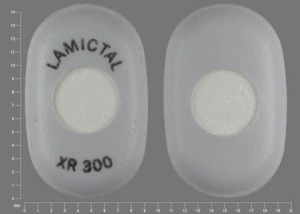
Lamictal XR Side Effects
Generic name: lamotrigine
Medically reviewed by Drugs.com. Last updated on Sep 3, 2024.
Note: This document provides detailed information about Lamictal XR Side Effects associated with lamotrigine. Some dosage forms listed on this page may not apply specifically to the brand name Lamictal XR.
Applies to lamotrigine: oral tablet, oral tablet chewable, oral tablet disintegrating, oral tablet extended release.
Important warnings
This medicine can cause some serious health issues
Oral route (tablet; tablet, chewable; tablet, disintegrating; tablet, extended release)
Cases of life-threatening serious rashes, including Stevens-Johnson syndrome and toxic epidermal necrolysis, or rash-related death have been caused by lamotrigine.
The rate of serious rash is greater in pediatric patients than in adults.
Additional factors that may increase the risk of rash include: (1) coadministration with valproate; (2) exceeding recommended initial dose of lamotrigine; or (3) exceeding recommended dose escalation for lamotrigine.
Benign rashes are also caused by lamotrigine; however, it is not possible to predict which rashes will prove to be serious or life threatening.
Lamotrigine should be discontinued at the first sign of rash, unless the rash is clearly not drug related.
Precautions
It is important that your doctor check your or your child's progress at regular visits, especially during the first few months of your treatment with lamotrigine (the active ingredient contained in Lamictal XR). This will allow your doctor to change your dose, if necessary, and will help reduce any unwanted effects.
It is important to tell your doctor if you become pregnant while using this medicine. Your doctor may want you to join a pregnancy registry for patients taking a seizure medicine.
You should not start or stop using birth control pills or other female hormonal products while you are using this medicine until you have consulted your doctor.
Tell your doctor right away if you have unusual changes in your menstrual cycle such as breakthrough bleeding while taking lamotrigine and birth control pills or other female hormonal products.
This medicine may increase the effects of alcohol and other central nervous system (CNS) depressants (medicines that make you drowsy or less alert). Some examples of CNS depressants are antihistamines or medicine for allergies or colds, sedatives, tranquilizers, or sleeping medicine, prescription pain medicine or narcotics, medicine for seizures or barbiturates, muscle relaxants, or anesthetics, including some dental anesthetics. Check with your doctor before taking any of the above while you are using this medicine.
Lamotrigine may cause blurred vision, double vision, clumsiness, unsteadiness, dizziness, or drowsiness. Do not drive or do anything else that could be dangerous until you know how this medicine affects you. If these reactions are especially bothersome, check with your doctor.
Skin rash may be a sign of a serious unwanted effect. Check with your doctor immediately if you or your child develop a rash, fever, flu-like symptoms, or swollen glands, or if your seizures becomes worse.
This medicine may cause hemophagocytic lymphohistiocytosis, a rare and life-threatening disorder wherein the body makes too many activated immune cells (macrophages and lymphocytes). Talk to your doctor if you have any concerns.
Lamotrigine may cause serious allergic reactions affecting multiple body organs (eg, liver or kidney). Check with your doctor right away if you or your child have the following symptoms: fever, dark urine, headache, hives, muscle pain or stiffness, stomach pain, unusual tiredness, or yellow eyes or skin.
This medicine may cause some people to be agitated, irritable, or display other abnormal behaviors. It may also cause some people to have suicidal thoughts and tendencies or to become more depressed. If you, your child, or your caregiver notice any of these side effects, tell your doctor or your child's doctor right away.
Check with your doctor right away if you or your child start to have a stiff neck, confusion, drowsiness, fever, chills, headache, nausea, vomiting, rash, or sensitivity to light. These could be symptoms of a rare and serious condition called aseptic meningitis.
Check with your doctor right away if blurred vision, difficulty with reading, or any other change in vision occurs during or after treatment. Your doctor may want your eyes be checked by an ophthalmologist (eye doctor).
Do not stop taking lamotrigine without first checking with your doctor. Stopping this medicine suddenly may cause your seizures to return or to occur more often. Your doctor may want you to gradually reduce the amount you are taking before stopping completely.
Do not take other medicines unless they have been discussed with your doctor. This includes prescription or nonprescription (over-the-counter [OTC]) medicines and herbal or vitamin supplements.
Serious side effects of Lamictal XR
Along with its needed effects, lamotrigine may cause some unwanted effects. Although not all of these side effects may occur, if they do occur they may need medical attention.
Check with your doctor immediately if any of the following side effects occur while taking lamotrigine:
More common side effects
- blurred vision
- changes in vision
- chest pain, discomfort, or tightness
- clumsiness or unsteadiness
- decreased urine output
- dilated neck veins
- double vision
- irregular breathing
- irregular heartbeat
- nausea
- pain or discomfort in the arms, jaw, back, or neck
- poor coordination
- seizure that will not stop
- skin rash
- sweating
- swelling of the face, fingers, feet, or lower legs
- trouble breathing
- unusual tiredness or weakness
- vomiting
- weight gain
Less common side effects
- anxiety
- chest pain
- confusion
- continuous, uncontrolled back and forth or rolling eye movements
- depression
- increase in seizures
- infection
- irritability
Rare side effects
- blistering, peeling, or loosening of the skin
- chills
- cough
- dark urine
- diarrhea
- fever
- general feeling of discomfort or illness
- headache
- itching
- joint pain
- loss of appetite
- memory loss
- muscle cramps, pain, or weakness
- red or irritated eyes
- runny nose
- shivering
- small red or purple spots on the skin
- sore throat
- sores, ulcers, or white spots on the lips or in the mouth
- swelling of the face, mouth, hands, or feet
- swollen lymph nodes
- trouble sleeping
- unusual bleeding or bruising
- yellow eyes or skin
Incidence not known
- back, leg, or stomach pains
- bleeding gums
- bloating
- blood in the urine
- bloody, black or tarry stools
- bluish lips or skin
- constipation
- cough
- coughing or vomiting blood
- difficulty with swallowing
- fainting
- fast heartbeat
- general body swelling
- heartburn
- high fever
- hoarseness
- lightheadedness
- loss of balance control
- lower back or side pain
- mask-like face
- muscle spasms
- nosebleeds
- not breathing
- pain or burning in the throat
- painful or difficult urination
- pains in the stomach or side, possibly radiating to the back
- pale skin
- persistent bleeding or oozing from puncture sites, mouth, or nose
- rapid, shallow breathing
- redness, soreness, or itching skin
- shuffling walk
- slowed movement
- slurred speech
- sores, welting, or blisters
- stiffness of the arms and legs
- swollen or painful glands
- tic-like (jerky) movements
Get emergency help immediately if any of the following symptoms of overdose occur while taking lamotrigine:
Symptoms of overdose
- clumsiness or unsteadiness (severe)
- continuous, uncontrolled back and forth or rolling eye movements (severe)
- dizziness (severe)
- drowsiness (severe)
- dryness of the mouth (severe)
- headache (severe)
- increased heart rate
- loss of consciousness
- slurred speech (severe)
Other side effects of Lamictal XR
Some side effects of lamotrigine may occur that usually do not need medical attention. These side effects may go away during treatment as your body adjusts to the medicine. Also, your health care professional may be able to tell you about ways to prevent or reduce some of these side effects.
Check with your health care professional if any of the following side effects continue or are bothersome or if you have any questions about them:
More common side effects
- dizziness
- drowsiness
Less common side effects
- indigestion
- loss of strength
- menstrual pain
- pain
- trembling or shaking
- trouble with sleeping
- unusual weight loss
See also:
Lamictal
Lamictal is an anti-epileptic medication used treat seizures in adults and children over 2 years ...
Klonopin
Klonopin (clonazepam) is used to control seizures in epilepsy and for the treatment of panic ...
Botox
Botox is used for cosmetic purposes and to treat overactive bladder symptoms, urinary incontinence ...
Topamax
Topamax (topiramate) is used to prevent seizures in adults and children and to prevent migraine ...
Valium
Valium is used to treat anxiety disorders, alcohol withdrawal symptoms, or muscle spasms. Learn ...
Valproate Sodium
Valproate Sodium is used for epilepsy, seizure prevention, seizures
Magnesium sulfate
Magnesium sulfate is used for barium poisoning, hypomagnesemia, seizure prevention, ventricular ...
Acetazolamide
Acetazolamide is used for edema, epilepsy, glaucoma, hydrocephalus, hypokalemic periodic paralysis ...
Valproic acid
Valproic acid is used for bipolar disorder, cluster-tic syndrome, epilepsy, headache ...
For healthcare professionals
Applies to lamotrigine: oral tablet, oral tablet disintegrating, oral tablet dispersible, oral tablet extended release.
General adverse events
The more commonly reported adverse reactions have included dizziness, headache, diplopia, ataxia, nausea, blurred vision, somnolence, and rash.[Ref]
Immunologic
- Postmarketing reports: Progressive immunosuppression, Lupus-like reaction, vasculitis, drug reaction with eosinophilia and systemic symptoms (DRESS), hemophagocytic lymphohistiocytosis (HLH)[Ref]
In cases of hemophagocytic lymphohistiocytosis (HLH), patients have presented with signs of systemic inflammation (fever, rash, hepatosplenomegaly, and organ system dysfunction) and blood dyscrasias. Symptoms have been reported within 8 to 24 days.[Ref]
Hypersensitivity
- Uncommon (0.1% to 1%): Allergic reaction, chills, malaise[Ref]
Nervous system
- Very common (10% or more): Dizziness (38%), headache (29%), ataxia (22%), somnolence (14%)
- Common (1% to 10%): Seizure exacerbation, incoordination, insomnia, tremor, speech disorder, amnesia, hypoesthesia, pain, gait abnormality, vertigo, dyspraxia, confusion, paresthesia
- Uncommon (0.1% to 1%): Akathisia, aphasia, central nervous system depression, dysarthria, dyskinesia, hyperkinesia, hypertonia, movement disorder, myoclonus, sudden unexplained death in Epilepsy (SUDEP)
- Rare (less than 0.1%): Choreoathetosis, dystonia, extrapyramidal syndrome, faintness, grand mal seizures, hemiplegia, hyperalgesia, hyperesthesia, hypokinesia, hypotonia, neuralgia, muscle spasm, neuralgia, paralysis, peripheral neuritis
- Very rare (less than 0.01%): Muscle spasm, paralysis, peripheral neuritis
- Postmarketing reports: Exacerbation of Parkinsonian symptoms in patients with pre-existing Parkinson's disease, tics[Ref]
Sudden unexplained death in epilepsy (SUDEP) was reported in 20 of 4700 patients with epilepsy during premarketing development. While this exceeds the expected rate in healthy populations, it is within the range for patients with epilepsy.[Ref]
Psychiatric
- Common (1% to 10%): Depression, anxiety, irritability, disturbance of concentration, emotional lability, abnormal thinking, nervousness
- Uncommon (0.1% to 1%): Apathy, euphoria, hallucinations, hostility, depersonalization, memory decrease, mind racing, panic attack, paranoid reaction, personality disorder, psychosis, sleep disorder, stupor, suicidal ideation
- Rare (less than 0.1%): Delirium, delusions, dysphoria, manic depression reaction, neurosis
- Postmarketing reports: Aggression, nightmares[Ref]
Antiepileptic drugs (AEDs) increase the risk of suicidal thoughts or behavior. Pooled analyses of 199 placebo-controlled clinical trials of 11 different AEDs (monotherapy or adjunctive therapy) showed twice the risk compared with placebo patients; an estimated incidence of 0.43% (n=27,863) in AED-treated patients compared to 0.24% (n=16,029) in placebo. The median treatment duration was 12 weeks. There were 4 suicides in AED-treated patients (placebo=0). The risk of suicidal thoughts or behavior was considered similar among the drugs studied despite their varying mechanisms of action suggesting the risk applies to all AEDs used for any indication. Additionally, the risk did not vary substantially by age.[Ref]
Ocular
- Very common (10% or more): Diplopia (28%), blurred vision (16%)
- Common (1% to 10%): Vision abnormality, nystagmus, photosensitivity, amblyopia
- Uncommon (0.1% to 1%): Abnormality of accommodation, conjunctivitis, dry eyes, photophobia
- Rare (less than 0.1%): Lacrimation disorder, oscillopsia, ptosis, strabismus, uveitis, visual field defect[Ref]
Gastrointestinal
- Very common (10% or more): Vomiting (20%), nausea (19%), diarrhea (10%)
- Common (1% to 10%): Abdominal pain, vomiting, dyspepsia, constipation, anorexia, dry mouth, rectal hemorrhage, peptic ulcer, flatulence
- Uncommon (0.1% to 1%): Dysphagia, eructation, gastritis, gingivitis, increased appetite, increased salivation, mouth ulceration
- Rare (less than 0.1%): Gastrointestinal hemorrhage, glossitis, gum hemorrhage, gum hyperplasia, hematemesis, hemorrhagic colitis, melena, stomach ulcer, stomatitis, tongue edema
- Very rare (less than 0.01%): Pancreatitis, esophagitis[Ref]
Respiratory
- Very common (10% or more): Rhinitis (14%)
- Common (1% to 10%): Pharyngitis, increased cough, epistaxis, dyspnea, bronchitis, sinusitis, bronchospasm
- Uncommon (0.1% to 1%): Yawn
- Rare (less than 0.1%): Hiccup, hyperventilation
- Postmarketing reports: Apnea[Ref]
Dermatologic
- Very common (10% or more): Rash (14%)
- Common (1% to 10%): Contact dermatitis, dry skin, sweating, eczema, pruritus
- Uncommon (0.1% to 1%): Acne, alopecia, hirsutism, maculopapular rash, skin discoloration, urticaria
- Rare (less than 0.1%): Angioedema, erythema, exfoliative dermatitis, fungal dermatitis, herpes zoster, leukoderma, multiforme erythema, petechial rash, pustular rash, Stevens-Johnson syndrome, vesiculobullous rash[Ref]
In adult patients (n=3348), serious rash associated with hospitalization and discontinuation was reported in 0.3% of patients in premarketing epilepsy trials. In bipolar trials, serious rash occurred in 0.08% of patients receiving this drug as initial monotherapy and 0.13% of patients receiving this drug as adjunctive therapy. In worldwide postmarketing experience, rash-related death has been reported, but the numbers are too few to permit a precise estimate of rate.
In a prospectively followed cohort of pediatric patients 2 to 17 years old, the incidence of serious rash was approximately 0.3% to 0.8%. In a prospectively followed cohort of patients 2 to 16 years old (n=1983), 1 rash-related death occurred in a patient with epilepsy taking this drug as adjunctive therapy.
Evidence has show the inclusion of valproate in a multidrug regimen increases the risk of serious, potentially life-threatening rash in both adult and pediatric patients. In pediatric patients who used valproate concomitantly for epilepsy, 1.2% (6 of 482) experienced a serious rash (placebo=0.6%). In adults, 1% of patients of patients receiving this drug in combination with valproate (n=584) experienced a rash (placebo=0.16%).[Ref]
Genitourinary
- Common (1% to 10%): Dysmenorrhea, vaginitis, amenorrhea, libido increase, urinary tract infection (both male and female), urinary frequency
- Uncommon (0.1% to 1%): Libido decreased, abnormal ejaculation, hematuria, impotence, menorrhagia, polyuria, urinary incontinence
- Rare (less than 0.1%): Anorgasmia, breast abscess, breast neoplasm, creatinine increase, cystitis, dysuria, epididymitis, female lactation, nocturia, urinary retention, urinary urgency[Ref]
Other
- Very common (10% or more): Fever (15%), accidental injury (14%)
- Common (1% to 10%): Fatigue
- Uncommon (0.1% to 1%): Ear pain, taste perversion, tinnitus
- Rare (less than 0.1%): Alcohol intolerance, deafness, taste loss, parosmia, taste loss[Ref]
Metabolic
- Common (1% to 10%): Weight decrease, weight gain, peripheral edema, facial edema
- Rare (less than 0.1%): Bilirubinemia, general edema, gamma glutamyl transpeptidase increase, hyperglycemia[Ref]
Musculoskeletal
- Common (1% to 10%): Neck pain, arthralgia, myalgia, decreased reflexes, back pain, increased reflexes, asthenia
- Uncommon (0.1% to 1%): Arthritis, leg cramps, myasthenia, twitching
- Rare (less than 0.1%): Bursitis, muscle atrophy, pathological fracture, tendinous contracture
- Postmarketing reports: Rhabdomyolysis (among patients experiencing hypersensitivity reactions)[Ref]
Cardiovascular
- Common (1% to 10%): Chest pain, migraine
- Uncommon (0.1% to 1%): Flushing, hot flashes, hypertension, palpitations, postural hypotension, syncope, tachycardia, vasodilation[Ref]
Hematologic
- Uncommon (0.1% to 1%): Leukopenia
- Rare (less than 0.1%): Anemia, eosinophilia, fibrin decrease, fibrinogen decrease, iron deficiency anemia, leukocytosis, lymphocytosis, macrocytic anemia, ecchymosis, thrombocytopenia
- Postmarketing reports: Agranulocytosis, hemolytic anemia, lymphadenopathy not associated with hypersensitivity disorder[Ref]
Hepatic
- Common (1% to 10%): Lymphadenopathy
- Uncommon (0.1% to 1%): Liver function tests abnormal, aspartate transaminase (AST) increased
- Rare (less than 0.1%): Hepatitis, alanine transaminase ALT) increased, acute kidney failure, kidney failure, kidney pain[Ref]
References
1. (2018) "Product Information. LaMICtal XR (lamotrigine)." GlaxoSmithKline
2. (2001) "Product Information. Lamictal (lamotrigine)." Glaxo Wellcome
3. Cerner Multum, Inc. "UK Summary of Product Characteristics."
4. Pharmaceutical Society of Australia (2006) APPGuide online. Australian prescription products guide online. http://www.appco.com.au/appguide/default.asp
5. Wadelius M, Karlsson T, Wadelius C (1996) "Lamotrigine and toxic epidermal necrolysis." Lancet, 348, p. 1041
6. Chaffin JJ, Davis SM (1997) "Suspected lamotrigine-induced toxic epidermal necrolysis." Ann Pharmacother, 31, p. 720-3
7. Sachs B, Ronnau AC, Ruzicka T, Gleichmann E, Schuppe HC (1996) "Lamotrigine and toxic epidermal necrolysis." Lancet, 348, p. 1597
8. Page RL, ONeil MG, Yarbrough DR, Conradi S (1998) "Fatal toxic epidermal necrolysis related to lamotrigine administration." Pharmacotherapy, 18, p. 392-8
9. Hilas O, Charneski L (2007) "Lamotrigine-induced Stevens-Johnson syndrome." Am J Health Syst Pharm, 64, p. 273-275
10. Mikati MA, Schachter SC, Schomer DL, Keally M, Osborne-Shafer P, Seaman CA, Sheridan PH, Ashworth M, Kupferberg H, Valakas A, et al. (1989) "Long-term tolerability, pharmacokinetic and preliminary efficacy study of lamotrigine in patients with resistant partial seizures." Clin Neuropharmacol, 12, p. 312-21
11. Boot B (2009) "Recurrent lamotrigine-induced aseptic meningitis." Epilepsia, 50, p. 968-9
12. Margolese HC, Beauclair L, Szkrumelak N, Chouinard G (2003) "Hypomania Induced by Adjunctive Lamotrigine." Am J Psychiatry, 160, p. 183-184
13. Mueller TH, Beeber AR (2004) "Delirium From Valproic Acid With Lamotrigine." Am J Psychiatry, 161, p. 1128-1129
14. Uher R, Jones HM (2006) "Hallucinations during lamotrigine treatment of bipolar disorder." Am J Psychiatry, 163, p. 749-50
15. Desarkar P, Sinha VK (2006) "Lamotrigine-induced severe manic switch." Aust N Z J Psychiatry, 40, p. 718
16. Verma A, Miller P, Carwile ST, Husain AM, Radtke (1999) "Lamotrigine-induced blepharospam." Pharmacotherapy, 19, p. 877-80
17. Saravanan N, Musibay Otaiku O, Namushi Namushi R (2005) "Interstitial pneumonitis during lamotrigine therapy." Br J Clin Pharmacol, 60, p. 666-7
18. Hillemacher T, Bleich S, Kornhuber J, Frieling H (2006) "Hair loss as a side effect of lamotrigine treatment." Am J Psychiatry, 163, p. 1451
19. Schwartz R, Avello E, Palisson F (2008) "Lamotrigine-induced toxic epidermal necrolysis treated with intravenous immunoglobulin and amniotic membranes." Arch Dermatol, 144, p. 724-6
20. Avoni P, Contin M, Riva R, Albani F, Liguori R, Baruzzi A (2001) "Dysgeusia in epileptic patients treated with lamotrigine: Report of three cases." Neurology, 57, p. 1521
21. Bowden CL, Calabrese JR, Ketter TA, Sachs GS, White RL, Thompson TR (2006) "Impact of lamotrigine and lithium on weight in obese and nonobese patients with bipolar I disorder." Am J Psychiatry, 163, p. 1199-201
22. FDA. U.S Food & Drug Administration (2018) FDA Drug Safety Communication: FDA warns of serious immune system reaction with seizure and mental health medicine lamotrigine (Lamictal) https://www.fda.gov/Drugs/DrugSafety/ucm605470.htm?utm_campaign=New%20FDA%20Drug%20Safety%20Communication%20on%20Lam
23. Esfahani FE, Dasheiff RM (1997) "Anemia associated with lamotrigine." Neurology, 49, p. 306-7
24. Fadul CE, Meyer LP, Jobst BC, Cornell CJ, Lewis LD (2002) "Agranulocytosis Associated with Lamotrigine in a Patient with Low-grade Glioma." Epilepsia, 43, p. 199-200
25. Moeller KE, Wei L, Jewell AD, Carver LA (2008) "Acute hepatotoxicity associated with lamotrigine." Am J Psychiatry, 165, p. 539-40
26. Ouellet G, Tremblay L, Marleau D (2009) "Fulminant hepatitis induced by lamotrigine." South Med J, 102, p. 82-4
Frequently asked questions
- Is it better to take lamotrigine at night?
- What should I do if I develop a rash while taking lamotrigine?
- If you are taking lamotrigine how long does it take to get out of your system?
More about Lamictal XR (lamotrigine)
- Check interactions
- Compare alternatives
- Pricing & coupons
- Reviews (4)
- Drug images
- Latest FDA alerts (6)
- Dosage information
- During pregnancy
- Generic availability
- FDA approval history
- Drug class: triazine anticonvulsants
- Breastfeeding
- En español
Patient resources
Other brands
Professional resources
Other brands
Other formulations
Related treatment guides
Further information
Lamictal XR side effects can vary depending on the individual. Always consult your healthcare provider to ensure the information displayed on this page applies to your personal circumstances.
Note: Medication side effects may be underreported. If you are experiencing side effects that are not listed, submit a report to the FDA by following this guide.