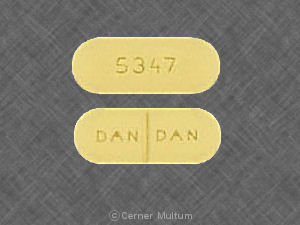
Probenecid (Monograph)
Drug class: Uricosuric Agents
Introduction
Uricosuric and renal tubular transport blocking agent.
Uses for Probenecid
Hyperuricemia Associated with Gout
Reduction of serum uric acid concentrations in chronic gouty arthritis and tophaceous gout in patients with frequent disabling gout attacks.
Management of gout when there are visible tophi or when serum urate concentrations exceed 8.5–9 mg/dL and patient has family history of tophi or low urate excretion.
Not usually recommended for management of asymptomatic hyperuricemia; however, some clinicians have suggested that therapy be initiated when serum urate concentrations exceed 9 mg/dL (by colorimetric method) because these concentrations often are associated with increased joint changes and renal complications.
Of no value in treatment of acute gout attacks (due to lack of analgesic or anti-inflammatory activity).
Fixed combination of probenecid and colchicine (probenecid/colchicine): Treatment of chronic gouty arthritis complicated by frequent, recurrent, acute gout attacks. Probenecid/colchicine has limited usefulness for prophylactic therapy because colchicine content in the fixed combination exceeds amount required for prophylaxis in most patients.
Hyperuricemia Secondary to Other Causes
Has been used effectively to promote uric acid excretion in hyperuricemia secondary to the administration of thiazide and related diuretics† [off-label], furosemide† [off-label], ethacrynic acid† [off-label], pyrazinamide† [off-label], or ethambutol† [off-label].
Not recommended to treat hyperuricemia secondary to cancer chemotherapy, radiation, or myeloproliferative neoplastic diseases because of increased risk of uric acid nephropathy.
Use with Anti-infectives
Used for therapeutic advantage to decrease clearance and increase plasma concentrations of certain β-lactam antibacterials. Also used to reduce clearance of cidofovir and decrease nephrotoxicity associated with the antiviral.
Used concomitantly with IM penicillin G procaine for treatment of neurosyphilis.
Used concomitantly with IM cefoxitin for treatment of mild to moderately severe acute pelvic inflammatory disease (PID) or treatment of uncomplicated urogenital or anorectal gonorrhea.
Used concomitantly with IV cidofovir for management of cytomegalovirus (CMV) retinitis.
Probenecid Dosage and Administration
General
Hyperuricemia Associated with Gout
-
Adjust dosage according to individual response and tolerance.
-
Maintain fluid intake to yield daily urine output of ≥2–3 L; alkalinization of urine is desirable. (See Renal Effects under Cautions.)
-
Administer prophylactic doses of colchicine concurrently during first 3–6 months of probenecid therapy because probenecid may increase frequency of acute gout attacks during first 6–12 months of therapy. Initiate colchicine prior to uricosuric therapy since sudden changes in serum urate concentrations may precipitate acute attacks.
-
Initially, low probenecid doses are recommended to reduce possibility of flare-up of acute gouty attacks and to prevent massive uricosuria. If acute attack occurs during therapy, continue probenecid without changing dosage and administer full therapeutic doses of colchicine or other anti-inflammatory agents. (See Acute Gout Attacks under Cautions.)
-
Serum urate concentrations usually reach a minimum within a few days after beginning therapy.
Use with Anti-infectives
-
The 15-minute IV phenolsulfonphthalein (PSP) excretion test can be used to determine effectiveness of probenecid in decreasing penicillin excretion. Probenecid dosage is adequate when renal clearance of the dye is reduced to approximately 20% of the normal rate.
Administration
Oral Administration
Administer orally.
Adverse GI effects may be minimized by administration with food or antacids; dosage reduction may be required.
Dosage
Pediatric Patients
Use with Anti-infectives
General Dosage (Use with Penicillin Therapy)
OralChildren 2–14 years of age: Manufacturer recommends initial dose of 25 mg/kg (or 700 mg/m2) followed by maintenance dosage of 40 mg/kg (or 1.2 g/m2) daily given in 4 divided doses.
Children weighing >50 kg: Manufacturer recommends 2 g daily given in divided doses.
Adults
Hyperuricemia Associated with Gout
Oral
Initially, 250 mg twice daily for one week, initiated 2–3 weeks after an acute gout attack. Subsequently, increase to 500 mg twice daily.
Patients previously controlled with other uricosuric therapy: Initially, 500 mg twice daily.
If gouty arthritis is not controlled or if 24-hour uric acid excretion is <700 mg, increase daily dosage by 500 mg every 4 weeks as tolerated to a maximum of 2–3 g daily.
If acute attacks have been absent ≥6 months and serum urate concentrations are controlled, consider decreasing daily dosage by 500 mg every 6 months.
Continue therapy indefinitely; irregular dosage schedules may lead to increased serum urate concentrations.
Probenecid/Colchicine Fixed Combination
OralManufacturer recommends initial dosage of 1 tablet (probenecid 500 mg in fixed combination with colchicine 0.5 mg) once daily for 1 week, then 1 tablet twice daily. If gouty arthritis is not controlled or if 24-hour uric acid excretion is not >700 mg, increase daily dosage by 1 tablet every 4 weeks as tolerated (generally not exceeding 4 tablets [probenecid 2 g and colchicine 2 mg] daily).
If acute attacks have been absent ≥6 months and serum urate concentrations are controlled, manufacturer recommends reducing dosage by 1 tablet every 6 months as long as serum urate concentrations remain controlled.
Probenecid/colchicine has limited usefulness for prophylactic therapy because colchicine content in the fixed combination exceeds amount required for prophylaxis in most patients.
Use with Anti-infectives
General Dosage (Use with Penicillin Therapy)
OralManufacturer recommends 2 g daily in divided doses.
Neurosyphilis
OralCDC and others recommend 500 mg 4 times daily for 10–14 days in conjunction with IM penicillin G procaine regimen (2.4 million units of penicillin G once daily for 10–14 days); some clinicians recommend that this regimen be followed by a regimen of IM penicillin G benzathine (2.4 million units of penicillin G once weekly for up to 3 weeks) without probenecid.
PID
OralCDC recommends 1 g as a single dose in conjunction with IM cefoxitin (2 g as a single dose), followed by oral doxycycline (100 mg twice daily for 14 days) with or without oral metronidazole (500 mg twice daily for 14 days).
Uncomplicated Gonorrhea
OralUrogenital or anorectal gonorrhea: CDC recommends 1 g as a single dose in conjunction with IM cefoxitin (2 g as a single dose).
CMV Retinitis
OralUse 3-dose regimen of probenecid for each cidofovir dose. Give 2 g of probenecid 3 hours prior to initiation of each cidofovir IV infusion and give 1-g doses of probenecid at 2 and 8 hours after completion of each cidofovir IV infusion (total of 4 g of probenecid for each cidofovir dose).
Prescribing Limits
Adults
Hyperuricemia Associated with Gout
Oral
Maximum 2–3 g daily.
Special Populations
Hepatic Impairment
No specific dosage recommendations.
Renal Impairment
Hyperuricemia Associated with Gout
Oral
May need to increase dosage. (See Renal Impairment under Cautions.)
Geriatric Patients
No dosage adjustments except those related to renal impairment.
Cautions for Probenecid
Contraindications
-
Known hypersensitivity to probenecid.
-
Children <2 years of age.
-
Known blood dyscrasias.
-
Uric acid kidney stones.
-
Initiation of probenecid during acute gout attack. (See Acute Gout Attacks under Cautions.)
Warnings/Precautions
Warnings
Acute Gout Attacks
May exacerbate and prolong inflammation during acute gout attacks. Do not initiate probenecid until after acute gout attack subsides.
Possible increased frequency of acute gout attacks during first 6–12 months of probenecid therapy. If acute attacks occur during therapy, continue probenecid and administer colchicine or other anti-inflammatory agents to control the acute attack.
Interactions
Salicylates contraindicated in patients receiving probenecid. (See Specific Drugs under Interactions.)
Probenecid increases plasma concentrations of methotrexate; methotrexate toxicity reported when probenecid used concomitantly in animals. (See Specific Drugs under Interactions.)
Sensitivity Reactions
Hypersensitivity Reactions
Severe allergic reactions and anaphylaxis reported rarely; most cases occurred within several hours after administration of probenecid in patients who previously received the drug. Hypersensitivity may be characterized by dermatitis, pruritus, fever, sweating, and hypotension.
If hypersensitivity reaction occurs, discontinue probenecid.
General Precautions
Renal Effects
Possible development of uric acid stones due to increased concentration of uric acid in renal tubules; may result in hematuria, renal colic, costovertebral pain. Usually occurs when probenecid is initiated.
May be prevented by alkalinization of the urine and adequate hydration. (See General under Dosage and Administration.) Monitor acid-base balance if alkali is administered.
Peptic Ulcer
Use with caution in patients with history of peptic ulcer.
Use of Fixed Combinations
When used in fixed combination with colchicine (probenecid/colchicine), consider cautions, precautions, and contraindications associated with colchicine.
Specific Populations
Pregnancy
Probenecid crosses placenta and appears in cord blood; evaluate risks and benefits when considering use in women of childbearing potential.
Lactation
Distribution into human milk expected; effects on nursing infant not known. Caution advised because of potential risks to nursing infants.
Pediatric Use
Contraindicated in children <2 years of age.
Geriatric Use
Consider age-related decreases in renal function when selecting dosage; adjust dosage if necessary.
Renal Impairment
Increased dosage may be required. Manufacturer states may not be effective in gouty patients with chronic renal insufficiency, especially those with GFR ≤30 mL/minute. Avoidance of probenecid use in patients with moderate to severe renal impairment (Clcr <50 mL/minute) has been suggested.
Because of its mechanism of action, concomitant use with penicillin therapy not recommended in patients with known renal impairment.
Common Adverse Effects
Headache, vomiting, nausea, anorexia.
Drug Interactions
Weak Organic Acids
Probenecid inhibits renal tubular secretion of many weak organic acids, thereby increasing plasma concentrations of weak organic acids.
Specific Drugs and Laboratory Tests
|
Drug or Test |
Interaction |
Comments |
|---|---|---|
|
Acetaminophen |
Possible increased peak plasma concentrations of acetaminophen |
Select and adjust acetaminophen dosage with care; lower dosages may be adequate |
|
Alcohol |
Potential for increased serum urate concentrations |
May need to increase probenecid dosage |
|
Antidiabetic agents, oral (sulfonylureas) |
Possible increased plasma concentrations of oral sulfonylurea antidiabetic agents; may increase risk of hypoglycemia |
|
|
β-Lactam anti-infectives (e.g., ampicillin, methicillin, nafcillin, oxacillin, penicillin G, cefoxitin) |
Decreased renal excretion and increased plasma concentrations of β-lactam anti-infectives May increase risk of adverse effects associated with the β-lactam anti-infective; psychic disturbances reported when used with penicillin or other β-lactams |
Used concomitantly with penicillin G procaine or cefoxitin for therapeutic advantage |
|
Cidofovir |
Decreased renal clearance of cidofovir |
Used concomitantly with cidofovir for therapeutic advantage |
|
Diazoxide |
Potential for increased serum urate concentrations |
May need to increase probenecid dosage |
|
Diuretics, loop (furosemide, ethacrynic acid) |
Potential for increased serum urate concentrations Inhibits furosemide and ethacrynic acid naturesis |
May need to increase probenecid dosage |
|
Diuretics, thiazide |
Increased excretion of calcium, magnesium, and citrate; does not antagonize thiazide-induced naturesis |
|
|
Ganciclovir, valganciclovir |
Ganciclovir: Increased AUC and decreased renal excretion of ganciclovir Valganciclovir: Increased AUC and decreased renal excretion of ganciclovir expected |
|
|
Ketamine |
Substantially prolonged anesthesia reported in rats |
|
|
Lorazepam |
Possible increased peak plasma concentrations of lorazepam |
Select and adjust lorazepam dosage with care; lower dosage may be adequate |
|
Methotrexate |
Increased serum concentrations of methotrexate; concomitant use in animals resulted in methotrexate toxicity |
Reduce methotrexate dosage and monitor carefully |
|
NSAIAs (indomethacin, ketoprofen, meclofenamate, naproxen, sulindac) |
Increased plasma concentrations of NSAIAs Sulindac: Possible decreased uricosuric action of probenecid |
Select and adjust NSAIA dosage with care; lower dosage may be adequate Changes in uricosuric action unlikely to be clinically important Ketoprofen: Concomitant use not recommended |
|
Nitrofurantoin |
Possible inhibition of renal excretion of nitrofurantoin and decreased nitrofurantoin urine concentrations with possible decreased efficacy in treatment of UTIs; may increase risk of nitrofurantoin-associated adverse effects |
Avoid concomitant use whenever possible |
|
Pyrazinamide |
Pyrazinamide antagonizes uricosuric action of probenecid; potential for increased serum urate concentrations |
May need to increase probenecid dosage |
|
Rifampin |
Possible inhibition of tubular secretion and hepatic uptake of rifampin resulting in small increases in plasma concentrations of rifampin |
Not considered clinically important |
|
Salicylates |
Reduced uricosuric effect of probenecid |
Concomitant use contraindicated |
|
Sulfonamides |
Increased total sulfonamide plasma concentrations; free sulfonamide plasma concentrations not affected |
Concomitant use not therapeutically useful If used concomitantly for prolonged periods, monitor plasma concentrations of the sulfonamide |
|
Tests for theophylline |
Possible interference with Schack and Waxler assay resulting in falsely elevated theophylline concentrations |
|
|
Tests for urinary glucose |
Possible interference with tests using cupric sulfate reagent (Benedict’s Qualitative Reagent, Clinitest, Fehling’s Solution) resulting in false-positive glycosuria; may be caused by a reducing substance in urine which disappears with discontinuance of therapy |
Use glucose oxidase reagent (Clinistix, Tes-Tape) |
|
Thiopental |
Lower doses of thiopental (not commercially available in US) reportedly needed for anesthesia in patients receiving probenecid; substantially prolonged anesthesia reported in rats |
Probenecid Pharmacokinetics
Absorption
Bioavailability
Rapidly and completely absorbed following oral administration, with peak plasma concentration attained within 2–4 hours.
Onset
Following oral administration, maximal renal clearance of uric acid is reached after 30 minutes; exerts its effect on plasma penicillin concentrations after 2 hours.
Distribution
Extent
CSF concentrations of probenecid are about 2% of plasma concentrations.
Crosses placenta and appears in cord blood. Not known whether distributed into milk; however, distribution into milk is expected.
Plasma Protein Binding
Approximately 75%.
Elimination
Metabolism
Slowly metabolized, principally by the liver, to metabolites that may possess some uricosuric activity.
Elimination Route
Excreted principally in the urine as monoacyl glucuronide and unchanged drug. Alkalinization of urine increases renal probenecid excretion.
Half-life
Dose dependent; 4–17 hours.
Stability
Storage
Oral
Tablets
Probenecid: 20–25°C in well-closed container.
Probenecid/colchicine: 20–25°C in well-closed, light-resistant container.
Actions
-
Competitively inhibits active reabsorption of urate at the proximal convoluted tubule, increasing urinary excretion of uric acid and reducing serum urate concentrations.
-
Competitively inhibits tubular secretion of weak organic acids (e.g., penicillins, most cephalosporins, some other β-lactam anti-infectives) and substantially increases plasma concentrations of acidic drugs eliminated principally by renal secretion.
-
Mechanism(s) of action responsible for inhibition of renal tubular transport not known; may inhibit transport enzymes that require a source of high energy phosphate bonds and/or nonspecifically interfere with substrate access to protein receptor sites on the kidney tubules.
Advice to Patients
-
Importance of informing clinicians of existing or contemplated concomitant therapy, including prescription and OTC drugs and dietary or herbal supplements, as well as concomitant illnesses.
-
Potential for drug to increase incidence of gouty arthritis attacks during therapy initiation. Continue probenecid during acute attacks, without changing dose, and add therapeutic dosages of colchicine or other anti-inflammatory agents.
-
Importance of women informing clinicians if they are or plan to become pregnant or plan to breast-feed.
-
Importance of informing patients of other important precautionary information. (See Cautions.)
Additional Information
The American Society of Health-System Pharmacists, Inc. represents that the information provided in the accompanying monograph was formulated with a reasonable standard of care, and in conformity with professional standards in the field. Readers are advised that decisions regarding use of drugs are complex medical decisions requiring the independent, informed decision of an appropriate health care professional, and that the information contained in the monograph is provided for informational purposes only. The manufacturer’s labeling should be consulted for more detailed information. The American Society of Health-System Pharmacists, Inc. does not endorse or recommend the use of any drug. The information contained in the monograph is not a substitute for medical care.
Preparations
Excipients in commercially available drug preparations may have clinically important effects in some individuals; consult specific product labeling for details.
Please refer to the ASHP Drug Shortages Resource Center for information on shortages of one or more of these preparations.
* available from one or more manufacturer, distributor, and/or repackager by generic (nonproprietary) name
|
Routes |
Dosage Forms |
Strengths |
Brand Names |
Manufacturer |
|---|---|---|---|---|
|
Oral |
Tablets, film-coated |
500 mg* |
Probenecid Tablets |
* available from one or more manufacturer, distributor, and/or repackager by generic (nonproprietary) name
|
Routes |
Dosage Forms |
Strengths |
Brand Names |
Manufacturer |
|---|---|---|---|---|
|
Oral |
Tablets |
500 mg Probenecid and Colchicine 0.5 mg* |
Probenecid and Colchicine Tablets |
AHFS DI Essentials™. © Copyright 2025, Selected Revisions August 10, 2020. American Society of Health-System Pharmacists, Inc., 4500 East-West Highway, Suite 900, Bethesda, Maryland 20814.
† Off-label: Use is not currently included in the labeling approved by the US Food and Drug Administration.
Reload page with references included
Related/similar drugs
More about probenecid
- Check interactions
- Compare alternatives
- Pricing & coupons
- Reviews (7)
- Drug images
- Side effects
- Dosage information
- During pregnancy
- Drug class: antigout agents
- Breastfeeding
- En español