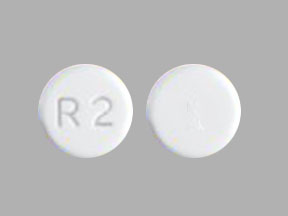
Rasagiline (Monograph)
Brand name: Azilect
Drug class: Monoamine Oxidase B Inhibitors
- Antiparkinsonian Agents
- MAO Inhibitors
VA class: CN500
Chemical name: (R)-2,3-dihydro-N-2-propynyl-1H-inden-1-amine methanesulfonate
Molecular formula: C12H13N•CH4O3S
CAS number: 161735-79-1
Introduction
Selective irreversible MAO-B inhibitor.
Uses for Rasagiline
Parkinsonian Syndrome
Symptomatic treatment of parkinsonian syndrome (e.g., parkinsonism, Parkinson disease [paralysis agitans]).
May be used as monotherapy or as adjunctive therapy to levodopa or other antiparkinsonian agents (e.g., dopamine agonists).
Rasagiline Dosage and Administration
Administration
Oral Administration
Administer orally once daily without regard to meals.
Dosage
Available as rasagiline mesylate; dosage expressed in terms of rasagiline.
Adults
Parkinsonian Syndrome
Monotherapy or Adjunctive Therapy with Other Antiparkinsonian Agents (Other than Levodopa)
Oral1 mg once daily.
Adjunctive Therapy with Levodopa
OralInitially, 0.5 mg once daily.
If adequate response not achieved, may increase dosage to 1 mg once daily as tolerated.
Consider reducing levodopa dosage if adverse dopaminergic effects (e.g., dyskinesia, hallucinations) occur. In clinical studies, approximately 9–17% of patients receiving 0.5 or 1 mg rasagiline daily required reduction of levodopa dosage (average reduction: about 9–13%).
Special Populations
Hepatic Impairment
0.5 mg once daily in patients with mild (Child-Pugh score of 5–6) hepatic impairment.
Use not recommended in patients with moderate or severe (Child-Pugh score ≥7) hepatic impairment. (See Special Populations under Pharmacokinetics.)
Renal Impairment
No dosage adjustment required in patients with mild or moderate renal impairment.
Geriatric Patients
No dosage adjustment required.
Cautions for Rasagiline
Contraindications
-
Concomitant use with cyclobenzaprine, dextromethorphan, meperidine, methadone, propoxyphene (no longer commercially available in the US), tramadol, St. John’s wort (Hypericum perforatum), or other MAO inhibitors (selective or nonselective). (See Interactions.)
Warnings/Precautions
Hypertension
Substantial increases in BP and posttreatment hypertension (SBP >180 mm Hg or DBP >100 mm Hg) reported in patients receiving rasagiline as adjunctive therapy with levodopa.
Serious hypertensive reactions associated with nonselective inhibition of MAO may occur with use of higher than recommended dosages of rasagiline. Do not exceed recommended dosages. (See Dosage under Dosage and Administration.)
Hypertensive crisis reported rarely following concomitant use of recommended dosages of selective MAO-B inhibitors with tyramine-rich foods or sympathomimetic amines (e.g., ephedrine). Manufacturer states that restriction of most tyramine-containing foods generally not required during rasagiline therapy. However, because foods that contain very large amounts (i.e., >150 mg) of tyramine potentially can cause severe hypertension in some patients (e.g., those with mildly increased sensitivity to tyramine) receiving recommended dosages of rasagiline, advise patients to avoid such tyramine-rich foods during rasagiline therapy. (See Specific Drugs and Foods under Interactions and also see Advice to Patients.)
Serotonin Syndrome
Severe, potentially fatal reactions resembling serotonin syndrome reported following concomitant use of selective (e.g., rasagiline, selegiline) or nonselective (e.g., phenelzine, tranylcypromine) MAO inhibitors with antidepressants (e.g., SNRIs, SSRIs, tricyclic or tetracyclic antidepressants, triazolopyridine-derivative antidepressants) or certain opiate agonists (i.e., meperidine, tramadol). (See Interactions.)
Manifestations of serotonin syndrome may include mental status changes (e.g., agitation, hallucinations, coma), autonomic instability (e.g., tachycardia, labile BP, hyperthermia), neuromuscular aberrations (e.g., hyperreflexia, incoordination), and/or GI symptoms (e.g., nausea, vomiting, diarrhea).
Concomitant use with certain opiate agonists (i.e., meperidine, methadone, propoxyphene [no longer commercially available in the US], tramadol) is contraindicated. Concomitant use with antidepressants generally should be avoided. (See Specific Drugs and Foods under Interactions.)
Sudden Sleep Episodes
Episodes of falling asleep while engaged in activities of daily living (e.g., driving) reported, sometimes resulting in accidents.
Some patients perceived no warning signs (e.g., excessive drowsiness) and believed that they were alert immediately prior to the event.
Monitor patients for drowsiness or sleepiness. Patients may not acknowledge drowsiness or sleepiness until directly questioned about such adverse effects during specific activities. Ask patients about any factors that may increase the risk of somnolence (e.g., concomitant sedating drugs, presence of sleep disorders).
Generally discontinue therapy if a patient develops daytime sleepiness or episodes of falling asleep during activities that require active participation (e.g., conversations, eating). If the drug is continued, advise patients not to drive and to avoid other potentially dangerous activities.
Concomitant Use with Ciprofloxacin or Other CYP1A2 Inhibitors
Concomitant use with ciprofloxacin or other CYP1A2 inhibitors may increase plasma rasagiline concentrations by up to twofold. Adjustment of rasagiline dosage recommended. (See Drugs Affecting Hepatic Microsomal Enzymes under Interactions.)
Orthostatic Hypotension and Lowering of BP
Orthostatic hypotension, with or without manifestations such as dizziness, nausea, syncope, and sometimes sweating, reported when used as adjunctive therapy with levodopa. Occurs most frequently during the first 2 months of therapy (and less frequently over time) and may occur at any time following dosage increase. Substantial decreases in BP in the supine position and posttreatment hypotension also reported following use as adjunctive therapy.
Risk of hypotension or orthostatic hypotension not increased when used as monotherapy.
Dyskinesia
When used as adjunctive therapy with levodopa, rasagiline may precipitate or exacerbate levodopa-associated adverse effects (e.g., dyskinesia), presumably by increasing dopaminergic activity; effects may be mitigated by reducing levodopa dosage.
Hallucinations and Psychotic-like Behavior
Hallucinations reported when used as monotherapy or as adjunctive therapy with levodopa. (See Advice to Patients.)
New onset or exacerbation of psychotic-like behavior (manifested as paranoia, confusional state or confusion, psychotic disorder, agitation, delusion, and hallucinations) reported. Use not recommended in patients with major psychotic disorders. (See Specific Drugs and Foods under Interactions.)
Consider reducing dosage or discontinuing rasagiline if a patient develops hallucinations or psychotic-like behavior.
Intense Urges
Intense urges (e.g., urge to gamble, increased sexual urges, other intense urges) and inability to control these urges reported in some patients receiving antiparkinsonian agents that increase central dopaminergic tone (including rasagiline). Urges stopped in some cases when dosage was reduced or drug was discontinued.
Consider reducing dosage or discontinuing rasagiline if a patient develops such urges.
Neuroleptic Malignant Syndrome
A symptom complex resembling neuroleptic malignant syndrome (characterized by elevated temperature, muscular rigidity, altered consciousness, and autonomic instability) reported following rapid dosage reduction, withdrawal of, or changes in drugs that increase central dopaminergic tone. Hyperpyrexia not reported following discontinuance of rasagiline.
Melanoma
Epidemiologic studies indicate patients with Parkinson disease have a twofold to approximately sixfold greater risk of developing melanoma than the general population. Unclear whether increased risk is related to Parkinson disease or other factors (e.g., drugs used to treat the disease).
Monitor for melanoma on a frequent and regular basis. Perform dermatologic examinations periodically; frequency of examinations determined by patient’s dermatologist.
Specific Populations
Pregnancy
Category C.
Lactation
Inhibits prolactin secretion in rats; may inhibit milk secretion in women. Not known whether rasagiline is distributed into milk; caution if used in nursing women.
Pediatric Use
Safety and efficacy not established in pediatric patients <18 years of age.
Geriatric Use
No overall differences in safety relative to younger adults.
Hepatic Impairment
Dosage adjustment recommended in patients with mild (Child-Pugh score of 5–6) hepatic impairment.
Use not recommended in patients with moderate or severe (Child-Pugh score ≥7) hepatic impairment. (See Special Populations under Pharmacokinetics.)
Common Adverse Effects
Monotherapy: Flu syndrome, arthralgia, depression, dyspepsia.
Adjunctive therapy with levodopa: Dyskinesia, accidental injury, weight loss, orthostatic hypotension, vomiting, anorexia, arthralgia, abdominal pain, nausea, constipation, dry mouth, rash, abnormal dreams, fall.
Adjunctive therapy with a dopamine agonist: Peripheral edema, fall, arthralgia, cough, insomnia.
Drug Interactions
Extensively metabolized, principally by CYP1A2; does not inhibit CYP1A2, 2A6, 2C9, 2C19, 2D6, 2E1, 3A4, or 4A in vitro.
Drugs Affecting Hepatic Microsomal Enzymes
Inhibitors of CYP1A2 (e.g., ciprofloxacin): Possibly substantial (up to twofold) increase in plasma rasagiline concentrations. If used concomitantly, limit rasagiline dosage to 0.5 mg once daily.
Drugs Metabolized by Hepatic Microsomal Enzymes
Substrates of CYP1A2 (e.g., theophylline): Pharmacokinetic interaction unlikely.
Substrates of CYP2A6, 2C9, 2C19, 2D6, 2E1, 3A4, or 4A: Pharmacokinetic interaction unlikely.
Specific Drugs and Foods
|
Drug or Food |
Interaction |
Comments |
|---|---|---|
|
Antidepressants (e.g., SNRIs, SSRIs, tetracyclics, tricyclics, triazolopyridine derivatives) |
Potential for serious, possibly fatal adverse effects resembling serotonin syndrome |
Generally avoid concomitant use Allow ≥2 weeks to elapse between discontinuance of rasagiline and initiation of an SNRI, SSRI, tetracyclic, tricyclic, or triazolopyridine-derivative antidepressant Fluoxetine: Allow ≥5 weeks to elapse between discontinuance of fluoxetine and initiation of rasagiline; consider a longer interval after long-term or high-dosage fluoxetine therapy |
|
Antipsychotics (i.e., those that decrease central dopaminergic tone) |
Possible reduced effectiveness of rasagiline |
|
|
Ciprofloxacin |
Substantial (83%) increase in AUC of rasagiline |
Limit rasagiline dosage to 0.5 mg once daily |
|
Cyclobenzaprine |
Concomitant use contraindicated |
|
|
Dextromethorphan |
Possible brief episodes of psychosis or bizarre behavior |
Concomitant use contraindicated |
|
Foods, tyramine-containing |
Possible hypertensive crisis |
Avoid foods containing very large amounts of tyramine (e.g., aged cheeses, such as Stilton cheese) (see Advice to Patients) Consult specialized references on food constituents or a dietician for specific information on the tyramine content of foods and beverages |
|
Levodopa |
Possible increased adverse dopaminergic effects and increased risk of dyskinesia and orthostatic hypotension Possible modest increase in plasma rasagiline concentrations |
May consider reduction of levodopa dosage Combination used to therapeutic advantage |
|
MAO inhibitors (selective or nonselective) |
Possible increased risk of nonselective MAO inhibition, resulting in hypertensive crisis |
Concomitant use contraindicated Allow ≥2 weeks to elapse between discontinuance of rasagiline and initiation of other MAO inhibitors |
|
Metoclopramide |
Possible reduced efficacy of rasagiline |
|
|
Opiate agonists (e.g., meperidine, methadone, propoxyphene [no longer commercially available in US], tramadol) |
Potential for serious, possibly fatal serotonin syndrome |
Concomitant use with meperidine, methadone, propoxyphene, or tramadol is contraindicated Allow ≥2 weeks to elapse between discontinuance of rasagiline and initiation of these opiate agonists |
|
St. John's wort (Hypericum perforatum) |
Concomitant use contraindicated |
|
|
Sympathomimetic amines (e.g., amphetamines, ephedrine, phenylephrine, pseudoephedrine) |
Possible severe hypertensive reaction or hypertensive crisis |
Caution advised during concomitant use with sympathomimetic amines, including oral, nasal, and ophthalmic preparations |
|
Theophylline |
Pharmacokinetic interaction unlikely |
Rasagiline Pharmacokinetics
Absorption
Bioavailability
Rapidly absorbed following oral administration, with peak plasma concentration attained within approximately 1 hour.
Absolute bioavailability is about 36%.
Duration
Inhibition of platelet MAO-B in humans persists ≥1 week after last dose.
Food
High-fat meals decrease peak plasma concentrations and AUC of rasagiline by approximately 60 and 20%, respectively. Because of modest effect on AUC, may administer rasagiline without regard to meals.
Special Populations
Mild hepatic impairment (Child-Pugh score of 5–6) increases rasagiline AUC and peak plasma concentration by twofold and 1.4-fold, respectively; moderate hepatic impairment (Child-Pugh score of 7–9) increases rasagiline AUC and peak plasma concentration by sevenfold and twofold, respectively. (See Hepatic Impairment under Dosage and Administration.)
Moderate renal impairment increases AUC of 1-aminoindan (major metabolite of rasagiline) by 1.5-fold. Because 1-aminoindan does not inhibit MAO, no dosage adjustment needed in patients with mild or moderate renal impairment. Data not available for patients with severe renal impairment.
Distribution
Extent
Readily crosses the blood-brain barrier.
Plasma Protein Binding
Approximately 88–94% (with 61–63% bound to albumin).
Elimination
Metabolism
Undergoes almost complete biotransformation in the liver prior to excretion. Metabolized via dealkylation and/or hydroxylation by CYP isoenzymes, principally CYP1A2.
Elimination Route
Excreted in urine (62%) and feces (7%) as metabolites over 7 days; <1% excreted as unchanged drug in urine.
Half-life
Mean steady-state or terminal half-life is 3 or 1.34 hours, respectively. However, no correlation between pharmacokinetic profile and pharmacologic effects because rasagiline irreversibly inhibits MAO-B, and restoration of normal enzyme activity depends on the rate of de novo enzyme synthesis.
Stability
Storage
Oral
Tablets
25°C (may be exposed to 15-30°C).
Actions
-
Irreversible MAO-B inhibitor.
-
Precise mechanism of activity not fully characterized, but data from ex vivo animal studies indicate rasagiline potently and irreversibly inhibits MAO-B in brain, liver, and intestinal tissues; also potently and irreversibly inhibits MAO-B in platelets. Selectivity in inhibiting MAO-B (and not MAO-A) is dose related and diminishes as dosage increases above recommended daily dosage.
-
Inhibition of MAO-B results in increased extracellular concentrations of dopamine and, therefore, enhanced dopaminergic activity in the striatum.
Advice to Patients
-
Risk of hypertension and hypertensive crisis; importance of not exceeding the maximum recommended daily dosage and of avoiding foods containing very large amounts of tyramine (e.g., aged cheeses). (See Hypertension under Cautions.) Importance of advising patients to contact their clinician if their BP increases.
-
Importance of advising patients of the potential for sedating effects, including somnolence and the possibility of falling asleep without feeling drowsy or without warning while engaged in activities of daily living. Patients should avoid driving or engaging in other potentially dangerous activities until the effects on the individual are known.
-
Importance of advising patients that if increased somnolence or new episodes of falling asleep during activities of daily living (e.g., watching television, passenger in a car) occur at any time during therapy, they should not drive or participate in potentially dangerous activities until they have contacted their clinician. Patients should not drive, operate machinery, or work at heights during treatment if they have previously experienced somnolence and/or have fallen asleep without warning prior to use of rasagiline. Patients should inform their clinician if they take any medications that make them drowsy before starting rasagiline therapy.
-
Risk of new onset or exacerbation of dyskinesia when used concomitantly with levodopa.
-
Risk of orthostatic hypotension, with or without manifestations such as dizziness, nausea, syncope, and sweating. Importance of advising patients to rise slowly after prolonged sitting or lying down, particularly during initial therapy.
-
Risk of hallucinations or psychotic-like behavior. Importance of informing patients of the possible risk of exacerbating psychosis in those with major psychotic disorders.
-
Importance of taking as prescribed. If a dose is missed, omit dose and administer next dose at the regularly scheduled time on the following day. Importance of advising patients to contact their clinician if they wish to discontinue therapy.
-
Importance of asking patients whether they have developed any new or increased gambling urges, sexual urges, or other urges while receiving rasagiline and of advising them of the importance of reporting such urges.
-
Importance of women informing clinicians if they are or plan to become pregnant or plan to breast-feed.
-
Importance of informing clinicians of existing or contemplated concomitant therapy, including prescription (e.g., antidepressants, ciprofloxacin, opiate agonists) and OTC drugs (e.g., phenylephrine, pseudoephedrine), dietary supplements, and/or herbal products (e.g., St. John’s wort), as well as any concomitant illnesses (e.g., hepatic impairment, major psychotic disorder).
-
Importance of informing patients of other important precautionary information. (See Cautions.)
Preparations
Excipients in commercially available drug preparations may have clinically important effects in some individuals; consult specific product labeling for details.
Please refer to the ASHP Drug Shortages Resource Center for information on shortages of one or more of these preparations.
* available from one or more manufacturer, distributor, and/or repackager by generic (nonproprietary) name
|
Routes |
Dosage Forms |
Strengths |
Brand Names |
Manufacturer |
|---|---|---|---|---|
|
Oral |
Tablets |
0.5 mg (of rasagiline)* |
Azilect |
Teva Neuroscience |
|
Rasagiline Mesylate Tablets |
||||
|
1 mg (of rasagiline)* |
Azilect |
Teva Neuroscience |
||
|
Rasagiline Mesylate Tablets |
AHFS DI Essentials™. © Copyright 2025, Selected Revisions May 7, 2018. American Society of Health-System Pharmacists, Inc., 4500 East-West Highway, Suite 900, Bethesda, Maryland 20814.
Reload page with references included
Related/similar drugs
More about rasagiline
- Check interactions
- Compare alternatives
- Pricing & coupons
- Reviews (15)
- Drug images
- Side effects
- Dosage information
- During pregnancy
- Drug class: dopaminergic antiparkinsonism agents
- Breastfeeding
- En español