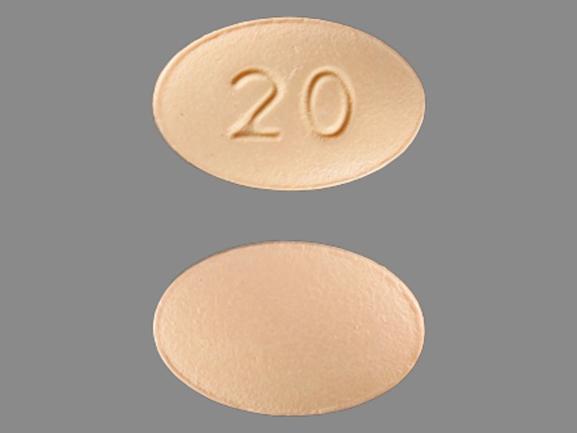
Viibryd Dosage
Generic name: VILAZODONE HYDROCHLORIDE 10mg
Dosage form: tablet
Drug class: Miscellaneous antidepressants
Medically reviewed by Drugs.com. Last updated on Oct 17, 2023.
2.1 Dosage for Treatment of Major Depressive Disorder
The recommended target dosage for VIIBRYD is 20 mg to 40 mg orally once daily with food. To achieve the target dosage, titrate VIIBRYD as follows:
- Start with an initial dosage of 10 mg once daily with food for 7 days,
- Then increase to 20 mg once daily with food.
- The dose may be increased up to 40 mg once daily with food after a minimum of 7 days between dosage increases.
If a dose is missed, it should be taken as soon as the patient remembers. If it is almost time for the next dose, the patient should skip the missed dose and take the next dose at the regular time. Two doses should not be taken at the same time.
2.2 Screen for Bipolar Disorder Prior to Starting VIIBRYD
Prior to initiating treatment with VIIBRYD or another antidepressant, screen patients for a personal or family history of bipolar disorder, mania, or hypomania.
2.3 Switching to or from a Monoamine Oxidase Inhibitor Antidepressant
At least 14 days must elapse between discontinuation of a monoamine oxidase inhibitor (MAOI) antidepressant and initiation of VIIBRYD. In addition, at least 14 days must elapse after stopping VIIBRYD before starting an MAOI antidepressant.
2.4 Dosage Adjustments with CYP3A4 Inhibitors or Inducers
Patients receiving concomitant CYP3A4 inhibitors:
During concomitant use of a strong CYP3A4 inhibitor (e.g., itraconazole, clarithromycin, voriconazole), the VIIBRYD dose should not exceed 20 mg once daily. The original VIIBRYD dose level, can be resumed when the CYP3A4 inhibitor is discontinued.
Patients receiving concomitant CYP3A4 inducers:
Based on clinical response, consider increasing the dosage of VIIBRYD by 2-fold, up to a maximum 80 mg once daily, over 1 to 2 weeks in patients taking strong CYP3A4 inducers (e.g., carbamazepine, phenytoin, rifampin) for greater than 14 days. If CYP3A4 inducers are discontinued, gradually reduce the VIIBRYD dosage to its original level over 1 to 2 weeks.
2.5 Discontinuing Treatment with VIIBRYD
Adverse reactions may occur upon discontinuation of VIIBRYD. A gradual reduction in dosage rather than abrupt cessation is recommended whenever possible. VIIBRYD should be down tapered from the 40 mg once daily dose to 20 mg once daily for 4 days, followed by 10 mg once daily for 3 days. Patients taking VIIBRYD 20 mg once daily should be tapered to 10 mg once daily for 7 days.
Frequently asked questions
More about Viibryd (vilazodone)
- Check interactions
- Compare alternatives
- Pricing & coupons
- Reviews (865)
- Drug images
- Side effects
- During pregnancy
- Generic availability
- Support group
- FDA approval history
- Drug class: miscellaneous antidepressants
- Breastfeeding
- En español
Patient resources
Professional resources
Related treatment guides
See also:
Further information
Always consult your healthcare provider to ensure the information displayed on this page applies to your personal circumstances.