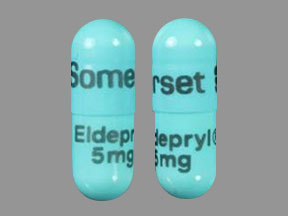
Eldepryl Side Effects
Generic name: selegiline
Medically reviewed by Drugs.com. Last updated on Aug 13, 2024.
Note: This document provides detailed information about Eldepryl Side Effects associated with selegiline. Some dosage forms listed on this page may not apply specifically to the brand name Eldepryl.
Applies to selegiline: oral capsule, oral tablet, oral tablet disintegrating.
Other dosage forms:
Precautions
It is very important that your doctor check your progress at regular visits to allow for changes in your dose and to check for any unwanted effects.
Do not take selegiline (the active ingredient contained in Eldepryl) if you have used meperidine (e.g., Demerol®) or an MAO inhibitor (MAOI) (e.g., isocarboxazid, phenelzine, tranylcypromine, Marplan®, Nardil®, or Parnate®) within the past 14 days. If you do, you may develop agitation, confusion, restlessness, stomach or intestinal symptoms, sudden high body temperature, extremely high blood pressure, or severe convulsions.
Do not take cough medicines (e.g., dextromethorphan, Robitussin®, Pediacare®) or pain medicines (e.g., methadone, propoxyphene, tramadol, Darvon®, Dolophine®, Ultram®) while you are using this medicine. Using these medicines together can cause unwanted effects.
Selegiline may cause serious side effects when used together with some antidepressants. Tell your doctor if you have used amitriptyline, doxepin, fluoxetine, fluvoxamine, nortriptyline, paroxetine, sertraline, Elavil®, Luvox®, Pamelor®, Paxil®, Prozac®, or Zoloft® within the past 14 days.
When selegiline is taken at doses of 10 mg or less per day for the treatment of Parkinson's disease, there are no restrictions on food or beverages you eat or drink. However, the chance exists that dangerous reactions, such as sudden high blood pressure, may occur if doses higher than those used for Parkinson's disease are taken with certain foods, beverages, or other medicines. These foods, beverages, and medicines include:
- Foods that have a high tyramine content (most common in foods that are aged or fermented to increase their flavor), such as cheeses; fava or broad bean pods; yeast or meat extracts; smoked or pickled meat, poultry, or fish; fermented sausage (bologna, pepperoni, salami, summer sausage) or other fermented meat; sauerkraut; or any overripe fruit. If a list of these foods and beverages is not given to you, ask your doctor to provide one.
- Alcoholic beverages or alcohol-free or reduced-alcohol beer and wine.
- Large amounts of caffeine-containing food or beverages such as coffee, tea, cola, or chocolate.
- Any other medicine unless approved or prescribed by your doctor. This especially includes nonprescription (over-the-counter [OTC]) medicine, such as that for colds (including nose drops or sprays), cough, asthma, hay fever, and appetite control; “keep awake” products; or products that make you sleepy.
Also, for at least 2 weeks after you Stop taking selegiline, these foods, beverages, and other medicines may continue to react with selegiline if it was taken in doses higher than those usually used for Parkinson's disease.
Check with your doctor or hospital emergency room immediately if severe headache, stiff neck, chest pains, fast heartbeat, or nausea and vomiting occur while you are taking this medicine. These may be symptoms of a serious side effect that should have a doctor's attention.
Dizziness, lightheadedness, or fainting may occur, especially when you get up from a lying or sitting position. Getting up slowly may help. If the problem continues or gets worse, check with your doctor.
Selegiline may cause dryness of the mouth. For temporary relief, use sugarless candy or gum, melt bits of ice in your mouth, or use a saliva substitute. However, if your mouth continues to feel dry for more than 2 weeks, check with your medical doctor or dentist. Continuing dryness of the mouth may increase the chance of dental disease, including tooth decay, gum disease, and fungus infections.
It is important that your doctor check your skin for melanoma (tumor) regularly if you have Parkinson's disease.
Do not Stop taking selegiline without first checking with your doctor. Your doctor may want you to reduce gradually the amount you are taking before stopping completely.
Hallucinations may occur in some patients. This is more common with elderly patients. If you have hallucinations, check with your doctor.
Some people who have used this medicine had unusual changes in their behavior. Talk with your doctor if you start having problems with gambling or increased sex drive while using this medicine.
Serious side effects of Eldepryl
Along with its needed effects, selegiline may cause some unwanted effects. Although not all of these side effects may occur, if they do occur they may need medical attention.
Check with your doctor immediately if any of the following side effects occur while taking selegiline:
More common side effects
- chest pain (severe)
- enlarged pupils
- fast or slow heartbeat
- headache (severe)
- increase in unusual movements of the body
- increased sensitivity of the eyes to light
- increased sweating (possibly with fever or cold, clammy skin)
- mood or other mental changes
- nausea and vomiting (severe)
- stiff or sore neck
Less common or rare side effects
- bloody or black, tarry stools
- bruising
- convulsions (seizures)
- decreased urine
- difficult or frequent urination
- difficulty with breathing
- difficulty with speaking
- difficulty with swallowing
- dizziness or lightheadedness, especially when getting up from a lying or sitting position
- dry mouth
- hallucinations (seeing, hearing, or feeling things that are not there)
- increased thirst
- irregular heartbeat
- large, flat, blue, or purplish patches in the skin
- lip smacking or puckering
- loss of appetite
- loss of balance control
- muscle pain or cramps
- nausea or vomiting
- numbness or tingling in the hands, feet, or lips
- puffing of the cheeks
- rapid or worm-like movements of the tongue
- restlessness or desire to keep moving
- severe stomach pain
- shakiness in the legs, arms, hands, or feet
- shortness of breath
- swelling of the feet or lower legs
- swelling or inflammation of the mouth
- tightness in the chest
- trembling or shaking of the hands or feet
- twisting movements of the body
- uncontrolled chewing movements
- uncontrolled movements of the face, neck, back, arms, or legs
- unusual tiredness or weakness
- vomiting of blood or material that looks like coffee grounds
- wheezing
Get emergency help immediately if any of the following symptoms of overdose occur while taking selegiline:
Symptoms of overdose
- agitation or irritability
- chest pain
- difficulty opening the mouth or lockjaw
- dizziness (severe) or fainting
- fast or irregular pulse (continuing)
- high fever
- high or low blood pressure
- severe spasm where the head and heels are bent backward and the body arched forward
- troubled breathing
Other side effects of Eldepryl
Some side effects of selegiline may occur that usually do not need medical attention. These side effects may go away during treatment as your body adjusts to the medicine. Also, your health care professional may be able to tell you about ways to prevent or reduce some of these side effects.
Check with your health care professional if any of the following side effects continue or are bothersome or if you have any questions about them:
More common side effects
- abdominal or stomach pain
- dizziness or feeling faint
- runny nose
- sneezing
- stuffy nose
- trouble with sleeping
Less common or rare side effects
- anxiety
- back or leg pain
- blurred or double vision
- body aches or pain
- burning of the lips, mouth, or throat
- chills
- constipation
- cough
- diarrhea
- drowsiness
- dryness or soreness of the throat
- frequent urge to urinate
- headache
- heartburn
- inability to move
- increased sweating
- irritability (temporary)
- memory problems
- nervousness
- pounding or fast heartbeat
- rash
- red, raised, or itchy skin
- ringing or buzzing in the ears
- slow or difficult urination
- slowed movements
- taste changes
- uncontrolled closing of the eyelids
- unusual feeling of well-being
- unusual weight loss
- voice changes
See also:
Sinemet
Sinemet is used to treat symptoms of Parkinson's disease, such as muscle stiffness, tremors ...
Cogentin
Cogentin is used for extrapyramidal reaction, parkinson's disease
Dupixent
Dupixent is used to treat eczema, eosinophilic or oral-corticosteroid-dependent asthma, chronic ...
Exelon
Exelon (rivastigmine) is used to treat dementia caused by Alzheimer's or Parkinson's disease ...
Gocovri
Gocovri (amantadine) is used in the treatment of Parkinson's disease. Includes Gocovri side ...
Rivastigmine
Rivastigmine is used for alzheimer's disease, lewy body dementia, parkinson's disease
Levodopa
Levodopa is used for parkinson's disease, parkinsonism, periodic limb movement disorder, restless ...
Amantadine
Easy-to-read patient leaflet for amantadine. Includes indications, proper use, special ...
Carbidopa/levodopa
Carbidopa/levodopa is used for GTP-CH Deficiency, neuroleptic malignant syndrome, parkinson's ...
Benztropine
Benztropine is used for extrapyramidal reaction, hyperhidrosis, parkinson's disease
For healthcare professionals
Applies to selegiline: compounding powder, oral capsule, oral tablet, oral tablet disintegrating, transdermal film extended release.
General adverse events
In prospective pre-marketing studies, the most commonly reported side effects leading to treatment discontinuation with selegiline (the active ingredient contained in Eldepryl) oral tablets were, in decreasing order of frequency, nausea, hallucinations, confusion, depression, loss of balance, insomnia, orthostatic hypotension, increased akinetic involuntary movements, agitation, arrhythmia, bradykinesia, chorea, delusions, hypertension, new or increased angina pectoris, and syncope.
In clinical trials with selegiline orally disintegrating tablets, the most commonly reported side effects leading to treatment discontinuation were dizziness, chest pain, accidental injury, and myasthenia. The relative risk for treatment-emergent hypertension and orthostatic or postural hypotension was reported as being at least 2 fold greater in patients 65 years or older compared to those younger than 65 years. Patients over 65 years were also reported at an increased risk for somnolence compared to younger patients.
In clinical trials with selegiline transdermal patches, application site reaction was reported as the side effect that lead to treatment discontinuation in at least 1% of patients at a rate at least twice that of placebo.
Selegiline potentiates the effects of levodopa; therefore, the side effects of levodopa may be emphasized unless the levodopa dose is reduced.[Ref]
Psychiatric
- Very common (10% or more): Insomnia
- Common (1% to 10%): Anxiety/tension, confusion, depression, euphoria, hallucinations, illusion, sleeping disorders, vivid dreams
- Uncommon (0.1% to 1%): Abnormal dreams, agitation, manic reaction, mild transient irritability, mood change, psychoses
- Frequency not reported: Apathy, delusions, disorientation, dreams/nightmares, hollow feeling, overstimulation, personality change, sleep disturbance, transient high, transient irritability
- Postmarketing reports: Abnormal thinking, aggressive reaction, bruxism, delirium, impulse control disorders and compulsions, nervousness, paranoid reaction, paroniria, psychotic-like behavior[Ref]
Insomnia and sleep disorder were reported as very common side effects with selegiline in double-blind placebo-controlled clinical trials at a higher frequency when used as adjunctive therapy with levodopa in the earlier phases of Parkinson's disease. Insomnia was also reported as a very common side effect in placebo-controlled clinical trials for major depressive disorder with transdermal selegiline.
Parkinson's disease patients treated with dopamine agonists and/or other dopaminergic treatments such as selegiline have been reported as exhibiting impulse control disorders such as pathological gambling, increased libido, hypersexuality, compulsive spending/buying, and binge eating. There have been very few cases reported with selegiline. In some cases, dose reduction or treatment discontinuation led to cessation of impulse control disorders.
Postmarketing reports have indicated that patients taking this drug may experience new or worsening mental status and behavioral changes, such as psychotic-like behavior, particularly after starting therapy or increasing the dose. Certain medications used to treat psychosis (e.g., dopamine antagonists) may exacerbate the symptoms of Parkinson's disease and may decrease the effectiveness of selegiline. Transient high and bruxism were reported at doses greater than 10 mg per day.
Anxiety was reported as a very common side effect with selegiline in double-blind placebo-controlled clinical trials when used as adjunctive therapy with levodopa in the earlier phases of Parkinson's disease.
Antidepressants may have a role in inducing worsening of depression and the emergence of suicidality in certain patients during the early phases of treatment. An increased risk of suicidal thinking and behavior in children, adolescents, and young adults (aged 18 to 24 years) with major depressive disorder (MDD) and other psychiatric disorders has been reported with short-term use of antidepressant drugs.
Adult and pediatric patients receiving antidepressants for MDD, as well as for psychiatric and nonpsychiatric indications, have reported symptoms that may be precursors to emerging suicidality, including anxiety, agitation, panic attacks, insomnia, irritability, hostility, aggressiveness, impulsivity, akathisia, hypomania, and mania. Causality has not been established.[Ref]
Nervous system
- Very common (10% or more): Dizziness/lightheadedness/fainting
- Common (1% to 10%): Abnormal movements (e.g., dyskinesias, bradykinesia, akinesia), ataxia, headache, impaired balance, lethargy, somnolence, syncope, tremor
- Frequency not reported: Chorea, drowsiness, dyskinesia, dystonic symptoms, facial grimace, festination, impaired memory, increased apraxia, involuntary movements, migraine, myoclonic jerks, numbness of toes/fingers, restlessness, speech affected, supraorbital pain, tardive dyskinesia
- Postmarketing reports: Abnormal gait, cerebrovascular disorder, coma, convulsions, hypertonia, involuntary muscle contractions, neuroleptic malignant syndrome, serotonin syndrome, taste disturbance[Ref]
There have been reports of falling asleep while engaged in activities of daily living, including the operation of motor vehicles, which sometimes resulted in accidents, in Parkinson's disease patients treated with this drug. These reports have occurred in a setting of pre-existing somnolence.
Impaired memory and myoclonic jerks were reported at doses greater than 10 mg per day. Seizure in dialyzed chronic renal failure in a patient treated with selegiline on concomitant medications has been reported in postmarketing experience.
A symptom complex resembling the neuroleptic malignant syndrome, with no other obvious etiology, has been reported in association with rapid dose reduction, withdrawal of, or changes in, antiparkinson therapy.
There have been postmarketing reports of fatal and non-fatal cases of serotonin syndrome with concomitant use of this drug with antidepressants.
Headache was reported as a very common side effect in placebo-controlled clinical trials for major depressive disorder with transdermal selegiline.[Ref]
Cardiovascular
- Very common (10% or more): Postural hypotension
- Common (1% to 10%): Arrhythmia, bradycardia, chest pain, hypertension, hypotension, edema, palpitations
- Uncommon (0.1% to 1%): Angina pectoris, ankle edema, orthostatic hypotension, supraventricular tachycardia
- Frequency not reported: Peripheral edema, hematoma, tachycardia
- Postmarketing reports: Flushing, myocardial infarction[Ref]
This drug inhibits the catabolism of dietary amines such as tyramine, and has the potential to produce a hypertensive crisis following the ingestion of tyramine-rich foods or beverages.
Postural hypotension was reported with selegiline (the active ingredient contained in Eldepryl) in double-blind placebo-controlled clinical trials at a higher frequency when used as adjunctive therapy with levodopa in the earlier phases of Parkinson's disease compared to the late phase. Palpitation was also reported as a very common side effect in the earlier phases of Parkinson's disease in these trials.[Ref]
Gastrointestinal
- Very common (10% or more): Dry mouth, irritation of the buccal mucosa (orally disintegrating tablet), mouth ulceration, nausea, stomatitis
- Common (1% to 10%): Abdominal pain, constipation, diarrhea, dyspepsia, dysphagia, eructation, flatulence, gastric irritation, tooth disorder, vomiting
- Frequency not reported: Gastrointestinal bleeding (exacerbation of pre-existing ulcer disease), heartburn, rectal bleeding, throat burning[Ref]
Constipation was reported as a very common side effect with selegiline (the active ingredient contained in Eldepryl) in double-blind placebo-controlled clinical trials when used as adjunctive therapy with levodopa in the earlier phases of Parkinson's disease.[Ref]
Other
- Very common (10% or more): Fatigue
- Common (1% to 10%): Fall, pain, vertigo
- Frequency not reported: Chills, generalized ache, falling down, freezing, heavy leg, increased energy, malaise, tinnitus, tiredness, weakness
- Postmarketing reports: Asthenia, death, fever[Ref]
Increased energy was reported at doses greater than 10 mg per day.
Vertigo was a very common side effect reported with selegiline (the active ingredient contained in Eldepryl) in double-blind placebo-controlled clinical trials when used as adjunctive therapy with levodopa compared with its use as monotherapy.[Ref]
Dermatologic
- Very common (10% or more): Rash
- Common (1% to 10%): Ecchymosis, increased sweating, skin disorders
- Uncommon (0.1% to 1%): Hair loss, skin eruptions
- Frequency not reported: Facial hair, photosensitivity[Ref]
Skin disorders reported with this drug have included skin ulcer, fungal dermatitis, skin hypertrophy, contact dermatitis, herpes simplex, dry skin, sweating, urticaria, and pruritus.[Ref]
Genitourinary
- Very common (10% or more): Micturition disorder
- Common (1% to 10%): Urinary retention
- Frequency not reported: Hypersexuality, nocturia, penile sensation, prostatic hypertrophy, sexual dysfunction, slow urination, transient anorgasmia, urinary frequency, urinary hesitancy
- Postmarketing reports: Increased libido[Ref]
Transient anorgasmia and decreased penile sensation were reported at doses greater than 10 mg per day. The estimates of the incidence of untoward sexual experience and performance may also underestimate their actual incidence, partly because patients and physicians may be reluctant to discuss this issue.[Ref]
Hematologic
- Uncommon (0.1% to 1%): Leucocytopenia, thrombocytopenia[Ref]
Hepatic
- Common (1% to 10%): ALT/AST increased
- Uncommon (0.1% to 1%): Transient increase in liver enzyme values[Ref]
Local
- Very common (10% or more): Application site reactions (transdermal patch)[Ref]
Application site reactions with the transdermal patch were primarily described as erythema and resolved spontaneously with no treatment.[Ref]
Metabolic
- Very common (10% or more): Anorexia
- Common (1% to 10%): Hypokalemia, weight loss
- Uncommon (0.1% to 1%): Loss of appetite
- Postmarketing reports: Hyperglycemia, hypoglycemia[Ref]
The 1.25 mg orally disintegrating tablet contains 1.25 mg phenylalanine.
Anorexia was reported as a very common side effect with selegiline in double-blind placebo-controlled clinical trials when used as adjunctive therapy with levodopa in the earlier phases of Parkinson's disease.[Ref]
Musculoskeletal
- Common (1% to 10%): Arthralgia, back pain, leg cramps, leg pain, low back pain, myalgia, musculoskeletal injuries, muscle cramps
- Uncommon (0.1% to 1%): Myopathy
- Frequency not reported: Muscle twitch, stiff neck
- Postmarketing reports: Muscle weakness (myasthenia)[Ref]
Muscle twitch was reported at doses greater than 10 mg per day.[Ref]
Ocular
- Common (1% to 10%): Abnormal accommodation
- Uncommon (0.1% to 1%): Blurred vision
- Frequency not reported: Blepharospasm, diplopia
- Postmarketing reports: Abnormal vision[Ref]
Oncologic
- Frequency not reported: Melanoma[Ref]
Epidemiological studies have shown that Parkinson's disease patients are at a 2- to 6-fold increased risk of developing melanoma than the general population. It is unclear whether the observed increase in risk is due to Parkinson's disease or other factors.[Ref]
Renal
- Frequency not reported: Small increments in serum BUN and creatinine[Ref]
Small increments in serum BUN and creatinine were observed with high doses of orally disintegrating selegiline (10 mg orally per day).[Ref]
Respiratory
- Common (1% to 10%): Dyspnea, hiccup, nasal congestion, pharyngitis, rhinitis, sinusitis, sore throat
- Frequency not reported: Asthma[Ref]
References
1. Montastruc JL, Chaumerliac C, Desboeuf K, Manika M, Bagheri H, Rascol O, LapeyreMestre M (2000) "Adverse drug reactions to selegiline: A review of the French Pharmacovigilance Database." Clin Neuropharmacol, 23, p. 271-5
2. (2006) "Product Information. Emsam (selegiline)." Bristol-Myers Squibb
3. Boyson SJ (1991) "Psychiatric effects of selegiline." Arch Neurol, 48, p. 902
4. Kurlan R, Dimitsopulos T (1992) "Selegiline and manic behavior in Parkinson's disease." Arch Neurol, 49, p. 1231
5. Brodersen P, Philbert A, Gulliksen G, Stigard A (1985) "The effect of L-Deprenyl on on-off phenomena in Parkinson's disease." Acta Neurol Scand, 71, p. 494-7
6. Vezina P, Mohr E, Grimes D (1992) "Deprenyl in Parkinson's disease: mechanisms, neuroprotective effect, indications and adverse effects." Can J Neurol Sci, 19, p. 142-6
7. Menza MA, Golbe LI (1988) "Hypomania in a patient receiving deprenyl (selegiline) after adrenal- striatal implantation for Parkinson's disease." Clin Neuropharmacol, 11, p. 549-51
8. (2001) "Product Information. Eldepryl (selegiline)." Somerset Pharmaceuticals Inc
9. Riley DE (2002) "Reversible transvestic fetishism in a man with Parkinson's disease treated with selegiline." Clin Neuropharmacol, 25, p. 234-7
10. Ito D, Amano T, Sato H, Fukuuchi Y (2001) "Paroxysmal hypertensive crises induced by selegiline in a patient with Parkinson's disease." J Neurol, 248, p. 533-4
11. McGrath PJ, Stewart JW, Quitkin FM (1989) "A possible L-deprenyl induced hypertensive reaction." J Clin Psychopharmacol, 9, p. 310-1
12. Sandler M, Glover V, Ashford A, Stern GM (1978) "Absence of "cheese effect" during deprenyl therapy: some recent studies." J Neural Transm, 43, p. 209-15
13. Golbe LI (1989) "Long-term efficacy and safety of deprenyl (selegiline) in advanced Parkinson's disease." Neurology, 39, p. 1109-11
More about Eldepryl (selegiline)
- Check interactions
- Compare alternatives
- Reviews (1)
- Drug images
- Dosage information
- During pregnancy
- Drug class: dopaminergic antiparkinsonism agents
- Breastfeeding
Patient resources
Other brands
Professional resources
Other brands
Related treatment guides
Further information
Eldepryl side effects can vary depending on the individual. Always consult your healthcare provider to ensure the information displayed on this page applies to your personal circumstances.
Note: Medication side effects may be underreported. If you are experiencing side effects that are not listed, submit a report to the FDA by following this guide.