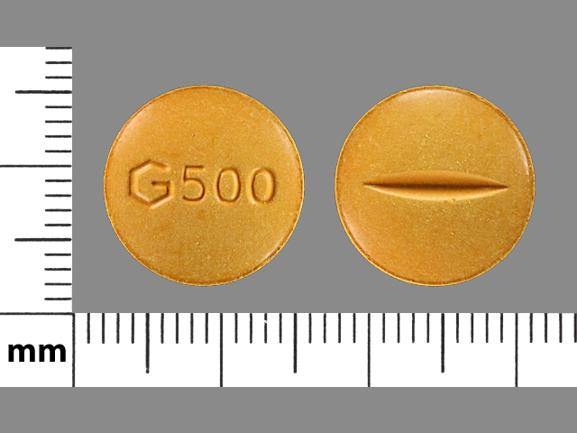
Sulfasalazine (Monograph)
Brand name: Azulfidine
Drug class: Sulfonamides
- Disease-Modifying Antirheumatic Drugs
- DMARDS
Introduction
Prodrug converted in vivo to sulfapyridine (a sulfonamide anti-infective) and 5-aminosalicylic acid (mesalamine; anti-inflammatory agent).
Uses for Sulfasalazine
Ulcerative Colitis
Adjunct for management of mild to moderate ulcerative colitis.
Crohn’s Disease
Management of active Crohn’s disease† [off-label].
May be useful in patients with mild to moderately active disease, especially those with ileocolonic or colonic involvement. May not be effective in patients with small bowel disease. Many clinicians recommend that the drug be used in patients with left-sided disease, restricted to the colon.
Patients who have previously received corticosteroid therapy or have undergone surgical resection may fail to respond to sulfasalazine therapy. Those who have not received corticosteroids or have not undergone surgery may respond substantially better to sulfasalazine than to placebo.
There is some evidence that concomitant therapy with sulfasalazine and corticosteroids may not be more effective than either drug alone, but some subgroups of patients may have a better response to combined therapy (e.g., those with disease localized in the colon).
Does not appear to be useful for maintenance therapy once a remission has been attained or following surgical resection.
Rheumatoid Arthritis in Adults
Management of rheumatoid arthritis in adults whose symptoms progress despite an adequate regimen of NSAIAs. One of several disease-modifying antirheumatic drugs (DMARDs) that can be used when DMARD therapy is appropriate.
Usually used in conjunction with analgesic and/or NSAIA therapy, at least until the beneficial effects of sulfasalazine are apparent. Administration of sulfasalazine alone is not a complete treatment for rheumatoid arthritis.
Has been used in conjunction with other DMARDs (e.g., azathioprine, gold compounds, hydroxychloroquine, methotrexate, penicillamine) and/or systemic corticosteroids.
Juvenile Arthritis
Management of the signs and symptoms of polyarticular course juvenile rheumatoid arthritis in children who have not responded adequately to NSAIAs. Not recommended for management of systemic course juvenile rheumatoid arthritis because of the high frequency of adverse effects reported in children.
Sulfasalazine Dosage and Administration
Administration
Oral Administration
Administer orally, preferably after meals.
Delayed-release tablets should be swallowed whole.
Maintain adequate fluid intake to prevent crystalluria and stone formation.
Dosage
Pediatric Patients
Ulcerative Colitis
Oral
Conventional tablets in children ≥6 years of age: Initial dosage is 40–60 mg/kg daily in 3–6 divided doses and usual maintenance dosage is 30 mg/kg daily in 4 divided doses.
Delayed-release tablets in children ≥6 years of age: Initial dosage is 40–60 mg/kg daily in 3–6 divided doses and usual maintenance dosage is 30 mg/kg daily in 4 divided doses.
Crohn’s Disease† [off-label]
Oral
Initiate therapy with 25–40 mg/kg daily and increase to 50–75 mg/kg daily (maximum daily dosage 4 g).
Juvenile Arthritis
Polyarticular Course
OralDelayed-release tablets in children ≥6 years of age: 30–50 mg/kg daily in 2 equally divided doses; the maximum dosage usually is 2 g daily.
To reduce GI intolerance, the manufacturers recommend that therapy be initiated with ¼ to (1/3) of the planned maintenance dosage, and that dosage be increased at weekly intervals until the planned maintenance dosage is achieved (usually at week 4).
Adults
Ulcerative Colitis
Oral
Conventional or delayed-release tablets: Initial dosage is 3–4 g daily given in equally divided doses; interval between doses should not exceed 8 hours. In some patients, it may be advantageous to initiate therapy with a dosage of 1–2 g daily to lessen adverse GI effects. Usual maintenance dosage is 2 g daily in 4 divided doses, although some clinicians advocate a lower maintenance dosage of 1–1.5 g daily if necessary to prevent adverse effects.
Dosage as high as 12 g daily has been used for initial therapy, but dosage >4 g daily is accompanied by increased incidence of adverse effects. Generally avoid dosage >4 g daily unless serum concentrations of total sulfapyridine and the phenotype of the patient are known.
Efficacy of maintenance therapy appears to be dose related, but potential benefits of dosages >2 g daily must be weighed against the risks of increased adverse effects and the necessity for more careful patient monitoring.
Crohn’s Disease† [off-label]
Oral
Mildly to moderately active disease: 3–6 g daily (as conventional or delayed-release tablets) has been used.
Maintenance: 1.5–3 g daily (as conventional or delayed-release tablets) has been used, although such dosages do not appear to be more effective than placebo when used in patients with medically induced remission.
Rheumatoid Arthritis
Oral
Delayed-release tablets: 2–3 g daily given in equally divided doses every 12 hours.
It may be advantageous to initiate therapy with a dosage of 0.5–1 g daily to lessen adverse GI effects. The manufacturers recommend that patients receive 0.5 g every evening the first week of therapy, 0.5 g twice daily (morning and evening) the second week, 0.5 g every morning and 1 g every evening the third week, and 1 g twice daily (morning and evening) thereafter.
A response to sulfasalazine (manifested by improvement in the number and extent of actively inflamed joints) may not occur until after 4–12 weeks of therapy.
Patients receiving sulfasalazine dosages >2 g daily should be carefully monitored.
Prescribing Limits
Pediatric Patients
Juvenile Arthritis
Oral
Maximum 2 g daily.
Crohn’s Disease† [off-label]
Oral
Maximum 4 g daily.
Cautions for Sulfasalazine
Contraindications
-
Hypersensitivity to sulfasalazine, its metabolites, sulfonamides, or salicylates.
-
Intestinal or urinary tract obstruction.
-
Porphyria.
Warnings/Precautions
Warnings
Hematologic Effects
Fatalities associated with agranulocytosis, aplastic anemia, or other blood dyscrasias have been reported with sulfasalazine.
Clinical signs such as sore throat, fever, pallor, purpura, or jaundice may indicate myelosuppression, hemolysis, or hepatotoxicity.
Use in patients with blood dyscrasias only after critical appraisal.
Perform CBC and differential prior to initiation of sulfasalazine therapy and every 2 weeks during the first 3 months of therapy. Monitor CBC and differential once monthly during the second 3 months, then once every 3 months and as clinically indicated. The drug can be discontinued while awaiting results of blood tests.
Patients with glucose-6-phosphate dehydrogenase (G-6-PD) deficiency should be monitored closely for signs of hemolytic anemia.
Impaired Fertility
Oligospermia and infertility reported in men treated with sulfasalazine; effects were reversed when the drug was discontinued .
Sensitivity Reactions
Hypersensitivity Reactions
Erythema multiforme (Stevens-Johnson syndrome), exfoliative dermatitis, epidermal necrolysis (Lyell’s syndrome) with corneal damage, rash with eosinophilia and systemic symptoms (DRESS), anaphylaxis, serum sickness syndrome, interstitial lung disease, pneumonitis with or without eosinophilia, vasculitis, fibrosing alveolitis, pleuritis, pericarditis with or without tamponade, allergic myocarditis, polyarteritis nodosa, lupus erythematosus-like syndrome, hepatitis and hepatic necrosis with or without immune complexes, fulminant hepatitis sometimes leading to liver transplantation, parapsoriasis varioliformis aculta (Mucha-Haberman syndrome), rhabdomyolysis, photosensitization, arthralgia, periorbital edema, conjunctival and scleral injection, and alopecia reported with sulfasalazine or other sulfonamides.
Incidence of hypersensitivity reactions appears to increase with increased sulfonamide dosage. Fatalities related to hypersensitivity to sulfasalazine have been reported.
Use with caution in patients with severe allergy or bronchial asthma.
If a hypersensitivity reaction occurs, discontinue sulfasalazine immediately and treat appropriately.
Desensitization
Desensitization to sulfasalazine has been used when reinitiation of the drug was considered necessary in a patient who had a hypersensitivity reaction.
Desensitization should not be attempted in patients with a history of agranulocytosis, toxic epidermal necrolysis, fibrosing alveolitis, or anaphylactoid reaction while receiving sulfasalazine.
Specialized references should be consulted for specific information on desensitization procedures and dosage. Although various desensitization procedures have been reported to be effective, many regimens use an initial sulfasalazine dosage of 50–250 mg daily which is then doubled every 4–7 days until the desired therapeutic dosage is attained.
If symptoms of sensitivity recur, the drug should be discontinued.
Cross-hypersensitivity
Although cross-sensitization has been reported to occur between the various anti-infective sulfonamides, some diuretics such as acetazolamide and the thiazides, some goitrogens, and sulfonylurea antidiabetic agents, the association between hypersensitivity to sulfonamide anti-infectives and subsequent sensitivity reactions to non-anti-infective sulfonamides (e.g., thiazides, sulfonylurea antidiabetic agents, furosemide, dapsone, probenecid) appears to result from a predisposition to allergic reactions in general rather than to cross-sensitivity to the sulfa moiety per se.
General Precautions
Renal Effects
Sulfonamides have been associated with renal toxicity manifested by renal colic, nephritis, urolithiasis, toxic nephrosis with anuria and oliguria, hematuria, proteinuria, crystalluria, kidney stone formation, and elevation of BUN and serum creatinine concentrations. Nephrotic syndrome and hemolytic-uremic syndrome have been reported.
Adverse renal effects usually are the result of crystalluria. Risk of crystalluria may be decreased by maintaining an adequate urinary output and by increasing urinary pH. Unless the urine is highly acidic and/or the drug is relatively insoluble, alkalinization of the urine usually is not necessary if the urinary output is maintained at a minimum of 1500 mL daily.
Use in patients with renal damage only after critical appraisal.
Perform urinalysis (with microscopic examination) frequently and other renal function tests periodically during sulfasalazine therapy.
Maintain adequate fluid intake to minimize risk of crystalluria and stone formation. If persistent, heavy crystalluria, hematuria, or oliguria occurs, sulfonamide therapy should be discontinued and alkali therapy maintained.
Hepatic Effects
Hepatotoxicity, including increased liver enzyme concentration, jaundice, cholestatic jaundice, cirrhosis and possible hepatocellular damage including liver necrosis and liver failure, have been reported rarely. Fatalities associated with hepatic damage have occurred.
Use in patients with hepatic damage only after critical appraisal.
Perform liver function tests prior to initiation of sulfasalazine therapy and every 2 weeks during the first 3 months of therapy. Monitor hepatic function once monthly during the second 3 months, then once every 3 months and as clinically indicated.
Specific Populations
Pregnancy
Category B.
Because sulfasalazine and sulfapyridine cross the placenta, the potential for kernicterus in neonates should be considered despite the fact that sulfapyridine has been shown to have poor bilirubin-displacing capacity.
Lactation
Distributed into milk. Use caution.
Pediatric Use
Safety and efficacy not established for management of ulcerative colitis in children <2 years of age.
Safety and efficacy for management of polyarticular course juvenile rheumatoid arthritis in children 6–16 years of age is supported by evidence from adequate and well-controlled studies in adults.
Adverse effects observed in children receiving sulfasalazine for management of juvenile rheumatoid arthritis generally are similar to those observed in adults with rheumatoid arthritis.
Not recommended for treatment of systemic course juvenile rheumatoid arthritis in children because a high incidence of serum sickness-like syndrome has been reported in these children. The serum sickness-like syndrome may be severe and presents as fever, nausea, vomiting, headache, rash, and abnormalities in liver function tests.
Sulfasalazine (initially 25–40 mg/kg daily and increased to 50–75 mg/kg daily [maximum 4 g daily]) has been used for the management of Crohn’s disease† [off-label] (i.e., mild ileal, ileocecal, ileocolonic, or colonic disease) in a limited number of pediatric patients. Efficacy in maintaining remission in children is similar to that observed with oral mesalamine delayed-release tablets, although some preferred mesalamine because of ease and frequency of administration and better tolerance.
Hepatic Impairment
Use with caution.
Renal Impairment
Use with caution. (See Renal Effects under Cautions.)
Common Adverse Effects
GI effects (anorexia, nausea, dyspepsia, vomiting, abdominal pain, gastric distress); headache; fever; rash; abnormal liver function test results; leukopenia; thrombocytopenia; reversible oligospermia. Rash occurs more frequently in patients with rheumatoid arthritis than in those with ulcerative colitis.
Drug Interactions
Specific Drugs
|
Drug |
Interaction |
Comments |
|---|---|---|
|
Anticoagulants, oral (warfarin) |
Possibility that sulfonamides may potentiate the effects of coumarin anticoagulants by displacing them from their protein-binding sites or by impairing anticoagulant metabolism |
If used concomitantly, monitor closely |
|
Antidiabetic agents, sulfonylureas |
Sulfonamides may potentiate the hypoglycemic effects of tolbutamide and chlorpropamide by displacing the antidiabetic agents from their protein-binding sites |
Use concomitantly with caution |
|
Anti-infectives |
Possibility that concomitant anti-infectives may alter the action of sulfasalazine by altering intestinal flora and consequently sulfasalazine metabolism |
|
|
Digoxin |
Possible decreased GI absorption of digoxin |
If used concomitantly, monitor to ensure adequate digoxin concentrations |
|
Folic acid |
Sulfasalazine inhibits folic acid absorption, interferes with folic acid metabolism, and may result in decreased serum folic acid concentrations and possibly folic acid deficiency in some patients |
Folic acid deficiency may be prevented in patients receiving sulfasalazine by increased dietary intake of folic acid, taking the drug between meals, and/or by administration of folic acid supplements |
|
Iron |
Sulfasalazine chelates iron, altering distribution of sulfasalazine in the intestinal lumen, interfering with its absorption and resulting in lower blood concentrations of sulfasalazine |
|
|
Methotrexate |
No evidence of pharmacokinetic interaction in patients with rheumatoid arthritis; possible increased risk of GI effects (especially nausea) |
Sulfasalazine Pharmacokinetics
Absorption
Bioavailability
About 10–15% of a sulfasalazine dose is absorbed as unchanged drug from the small intestine.
Part of an oral dose of sulfasalazine passes intact into the colon where the azo-linkage is cleaved by intestinal flora to form sulfapyridine and 5-aminosalicylic acid (mesalamine). Sulfapyridine is rapidly absorbed from the colon; only a small portion of the 5-aminosalicylic acid present in the colon is absorbed.
Following administration of a single oral dose of sulfasalazine to healthy adults, peak serum sulfasalazine concentrations occur within 1.5–6 hours and peak serum sulfapyridine concentrations occur within 6–24 hours. When delayed-release tablets are used, peak serum sulfasalazine concentrations occur within 3–12 hours and peak sulfapyridine concentrations occur within 12–24 hours.
Plasma Concentrations
Mean serum concentration of total sulfapyridine (sulfapyridine and its metabolites) tends to be greater in patients who are slow acetylator phenotypes than in fast acetylator phenotypes.
Distribution
Extent
In animals, relatively high concentrations of sulfasalazine are present in serous fluid, liver, and the intestinal wall. Sulfapyridine is distributed to most body tissues.
Unchanged sulfasalazine, sulfapyridine and its metabolites, and 5-aminosalicylic acid and its acetylated metabolite cross the placenta.
Only small amounts of unchanged sulfasalazine are distributed into milk, but sulfapyridine concentrations in milk are about 30–60% of concurrent serum concentrations.
Plasma Protein Binding
Sulfasalazine is >99.3% bound to albumin; sulfapyridine is 70% bound to albumin; acetylsulfapyridine (principal metabolite of sulfapyridine) is approximately 90% bound to plasma proteins.
Elimination
Metabolism
Sulfasalazine is cleaved by intestinal flora in the colon to form sulfapyridine and 5-aminosalicylic acid.
Following absorption, sulfapyridine undergoes hepatic N 4-acetylation and ring hydroxylation followed by conjugation with glucuronic acid. A small portion of 5-aminosalicylic acid is absorbed and undergoes N 4-acetylation; the major portion is excreted in the feces. The rate of metabolism of sulfapyridine and acetylsulfapyridine depends on the acetylator phenotype of the patient.
Elimination Route
Most of a sulfasalazine dose is excreted in the urine. Unchanged sulfasalazine accounts for up to 15%, sulfapyridine and its metabolites account for about 60%, and 5-aminosalicylic acid and its metabolites account for 20–33% of a dose.
Although total fecal excretion of sulfasalazine and its metabolites depends on GI transit time and the activity of the intestinal bacteria; fecal excretion may account for about 5% of a daily dose (primarily as sulfapyridine metabolites).
Half-life
Mean serum half-life of sulfasalazine is 5.7 hours following a single dose and 7.6 hours following multiple doses.
Half-life of sulfapyridine is 8.4 hours following a single sulfasalazine dose and 10.4 hours following multiple sulfasalazine doses.
Special Populations
In geriatric patients with rheumatoid arthritis, half-life of sulfasalazine and its metabolites may be increased.
Stability
Storage
Oral
Tablets, Conventional and Delayed-release
25°C (may be exposed to 15–30°C).
Actions
-
Mechanism of action in management of ulcerative colitis has not been fully determined. Sulfasalazine may serve as a vehicle to deliver sulfapyridine and 5-aminosalicylic acid (mesalamine) to the colon in higher concentrations than can be achieved by oral administration of these metabolites alone. Therapeutic effect may result from antibacterial action of sulfapyridine and/or topical anti-inflammatory action of 5-aminosalicylic acid.
-
Relative contribution of sulfasalazine and its major metabolites to the management of rheumatoid arthritis is not known.
Advice to Patients
-
Importance of taking sulfasalazine in evenly divided doses, preferably after meals, and to swallow delayed-release tablets whole.
-
Advise patients that sulfasalazine may cause orange-yellow discoloration of the urine or skin. If tablets pass into feces undisintegrated, importance of notifying clinician since the drug should be discontinued immediately.
-
Advise patients of the possibility of adverse effects and need for careful medical supervision. Importance of reporting the occurrence of sore throat, fever, pallor, purpura, or jaundice to a clinician since this may indicate a serious blood disorder.
-
Advise patients that photosensitivity has been reported with sulfonamides and they should avoid exposure to UV light or prolonged exposure to sunlight.
-
Advise patients with ulcerative colitis that symptoms rarely remit completely and that the risk of relapse can be substantially reduced by continued administration of sulfasalazine using a maintenance dosage.
-
Advise patients with rheumatoid arthritis that symptoms rarely remit completely and that it is important to consult with their clinician to determine the need for continued administration of sulfasalazine.
-
Importance of informing clinicians of existing or contemplated concomitant therapy, including prescription and OTC drugs.
-
Importance of women informing clinician if they are or plan to become pregnant or plan to breast-feed.
-
Importance of advising patients of other important precautionary information. (See Cautions.)
Additional Information
The American Society of Health-System Pharmacists, Inc. represents that the information provided in the accompanying monograph was formulated with a reasonable standard of care, and in conformity with professional standards in the field. Readers are advised that decisions regarding use of drugs are complex medical decisions requiring the independent, informed decision of an appropriate health care professional, and that the information contained in the monograph is provided for informational purposes only. The manufacturer’s labeling should be consulted for more detailed information. The American Society of Health-System Pharmacists, Inc. does not endorse or recommend the use of any drug. The information contained in the monograph is not a substitute for medical care.
Preparations
Excipients in commercially available drug preparations may have clinically important effects in some individuals; consult specific product labeling for details.
Please refer to the ASHP Drug Shortages Resource Center for information on shortages of one or more of these preparations.
* available from one or more manufacturer, distributor, and/or repackager by generic (nonproprietary) name
|
Routes |
Dosage Forms |
Strengths |
Brand Names |
Manufacturer |
|---|---|---|---|---|
|
Oral |
Tablets |
500 mg* |
Azulfidine (scored) |
Pfizer |
|
Tablets, delayed-release (enteric-coated), film-coated |
500 mg* |
Azulfidine EN-tabs |
Pfizer |
AHFS DI Essentials™. © Copyright 2025, Selected Revisions April 10, 2024. American Society of Health-System Pharmacists, Inc., 4500 East-West Highway, Suite 900, Bethesda, Maryland 20814.
† Off-label: Use is not currently included in the labeling approved by the US Food and Drug Administration.
Reload page with references included
Related/similar drugs
More about sulfasalazine
- Check interactions
- Compare alternatives
- Pricing & coupons
- Reviews (199)
- Drug images
- Side effects
- Dosage information
- During pregnancy
- Drug class: 5-aminosalicylates
- Breastfeeding
- En español
Patient resources
Professional resources
Other brands
Azulfidine, Azulfidine EN-tabs