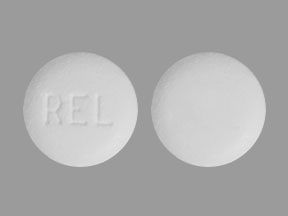
Methylnaltrexone (Monograph)
Brand name: Relistor
Drug class: Opioid Antagonists
Introduction
Peripherally acting μ-opiate receptor antagonist; quaternary amine derivative of naltrexone.
Uses for Methylnaltrexone
Opiate-induced Constipation
Management of opiate-induced constipation in patients with advanced illness or pain caused by active cancer who require opiate dosage escalation for palliative care.
Management of opiate-induced constipation in patients with chronic non-cancer-related pain, including those with chronic pain related to prior cancer or its treatment who do not require frequent (e.g., weekly) increases in opiate dosage.
Methylnaltrexone Dosage and Administration
General
-
Discontinue methylnaltrexone if opiate therapy is discontinued.
Chronic Non-cancer-related Pain
-
Discontinue all maintenance laxative therapy prior to initiating methylnaltrexone; laxatives may be used as needed if the response to methylnaltrexone is suboptimal after 3 days.
-
Patients receiving opiates for <4 weeks may be less responsive to methylnaltrexone.
-
To avoid adverse effects (e.g., diarrhea), reevaluate continued need for methylnaltrexone if the opiate regimen is changed.
Administration
Administer orally or by sub-Q injection for management of opiate-induced constipation in patients with chronic non-cancer-related pain; administer by sub-Q injection in those with advanced illness.
Patient should be within close proximity to toilet facilities after methylnaltrexone is administered.
Oral Administration
Administer tablets with water on an empty stomach at least 30 minutes before the first meal of the day.
Sub-Q Administration
Administer by sub-Q injection into the upper arm, abdomen, or thigh. Use abdomen or thigh for self-administration; may use upper arm if not self-administered.
Rotate injection sites. Do not inject into areas where skin is bruised, tender, red, or hard, or where scars or stretch marks are present.
Use prefilled syringes only for patients who require an 8- or 12-mg dose; use single-use vial for all other doses.
Dosage
Available as methylnaltrexone bromide; dosage expressed in terms of the salt.
Adults
Opiate-induced Constipation in Patients with Advanced Illness
Sub-Q
Base dosage on patient’s weight (see Table 1). Give one dose every other day as needed. Do not exceed one dose per 24-hour period.
Determine injection volume by multiplying the patient’s weight in kg by 0.0075 and rounding up to nearest 0.1 mL.
|
Patient Weight (kg) |
Injection Volume |
Dosage (frequency of every other day as needed) |
|---|---|---|
|
<38 |
See below |
0.15 mg/kg |
|
38 to <62 |
0.4 mL |
8 mg |
|
62–114 |
0.6 mL |
12 mg |
|
>114 |
See below |
0.15 mg/kg |
Opiate-induced Constipation in Patients with Chronic Non-cancer-related Pain
Sub-Q
12 mg once daily.
12 mg every other day is not recommended because of increased incidence of adverse effects (nausea, diarrhea, vomiting, tremor, sensation of body temperature change, piloerection, chills).
Oral
450 mg once daily.
Prescribing Limits
Adults
Opiate-induced Constipation in Patients with Advanced Illness
Sub-Q
Maximum one dose per 24-hour period.
Special Populations
Hepatic Impairment
Opiate-induced Constipation in Patients with Advanced Illness
Sub-Q
Mild or moderate hepatic impairment (Child-Pugh class A or B): Dosage adjustment not required.
Severe hepatic impairment (Child-Pugh class C): Manufacturer makes no specific dosage recommendations.
Opiate-induced Constipation in Patients with Chronic Non-cancer-related Pain
Sub-Q
Mild or moderate hepatic impairment (Child-Pugh class A or B): Dosage adjustment not required.
Severe hepatic impairment (Child-Pugh class C): Base dosage on patient’s weight (see Table 2). (See Special Populations under Pharmacokinetics.)
Determine injection volume by multiplying the patient’s weight in kg by 0.00375 and rounding up to nearest 0.1 mL.
|
Patient Weight (kg) |
Injection Volume |
Dosage (frequency of once daily) |
|---|---|---|
|
<38 |
See below |
0.075 mg/kg |
|
38–61 |
0.2 mL |
4 mg |
|
62–114 |
0.3 mL |
6 mg |
|
>114 |
See below |
0.075 mg/kg |
Oral
Mild hepatic impairment (Child-Pugh class A): Dosage adjustment not required.
Moderate or severe hepatic impairment (Child-Pugh class B or C): 150 mg once daily. (See Special Populations under Pharmacokinetics.)
Renal Impairment
Opiate-induced Constipation in Patients with Advanced Illness
Sub-Q
Mild renal impairment: Dosage adjustment not required.
Moderate or severe renal impairment (Clcr <60 mL/minute): Decrease dosage by 50% (see Table 3). (See Special Populations under Pharmacokinetics.)
Determine injection volume by multiplying the patient’s weight in kg by 0.00375 and rounding up to nearest 0.1 mL.
|
Patient Weight (kg) |
Injection Volume |
Dosage (frequency of every other day as needed) |
|---|---|---|
|
<38 |
See below |
0.075 mg/kg |
|
38–61 |
0.2 mL |
4 mg |
|
62–114 |
0.3 mL |
6 mg |
|
>114 |
See below |
0.075 mg/kg |
Opiate-induced Constipation in Patients with Chronic Non-cancer-related Pain
Sub-Q
Mild renal impairment: Dosage adjustment not required.
Moderate or severe renal impairment (Clcr <60 mL/minute): 6 mg once daily. (See Special Populations under Pharmacokinetics.)
Oral
Mild renal impairment: Dosage adjustment not required.
Moderate or severe renal impairment (Clcr <60 mL/minute): 150 mg once daily. (See Special Populations under Pharmacokinetics.)
Geriatric Patients
No dosage adjustment required.
Cautions for Methylnaltrexone
Contraindications
-
Patients with known or suspected GI obstruction or at increased risk for recurrent GI obstruction. (See GI Perforation under Cautions.)
Warnings/Precautions
GI Perforation
GI perforation reported in patients with advanced illness who have underlying conditions that may be associated with localized or diffuse reduction of structural integrity in the GI tract wall (e.g., peptic ulcer disease, Ogilvie’s syndrome, diverticular disease, infiltrative GI tract malignancies or peritoneal metastases). Carefully consider risks and benefits of methylnaltrexone in patients with these conditions or with other conditions that might result in impaired integrity of the GI tract wall (e.g., Crohn’s disease).
Monitor patients receiving methylnaltrexone for the development of severe, persistent, or worsening abdominal pain. Discontinue the drug if such symptoms occur.
Severe or Persistent Diarrhea
Discontinue if severe or persistent diarrhea develops.
Opiate Withdrawal
Symptoms consistent with opiate withdrawal (e.g., hyperhidrosis, chills, diarrhea, abdominal pain, anxiety, yawning) reported.
Patients with disruptions in the blood-brain barrier may be at increased risk for opiate withdrawal or reduced analgesia; carefully consider risks and benefits of methylnaltrexone in such patients, and monitor these patients for adequacy of analgesia and symptoms of opiate withdrawal.
Specific Populations
Pregnancy
Because of the immature fetal blood-brain barrier, use during pregnancy may precipitate opiate withdrawal in the fetus.
Limited data regarding use in pregnant women; data insufficient to inform drug-associated risk of major birth defects and spontaneous abortion. No adverse effects on embryofetal development observed in animal studies.
Advise pregnant women of potential fetal risk.
Lactation
Distributed into milk in rats (see Distribution under Pharmacokinetics); not known whether methylnaltrexone distributes into human milk, affects milk production, or affects nursing infants. Because of the potential for serious adverse effects, including opiate withdrawal, in nursing infants, women should not breast-feed while receiving the drug.
Pediatric Use
Safety and efficacy not established in children <18 years of age.
Juvenile rats were more sensitive than adult animals to the drug's adverse effects; seizures, tremors, and labored breathing observed in juvenile rats. Toxicity profile in juvenile dogs similar to that in adult dogs.
Geriatric Use
No overall differences in efficacy relative to younger adults. Higher incidence of diarrhea reported in geriatric patients receiving oral methylnaltrexone. Monitor geriatric patients receiving methylnaltrexone for adverse effects.
Hepatic Impairment
Mild hepatic impairment: Exposure not substantially altered after oral or sub-Q administration.
Moderate hepatic impairment: Exposure increased after oral administration but not substantially altered after sub-Q administration. (See Special Populations under Pharmacokinetics.)
Severe hepatic impairment: Systemic exposure increased after oral administration. Injection not studied; monitor for adverse effects.
Dosage adjustments necessary based on administration route and degree of hepatic impairment. (See Hepatic Impairment under Dosage and Administration.)
Renal Impairment
Increased exposure in patients with moderate or severe renal impairment. (See Special Populations under Pharmacokinetics.)
Dosage adjustments necessary based on degree of renal impairment. (See Renal Impairment under Dosage and Administration.)
Not studied in patients with end-stage renal disease requiring dialysis.
Common Adverse Effects
Opiate-induced constipation and advanced illness (injection): Transient abdominal pain, flatulence, nausea, dizziness, diarrhea.
Opiate-induced constipation and chronic non-cancer-related pain (tablets): Abdominal pain, diarrhea, headache, abdominal distention, vomiting, hyperhidrosis, anxiety, muscle spasms, rhinorrhea, chills.
Opiate-induced constipation and chronic non-cancer-related pain (injection): Abdominal pain, nausea, diarrhea, hyperhidrosis, hot flush, tremor, chills.
Drug Interactions
Methylnaltrexone does not substantially inhibit or induce CYP isoenzymes 1A2, 2A6, 2B6, 2C9, 2C19, or 3A4 in vitro; also does not induce CYP2E1 in vitro.
Major metabolites (methylnaltrexone sulfate, methyl-6α-naltrexol, methyl-6β-naltrexol) do not inhibit CYP isoenzymes 1A2, 2B6, 2C8, 2C9, 2C19, 2D6, or 3A4 in vitro; also do not induce CYP isoenzymes 1A2, 2B6, or 3A4 in vitro.
Methylnaltrexone and its major metabolites are not likely to cause clinically important interactions via inhibition of P-glycoprotein (P-gp), breast cancer resistance protein (BCRP), multidrug resistance protein 2 (MRP2), organic anion transport protein (OATP) 1B1 or 1B3, organic cation transporter (OCT) 1 or 2, organic anion transporter (OAT) 1 or 3, or multidrug and toxin extrusion transporter (MATE) 1 or 2K.
Methylnaltrexone, methyl-6α-naltrexol, and methyl-6β-naltrexol are substrates of OCT1, OCT2, MATE1, and MATE2K in vitro. Methyl-6α-naltrexol also is a substrate of BCRP, and methylnaltrexone sulfate is a substrate of MATE2K and a potential substrate of BCRP. Neither methylnaltrexone nor methyl-6β-naltrexol is a substrate of BCRP. Methylnaltrexone sulfate is not a substrate of OCT1, OCT2, or MATE1. Neither methylnaltrexone nor its 3 major metabolites are substrates of P-gp, MRP2, OATP1B1, OATP1B3, OAT1, or OAT3.
Specific Drugs
|
Drug |
Interaction |
Comments |
|---|---|---|
|
Dextromethorphan |
No substantial effect on metabolism of dextromethorphan |
|
|
Cimetidine |
Increased methylnaltrexone peak concentrations and AUC; decreased methylnaltrexone renal clearance |
Not considered clinically important |
|
Opiate antagonists |
Possible additive opiate receptor antagonism and increased risk of opiate withdrawal |
Avoid concomitant use |
Methylnaltrexone Pharmacokinetics
Absorption
Bioavailability
Peak plasma concentration and AUC increase in dose-proportional manner. No substantial accumulation occurs with repeated administration.
Peak plasma concentrations achieved within approximately 0.5 or 1.5 hours following sub-Q or oral administration, respectively.
Absolute bioavailability of tablets not established.
Onset
Laxation within 30 minutes in about 30% of patients and within 4 hours in about 50–60% of patients following sub-Q administration.
Food
High-fat meal decreases peak plasma concentration and AUC of orally administered methylnaltrexone by 60 and 43%, respectively, and delays peak concentration by 2 hours.
Special Populations
Mild hepatic impairment: AUC and peak plasma concentrations not altered substantially after sub-Q administration; peak plasma concentration increased by 1.7-fold after oral administration.
Moderate hepatic impairment: AUC and peak plasma concentrations not altered substantially after sub-Q administration; peak plasma concentration and AUC increased by 4.8-fold and approximately 2.1-fold, respectively, after oral administration.
Severe hepatic impairment: Injection not evaluated; peak plasma concentration and AUC increased by 3.8-fold and approximately 2.1-fold, respectively, after oral administration.
Mild, moderate, or severe renal impairment: AUC increased by 1.3-, 1.7-, or 1.9-fold, respectively, after sub-Q administration; peak plasma concentrations not substantially altered.
End-stage renal disease requiring dialysis: Not studied.
Geriatric patients: AUC increased by 26% compared with younger adults after IV administration.
Distribution
Extent
Distributed into milk in rats (milk concentrations up to 24 times plasma concentrations at 8 hours after sub-Q administration); not known whether distributed into human milk.
Plasma Protein Binding
11–15%.
Elimination
Metabolism
Metabolized by aldo-keto reductase 1C enzymes to form methyl-6-naltrexol isomers and conjugated by sulfotransferase (SULT) 1E1 and 2A1 to form methylnaltrexone sulfate. Not appreciably demethylated to form naltrexone. Methyl-6α-naltrexol and methyl-6β-naltrexol are active μ-opiate receptor antagonists; methylnaltrexone sulfate is a weak μ-opiate receptor antagonist.
Does not undergo first-pass hepatic metabolism following sub-Q administration. Systemic exposure to methylnaltrexone metabolites is greater following single oral dose (450 mg) than following single sub-Q dose (12 mg). Mean steady-state ratio of metabolite AUC to methylnaltrexone AUC was 30, 19, or 9% for methylnaltrexone sulfate, methyl-6α-naltrexol, or methyl-6β-naltrexol, respectively, following sub-Q administration (12 mg once daily) and 79, 38, or 21%, respectively, following oral administration (450 mg once daily).
Elimination Route
Appears to undergo active renal secretion.
Following IV administration, excreted principally as unchanged drug in urine and feces; 71% of dose recovered after 7 days (54% in urine and 17% in feces).
Following oral administration, only about 1% of dose recovered in urine as unchanged drug.
Half-life
Tablets: Terminal half-life of 15 hours.
Stability
Storage
Oral
Tablets
25°C (may be exposed to 15–30°C).
Parenteral
Solution
20–25°C (may be exposed to 15–30°C). Do not freeze; protect from light.
Vials for single use only; discard remainder. Once dose is withdrawn from vial into syringe, if immediate administration is not possible, store at room temperature; administer within 24 hours.
Do not remove prefilled syringe from tray until just prior to administration.
Actions
-
Peripherally acting μ-opiate receptor antagonist; quaternary amine derivative of naltrexone.
-
Blocks μ-opiate receptors in the GI tract, blocking intestinal smooth muscle relaxation caused by opiates and thereby reversing opiate-induced slowing of GI transit time.
-
Does not readily cross blood-brain barrier; therefore, does not affect opiate analgesic activity or precipitate opiate withdrawal, unlike centrally active opiate antagonists (e.g., naltrexone, naloxone).
-
Exhibits greater affinity for μ-opiate receptors than for κ-opiate receptors; does not interact with δ-opiate receptors nor substantially bind to nonopiate receptors.
-
2–4% of the opiate antagonist activity and potency of naloxone; possesses some μ-receptor agonist activity.
Advice to Patients
-
Importance of patient and/or caregiver reading the manufacturer’s patient information.
-
Importance of discontinuing methylnaltrexone therapy following cessation of opiate analgesic therapy. Advise patients to inform their clinician if opiate therapy for chronic non-cancer-related pain is altered.
-
For self-administration of methylnaltrexone injection, instruct patient and/or caregiver regarding proper dosage and administration, including the use of aseptic technique and proper disposal of needles and syringes.
-
Advise patients with advanced illness or their caregivers to inject one dose of methylnaltrexone every other day as needed and to never administer more than one dose in a 24-hour period.
-
Advise patients with chronic non-cancer-related pain to inject one dose of methylnaltrexone daily or to take methylnaltrexone tablets with water on an empty stomach at least 30 minutes before the first meal of the day.
-
Advise patients that close proximity to a toilet is advised after drug administration.
-
Advise patients with chronic non-cancer-related pain to discontinue all maintenance laxative therapy prior to initiation of methylnaltrexone; laxatives may be used as needed if response to methylnaltrexone is suboptimal after 3 days.
-
Possible risk of GI perforation. Importance of discontinuing methylnaltrexone and promptly seeking medical attention if unusually severe, persistent, or worsening abdominal pain occurs.
-
Potential for symptoms consistent with opiate withdrawal (e.g., sweating, chills, diarrhea, abdominal pain, anxiety, yawning) to occur.
-
Importance of discontinuing methylnaltrexone and informing clinician if severe or persistent diarrhea occurs.
-
Importance of women informing clinicians if they are or plan to become pregnant or plan to breast-feed. Advise women that methylnaltrexone use during pregnancy may precipitate fetal opiate withdrawal because the fetal blood-brain barrier is immature. Advise women not to breast-feed while receiving the drug because of the potential for opiate withdrawal in nursing infants.
-
Importance of informing clinicians of existing or contemplated concomitant therapy, including prescription and OTC drugs.
-
Importance of informing patients of other important precautionary information. (See Cautions.)
Additional Information
The American Society of Health-System Pharmacists, Inc. represents that the information provided in the accompanying monograph was formulated with a reasonable standard of care, and in conformity with professional standards in the field. Readers are advised that decisions regarding use of drugs are complex medical decisions requiring the independent, informed decision of an appropriate health care professional, and that the information contained in the monograph is provided for informational purposes only. The manufacturer’s labeling should be consulted for more detailed information. The American Society of Health-System Pharmacists, Inc. does not endorse or recommend the use of any drug. The information contained in the monograph is not a substitute for medical care.
Preparations
Excipients in commercially available drug preparations may have clinically important effects in some individuals; consult specific product labeling for details.
Please refer to the ASHP Drug Shortages Resource Center for information on shortages of one or more of these preparations.
|
Routes |
Dosage Forms |
Strengths |
Brand Names |
Manufacturer |
|---|---|---|---|---|
|
Oral |
Tablets, film-coated |
150 mg |
Relistor |
Salix |
|
Parenteral |
Injection, for subcutaneous use |
8 mg/0.4 mL |
Relistor (available as disposable prefilled syringes with needle-guard system) |
Salix |
|
12 mg/0.6 mL |
Relistor (available as single-dose vials and as disposable prefilled syringes with needle-guard system) |
Salix |
AHFS DI Essentials™. © Copyright 2025, Selected Revisions May 10, 2024. American Society of Health-System Pharmacists, Inc., 4500 East-West Highway, Suite 900, Bethesda, Maryland 20814.
Reload page with references included
Related/similar drugs
Frequently asked questions
More about methylnaltrexone
- Check interactions
- Compare alternatives
- Reviews (65)
- Side effects
- Dosage information
- During pregnancy
- Drug class: peripheral opioid receptor antagonists
- Breastfeeding
- En español