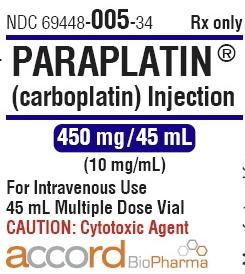
Carboplatin
Generic name: carboplatin [ KAR-boe-PLA-tin ]
Brand names: Paraplatin, CARBOplatin Novaplus
Dosage forms: intravenous powder for injection (150 mg), intravenous solution (10 mg/mL)
Drug class: Alkylating agents
What is carboplatin?
Carboplatin belongs to a class of medications known as platinum-containing compounds. It works by stopping or slowing the growth of cancer cells.
Carboplatin is used in adults in combination with other cancer treatments to treat ovarian cancer.
Carboplatin is also used in adults who have advanced ovarian carcinoma, where ovarian cancer has returned following prior chemotherapy, and are receiving palliative care (treatment to relieve suffering and improve quality of life during a serious illness).
Warnings
You may have a severe allergic reaction shortly after receiving a carboplatin injection. Your medical caregivers will quickly treat you if this occurs. You may be given medicine prior to the injection to help prevent an allergic reaction.
You may get infections or bleed more easily. Call your doctor if you have unusual bleeding or signs of infection (fever, cough, skin sores, painful urination).
Before taking this medicine
You should not be treated with carboplatin if you are allergic to it, or if you have:
-
severe bleeding;
-
severe bone marrow suppression; or
-
if you have had a severe allergic reaction to similar cancer drugs such as oxaliplatin or cisplatin.
To make sure this medicine is safe for you, tell your doctor if you have ever had:
-
if you have recently been exposed to varicella (chickenpox), or have varicella (chickenpox);
-
hearing problems;
-
weak immune system (caused by disease or by using certain medicines);
-
if you have received carboplatin in the past;
-
liver disease; or
-
kidney disease.
Carboplatin may harm an unborn baby. Use birth control and tell your doctor if you become pregnant.
Do not breastfeed while receiving this medicine.
How is carboplatin given?
Carboplatin is injected slowly into a vein by a healthcare provider over 15 minutes or longer. carboplatin is usually given once every 4 weeks.
Doses are based on body surface area (height and weight) and kidney function. Your dose may change if you gain or lose weight or if your kidney function changes.
Tell your medical caregivers if you feel any burning or pain when carboplatin is injected.
You may be given other medications to help prevent serious side effects or an allergic reaction.
You may get infections or bleed more easily. You may need frequent medical tests and your cancer treatments may be delayed based on the results.
Your kidney and liver function may also need to be tested.
You may need blood transfusions while you are being treated with carboplatin.
Dosing Information
Usual Adult Dose for Ovarian Cancer:
SINGLE AGENT THERAPY for use in the treatment of recurrent ovarian cancer:
360 mg/m2 by IV on day 1 every 4 weeks (alternatively, the dose may be calculated by the Calvert formula below). Usually, single intermittent courses should not be repeated until the neutrophil count is at least 2000 and the platelet count is at least 100,000.
COMBINATION THERAPY (with cyclophosphamide) for use in the treatment of advanced ovarian cancer (an effective combination for previously untreated patients):
-Carboplatin: 300 mg/m2 by IV on day 1 every 4 weeks for 6 cycles (alternatively, the dose may be calculated by the Calvert formula below)
-Cyclophosphamide 600 mg/m2 IV on day 1 every 4 weeks for 6 cycles
-Intermittent courses of carboplatin in combination with cyclophosphamide should not be repeated until the neutrophil count is at least 2000 and the platelet count is at least 100,000.
FORMULA DOSING: Another way to determine the initial dose is the use of a mathematical formula based on a patient's preexisting renal function or renal function and desired platelet nadir (renal excretion is the major route of elimination for this drug). The use of this formula allows compensation for patient variations in pretreatment renal function that might otherwise result in either under dosing (in patients with above average renal function) or overdosing (in patients with impaired renal function).
CALVERT FORMULA: Total Dose (mg) = (target AUC) x (GFR + 25); Note: With the Calvert formula, the total dose is calculated in mg, not mg/m2
Comments:
-This drug is usually administered by an infusion lasting 15 minutes or longer.
-No pre- or post-treatment hydration or forced diuresis is required.
-The target AUC of 4 to 6 mg/mL/min using single agent carboplatin appears to provide the most appropriate dose range in previously treated patients.
-To avoid potential toxicity due to overdosing, if a patient's GFR is estimated based on serum creatinine measured by the standardized Isotope Dilution Mass Spectrometry (IDMS) method rather than using an actual GFR measurement, a capping of the dose of carboplatin for the desired exposure (AUC) has been recommended.
Uses:
-For the initial treatment of advanced ovarian carcinoma in established combination with other approved chemotherapeutic agents. One established combination regimen consists of carboplatin and cyclophosphamide.
-For the palliative treatment of patients with ovarian carcinoma recurrent after prior chemotherapy, including patients who have been previously treated with cisplatin.
What happens if I miss a dose?
Call your doctor for instructions if you miss an appointment for your carboplatin injection.
What happens if I overdose?
In a medical setting an overdose would be treated quickly.
What should I avoid while receiving carboplatin?
Avoid being near people who are sick or have infections. Tell your doctor at once if you develop signs of infection.
Ask your doctor before getting any vaccine while you are being treated with carboplatin or after you stop treatment. Also avoid coming into contact with anyone who recently received an oral polio vaccine. In the US, polio vaccine is available only as an injection, but the oral form may still be in use in other countries.
Carboplatin side effects
Get emergency medical help if you have signs of an allergic reaction to carboplatin: hives; difficulty breathing; swelling of your face, lips, tongue, or throat.
Some side effects may occur during the injection. Tell your medical caregivers if you feel dizzy, nauseated, light-headed, itchy, sweaty, or have a headache, chest tightness, back pain, trouble breathing, or swelling in your face.
Carboplatin may cause serious side effects. Call your doctor at once if you have:
-
severe or ongoing nausea and vomiting;
-
numbness or tingly feeling in your hands or feet;
-
vision problems;
-
hearing problems, ringing in your ears;
-
pain, burning, irritation, or skin changes where the injection was given;
-
signs of infection - fever, chills, sore throat, body aches, unusual tiredness, loss of appetite, bruising or bleeding;
-
liver problems - loss of appetite, stomach pain (upper right side), tiredness, itching, dark urine, clay-colored stools, jaundice (yellowing of the skin or eyes);
-
low blood cell counts - fever, chills, tiredness, mouth sores, skin sores, easy bruising, unusual bleeding, pale skin, cold hands and feet, feeling light-headed or short of breath; or
-
signs of an electrolyte imbalance - increased thirst or urination, constipation, muscle weakness, leg cramps, numbness or tingling, feeling jittery, fluttering in your chest.
Common carboplatin side effects may include:
-
low blood cell counts;
-
loss of appetite;
-
numbness, burning pain, or tingly feeling;
-
temporary hair loss; or
-
pain in your hands or feet.
This is not a complete list of side effects and others may occur. Call your doctor for medical advice about side effects. You may report side effects to FDA at 1-800-FDA-1088.
Related/similar drugs
What other drugs will affect carboplatin?
Carboplatin can harm your kidneys, especially if you also use certain medicines for infections, cancer, osteoporosis, organ transplant rejection, high blood pressure, or pain or arthritis (including Advil, Motrin, and Aleve).
Tell your doctor about all your current medicines.
This list is not complete and many Other drugs may interact with carboplatin. This includes prescription and over-the-counter medicines, vitamins, and herbal products. Not all possible drug interactions are listed here.
Popular FAQ
Why give Taxol (Paxel) before carboplatin?
Taxol (paclitaxel, Paxel) must be given before carboplatin because if carboplatin is given before Taxol, it stops Taxol from having an effect on cancer cells. This is called a scheduling interaction because when Taxol is given before carboplatin, there is little interaction and both agents work as intended. Continue reading
How soon can you start chemo after port placement?
Chemotherapy can typically begin within a few days to 2 weeks after port placement, depending on factors like healing progress and treatment urgency. While same-day chemotherapy is possible in some cases, most healthcare providers recommend a short waiting period to ensure proper recovery and port functionality.
Continue readingRadiation vs. Chemo: Which cancer treatment is right for you?
Chemotherapy treats cancer throughout the body, while radiation targets specific areas. Each approach has unique benefits depending on the type and stage of cancer, as well as your overall health.
Continue readingWhat is chemo brain and how long does it last?
Chemo brain, also known as chemotherapy-induced cognitive impairment (CICI), chemo fog, or cancer-related cognitive impairment, refers to the cognitive difficulties experienced by many cancer patients during and after chemotherapy treatment. This condition is characterized by a noticeable decline in mental abilities, including memory, learning, attention, and executive functions such as planning and multitasking.
Continue readingWhat is TCHP chemotherapy and how is it used?
TCHP is a combination of Taxotere (docetaxel), carboplatin (Paraplatin), Herceptin (trastuzumab), Perjeta (pertuzumab). It is used to treat early-stage HER2-positive breast cancer.
Continue readingHow does carboplatin stop cancer?
Carboplatin is a chemotherapy drug that stops cancer cell growth by binding to the cell DNA and preventing it’s replication. Continue reading
Does carboplatin cause neuropathy?
Peripheral neuropathy is uncommon when conventional doses of carboplatin are used, but patients over 65 years of age may be at higher risk. Carboplatin may be associated with peripheral neuropathy in about 4% to 15% of patients. If carboplatin is combined with other neurotoxic cancer treatments, or used at higher doses or for prolonged periods, the risk of more severe neuropathy may increase. Continue reading
More about carboplatin
- Check interactions
- Compare alternatives
- Pricing & coupons
- Reviews (5)
- Side effects
- Dosage information
- During pregnancy
- Drug class: alkylating agents
- Breastfeeding
- En español
Patient resources
Other brands
Professional resources
Other brands
Related treatment guides
Further information
Remember, keep this and all other medicines out of the reach of children, never share your medicines with others, and use carboplatin only for the for the indication prescribed.
Always consult your healthcare provider to ensure the information displayed on this page applies to your personal circumstances.
Copyright 1996-2025 Cerner Multum, Inc. Version: 8.01.