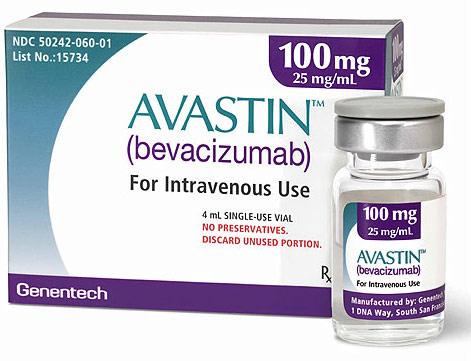
Avastin
Generic name: bevacizumab [ bev-a-CIZ-oo-mab ]
Drug class: VEGF/VEGFR inhibitors
What is Avastin?
Avastin injection is used in combination with other chemotherapy medications to treat certain types of colon and rectal cancer (cancer that begins in the large intestine), non-small cell lung cancer (NSCLC), glioblastoma (a certain type of cancerous brain tumor), renal cell cancer (RCC, a type of cancer that begins in the kidney), cervical cancer (cancer that begins in the opening of the uterus [womb]), and ovarian (female reproductive organs where eggs are formed), fallopian tube (tube that transports eggs released by the ovaries to the uterus), or peritoneal (layer of tissue that lines the abdomen) cancer.
Avastin is also used in combination with atezolizumab (Tecentriq) to treat hepatocellular carcinoma (HCC) that has spread or cannot be removed by surgery in people who have not previously received chemotherapy.
Avastin belongs to a class of medications called antiangiogenic agents. Bevacizumab works by stopping the formation of blood vessels that bring oxygen and nutrients to tumors. This may slow the growth and spread of tumors.
Warnings
Avastin can make it easier for you to bleed. Seek emergency medical attention if you have any bleeding that will not stop. You may also have bleeding on the inside of your body.
Call your doctor if you have: signs of bleeding in your digestive tract--feeling very weak or dizzy, severe stomach pain, bloody or tarry stools, coughing up blood or vomit that looks like coffee grounds; or signs of bleeding in the brain--sudden numbness or weakness, slurred speech, severe headache, problems with vision or balance.
Avastin can also cause problems with wound healing, which could result in bleeding or infection. Do not use Avastin within 28 days before or after a planned surgery.
Bevacizumab can cause a rare but serious neurologic disorder affecting the brain. Symptoms include headache, confusion, vision problems, feeling very weak or tired, fainting, and seizure (blackout or convulsions). These rare symptoms may occur within hours of your first dose of Avastin, or they may not appear for up to a year after your treatment started. Call your doctor at once if you have any of these side effects.
Some people receiving an Avastin injection have had a reaction to the infusion (when the medicine is injected into the vein). Tell your medical caregiver right away if you feel dizzy, nauseated, light-headed, sweaty, itchy, or have a fast heartbeat, chills, wheezing, or chest pain during the injection.
Before taking this medicine
You may not be able to use Avastin if you are being treating with other cancer medicines such as doxorubicin, daunorubicin, or if you have or ever had:
-
ovarian cancer with symptoms such as severe stomach pain or pelvic pain;
-
slow healing of a skin wound or surgical incision;
-
surgery within the past 4 weeks (28 days);
-
you plan to have surgery within the next 4 weeks (28 days); or
-
coughing up blood or vomit that looks like coffee grounds.
To make sure Avastin is safe for you, tell your doctor if you have ever had:
-
diabetes;
-
heart problems such as a heart attack, stroke, blood clot or blood clotting disorder;
-
bleeding problems or a perforation (a hole or tear) in your esophagus, stomach, or intestines; or
-
kidney disease.
Bevacizumab may harm an unborn baby. Do not use if you are pregnant. You may need a pregnancy test to make sure you are not pregnant. Use effective birth control while using Avastin and for at least 6 months after your last dose. Tell your doctor at once if you become pregnant.
Avastin may cause a woman's ovaries to stop working correctly. Symptoms of ovarian failure include 3 or more missed menstrual periods in a row. It may be harder for you to get pregnant while you are using this medicine and after this treatment. Talk to your doctor about your individual risk.
Do not breastfeed while using this medicine and for at least 6 months after your last dose.
How is Avastin given?
Avastin is given as an infusion into a vein. A healthcare provider will give you this injection.
Tell your caregivers right away if you feel dizzy, nauseated, light-headed, sweaty, or have a headache, shortness of breath, or chest pain during the injection.
Avastin is usually given once every 2 or 3 weeks.
Doses are based on weight. Your dose may change if you gain or lose weight.
You may need frequent medical tests and your cancer treatments may be delayed based on the results.
What happens if I miss a dose?
Call your doctor for instructions if you miss an appointment for your Avastin injection.
What happens if I overdose?
In a medical setting an overdose would be treated quickly.
What should I avoid while receiving Avastin?
Avoid activities that may increase your risk of bleeding or injury. Use extra care while shaving or brushing your teeth.
Avastin side effects
Get emergency medical help if you have signs of an allergic reaction to Avastin: hives, difficult breathing, swelling of your face, lips, tongue, or throat.
Some side effects may occur during the injection. Tell your medical caregiver right away if you feel dizzy, nauseated, light-headed, itchy, sweaty, or have a headache, chest tightness, back pain, trouble breathing, or swelling in your face.
Bevacizumab can cause a serious but rare neurologic disorder that affects the brain. Symptoms may occur within hours of your first dose or may not appear for up to a year after your treatment started. Call your doctor at once if you have: extreme weakness or tiredness, headache, confusion, vision problems, fainting, or seizures (blackout or convulsions).
Bevacizumab can cause you to bleed more easily. Call your doctor or seek emergency medical attention if you have:
-
easy bruising, unusual bleeding, or any bleeding that will not stop;
-
signs of bleeding in your digestive tract - severe stomach pain, bloody or tarry stools, coughing up blood or vomit that looks like coffee grounds; or
-
signs of bleeding in the brain - sudden numbness or weakness, slurred speech, severe headache, problems with vision or balance.
Some people taking Avastin have developed a perforation (a hole or tear) or a fistula (an abnormal passageway) in the stomach, intestines, throat, lungs, gallbladder, kidney, bladder, or vagina. Call your doctor if you have severe stomach pain or if you feel like you are choking when you eat or drink.
Also call your doctor if you have:
-
slow wound healing;
-
skin infection or open sores;
-
missed menstrual periods;
-
kidney problems - swelling, urinating less, feeling tired or short of breath;
-
signs of a blood clot - chest pain, sudden cough or shortness of breath, dizziness, coughing up blood, pain, swelling, or warmth in one leg;
-
heart problems - chest pain or pressure, pain spreading to your jaw or shoulder, nausea, sweating, swelling, rapid weight gain, feeling short of breath; or
-
low white blood cell counts - fever, mouth sores, skin sores, sore throat, cough.
Your cancer treatments may be delayed or permanently discontinued if you have certain side effects.
Common Avastin side effects may include:
-
increased blood pressure;
-
headache, back pain;
-
dry or watery eyes;
-
dry or flaky skin;
-
stuffy nose, runny nose, sneezing; or
-
altered sense of taste.
This is not a complete list of side effects and others may occur. Call your doctor for medical advice about side effects. You may report side effects to FDA at 1-800-FDA-1088.
What other drugs will affect Avastin?
Tell your doctor about all other cancer treatments you are receiving.
Other drugs may interact with bevacizumab, including prescription and over-the-counter medicines, vitamins, and herbal products. Tell your doctor about all other medicines you use.
Ingredients
Active ingredient: bevacizumab
Inactive ingredients: a,a-trehalose dihydrate, polysorbate 20, sodium phosphate dibasic (anhydrous), sodium phosphate monobasic (monohydrate), and Water for Injection, USP.
Manufacturer
Genentech, Inc, 1 DNA Way South San Francisco, CA 94080, USA.
Popular FAQ
What is Avastin eye injection used for?
Your doctor may use Avastin (bevacizumab) to treat wet age-related macular degeneration (AMD), diabetic eye disease or other eye problems. It is injected into the eye to help slow vision loss. These uses are considered “off-label” meaning your doctor might use Avastin for unapproved uses if they believe it’s helpful.
Is Avastin chemotherapy or immunotherapy?
Avastin (bevacizumab) is not chemotherapy. It is a monoclonal antibody immunotherapy that binds to a protein called vascular endothelial growth factor (VEGF). Bevacizumab kills cancer by preventing growth of blood vessels that feed tumor growth (an anti-angiogenic). Avastin may be used alone or with chemotherapy to treat certain types of cancer.
Does Avastin shrink tumors?
In studies of cervical cancer, colon cancer, non-small cell lung cancer and kidney cancer Avastin has been shown to shrink and slow the spread of cancerous tumors when given in addition to other treatments. It also helped some people live longer. Your results with Avastin treatment may differ.
How long can you take Avastin for?
In most cases, you will receive Avastin infusions as long as your cancer is controlled and you are tolerating the side effects. For some diagnoses, you may also receive chemotherapy or only have a certain number of cycles. The length of time you take Avastin depends on your diagnosis and regimen.
What is the success rate of Avastin?
In clinical studies, Avastin has been shown to extend the length of time people can live with certain cancers. It can also help extend the time you live without your tumor growing or spreading. It may be given with chemotherapy or other medicines. Your individual success rate may vary from other patients.
How long do Avastin side effects last?
Everyone reacts differently to Avastin treatment. Some side effects may lessen over days to weeks as you get used to the medicine, while others may last even after treatment is stopped. Not everyone has serious or life-threatening side effects. Your doctor will stop treatment if any serious side effects occur.
What are monoclonal antibodies?
Monoclonal antibodies (mAbs) are man-made proteins that mimic the natural antibodies produced by our immune systems. Monoclonal antibodies can be formulated into medicines to treat various types of illnesses, such as cancer, rheumatoid arthritis or psoriasis. Continue reading
What’s the difference between Eylea, Eylea HD, and Avastin?
Eylea, Eylea HD, and Avastin may all be used to treat neovascular (wet) age-related macular degeneration (AMD), as injections into the eye (intravitreal injections). Both Eylea and Eylea HD are FDA-approved for this indication, but use of Avastin is off-label (not an FDA-approved indication - although it has been used for this purpose since 2005). Eylea HD is a longer acting version of Eylea. Continue reading
What are biosimilar drugs and how do they compare to biologics?
A biosimilar is a biological product that is similar to a reference biologic (usually the originally approved product) and for which there are no clinically meaningful differences in terms of safety, purity, and potency. One example is Amjevita (adalimumab-atto), the first biosimilar approved for Humira (adalimumab) in 2016. Continue reading
References
More about Avastin (bevacizumab)
- Check interactions
- Compare alternatives
- Pricing & coupons
- Reviews (30)
- Drug images
- Side effects
- Dosage information
- During pregnancy
- FDA approval history
- Drug class: VEGF/VEGFR inhibitors
- Breastfeeding
- En español
Patient resources
Other brands
Mvasi, Zirabev, Alymsys, Vegzelma, Avzivi
Professional resources
Other brands
Mvasi, Zirabev, Alymsys, Vegzelma
Related treatment guides
Further information
Remember, keep this and all other medicines out of the reach of children, never share your medicines with others, and use Avastin only for the indication prescribed.
Always consult your healthcare provider to ensure the information displayed on this page applies to your personal circumstances.
Copyright 1996-2024 Cerner Multum, Inc. Version: 18.01.