
Ovarian Cancer
Medically reviewed by Drugs.com. Last updated on Aug 4, 2025.
What do I need to know about ovarian cancer?
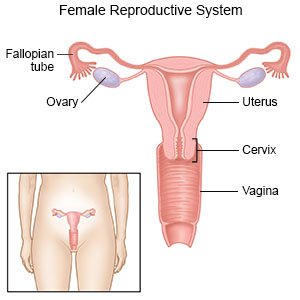
Ovarian cancer may develop in one or both of your ovaries. Ovaries produce eggs and hormones, such as estrogen and progesterone. These hormones are important in helping the body work correctly.
 |
What increases my risk for ovarian cancer?
- A family history of ovarian cancer
- Not having children, or having your first child after age 30
- Menstrual cycles started earlier than 12 years, or menopause (end of menstruation cycles) started later than 52 years
- Endometriosis
- Cigarette use
- Exposure to talc, such as from talcum powder
- Extra body weight
What are the signs and symptoms of ovarian cancer?
- Abdominal fullness, bloating, or swelling
- Loss of appetite or weight loss
- Diarrhea or constipation
- Changes in your menstrual cycle, including abnormal bleeding
- Abdominal or low back pain
- A need to urinate often
How is ovarian cancer diagnosed?
Your healthcare provider will examine you and ask about your symptoms. Tell your provider if you have a family history of ovarian cancer or other cancers. You may also need any of the following:
- Blood tests may be used to measure the level of a chemical called CA-125. A higher level than normal may mean you have ovarian cancer.
- Ultrasound or CT pictures may show the location of the tumor. You may be given contrast liquid to help healthcare providers see your ovaries better. Tell the healthcare provider if you have ever had an allergic reaction to contrast liquid.
- Genetic tests may be used to help plan treatment. Germline testing checks for inherited genetic conditions that increase the risk for ovarian cancer. An example is BRCA 1 or 2. This test is done on a blood or saliva sample. Tumor biomarker testing is done to check for mutations within cancer cells. These mutations cannot be passed from parent to child. Biomarker tests are done on a tumor sample.
How is ovarian cancer treated?
Ovarian cancer is treated depending on the size of the tumor and stage of the cancer. You may need more than one of the following:
- Chemotherapy medicines are used to kill cancer cells.
- Surgery may be needed to remove one or both of your ovaries.
- Radiation is used to kill cancer cells and to shrink the tumor or tumors with x-rays or gamma rays.
Treatment options
The following list of medications are related to or used in the treatment of this condition.
What can I do to manage ovarian cancer?
- Do not smoke. Nicotine can damage blood vessels. increase your risk for new or returning cancer, and delay healing after treatment. Do not use e-cigarettes or smokeless tobacco in place of cigarettes or to help you quit. They still contain nicotine. Ask your healthcare provider for information if you currently smoke and need help quitting.
- Weigh yourself daily. Weigh yourself in the morning before breakfast. Weight gain can be a sign of extra fluid in your body. Call your healthcare provider if you gain at least 2 pounds in a day.

- Drink liquids as directed. You may need extra liquid to prevent dehydration. Ask how much liquid to drink each day and which liquids are best for you.
- Eat enough protein and calories. Foods may taste different during cancer treatment. You may not feel like eating, and you may lose weight. Eat a variety of health foods. Healthy foods include fruits, vegetables, whole-grain breads, low-fat dairy products, beans, lean meats, and fish. Eat small meals every 2 to 3 hours. Ask a dietitian for more information about the best eating plan for you.

- Be physically active as directed. Physical activity, such as exercise, may improve your energy levels and appetite. Ask about the best activity plan for you.

Call your local emergency number (911 in the US) for any of the following:
- You suddenly feel lightheaded and short of breath.
- You have chest pain when you take a deep breath or cough.
- You cough up blood.
When should I seek immediate care?
- Your arm or leg feels warm, tender, and painful. It may look swollen and red.
- You vomit many times and cannot keep any food or liquids down.
When should I call my doctor or oncologist?
- You have a fever.
- Your pain is worse or does not go away after you take pain medicine.
- You have questions or concerns about your condition or care.
Care Agreement
You have the right to help plan your care. Learn about your health condition and how it may be treated. Discuss treatment options with your healthcare providers to decide what care you want to receive. You always have the right to refuse treatment. The above information is an educational aid only. It is not intended as medical advice for individual conditions or treatments. Talk to your doctor, nurse or pharmacist before following any medical regimen to see if it is safe and effective for you.© Copyright Merative 2025 Information is for End User's use only and may not be sold, redistributed or otherwise used for commercial purposes.
Learn more about Ovarian Cancer
Treatment options
Care guides
Symptoms and treatments
Medicine.com guides (external)
Further information
Always consult your healthcare provider to ensure the information displayed on this page applies to your personal circumstances.