Lower Gastrointestinal Endoscopic Ultrasonography
WHAT YOU SHOULD KNOW:
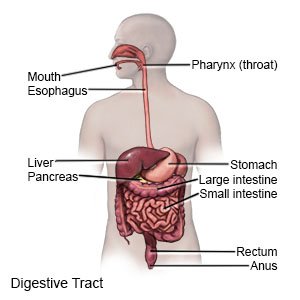
- Lower gastrointestinal (gas-tro-in-TES-ti-nal) endoscopic (EN-do-skop-ik) ultrasound (UL-trah-sownd) is a procedure to check the different parts of the lower gastrointestinal tract (GIT). The lower GIT includes some parts of the small intestines, the colon and rectum. The colon is the long tube that connects the small bowel with the anus (opening through which stool passes). The colon absorbs water from digested foods and turns the digested food into stool. It stores the stool until it passes out through your anus. Lower GIT endoscopic ultrasound is used to help diagnose and treat diseases that affect the lower GIT. These may include tumors, bleeding, abscess (collection of pus), or anal fistula (an abnormal connection from the anus to another organ). This procedure may also examine structures close to the lower GIT, such as the reproductive organs, liver, pancreas, kidneys, and lymph nodes.

- With lower GI endoscopic ultrasound, caregivers use an echoendoscope to help see the GIT. An echoendoscope is a thin and flexible (bendable) metal tube with a small transducer (sensor) on its tip. This transducer works using a water-filled balloon which produces an ultrasound (high energy sound waves). As the sensor touches a certain lower GI part, pictures are seen on a TV-like screen. Some echoendoscopes have a tiny camera to give caregivers a clearer view of the organ while watching the images on a monitor. With lower GI endoscopic ultrasound, conditions of the GIT may be diagnosed, and treatment given as soon as possible.
AFTER YOU LEAVE:
Medicines:
- Keep a written list of the medicines you take, the amounts, and when and why you take them. Bring the list of your medicines or the pill bottles when you see your caregivers. Learn why you take each medicine. Ask your caregiver for information about your medicine. Do not use any medicines, over-the-counter drugs, vitamins, herbs, or food supplements without first talking to caregivers.
- Always take your medicine as directed by caregivers. Call your caregiver if you think your medicines are not helping or if you feel you are having side effects. Do not quit taking your medicines until you discuss it with your caregiver. If you are taking medicine that makes you drowsy, do not drive or use heavy equipment.
Ask your caregiver when to return for a follow-up visit. Keep all appointments. Write down any questions you may have. This way you will remember to ask these questions during your next visit.
- Ask your caregiver when the results of your test will be available.
Diet: Eat a variety of healthy foods from all the food groups every day. Include whole grain bread, cereal, rice and pasta. Eat a variety of fruits and vegetables, including dark green and orange vegetables and legumes (dry beans). Include dairy products such as low-fat milk, yogurt and cheese. Choose protein sources such as lean meat and poultry (chicken), fish, beans, eggs and nuts. Ask your caregiver how many servings of fats, oils, and sweets you may have each day, and if you need to be on a special diet.
Drinking liquids: Men 19 years old and older should drink about 3.0 Liters of liquid each day (close to 13 eight-ounce cups). Women 19 years old and older should drink about 2.2 Liters of liquid each day (close to 9 eight-ounce cups). Good choices for most people to drink include water, juice, and milk. If you are used to drinking liquids that contain caffeine, such as coffee, these can also be counted in your daily liquid amount. Some food items such as soup and fruit also add liquid to your diet. Ask your caregiver how much liquid you should have each day.
Rest: You may feel like resting more. Slowly start to do more each day. Rest when you feel it is needed.
CONTACT A CAREGIVER IF:
- You have a fever (increased body temperature).
- You have a feeling of being too full or bloated.
- You have nausea (upset stomach) or vomiting (throwing up).
- Your skin is itchy, swollen, or has a rash.
- You have questions or concerns about your procedure, condition, or care.
SEEK CARE IMMEDIATELY IF:
- You are not able to eat or drink.
- You have problems having a bowel movement.
- You have trouble breathing all of a sudden.
- Your abdomen (stomach) becomes tender and hard.
- Your stools are black or have blood in them.
- Your vomit (throw up) has blood or bile in it.
Copyright © 2008 Thomson Healthcare Inc. All rights reserved. Information is for End User's use only and may not be sold, redistributed or otherwise used for commercial purposes.
The above information is an educational aid only. It is not intended as medical advice for individual conditions or treatments. Talk to your doctor, nurse or pharmacist before following any medical regimen to see if it is safe and effective for you.
| Link to Page | Print Page | Email Page |