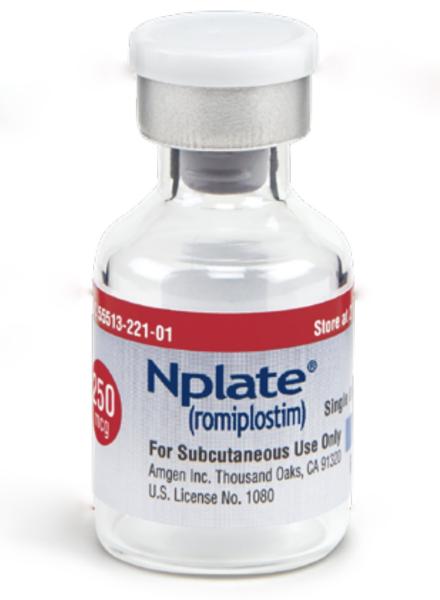
Romiplostim Side Effects
Applies to romiplostim: subcutaneous powder for solution.
Precautions
It is very important that your doctor check your or your child's progress at regular visits to make sure this medicine is working properly. Blood tests will be needed to check for unwanted effects.
Do not stop receiving this medicine without checking first with your doctor. Stopping this medicine suddenly may cause the number of platelets to go below the number you had before you started receiving the medicine. This will increase your risk for bleeding. Your doctor will check your platelet levels and progress when you stop receiving the medicine.
If you receive this medicine and you have a bone marrow problem called myelodysplastic syndromes (MDS), it may worsen and become an acute leukemia (white blood cell cancer).Talk to your doctor if you have concerns about this.
This medicine may increase your risk of developing blood clots. Check with your doctor right away if you or your child have swelling and pain in your arms, legs, or stomach, chest pain, trouble breathing, loss of sensation, confusion, or problems with muscle control or speech.
Portal vein thrombosis (a blood clotting problem in the liver) may occur in patients receiving this medicine, usually in those who have low platelet counts caused by chronic liver disease (eg, cirrhosis). Check with your doctor right away if you have blood in the stool, fever, low back pain, stomach pain, yellow skin or eyes, or if you are vomiting blood.
Your condition can cause you to bleed too much when injured. Be extra careful to avoid injuries. Stay away from rough sports or other situations where you could be bruised, cut, or injured. Gently brush and floss your teeth. Be careful when using sharp objects, including razors and fingernail clippers.
Serious side effects of romiplostim
Along with its needed effects, romiplostim may cause some unwanted effects. Although not all of these side effects may occur, if they do occur they may need medical attention.
Check with your doctor or nurse immediately if any of the following side effects occur while taking romiplostim:
More common side effects
- bloating or swelling of the face, arms, hands, lower legs, or feet
- body aches or pain
- change in hearing
- chills
- cough
- diarrhea
- difficulty breathing
- ear congestion, drainage, or pain
- fever
- headache
- loss of appetite
- loss of voice
- nausea
- pain or tenderness around the eyes and cheekbones
- rapid weight gain
- sneezing
- sore throat
- stomach pain
- stuffy or runny nose
- tightness of the chest
- tingling of the hands or feet
- unusual tiredness or weakness
- unusual weight gain or loss
- upper stomach pain
Incidence not known
- burning pain, warmth, swelling, or redness of the hands and feet
- fast heartbeat
- feeling of warmth
- hives, itching, skin rash
- hoarseness
- irritation
- joint pain, stiffness, or swelling
- large, hive-like swelling on the face, eyelids, lips, tongue, throat, hands, legs, feet, or genitals
- redness of the skin
- trouble swallowing
Other side effects of romiplostim
Some side effects of romiplostim may occur that usually do not need medical attention. These side effects may go away during treatment as your body adjusts to the medicine. Also, your health care professional may be able to tell you about ways to prevent or reduce some of these side effects.
Check with your health care professional if any of the following side effects continue or are bothersome or if you have any questions about them:
More common side effects
- acid or sour stomach
- belching
- bruise
- burning, crawling, itching, numbness, prickling, "pins and needles", or tingling feelings
- difficulty with moving
- dizziness
- heartburn
- indigestion
- mouth or throat pain
- muscle pains, cramps, or stiffness
- pain in the shoulder, arms, or legs
- stomach discomfort, upset, or pain
- trouble sleeping
See also:
For healthcare professionals
Applies to romiplostim: subcutaneous powder for injection.
General adverse events
The most serious adverse reactions were increased bone marrow reticulin, thrombotic/thromboembolic complications, and progression of myelodysplastic syndromes (MDS) to acute myelogenous leukemia (AML).[Ref]
Hematologic
- Very common (10% or more): Grade 2 or higher bleeding event (15%)
- Common (1% to 10%): Bone marrow reticulin formation increased 2 grades or more, bone marrow collagen fibrosis increased to grade 4, grade 4 bone marrow collagen fibrosis, bone marrow disorder, thrombocytopenia, anemia, thrombocytosis, bone marrow reticulin deposition, anemia, reticulin increased, serious bleeding event
- Uncommon (0.1% to 1%): Aplastic anemia, bone marrow failure, leukocytosis, splenomegaly, thrombocythemia, platelet count increased, platelet count abnormal, blood lactate dehydrogenase increased
- Frequency not reported: Marrow fibrosis with collagen[Ref]
Serious bleeding events included any event that was fatal, life-threatening, required hospitalization or prolongation of hospitalization, caused persistent or significant disability/incapacity, congenital anomaly/birth defect, and any other significant hazard.[Ref]
Cardiovascular
- Common (1% to 10%): Palpitations, flushing, hematoma, hypertension, peripheral ischemia, peripheral embolism
- Uncommon (0.1% to 1%): Myocardial infarction, heart rate increased, deep vein thrombosis, hypotension, phlebitis, thrombophlebitis superficial, thrombosis, erythromelalgia, blood pressure increased
- Frequency not reported: Congestive heart failure[Ref]
Oncologic
- Common (1% to 10%): B-cell lymphoma
- Uncommon (0.1% to 1%): Multiple myeloma, myelofibrosis
- Frequency not reported: Progression of myelodysplastic syndromes (MDS) to acute myelogenous leukemia (AML), blast cell counts transiently increased[Ref]
Nervous system
- Very common (10% or more): Headache (up to 36.2%), dizziness (up to 17%)
- Common (1% to 10%): Paresthesia, migraine
- Uncommon (0.1% to 1%): Clonus, dysgeusia, hypoesthesia, hypogeusia, neuropathy peripheral, transverse sinus thrombosis, vertigo[Ref]
Respiratory
- Very common (10% or more): Upper respiratory tract infection (up to 31%), nasopharyngitis (up to 26.2%), oropharyngeal pain (up to 25%), epistaxis (22.6%), cough (up to 17.3%)
- Common (1% to 10%): Pulmonary embolism, sinusitis, bronchitis, dyspnea, nasal congestion, rhinorrhea
- Uncommon (0.1% to 1%): Dry throat, painful respiration
- Frequency not reported: Upper respiratory tract infection, pneumonia[Ref]
Musculoskeletal
- Very common (10% or more): Arthralgia (up to 26%), back pain (up to 15.8%), pain in extremity (up to 15.6%), myalgia (up to 14%)
- Common (1% to 10%): Shoulder pain, muscle spasms, bone pain, musculoskeletal pain
- Uncommon (0.1% to 1%): Muscle tightness, muscle weakness, muscle twitching[Ref]
Other
- Very common (10% or more): Contusion (up to 41%), pyrexia (up to 24%), fatigue (up to 23.3%)
- Common (1% to 10%): Influenza-like illness, pain, asthenia, chills, injection site reaction, chest pain, peripheral swelling
- Uncommon (0.1% to 1%): Injection site hemorrhage, malaise, feeling hot, feeling jittery, body temperature increased[Ref]
Gastrointestinal
- Very common (10% or more): Diarrhea (up to 20%), nausea (up to 19.4%), upper abdominal pain (14%), abdominal pain (up to 11%), vomiting (up to 10.5%)
- Common (1% to 10%): Dyspepsia, gastroenteritis, constipation, gingival bleeding, mouth hemorrhage, upper abdominal pain, toothache
- Uncommon (0.1% to 1%): Rectal hemorrhage, breath odor, dysphagia, gastroesophageal reflux disease, hematochezia, stomach discomfort, stomatitis, tooth discoloration[Ref]
Dermatologic
- Very common (10% or more): Petechiae (18.6%), rash (up to 15%)
- Common (1% to 10%): Angioedema, pruritus, ecchymosis, purpura, urticaria
- Uncommon (0.1% to 1%): Alopecia, photosensitivity reaction, acne, dermatitis contact, dry skin, eczema, erythema, exfoliative rash, hair growth abnormal, prurigo, rash papular, rash pruritic, skin nodule, skin odor abnormal, face edema[Ref]
Psychiatric
- Very common (10% or more): Insomnia (up to 16%)
- Common (1% to 10%): Anxiety
- Uncommon (0.1% to 1%): Depression, abnormal dreams, irritability[Ref]
Metabolic
- Very common (10% or more): Peripheral edema (up to 12.5%)
- Common (1% to 10%): Hypokalemia
- Uncommon (0.1% to 1%): Alcohol intolerance, anorexia, appetite decreased, dehydration, gout, weight decreased, weight increased[Ref]
Immunologic
- Very common (10% or more): Antibodies to this drug (up to 16%)
- Common (1% to 10%): Preexisting antibodies to this drug, influenza, ear infection
- Uncommon (0.1% to 1%): Localized infection, neutralizing antibodies
- Frequency not reported: Hypersensitivity reactions including angioedema and anaphylaxis (postmarketing reports)[Ref]
Genitourinary
- Common (1% to 10%): Urinary tract infection
- Uncommon (0.1% to 1%): Protein urine present, vaginal hemorrhage[Ref]
Ocular
- Uncommon (0.1% to 1%): Conjunctival hemorrhage, accommodation disorder, blindness, eye disorder, eye pruritus, lacrimation increased, papilledema, visual disturbances[Ref]
Hepatic
- Uncommon (0.1% to 1%): Portal vein thrombosis, transaminase increased[Ref]
References
1. Cerner Multum, Inc. "UK Summary of Product Characteristics."
2. Cerner Multum, Inc. "Australian Product Information."
3. (2008) "Product Information. Nplate (romiplostim)." Amgen USA
Frequently asked questions
- How long does Nplate (romiplostim) take to work?
- How is Nplate (romiplostim) administered?
- Is Nplate a chemotherapy drug?
- What is Nplate used for and how does it work?
More about romiplostim
- Check interactions
- Compare alternatives
- Reviews (14)
- Dosage information
- During pregnancy
- Drug class: platelet-stimulating agents
- Breastfeeding
- En español
Patient resources
Other brands
Professional resources
Other brands
Related treatment guides
Further information
Romiplostim side effects can vary depending on the individual. Always consult your healthcare provider to ensure the information displayed on this page applies to your personal circumstances.
Note: Medication side effects may be underreported. If you are experiencing side effects that are not listed, submit a report to the FDA by following this guide.