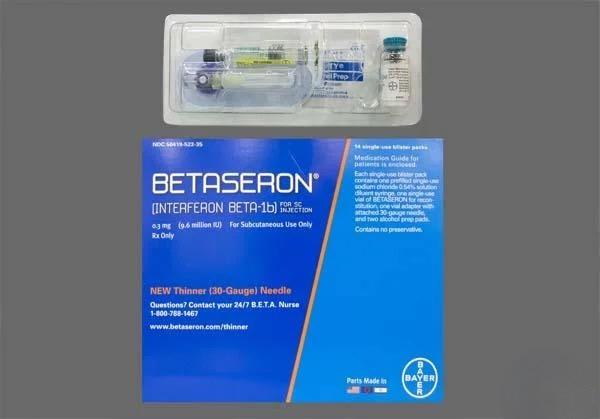
Interferon beta-1b Side Effects
Medically reviewed by Drugs.com. Last updated on Nov 8, 2023.
Applies to interferon beta-1b: subcutaneous powder for solution.
Serious side effects of Interferon beta-1b
Along with its needed effects, interferon beta-1b may cause some unwanted effects. Although not all of these side effects may occur, if they do occur they may need medical attention.
Check with your doctor immediately if any of the following side effects occur while taking interferon beta-1b:
More common
- Blue-green to black skin discoloration
- changes in menstrual periods
- chills
- cough
- decreased sexual ability in males
- diarrhea
- fever
- general feeling of discomfort or illness
- headache
- irregular or pounding heartbeat
- joint pain
- loss of appetite
- muscle aches and pains
- nausea
- runny or stuffy nose
- shivering
- sore throat
- stomach pain
- sweating
- trouble sleeping
- unusual tiredness or weakness
- vomiting
Less common
- Bloody or cloudy urine
- changes in vision
- cold hands and feet
- difficult, burning, or painful urination
- frequent urge to urinate
- pelvic pain
- swollen glands
- trouble breathing
- unusual weight gain
Incidence not known
- Black, tarry stools
- bleeding problems
- bleeding gums
- bloating or swelling
- blood in the urine or stools
- chest pain, discomfort, or tightness
- confusion
- dry, puffy skin
- feeling cold
- hoarseness or husky voice
- increased muscle tone
- increased urge to urinate
- light-colored stools
- loss of memory
- nervousness
- nosebleeds
- pale skin
- pinpoint red spots on the skin
- problems with speaking
- red, itching, or swollen eyes
- restlessness
- seizures
- sensitivity to heat
- swelling of the feet or lower legs
- swelling of the front part of the neck
- trouble sitting still
- unusual bleeding or bruising
- unusual weight loss
- upper right abdominal or stomach pain
- yellowing eyes and skin
Other side effects of Interferon beta-1b
Some side effects of interferon beta-1b may occur that usually do not need medical attention. These side effects may go away during treatment as your body adjusts to the medicine. Also, your health care professional may be able to tell you about ways to prevent or reduce some of these side effects.
Check with your health care professional if any of the following side effects continue or are bothersome or if you have any questions about them:
More common
- Constipation
- dizziness
- loss of voice
- menstrual pain or other changes
Incidence not known
- Difficulty in moving
- loss or thinning of the hair
- muscle stiffness
For Healthcare Professionals
Applies to interferon beta-1b: subcutaneous powder for injection.
Cardiovascular
Common (1% to 10%): Tachycardia
Rare (Less than 0.1%): Cardiomyopathy, congestive heart failure, palpitations, arrhythmia, tachycardia, vasodilatation, chest pain, hypertension[Ref]
Dermatologic
Very common (10% or more): Skin rashes (25%), increased sweating
Common (1% to 10%): Contusion, pruritus, erythematous rash, maculopapular rash, night sweats
Uncommon (0.1% to 1%): Alopecia, allergic dermatitis, erythema, urticaria
Rare (0.01% to 0.1%): Skin ulceration/necrosis at the site of injection, Quincke's edema (angioedema), erythema multiforme, Stevens-Johnson syndrome
Very rare (less than 0.01%): Calcified subcutaneous nodules, psoriasis, periungual and nail alterations
Frequency not reported: Rash vesicular[Ref]
Endocrine
Uncommon (0.1% to 1%): Hypothyroidism, hyperthyroidism[Ref]
Gastrointestinal
Very common (10% or more): Nausea (27%), diarrhea (17%), constipation (12%), vomiting (10%)
Common (1% to 10%): Abdominal pain
Frequency not reported: Dry mouth, dyspepsia, pancreatitis[Ref]
General
Influenza-like symptoms (e.g., myalgia, fever, chills, sweating, asthenia, headache, nausea) are the most common adverse reactions.[Ref]
Genitourinary
Very common (10% or more): Urinary tract infection (19%), cystitis (11%)
Frequency not reported: Metrorrhagia, menorrhagia, urinary incontinence, increase in the frequency of micturition[Ref]
Hematologic
Very common (10% or more): Lymphopenia (14%), leukopenia (11%), neutropenia, thrombocytopenia, anemia
Common (1% to 10%): Neutrophil count decreased, hematocrit decreased, blood potassium increased, blood urea nitrogen increased
Uncommon (0.1% to 1%): Platelet count decreased
Rare (Less than 0.1%): Thrombotic microangiopathy including thrombotic thrombocytopenic purpura/hemolytic uremic syndrome,
Frequency not reported: Pancytopenia[Ref]
Hepatic
Very common (10% or more): Alanine aminotransferase increased (26%), aspartate aminotransferase increased (16%)
Common (1% to 10%): Gamma-glutamyl-transferase increased
Uncommon (0.1% to 1%): Hepatitis (with or without icterus)
Rare (Less than 0.1%): Hepatic failure, autoimmune hepatitis
Frequency not reported: Elevation of hepatic transaminases (SGPT and SGOT), bilirubinemia, jaundice[Ref]
Hypersensitivity
Rare (Less than 0.1%): Anaphylactic reactions
Frequency not reported: Other allergic reactions[Ref]
Immunologic
Very common (10% or more): Influenza-like symptoms (49%)
Frequency not reported: Systemic lupus erythematosus, anaphylactic reaction, anaphylactic shock, hypersensitivity reactions (angioedema, dyspnea, urticaria, rash, pruritic rash)[Ref]
Local
Very common (10% or more): Injection site erythema (62%), injection site pain (15%), injection site pruritus (13%), injection site bruising
Common (1% to 10%): Injection site edema, injection site warmth, injection site hematoma, injection site rash
Uncommon (0.1% to 1%): Injection site infections (which could be severe)
Rare (Less than 0.1%): Injection site cellulitis (which could be severe)
Frequency not reported: Injection site abscess, injection site reaction, injection site inflammation, injection site necrosis, injection site bleeding[Ref]
Metabolic
Frequency not reported: Weight decreased, weight increased[Ref]
Musculoskeletal
Very common (10% or more): Myalgia (19%), back pain (20%), pain in extremity (19%), arthralgia (16%), muscular weakness (12%), muscle spasms (10%)
Common (1% to 10%): Muscle spasticity, muscle cramp, neck pain, arthralgia, muscle stiffness, musculoskeletal stiffness
Rare (0.01% to 0.1%): Drug induced lupus erythematosus
Frequency not reported: Arthritis[Ref]
Nervous system
Very common (10% or more): Headache (67%), dizziness (16%), paresthesia (12%)
Common (1% to 10%): Hypoesthesia
Uncommon (0.1% to 1%): Facial hypoesthesia
Frequency not reported: Neurological symptoms, syncope, hypertonia, seizures, migraine[Ref]
Other
Very common (10% or more): Pyrexia (45%), asthenia (24%), pain (23%), fever (20%), chills (19%)
Common (1% to 10%): Fatigue, malaise, hyperthermia, vertigo
Frequency not reported: Tachyphylaxis, sudden hearing loss, tinnitus (ototoxic effects resolved 7 to 14 days after discontinuation of the drug)[Ref]
Psychiatric
Common (1% to 10%): Depression/suicidal ideation, insomnia, somnolence
Uncommon (0.1% to 1%): Anxiety
Frequency not reported: Suicide attempt, suicide, psychosis, anxiety, confusion, emotional lability, anhedonia, psychotic thoughts, mood disturbances, hypersexuality, aggressive behavior, panic attacks[Ref]
Renal
Rare (Less than 0.1%): Nephrotic syndrome, glomerulosclerosis[Ref]
Respiratory
Very common (10% or more): Oropharyngeal pain (28%), nasopharyngitis (24%), upper respiratory tract infection (21%), cough (16%), sinusitis (14%)
Common (1% to 10%): Rhinorrhea, bronchitis
Rare (0.01% to 0.1%): Dyspnea
Frequency not reported: Pulmonary arterial hypertension[Ref]
More about interferon beta-1b
- Check interactions
- Compare alternatives
- Reviews (7)
- Dosage information
- During pregnancy
- Drug class: interferons
- En español
Patient resources
Other brands
Professional resources
Other brands
Related treatment guides
References
1. Product Information. Betaseron (interferon beta-1b). Berlex Laboratories. 2002;PROD.
2. Cerner Multum, Inc. UK Summary of Product Characteristics.
3. Pharmaceutical Society of Australia. APPGuide online. Australian prescription products guide online. http://www.appco.com.au/appguide/default.asp 2006.
Further information
Always consult your healthcare provider to ensure the information displayed on this page applies to your personal circumstances.
Some side effects may not be reported. You may report them to the FDA.