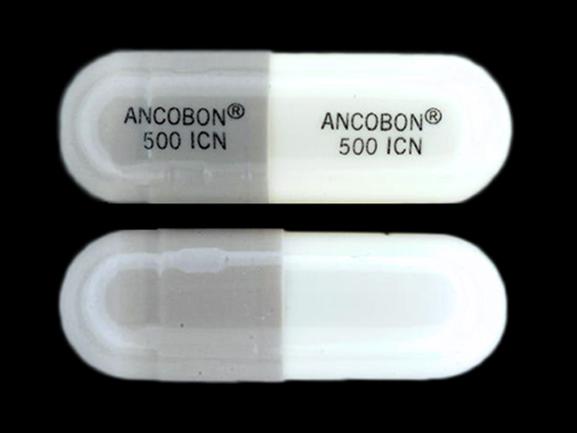
Ancobon Side Effects
Generic name: flucytosine
Medically reviewed by Drugs.com. Last updated on Jul 16, 2024.
Note: This document provides detailed information about Ancobon Side Effects associated with flucytosine. Some dosage forms listed on this page may not apply specifically to the brand name Ancobon.
Applies to flucytosine: oral capsule.
Important warnings
This medicine can cause some serious health issues
Oral route (capsule)
Use with extreme caution in patients with impaired renal function.
Close monitoring of hematologic, renal, and hepatic status of all patients is essential.
Serious side effects of Ancobon
Along with its needed effects, flucytosine (the active ingredient contained in Ancobon) may cause some unwanted effects. Although not all of these side effects may occur, if they do occur they may need medical attention.
Check with your doctor immediately if any of the following side effects occur while taking flucytosine:
Incidence not known
- agitation
- black, bloody, tarry stools
- blistering, peeling, or loosening of the skin
- bloody or cloudy urine
- burning, crawling, itching, numbness, prickling, "pins and needles", or tingling feelings
- burning upper abdominal or stomach pain
- change in consciousness
- chest pain or tightness
- chills
- confusion
- cough or hoarseness
- dark urine
- decreased urine output
- depression
- diarrhea
- dizziness
- dry mouth
- feeling of constant movement of self or surroundings
- fever
- headache
- hearing loss
- hives, itching, skin rash
- increased sensitivity of the skin to sunlight
- irregular heartbeat
- irritability
- joint or muscle pain
- light-colored stools
- loss of appetite
- loss of consciousness
- lower back or side pain
- mood changes
- muscle cramps or twitching
- nausea
- no blood pressure or pulse
- no breathing
- numbness or tingling in the hands, feet, or lips
- painful or difficult urination
- pain in the lower back or side
- pale skin
- rapid weight gain
- rectal bleeding
- red irritated eyes
- red skin lesions, often with a purple center
- redness of the skin
- seeing, hearing, or feeling things that are not there
- seizures
- sensation of spinning
- severe sunburn
- shakiness and unsteady walk
- sore throat
- sores, ulcers, or white spots on the lips or in the mouth
- stopping of the heart
- swelling of the face, ankles, or hands
- swollen glands
- thirst
- trouble breathing
- unpleasant breath odor
- unsteadiness, trembling, or other problems with muscle control or coordination
- unusual bleeding or bruising
- unusual drowsiness, dullness, tiredness, weakness or feeling of sluggishness
- vomiting
- vomiting of blood or material that looks like coffee grounds
- weakness in the arms, hands, legs, or feet
- weight loss
- yellow eyes or skin
For healthcare professionals
Applies to flucytosine: oral capsule.
Cardiovascular
- Frequency not reported: Cardiac arrest, myocardial toxicity, ventricular dysfunction, cardiac toxicity with ST elevation[Ref]
Dermatologic
- Frequency not reported: Rash, pruritus, urticaria, photosensitivity, Lyell's syndrome[Ref]
Gastrointestinal
- Frequency not reported: Nausea, vomiting/emesis, abdominal pain, diarrhea, dry mouth, duodenal ulcer, gastrointestinal hemorrhage/bleeding, enterocolitis, ulcerative colitis[Ref]
Genitourinary
- Frequency not reported: Crystalluria[Ref]
Hematologic
- Frequency not reported: Anemia, agranulocytosis, aplastic anemia, eosinophilia, leukopenia, pancytopenia, thrombocytopenia, bone marrow aplasia (fatal cases), bone marrow toxicity[Ref]
Hepatic
- Frequency not reported: Jaundice, hepatic dysfunction, elevated bilirubin, increased hepatic enzymes, acute hepatic injury, hepatic necrosis, hepatitis, alterations in liver function tests[Ref]
Acute hepatic injury including hepatic necrosis with possible fatal outcome in debilitated patients has been reported.
Alterations in liver function tests were generally dose related and reversible.[Ref]
Hypersensitivity
- Frequency not reported: Allergic reactions, anaphylaxis[Ref]
Metabolic
- Frequency not reported: Anorexia, hypoglycemia, hypokalemia
Nervous system
- Frequency not reported: Ataxia, hearing loss, headache, paresthesia, parkinsonism, peripheral neuropathy, vertigo, sedation, convulsions[Ref]
Other
- Frequency not reported: Pyrexia, fatigue, weakness[Ref]
Psychiatric
- Frequency not reported: Confusion, hallucinations, psychosis[Ref]
Renal
- Frequency not reported: Azotemia, elevated creatinine, elevated BUN, renal failure[Ref]
Respiratory
- Frequency not reported: Dyspnea, chest pain, respiratory arrest[Ref]
References
1. (2002) "Product Information. Ancobon (flucytosine)." Roche Laboratories
2. Isetta C, Garaffo R, Bastian G, Jourdan J, Baudouy M, Milano G (2000) "Life-threatening 5-fluorouracil-like cardiac toxicity after treatment with 5-fluorocytosine." Clin Pharmacol Ther, 67, p. 323-5
3. Thompson GR 3rd, Cadena J, Patterson TF (2009) "Overview of antifungal agents." Clin Chest Med, 30, 203-15, v
4. Harder EJ, Hermans PE (1975) "Treatment of fungal infections with flucytosine." Arch Intern Med, 135, p. 231-7
5. Bennett JE, Dismukes WE, Duma RJ, et al. (1979) "A comparison of amphotericin B alone and combined with flucytosine in the treatment of cryptococcal meningitis." N Engl J Med, 301, p. 126-31
6. White CA, Traube J (1982) "Ulcerating enteritis associated with flucytosine therapy." Gastroenterology, 83, p. 1127-9
7. Stamm AM, Diasio RB, Dismukes WE, et al. (1987) "Toxicity of amphotericin B plus flucytosine in 194 patients with cryptococcal meningitis." Am J Med, 83, p. 236-42
8. Record CO, Skinner JM, Sleight P, Speller DC (1971) "Candida endocarditis treated with 5-fluorocytosine." Br Med J, 01/30/71, p. 262-4
9. Wise GJ, Goldberg P, Kozinn PJ, Nawabi IU (1976) "Agranulocytosis associated with flucytosine for urinary candidiasis." Urology, 8, p. 490-1
10. Kauffman CA, Frame PT (1977) "Bone marrow toxicity associated with 5-fluorocytosine therapy." Antimicrob Agents Chemother, 11, p. 244-7
11. Holdsworth SR, Atkins RC, Scott DF, Jackson R (1975) "Management of candida peritonitis by prolonged peritoneal lavage containing 5-fluorocytosine." Clin Nephrol, 4, p. 157-9
12. Shelley WB, Sica PA Jr (1983) "Disseminate sporotrichosis of skin and bone cured with 5-fluorocytosine: photosensitivity as a complication." J Am Acad Dermatol, 8, p. 229-35
13. Kotani S, Hirose S, Niiya K, et al. (1988) "Anaphylaxis to flucytosine in a patient with AIDS." JAMA, 260, p. 3275-6
More about Ancobon (flucytosine)
- Check interactions
- Compare alternatives
- Pricing & coupons
- Drug images
- Dosage information
- During pregnancy
- Generic availability
- Drug class: miscellaneous antifungals
- En español
Patient resources
Professional resources
Related treatment guides
Further information
Ancobon side effects can vary depending on the individual. Always consult your healthcare provider to ensure the information displayed on this page applies to your personal circumstances.
Some side effects may not be reported. You may report them to the FDA.