Hydrocortisone (Topical) (Monograph)
Brand names: Ala-Cort, Ala-Scalpt, Anucort-HC, Anu-Med HC, Anusert HC,
... show all 46 brands
Drug class: Corticosteroids
Introduction
Corticosteroid secreted by the adrenal cortex; topical anti-inflammatory agent.
Uses for Hydrocortisone (Topical)
Corticosteroid-responsive Dermatoses
Relief of inflammatory and pruritic manifestations of corticosteroid-responsive dermatoses.
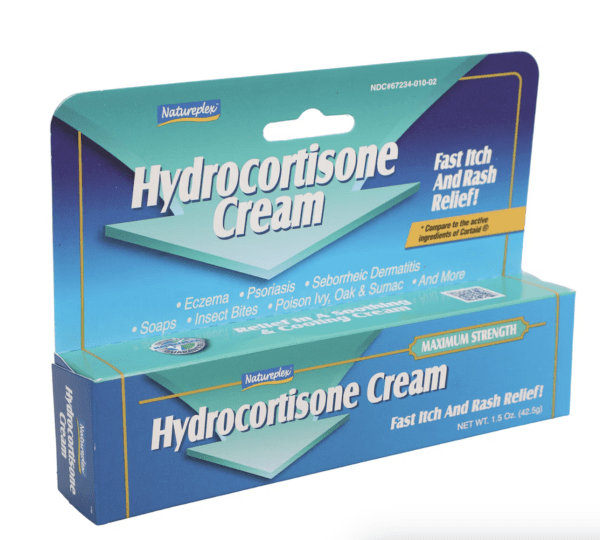
Nonprescription preparations used for temporary relief of minor skin irritations, itching, and rash caused by eczema, dermatitis, insect bites, poison ivy, poison oak, poison sumac, soaps, detergents, cosmetics, or jewelry.
Nonprescription preparations used for temporary relief of itchy anal and/or genital areas.
Nonprescription preparations used for temporary relief of itching and minor scalp irritation caused by scalp dermatitis.
Generally most effective in acute or chronic dermatoses (e.g., seborrheic or atopic dermatitis, localized neurodermatitis, anogenital pruritus, psoriasis, late phase of allergic contact dermatitis, inflammatory phase of xerosis).
Topical therapy generally preferred over systemic therapy; fewer associated adverse systemic effects.
Topical therapy generally only controls manifestations of dermatoses; eliminate cause if possible.
Topical efficacy may be increased by using a higher concentration or occlusive dressing therapy. (See Administration with Occlusive Dressing under Dosage and Administration.)
Response may vary from one topical corticosteroid preparation to another.
Anti-inflammatory activity may vary considerably depending on the vehicle, drug concentration, site of application, disease, and individual patient.
Infected Dermatoses
Topical treatment of infected dermatoses in combination with topical anti-infectives (e.g., neomycin, polymyxin B) or antifungals.
If a topical corticosteroid is used in combination with a topical anti-infective, weigh benefits against risks.
Oral Lesions
Hydrocortisone acetate paste used as an adjunct for temporary symptomatic relief of oral inflammatory or ulcerative lesions resulting from trauma.
Ulcerative Colitis and Anorectal Disorders
Used rectally as a retention enema for adjunctive treatment of mild or moderate acute ulcerative colitis limited to the rectosigmoid or left colon.
Used rectally as a retention enema for mild acute ulcerative colitis of the transverse or descending colon.
Retention enema usually is effective in mild or moderate acute rectosigmoid ulcerative colitis when response to sulfasalazine (generally considered the maintenance drug of choice) is inadequate or when sulfasalazine cannot be given.
Systemic corticosteroids and/or corticosteroid enemas are more effective than sulfasalazine in acute ulcerative colitis attacks, but if surgery is required, it should not be delayed in favor of corticosteroid therapy.
Hydrocortisone acetate rectal suppositories or suspension (foam), may be effective as adjunctive treatment of rectal ulcerative colitis.
Hydrocortisone acetate rectal suppositories also are used in the treatment of other anorectal inflammatory conditions (e.g., inflamed hemorrhoids, postirradiation or factitial proctitis, cryptitis, pruritus ani).
Fixed-combination preparations of a corticosteroid and local anesthetic may be useful for symptomatic relief of anorectal conditions (e.g., hemorrhoids), but combinations with antihistamines, astringents, keratolytics, and/or vasoconstrictors are of questionable efficacy.
Hydrocortisone (Topical) Dosage and Administration
General
-
Consider location of the lesion and the condition being treated when choosing a dosage form.
-
Creams are suitable for most dermatoses, but ointments may also provide some occlusion and are usually used for the treatment of dry, scaly lesions.
-
Lotions are probably best for treatment of weeping eruptions, especially in areas subject to chafing (e.g., axilla, foot, groin). Lotions, gels, and aerosols may be used on hairy areas, particularly the scalp.
-
Formulation affects percutaneous penetration and subsequent activity; extemporaneous preparation or dilution of commercial preparations with another vehicle may decrease effectiveness.
-
Patients applying a topical corticosteroid to a large surface area and/or to areas under occlusion should be evaluated periodically for evidence of hypothalamic-pituitary-adrenal (HPA)-axis suppression by appropriate endocrine testing (e.g., ACTH stimulation, plasma cortisol, urinary free cortisol). (See Hypothalamic-Pituitary-Adrenal Axis Suppresion and also Systemic Effects, under Cautions.)
Administration
Topical Administration
For dermatologic use only; avoid contact with eyes.
Apply creams, lotions, ointments, solutions, and aerosol foams topically to the skin or scalp.
Apply paste topically inside the oral cavity.
Apply rectal creams and ointments externally to the anal area; some commercially available creams also may be applied externally to the anogenital areas.
The area of skin to be treated may be thoroughly cleansed before topical application to reduce the risk of infection; however, some clinicians believe that, unless an occlusive dressing is used, cleansing of the treated area is unnecessary and may be irritating.
Apply cream, lotion, ointment, or solution sparingly in a thin film and rub gently into affected area.
For scalp dermatoses, part the hair and apply small amount of lotion or solution directly to the affected area; rub gently into scalp. Maintain usual hair care, but do not wash out lotion immediately after application. Alternatively, for scalp dermatoses, apply aerosol to dry scalp after shampooing.
To dispense foam, shake container well (for 5–10 seconds) immediately prior to use. Hold container upright and press down on container cap until foam appears. Apply a small amount to affected area.
For use in the mouth, press a small amount of paste to the lesion without rubbing until a thin film develops.
After a favorable response is achieved, frequency of application or concentration (strength) may be decreased to the minimum necessary to maintain control and to avoid relapse; discontinue if possible.
Administration with Occlusive Dressing
Occlusive dressings may be used for severe or resistant dermatoses (e.g., psoriasis). (See Occlusive Dressings under Cautions.)
Soak or wash the affected area to remove scales; apply a thin film of cream, lotion, or ointment; rub gently into the lesion; and apply another thin film. Cover affected area with a thin, pliable plastic film and seal it to adjacent normal skin with adhesive tape or hold in place with a gauze or elastic bandage.
If affected area is moist, incompletely seal the edges of the plastic film or puncture the film to allow excess moisture to escape. For added moisture in dry lesions, apply cream, ointment, or lotion and cover with a dampened cloth before the plastic film is applied or briefly soak the affected area in water before application of the drug and plastic film.
Thin polyethylene gloves may be used on the hands and fingers, plastic garment bags may be used on the trunk or buttocks, a tight shower cap may be used for the scalp, or whole-body suits may be used instead of plastic film to provide occlusion.
Frequency of occlusive dressing changes depends on the condition being treated; cleansing of the skin and reapplication of the corticosteroid are essential at each dressing change.
Occlusive dressing is usually left in place for 12–24 hours and therapy is repeated as needed. Although occlusive dressing may be left in place for 3–4 days at a time in resistant conditions, most clinicians recommend intermittent use of occlusive dressings for 12 hours daily to reduce the risk of adverse effects (particularly infection) and systemic absorption and for greater convenience.
The drug and an occlusive dressing may be used at night, and the drug or a bland emollient may be used without an occlusive dressing during the day.
In patients with extensive lesions, sequential occlusion of only one portion of the body at a time may be preferable to whole-body occlusion. (See Occlusive Dressings under Cautions.)
Rectal Administration
Administer rectally as a retention enema, suppository, or aerosol foam.
Administer retention enema, suppository, or foam carefully according to manufacturer’s instructions.
Dosage
Available as hydrocortisone (dosage expressed in terms of the base) and as hydrocortisone acetate, buteprate, butyrate, and valerate (dosage expressed in terms of the salt).
Pediatric Patients
Administer the least amount of topical preparations that provides effective therapy.
Corticosteroid-responsive Dermatoses
Topical
Nonprescription hydrocortisone preparations should not be used in children <2 years of age unless directed and supervised by a clinician.
Children ≥2 years of age: Apply appropriate cream, lotion, ointment, or solution sparingly 1–4 times daily.
Adults
Corticosteroid-responsive Dermatoses
Topical
Apply appropriate cream, lotion, ointment, or solution sparingly 1–4 times daily.
Apply aerosol foam to affected area 2–4 times daily.
Nonprescription preparations should not be used for self-medication for >7 days.
If the condition worsens or symptoms persist, discontinue and consult a clinician.
Oral Lesions
Topical
Apply a small amount of paste to the lesion 2 or 3 times daily after meals and at bedtime.
If substantial regeneration or repair of oral tissues does not occur after 7 days, further investigate etiology of the lesions.
Ulcerative Colitis and Anorectal Disorders
Rectal (as Retention Enema)
Adjunctive treatment of ulcerative colitis: 100 mg nightly. Some clinicians recommend 100 mg twice daily followed by 100 mg nightly when improvement occurs.
Usually given for 21 days or until clinical and proctologic remissions are achieved.
Lay on left side during and for 30 minutes after administration to distribute drug throughout the left colon. Retain for ≥1 hour, preferably all night.
Symptoms may improve in 3–5 days, followed by proctologic improvement. Discontinue if clinical or proctologic improvement does not occur within 2–3 weeks.
Protologic remission may require 2–3 months of therapy.
Following treatment for >21 days, gradually withdraw use; give every other night for 2–3 weeks, then discontinue.
Rectal (as Foam)
Ulcerative proctitis of the distal rectum: 90 mg (1 applicatorful of a 10% aerosol foam suspension) 1 or 2 times daily for 2–3 weeks. Then, if necessary, every other day until clinical and proctologic improvement.
Symptoms may improve within 5–7 days.
Rectal (as Suppository)
Adjunctive treatment of ulcerative colitis of the rectum and other inflammatory conditions of the anorectum: 25 mg in the morning and at night for 2 weeks.
Severe proctitis: 25 mg 3 times daily or 50 mg twice daily.
Adjunctive treatment of postirradiation or factitial proctitis: 25 mg in the morning and at night for 6–8 weeks (or less if an adequate response is attained).
For internal hemorrhoid symptoms and adjunctive treatment of other anorectal inflammatory conditions: 10 mg in the morning and at night for 2–6 days.
Prescribing Limits
Pediatric Patients
Corticosteroid-responsive Dermatoses
Self-medication
TopicalMaximum 7 days.
Adults
Corticosteroid-responsive Dermatoses
Self-medication
TopicalMaximum 7 days.
Cautions for Hydrocortisone (Topical)
Contraindications
-
Known hypersensitivity to hydrocortisone or any ingredient in the formulation.
-
Rectal corticosteroid therapy in patients with intestinal obstruction, abscess, impending perforation, peritonitis, extensive fistulas, and fresh intestinal anastomoses or sinus tracts.
Warnings/Precautions
Sensitivity Reactions
Allergic contact dermatitis may manifest as failure to heal rather than irritation as occurs with other topical preparations that do not contain corticosteroids; confirm with diagnostic patch testing.
General Precautions
Hypothalamic-Pituitary-Adrenal Axis Suppression.
Topically applied corticosteroids can be absorbed in sufficient amounts to reversibly suppress the HPA axis.
Perform periodic HPA-axis evaluation by appropriate testing (e.g., ACTH stimulation, morning plasma cortisol, urinary free cortisol), especially in patients applying a topical corticosteroid to a large surface area or to areas under occlusion.
If HPA-axis suppression occurs, withdraw the drug, reduce the frequency of application, and/or substitute a less potent corticosteroid.
HPA-axis function recovery generally is prompt and complete following drug discontinuance.
Rarely, glucocorticosteroid insufficiency may require systemic corticosteroid therapy.
Systemic Effects
Systemic absorption following topical administration may result in manifestations of Cushing’s syndrome, hyperglycemia, and glucosuria in some patients.
Adverse systemic effects may occur when corticosteroids are used on large areas of the body, for prolonged periods of time, with an occlusive dressing, and/or concurrently with other corticosteroid-containing preparations.
Infants and children may be more susceptible to adverse systemic effects.
Local Effects
Possible adverse local reactions (e.g., irritation, dryness, folliculitis, hypertrichosis, acneiform eruptions, hypopigmentation, perioral dermatitis, allergic contact dermatitis, secondary infection, striae, miliaria); may occur more frequently with the use of occlusive dressings, especially with prolonged therapy.
Prolonged use of topical corticosteroids may cause atrophy of the epidermis and subcutaneous tissue; these effects are most likely to occur (even with short-term use) in intertriginous (e.g., axilla, groin), flexor, and facial areas.
If irritation occurs, discontinue drug and initiate appropriate therapy.
Skin Infection
If concurrent skin infection is present or develops, initiate appropriate anti-infective therapy. If infection does not respond promptly, discontinue topical corticosteroid therapy until the infection has been controlled.
When topical corticosteroids and topical anti-infectives are used concomitantly, consider that the corticosteroid may mask clinical signs of bacterial, fungal, or viral infections; prevent recognition of ineffectiveness of the anti-infective; or suppress hypersensitivity reactions to ingredients in the formulation. In addition, consider the cautions, precautions, and contraindications associated with the anti-infective.
Do not use occlusive dressings in patients with primary skin infection.
Some manufacturers state that topical corticosteroids are contraindicated in patients with tuberculosis of the skin, dermatologic fungal infections, and cutaneous or systemic viral infection (including vaccinia and varicella and herpes simplex of the eye or adjacent skin); however, most clinicians believe topical corticosteroids may be used with caution if the infection is treated.
Severe Ulcerative Colorectal Disease
Use rectally with caution in severe ulcerative disease and only after adequate proctologic examination; risk of intestinal perforation.
Occlusive Dressings
Adverse systemic corticosteroid effects may occur with use of occlusive dressings on large areas of the body and for prolonged periods of time; monitor accordingly. (See Hypothalamic-Pituitary-Adrenal Axis Suppresion and also Systemic Effects, under Cautions.)
Adverse local reactions may occur more frequently with the use of occlusive dressings, especially with prolonged therapy. (See Local Effects under Cautions.)
Do not use occlusive dressings on weeping or exudative lesions.
Do not use occlusive dressings in patients with primary skin infection.
Remove occlusive dressings covering large areas if body temperature increases; thermal homeostasis may be impaired.
Use plastic occlusive material with care to avoid the risk of suffocation.
Use of Fixed Combination
When used in fixed combination with other agents, consider the cautions, precautions, and contraindications associated with the concomitant agents.
Specific Populations
Pregnancy
Category C.
Lactation
Not known whether topical hydrocortisone is distributed into milk. Caution advised if topical hydrocortisone is used.
Pediatric Use
Nonprescription hydrocortisone preparations should not be used in children <2 years of age unless directed and supervised by a clinician.
Tight-fitting diapers or plastic pants should not be used on a child being treated in the diaper area, since such garments may constitute occlusive dressings.
Children are more susceptible to topical corticosteroid-induced HPA-axis suppression and Cushing’s syndrome than mature individuals because of a greater skin surface area-to-body weight ratio, especially when topical corticosteroids are applied to >20% of body surface area. The risk of adrenal suppression appears to increase with decreasing age. (See Systemic Effects under Cautions.)
Manifestations of adrenal suppression in children include linear growth retardation, delayed weight gain, low plasma cortisol concentrations, and lack of response to corticotropin (ACTH) stimulation.
Children also are at greater risk of glucocorticoid insufficiency during and/or after withdrawal of treatment.
Intracranial hypertension has occurred in children; manifestations include bulging fontanelles, headaches, and bilateral papilledema.
Striae has been reported in children treated inappropriately with topical corticosteroids.
Topical corticosteroid therapy in children should be limited to the minimum amount necessary for therapeutic efficacy; chronic topical corticosteroid therapy may interfere with growth and development.
Common Adverse Effects
Burning, stinging, itching, irritation, dry skin, erythema, folliculitis, hypopigmentation, allergic contact dermatitis, secondary infection.
Drug Interactions
Specific Drugs and Laboratory Tests
|
Drug or Test |
Interaction |
|---|---|
|
Corticosteroids |
Potential pharmacologic interaction with other corticosteroid-containing preparations |
|
Nitroblue-tetrazolium test for bacterial infection |
Concurrent use of corticosteroids reportedly may result in false-negative results |
Hydrocortisone (Topical) Pharmacokinetics
Absorption
Bioavailability
Percutaneous penetration of corticosteroids following topical application to the skin varies among individuals and may be increased by occlusive dressings, high corticosteroid concentrations, and certain vehicles.
Only minimal amounts of topical corticosteroid reach the dermis and subsequently the systemic circulation after application to most normal skin areas; more absorption occurs from the scrotum, axilla, eyelid, face, and scalp than from the forearm, knee, elbow, palm, and sole.
Absorption is markedly increased by loss of the skin’s keratin layer and by inflammation and/or diseases of the epidermal barrier (e.g., psoriasis, eczema).
Occlusive dressings used with hydrocortisone for 96 hours substantially enhance percutaneous penetration; occlusive dressings used for up to 24 hours do not appear to alter penetration.
In healthy individuals, up to 30–90% of hydrocortisone administered rectally as a retention enema may be absorbed. Greater amounts of hydrocortisone may be absorbed if the intestinal mucosa is inflamed.
Distribution
Extent
Not known whether topical hydrocortisone is distributed into milk.
Elimination
Metabolism
Once absorbed through the skin, topically applied corticosteroids are metabolized primarily in the liver.
Elimination Route
Topical corticosteroids and metabolites are excreted by the kidneys and, to a lesser extent, in the bile.
Stability
Storage
Topical
Creams, Lotions, Ointments, Solutions, Aerosol Foams
Room temperature; consult product information for specific recommendations.
Rectal
Creams, Suspensions for Retention Enemas, Aerosol Foams, Suppositories
Room temperature; consult product information for specific recommendations.
Actions
-
Produces anti-inflammatory, antipruritic, and vasoconstrictor actions, possibly resulting in part from steroid receptor binding.
-
Precise mechanism of action for topical anti-inflammatory activity is unknown; therapeutic benefit in the management of corticosteroid-responsive dermatoses mediated primarily through anti-inflammatory, antipruritic, and vasoconstrictive actions.
-
Anti-inflammatory effects may occur through induction of phospholipase A2 inhibitory proteins (lipocortins); decreased arachidonic acid release from membrane phospholipids. Decreased arachidionic acid precursors may downregulate biosynthesis of potent inflammatory mediators (e.g., prostaglandins, leukotrienes).
-
Decreases inflammation by stabilizing leukocyte lysosomal membranes, preventing release of destructive acid hydrolases from leukocytes; inhibiting macrophage accumulation in inflamed areas; reducing leukocyte adhesion to capillary endothelium; reducing capillary wall permeability and edema formation; decreasing complement components; antagonizing histamine activity and release of kinin from substrates; reducing fibroblast proliferation, collagen deposition, and subsequent scar tissue formation; and possibly by other mechanisms as yet unknown.
Advice to Patients
-
Importance of using only as directed, only for the disorder for which it was prescribed, and for no longer than prescribed; avoid contact with the eyes. (See Topical Administration under Dosage and Administration.)
-
Importance of informing patients that treated areas of the skin should not be bandaged or otherwise covered or wrapped as to be occlusive unless directed by a clinician.
-
Importance of informing parents of children receiving the drug that if hydrocortisone is applied in the diaper area, tight-fitting diapers or plastic pants should not be used since they may act as an occlusive dressing.
-
Importance of reporting any local adverse reactions, especially those occurring under occlusive dressings, to a clinician.
-
Potential for hydrocortisone acetate suppositories to stain fabric; take appropriate precautionary measures.
-
Importance of informing clinicians of existing or contemplated concomitant therapy, including prescription and OTC drugs; other corticosteroid-containing preparations should not be used without first consulting with clinician.
-
Importance of women informing clinician if they are or plan to become pregnant or plan to breast-feed.
-
Importance of informing patients of other important precautionary information.
Additional Information
The American Society of Health-System Pharmacists, Inc. represents that the information provided in the accompanying monograph was formulated with a reasonable standard of care, and in conformity with professional standards in the field. Readers are advised that decisions regarding use of drugs are complex medical decisions requiring the independent, informed decision of an appropriate health care professional, and that the information contained in the monograph is provided for informational purposes only. The manufacturer’s labeling should be consulted for more detailed information. The American Society of Health-System Pharmacists, Inc. does not endorse or recommend the use of any drug. The information contained in the monograph is not a substitute for medical care.
Preparations
Excipients in commercially available drug preparations may have clinically important effects in some individuals; consult specific product labeling for details.
Please refer to the ASHP Drug Shortages Resource Center for information on shortages of one or more of these preparations.
* available from one or more manufacturer, distributor, and/or repackager by generic (nonproprietary) name
|
Routes |
Dosage Forms |
Strengths |
Brand Names |
Manufacturer |
|---|---|---|---|---|
|
Bulk |
Powder* |
|||
|
Rectal |
Cream |
1% |
Proctocort (with benzyl alcohol and propylene glycol) |
Monarch |
|
Suspension |
100 mg/60 mL |
Hydrocortisone Enema |
Copley |
|
|
Topical |
Cream |
0.5%* |
Cortizone-5 (with aloe and parabens) |
Pfizer |
|
Cortizone for Kids (with aloe and parabens) |
Pfizer |
|||
|
1%* |
Ala-Cort |
Del-Ray |
||
|
Cortaid Intensive Therapy (with parabens and propylene glycol) |
Pfizer |
|||
|
Cortizone-10 (with aloe and parabens) |
Pfizer |
|||
|
Cortizone-10 External Anal Itch Relief Creme (with aloe and parabens) |
Pfizer |
|||
|
Dermacort |
Melaleuca |
|||
|
DermiCort |
Republic |
|||
|
HydroSKIN |
Rugby |
|||
|
Hytone (with propylene glycol) |
Dermik |
|||
|
Penecort (with benzyl alcohol and propylene glycol) |
Allergan |
|||
|
Preparation H Hydrocortisone (with parabens and propylene glycol) |
Wyeth |
|||
|
2.5%* |
Anusol-HC (with benzyl alcohol and propylene glycol) |
Pfizer |
||
|
Hytone (with propylene glycol) |
Dermik |
|||
|
Gel |
1% |
CortaGel Extra Strength |
Norstar |
|
|
Lotion |
0.5%* |
HydroSKIN |
Rugby |
|
|
1%* |
Ala-Cort |
Del-Ray |
||
|
Aquanil HC (with benzyl alcohol) |
Person & Covey |
|||
|
Cetacort (with parabens) |
Healthpoint |
|||
|
HydroSKIN |
Rugby |
|||
|
LactiCare-HC |
Stiefel |
|||
|
Nutracort (with parabens) |
Healthpoint |
|||
|
Sarnol HC |
Stiefel |
|||
|
2% |
Ala-Scalpt |
Del-Ray |
||
|
2.5% |
Hydrocortisone Lotion |
Glades |
||
|
Hytone (with propylene glycol) |
Dermik |
|||
|
LactiCare-HC |
Stiefel |
|||
|
Nutracort (with parabens) |
Healthpoint |
|||
|
proctocream-HC (with benzyl alcohol) |
Physicians Total Care |
|||
|
Ointment |
0.5%* |
Cortizone-5 |
Pfizer |
|
|
1%* |
Cortizone-10 |
Pfizer |
||
|
HydroSKIN |
Rugby |
|||
|
2.5%* |
Hytone |
Dermik |
||
|
Pledgets (saturated with solution) |
0.5% |
Massengill Medicated Soft Cloth Towelette (with parabens and propylene glycol) |
GlaxoSmithKline |
|
|
Solution |
1% |
Cortaid FastStick Maximum Strength (with alcohol and methylparaben) |
Pfizer |
|
|
Cortaid Spray Maximum Strength (with alcohol and methylparaben) |
Pfizer |
|||
|
Cortizone-10 Scalp Itch Formula Liquid (with alcohol SD 40-2 60% v/v, benzyl alcohol, and propylene glycol) |
Pfizer |
|||
|
Penecort (with alcohol SD 40-2 57%, benzyl alcohol, and propylene glycol) |
Allergan |
|||
|
Texacort (with SD alcohol 33% and propylene glycol) |
Sirius |
|||
|
2.5% |
Texacort |
Sirius |
* available from one or more manufacturer, distributor, and/or repackager by generic (nonproprietary) name
|
Routes |
Dosage Forms |
Strengths |
Brand Names |
Manufacturer |
|---|---|---|---|---|
|
Topical |
Ointment |
1% with Bacitracin Zinc 400 units (of bacitracin) per g, Neomycin Sulfate 0.5% (0.35% of neomycin), and Polymyxin B Sulfate 5000 units (of polymyxin B) per g |
Cortisporin |
Monarch |
|
Solution |
1% with Neomycin Sulfate 0.5% (0.35% of neomycin), and Polymyxin B Sulfate 10,000 units (of polymyxin B) per g |
Lazersporin-C (with propylene glycol) |
Pedinol |
* available from one or more manufacturer, distributor, and/or repackager by generic (nonproprietary) name
|
Routes |
Dosage Forms |
Strengths |
Brand Names |
Manufacturer |
|---|---|---|---|---|
|
Bulk |
Powder* |
|||
|
Rectal |
Aerosol, foam suspension |
10% |
Cortifoam (with parabens, propylene glycol, and chlorofluorohydrocarbon propellants) |
Schwarz |
|
Suppositories |
25 mg |
Anucort-HC |
G&W |
|
|
Anu-Med HC |
Major |
|||
|
Anusol-HC |
Pfizer |
|||
|
Hemorrhoidal-HC |
Alpharma |
|||
|
Hemril-HC Uniserts |
Upsher-Smith |
|||
|
Hydrocortisone Acetate Suppositories |
IVAX |
|||
|
30 mg |
Proctocort |
Monarch |
||
|
Topical |
Cream |
0.5% |
Corticaine (with parabens) |
UCB |
|
0.5% (of hydrocortisone)* |
Cortaid Sensitive Skin Formula (with aloe and parabens) |
Pfizer |
||
|
1% (of hydrocortisone) |
Caldecort Anti-Itch (with propylene glycol) |
Novartis |
||
|
Cortaid Maximum Strength (with aloe and methylparaben) |
Pfizer |
|||
|
Dermarest DriCort |
Del |
|||
|
Dermtex HC (with menthol 1%) |
Pfeiffer |
|||
|
Nupercainal Hydrocortisone Anti-Itch Cream (with propylene glycol) |
Novartis |
|||
|
Ointment |
0.5% (of hydrocortisone) |
Cortaid Sensitive Skin Formula (with aloe and parabens) |
Pfizer |
|
|
1% |
Anusert HC-1 |
G&W |
||
|
Gynecort 10 |
Combe |
|||
|
Lanacort 10 |
Combe |
|||
|
1% (of hydrocortisone) |
Anusol-HC-1 |
Pfizer |
||
|
Cortaid Maximum Strength (with aloe and methylparaben) |
Pfizer |
|||
|
Paste |
0.5% |
Orabase HCA |
Colgate |
|
|
Solution |
1% |
Scalp-Aid |
Major |
|
|
Scalpcort Maximum Strength |
Clay-Park |
|||
|
1% (of hydrocortisone) |
Dermtex HC Spray |
Pfeiffer |
|
Routes |
Dosage Forms |
Strengths |
Brand Names |
Manufacturer |
|---|---|---|---|---|
|
Rectal |
Aerosol, foam suspension |
1% with Pramoxine Hydrochloride 1% |
proctofoam-HC (with parabens, propylene glycol, and chlorofluorohydrocarbon propellants) |
Schwarz |
|
Topical |
Aerosol, foam suspension |
1% with Pramoxine Hydrochloride 1% |
Epifoam (with parabens, propylene glycol, and hydrocarbon propellants) |
Schwarz |
|
Cream |
0.5% with Chlorcyclizine Hydrochloride 2% |
Mantadil (with methylparaben) |
GlaxoSmithKline |
|
|
0.5% with Neomycin Sulfate 0.5% (0.35% of neomycin) and Polymyxin B Sulfate 10,000 units (of polymyxin B) per g |
Cortisporin (with methylparaben and propylene glycol) |
Monarch |
||
|
1% with Pramoxine Hydrochloride 1% |
Analpram-HC (with propylene glycol) |
Ferndale |
||
|
Enzone (with propylene glycol) |
Forest |
|||
|
Pramosone (with propylene glycol) |
Ferndale |
|||
|
proctocream-HC (with propylene glycol) |
Schwarz |
|||
|
Zone-A Cream (with propylene glycol) |
Forest |
|||
|
1% with Urea 10% |
Carmol HC (with propylene glycol and sodium metabisulfite) |
Doak |
||
|
2.5% with Pramoxine Hydrochloride 1% |
Analpram-HC (with propylene glycol) |
Ferndale |
||
|
Pramosone (with propylene glycol) |
Ferndale |
|||
|
Lotion |
1% with Pramoxine Hydrochloride 1% |
Pramosone (with povidone) |
Ferndale |
|
|
Zone-A Lotion (with povidone) |
Forest |
|||
|
2.5% with Pramoxine Hydrochloride 1% |
Pramosone (with povidone) |
Ferndale |
||
|
Zone-A Forte Lotion (with povidone) |
Forest |
|||
|
Ointment |
1% with Pramoxine Hydrochloride 1% |
Pramosone |
Ferndale |
|
|
2.5% with Pramoxine Hydrochloride 1% |
Pramosone |
Ferndale |
|
Routes |
Dosage Forms |
Strengths |
Brand Names |
Manufacturer |
|---|---|---|---|---|
|
Topical |
Cream |
0.1% |
Pandel (with parabens and propylene glycol) |
Savage |
|
Routes |
Dosage Forms |
Strengths |
Brand Names |
Manufacturer |
|---|---|---|---|---|
|
Topical |
Cream |
0.1% |
Locoid (with methylparaben) |
Ferndale |
|
Ointment |
0.1% |
Locoid |
Ferndale |
|
|
Solution |
0.1% |
Locoid (with isopropyl alcohol 50% and povidone) |
Ferndale |
|
Routes |
Dosage Forms |
Strengths |
Brand Names |
Manufacturer |
|---|---|---|---|---|
|
Topical |
Cream |
0.2% |
Westcort (with propylene glycol) |
Westwood-Squibb |
|
Ointment |
0.2% |
Westcort (with propylene glycol) |
Westwood-Squibb |
AHFS DI Essentials™. © Copyright 2025, Selected Revisions October 10, 2024. American Society of Health-System Pharmacists, Inc., 4500 East-West Highway, Suite 900, Bethesda, Maryland 20814.
Reload page with references included
Related/similar drugs
More about hydrocortisone topical
- Check interactions
- Compare alternatives
- Pricing & coupons
- Reviews (65)
- Drug images
- Side effects
- Dosage information
- During pregnancy
- Drug class: topical steroids
- Breastfeeding
Patient resources
Professional resources
- Hydrocort Lotion prescribing information
- Hydrocortisone (FDA)
- Hydrocortisone 2.5% (FDA)
- Hydrocortisone Butyrate (FDA)
- Hydrocortisone Butyrate Lotion (FDA)
Other brands
Westcort, Anusol-HC Suppositories, Anucort-HC, Proctozone HC, ... +15 more