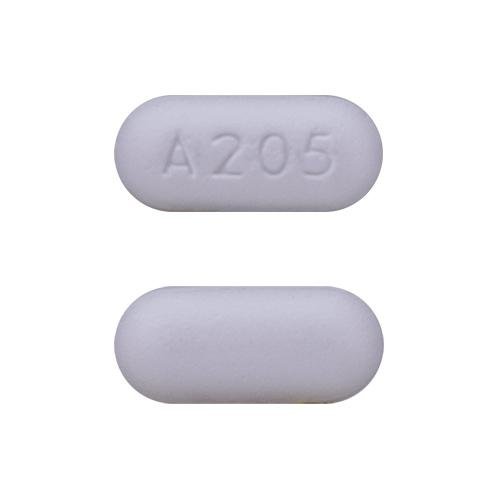
Fidaxomicin (Monograph)
Brand name: Dificid
Drug class: Other Macrolides
Introduction
Antibacterial; macrocycle antibiotic classified as a macrolide.
Uses for Fidaxomicin
Clostridioides difficile-associated Diarrhea
Treatment of diarrhea caused by Clostridioides difficile (formerly known as Clostridium difficile) infection (CDI; C. difficile-associated diarrhea [CDAD]) in adults ≥18 years of age.
Designated an orphan drug by FDA for treatment of CDI in pediatric patients† [off-label].
For treatment of an initial episode of nonsevere CDI in adults, IDSA and Society for Healthcare Epidemiology of America (SHEA) recommend oral vancomycin or oral fidaxomicin.
For treatment of an initial episode of severe CDI in adults, IDSA and SHEA state that either oral vancomycin or oral fidaxomicin can be used. However, these experts state that vancomycin is the anti-infective of choice for treatment of an initial episode of fulminant CDI (characterized by hypotension or shock, ileus, or megacolon) in adults and should be used in conjunction with IV metronidazole, especially if ileus is present.
Consult specialized references for information on management of CDI, including recommendations for diagnosis, prevention, control, and treatment of initial, recurrent, or fulminant CDI in adults and pediatric patients.
Fidaxomicin Dosage and Administration
Administration
Oral Administration
Administer orally without regard to food.
Dosage
Adults
Clostridioides difficile-associated Diarrhea
Oral
200 mg twice daily for 10 days.
Special Populations
Hepatic Impairment
Manufacturer makes no specific dosage recommendations; pharmacokinetics not expected to be affected. (See Hepatic Impairment under Cautions.)
Renal Impairment
Dosage adjustment not recommended. (See Renal Impairment under Cautions.)
Geriatric Patients
Dosage adjustment not recommended. (See Geriatric Use under Cautions.)
Cautions for Fidaxomicin
Contraindications
-
Hypersensitivity to fidaxomicin or any ingredient in the formulation.
Warnings/Precautions
Sensitivity Reactions
Hypersensitivity Reactions
Acute hypersensitivity reactions (e.g., dyspnea, rash, pruritus, angioedema of mouth, throat, face) reported. History of allergy to other macrolides reported in some of these patients.
Consider possibility of hypersensitivity reactions if fidaxomicin prescribed for patient with known macrolide allergy.
If severe hypersensitivity reaction occurs, discontinue fidaxomicin and administer appropriate therapy.
Systemic Infections
Use only for treatment of diarrhea caused by C. difficile. Because only minimal systemic absorption occurs following oral administration, not effective for treatment of other types of infections.
Selection and Use of Anti-infectives
To reduce development of drug-resistant bacteria and maintain effectiveness of fidaxomicin and other antibacterials, use only for treatment of infections proven or strongly suspected to be caused by C. difficile.
Prescribing fidaxomicin in the absence of proven or strongly suspected CDI is unlikely to provide benefit to the patient and increases risk of development of drug-resistant bacteria.
When selecting or modifying anti-infective therapy, use results of culture and in vitro susceptibility testing. In the absence of such data, consider local epidemiology and susceptibility patterns when selecting anti-infectives for empiric therapy.
Specific Populations
Pregnancy
Available data insufficient to inform any drug-associated risk for major birth defects, miscarriage, or adverse maternal or fetal outcomes if used in pregnant women.
No evidence of harm to the fetus when IV fidaxomicin was administered to rats and rabbits during organogenesis at dosages resulting in fidaxomicin and OP-1118 (its main metabolite) exposures ≥65-fold higher than human exposures reported with recommended dosage of the drug.
Lactation
Not known whether fidaxomicin or its main metabolite (OP-1118) distributes into human milk, affects breast-fed infant, or affects milk production.
Consider developmental and health benefits of breast-feeding along with the mother’s clinical need for fidaxomicin and potential adverse effects on the breast-fed infant from the drug or from the underlying maternal condition.
Pediatric Use
Safety and efficacy not established in patients <18 years of age. Designated an orphan drug by FDA for treatment of CDI in pediatric patients† [off-label].
In a phase 2a clinical trial in pediatric patients ≥6 months of age† [off-label] with C. difficile-associated diarrhea, safety profile of the drug was similar to that reported in adults.
Geriatric Use
No overall differences in efficacy or safety observed in geriatric adults ≥65 years of age compared with younger adults.
Plasma concentrations of fidaxomicin and its main metabolite (OP-1118) are higher in patients ≥65 years of age than in younger adults, but remain in the ng/mL range. Not considered clinically important; dosage adjustment not recommended.
Hepatic Impairment
Effect of hepatic impairment on pharmacokinetics not formally studied, but elimination not expected to be substantially affected since fidaxomicin and its main metabolite (OP-1118) do not appear to undergo substantial hepatic metabolism.
Renal Impairment
In clinical trials in patients with mild, moderate, or severe renal impairment (based on Clcr) receiving fidaxomicin (200 mg orally twice daily for 10 days), plasma concentrations of fidaxomicin and its main metabolite (OP-1118) did not vary by severity of renal impairment. Dosage adjustment not recommended.
Common Adverse Effects
Nausea, vomiting, abdominal pain, GI hemorrhage, anemia, neutropenia.
Drug Interactions
Metabolism of fidaxomicin and formation of its main metabolite (OP-1118) not dependent on CYP isoenzymes.
Fidaxomicin and OP-1118 are substrates of P-glycoprotein (P-gp) transport system.
Drugs Metabolized by Hepatic Microsomal Enzymes
No clinically important effect on pharmacokinetics of CYP3A4, CYP2C9, or CYP2C19 substrates. Manufacturer states dosage adjustments not needed if fidaxomicin used concomitantly with CYP isoenzyme substrates.
Drugs Affecting or Affected by P-glycoprotein Transport
P-gp inhibitors: Potential for substantial increase in plasma fidaxomicin and OP-1118 concentrations, but values still within the ng/mL range. Decrease in fidaxomicin and OP-1118 concentrations at the site of action (i.e., GI tract) is possible, but data from controlled clinical trials of fidaxomicin indicate that concomitant use of P-gp inhibitors had no attributable effect on safety or treatment outcome. Manufacturer states dosage adjustments not needed.
P-gp substrates: Pharmacokinetics of P-gp substrate not substantially altered by fidaxomicin. Manufacturer states dosage adjustments not needed.
Specific Drugs
|
Drug |
Interaction |
Comments |
|---|---|---|
|
Cyclosporine |
Substantially increased fidaxomicin and OP-1118 concentrations, but concentrations remain in the ng/mL range |
Dosage adjustment not needed |
|
Digoxin |
No clinically important effect on digoxin pharmacokinetics |
Dosage adjustment not needed |
|
Metronidazole |
Some in vitro evidence of synergistic antibacterial effects with fidaxomicin and OP-1118; no in vitro evidence of antagonism |
|
|
Midazolam |
No clinically important effect on midazolam pharmacokinetics |
Dosage adjustment not needed |
|
Omeprazole |
No clinically important effect on omeprazole pharmacokinetics |
Dosage adjustment not needed |
|
Rifamycins (rifampin, rifaximin) |
In vitro evidence of synergistic antibacterial effects with fidaxomicin and OP-1118 against C. difficile; no in vitro evidence of antagonism |
|
|
Warfarin |
No clinically important effect on warfarin pharmacokinetics |
Dosage adjustment not needed |
Fidaxomicin Pharmacokinetics
Absorption
Bioavailability
Only minimal systemic absorption occurs following oral administration.
Following a single 200-mg oral dose in healthy adults, mean peak plasma concentrations of fidaxomicin and its main metabolite (OP-1118) average 5.2 and 12 ng/mL, respectively, and are attained within 1– 2 hours.
Although plasma concentrations of fidaxomicin and OP-1118 at 1–5 hours after a dose are approximately 2–6 times higher in patients with CDI than in healthy adults, plasma concentrations remain in the ng/mL range. No evidence of accumulation of fidaxomicin in plasma after 10 days of treatment.
Food
Administration with a high-fat meal in healthy adults decreased peak plasma concentrations of fidaxomicin and OP-1118 by approximately 22 and 33%, respectively, but did not affect AUC; not considered clinically important.
Special Populations
Plasma concentrations of fidaxomicin and OP-1118 at 1–5 hours after a dose are approximately 2–4 times higher in geriatric patients ≥65 years of age than in adults <65 years of age; not considered clinically important.
In controlled trials in patients receiving fidaxomicin (200 mg twice daily for 10 days), plasma concentrations of fidaxomicin and OP-1118 were not affected by severity of renal impairment in those with mild, moderate, or severe impairment (based on Clcr).
Effect of hepatic impairment on pharmacokinetics of fidaxomicin not formally studied. Because significant hepatic metabolism does not appear to occur, concentrations of fidaxomicin and OP-1118 are not expected to be substantially affected by hepatic impairment.
Distribution
Extent
Following oral administration, remains mainly confined to and acts locally in the GI tract.
Elimination
Metabolism
Mainly transformed by hydrolysis at the isobutyryl ester to form OP-1118. Although OP-1118 also has antibacterial activity against C. difficile, it is less active than fidaxomicin.
Metabolism of fidaxomicin and formation of OP-1118 not dependent on CYP isoenzymes.
Elimination Route
Excreted principally in feces. In healthy adults, >92% of an oral dose is recovered in feces as fidaxomicin and OP-1118; <1% of dose recovered in urine as OP-1118.
In some patients treated with fidaxomicin (200 mg orally twice daily for 10 days), fecal concentrations of fidaxomicin and OP-1118 obtained within 24 hours of the last dose ranged from 639–2710 and 213–1210 mcg/g, respectively.
Half-life
Adults: Fidaxomicin elimination half-life is approximately 12 hours; OP-1118 elimination half-life is approximately 11 hours.
Stability
Storage
Oral
Tablets
20–25°C (may be exposed to 15–30°C).
Actions and Spectrum
-
Macrocycle antibiotic that has been classified as a macrolide. Other commercially available macrolides have 14- or 15-member lactone ring structures; fidaxomicin has an 18-member macrocyclic ester structure.
-
Following oral administration, only minimal systemic absorption occurs; remains mainly confined to and acts locally in the GI tract.
-
Has a narrow spectrum of antibacterial activity. Active against certain gram-positive bacteria; has limited or no activity against gram-negative bacteria and no activity against Candida albicans.
-
Active in vitro and in vivo against C. difficile, a spore-forming, gram-positive anaerobe. MIC90 of fidaxomicin for C. difficile generally ranges from 0.125–0.5 mcg/mL. Appears to have greater in vitro activity against C. difficile and may have a more minimal impact in vivo on normal intestinal flora than some other anti-infectives used for treatment of CDI.
-
Both fidaxomicin and its main metabolite (OP-1118) are bactericidal against C. difficile in vitro, and exert a postantibiotic effect against the organism. Although exact mechanism of action not fully determined, the drug acts as an RNA polymerase inhibitor and appears to inhibit RNA synthesis in susceptible bacteria by binding to DNA-RNA polymerase complex prior to formation of open DNA-RNA polymerase complex needed for initiation of transcription. This is distinct from mechanism of action of other commercially available macrolides, which interfere with translation in susceptible bacteria by acting at the ribosomal level of protein synthesis.
-
In vitro studies indicate a low frequency of spontaneous resistance to fidaxomicin in C. difficile. Fidaxomicin-resistant strains of C. difficile have been produced in vitro and reduced susceptibility has been reported rarely in clinical specimens. Point mutations in gene encoding the β subunit of RNA polymerase, rpoB, identified in C. difficile mutants with reduced susceptibility to fidaxomicin produced in vitro. A single mutation (Val-1143-Gly) in the β subunit of RNA polymerase was identified in C. difficile obtained from a patient who had recurrence of CDAD after fidaxomicin treatment.
-
Cross-resistance with other anti-infectives not reported to date.
Advice to Patients
-
Advise patients that antibacterials (including fidaxomicin) should only be used to treat bacterial infections and not used to treat viral infections (e.g., the common cold). Importance of advising patients that fidaxomicin is used only to treat diarrhea associated with C. difficile infection (CDI; CDAD) and should not be used to treat any other infection.
-
Importance of completing full course of therapy, even if feeling better after a few days.
-
Advise patients that skipping doses or not completing the full course of therapy may decrease effectiveness and increase the likelihood that bacteria will develop resistance and will not be treatable with fidaxomicin or other antibacterials in the future.
-
Advise patients that fidaxomicin may be taken with or without food.
-
Importance of informing clinicians of existing or contemplated concomitant therapy, including prescription and OTC drugs and dietary or herbal supplements, as well as any concomitant illnesses.
-
Importance of women informing clinicians if they are or plan to become pregnant or plan to breast-feed.
-
Importance of informing patients of other important precautionary information. (See Cautions.)
Additional Information
The American Society of Health-System Pharmacists, Inc. represents that the information provided in the accompanying monograph was formulated with a reasonable standard of care, and in conformity with professional standards in the field. Readers are advised that decisions regarding use of drugs are complex medical decisions requiring the independent, informed decision of an appropriate health care professional, and that the information contained in the monograph is provided for informational purposes only. The manufacturer’s labeling should be consulted for more detailed information. The American Society of Health-System Pharmacists, Inc. does not endorse or recommend the use of any drug. The information contained in the monograph is not a substitute for medical care.
Preparations
Excipients in commercially available drug preparations may have clinically important effects in some individuals; consult specific product labeling for details.
Please refer to the ASHP Drug Shortages Resource Center for information on shortages of one or more of these preparations.
|
Routes |
Dosage Forms |
Strengths |
Brand Names |
Manufacturer |
|---|---|---|---|---|
|
Oral |
Tablets, film-coated |
200 mg |
Dificid |
Merck |
AHFS DI Essentials™. © Copyright 2025, Selected Revisions December 10, 2024. American Society of Health-System Pharmacists, Inc., 4500 East-West Highway, Suite 900, Bethesda, Maryland 20814.
† Off-label: Use is not currently included in the labeling approved by the US Food and Drug Administration.
Reload page with references included
Related/similar drugs
Frequently asked questions
More about fidaxomicin
- Check interactions
- Compare alternatives
- Pricing & coupons
- Reviews (20)
- Drug images
- Side effects
- Dosage information
- During pregnancy
- Drug class: macrolides
- Breastfeeding
- En español