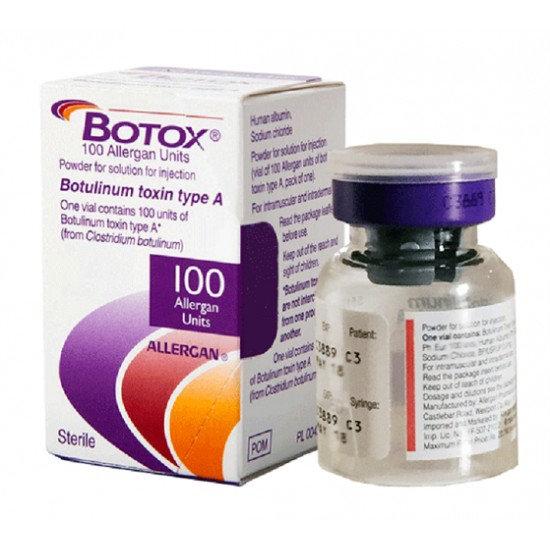
Botox Complete Guide: Medical & Cosmetic Uses (Onabotulinumtoxin A)
Pronunciation: Boe-tox
Generic name: onabotulinumtoxinA
Other brand names of onabotulinumtoxinA include: Botox Therapeutic, Botox Cosmetic
Dosage form: single-dose vial (50, 100, 200 Units)
Drug class: Skeletal muscle relaxants
What is Botox? (OnabotulinumtoxinA)
Botox is a prescription neurotoxin medication containing onabotulinumtoxinA (botulinum toxin type A). This FDA-approved treatment temporarily blocks nerve signals to muscles or sweat glands, providing therapeutic relief for various medical conditions and cosmetic improvement for facial wrinkles and lines.
Botox Formulations
- Botox Therapeutic: Medical conditions (100, 200 Units)
- Botox Cosmetic: Aesthetic treatments (50, 100 Units)
Important Note: These formulations are not interchangeable despite containing the same active ingredient.
Quick Facts About Botox
| Attribute | Details |
|---|---|
| Generic Name | OnabotulinumtoxinA |
| Brand Names | Botox Therapeutic, Botox Cosmetic |
| Drug Class | Skeletal muscle relaxant, Neurotoxin |
| FDA Approval | December 9, 1991 |
| Dosage Forms | 50, 100, 200 Unit single-dose vials |
| Administration | Injectable only |
| Manufacturer | AbbVie (formerly Allergan) |
| Pronouciation | Boe-tox |
Primary Medical Uses
- Overactive bladder (OAB) and urinary incontinence
- Chronic migraine prevention (15+ headache days/month)
- Muscle spasticity in adults and children 2+
- Cervical dystonia (neck muscle spasms)
- Severe underarm sweating (axillary hyperhidrosis)
- Eye conditions: blepharospasm, strabismus
- Neurogenic detrusor overactivity in children 5+
Primary Cosmetic Uses
- Frown lines (glabellar lines)
- Crow's feet (lateral canthal lines)
- Forehead wrinkles
- Neck bands (platysma bands)
How Does Botox Work? (Mechanism of Action)
Botox is a neuromuscular blocking agent and acetylcholine release inhibitor that:
For Medical Conditions:
- Relaxes overactive muscles (spasticity, dystonia)
- Improves bladder capacity (overactive bladder)
- Prevents migraine headaches (chronic migraine)
- Reduces excessive sweating (hyperhidrosis)
- Corrects eye alignment (strabismus)
- Controls muscle spasms (blepharospasm).
For Cosmetic Enhancement:
- Smooths forehead lines and crow's feet
- Reduces frown lines between eyebrows
- Softens neck bands (platysma)
- Creates a refreshed, youthful appearance.
Botox Medical Uses & FDA Approvals
Overactive Bladder (OAB) Treatment
- Indication: Adults with inadequate response to anticholinergics
- Dosage: 100 Units (20 injection sites)
- Benefits: Reduces urgency, frequency, and incontinence
Neurogenic Detrusor Overactivity
- Adult dosage: 200 Units (30 sites)
- Pediatric dosage (≥5 years): Weight-based dosing
- Conditions: Spinal cord injury, multiple sclerosis
Chronic Migraine Prevention
- Indication: Adults with 15+ headache days/month
- Dosage: 155 Units across 7 head/neck muscles
- Injection sites: 31 sites total
- Effectiveness: Reduces migraine frequency and severity
Muscle Spasticity Treatment
- Adult upper limb: Up to 400 Units
- Adult lower limb: 300-400 Units
- Pediatric spasticity (≥2 years): 3-8 Units/kg
- Conditions: Post-stroke, cerebral palsy, brain injury
Cervical Dystonia (Torticollis)
- Average dose: 236 Units (range 198-300)
- Benefits: Reduces abnormal head position and neck pain
- Duration: 3-4 months between treatments
Severe Axillary Hyperhidrosis
- Dosage: 50 Units per armpit
- Indication: Inadequate response to topical treatments
- Effectiveness: Significantly reduces underarm sweating
Eye Conditions
Blepharospasm (Eyelid Spasms)
- Dosage: 1.25-2.5 Units per site (3 sites per eye)
- Age: Adults and children 12+
Strabismus (Crossed Eyes)
- Dosage: 0.05-0.15 mL per muscle
- Age: Adults and children 12+
Botox Cosmetic Uses & FDA Approvals
Frown Lines (Glabellar Lines)
- Dosage: 20 Units (5 injection sites)
- Target: Corrugator and procerus muscles
- Results: Smoother forehead appearance
Crow's Feet (Lateral Canthal Lines)
- Dosage: 24 Units (6 injection sites total)
- Target: Orbicularis oculi muscle
- Results: Reduced eye wrinkles
Forehead Lines
- Dosage: 40 Units total (5 injection sites forehead + 5 injection sites glabellar)
- Target: Frontalis muscle
- Results: Smoother forehead wrinkles
Platysma Bands (Neck Bands)
- Dosage: 26-36 Units total (18-28 injection sites)
- Target: Platysma muscle
- Results: Reduced vertical neck banding
Off-Label Cosmetic Uses
While not FDA-approved, common uses include:
- Lip lines (perioral wrinkles)
- Bunny lines (nasal wrinkles)
- Masseter Botox (jawline slimming)
- Gummy smile correction.
Botox Side Effects & Safety Profile
Common Side Effects (Both Medical & Cosmetic)
- Injection site reactions: Pain, swelling, bruising, redness
- Headache and mild fatigue
- Temporary muscle weakness in the treatment area
- Dry mouth
- Neck pain
Medical Use Specific Side Effects
Bladder Treatment:
- Urinary tract infections
- Painful urination
- Incomplete bladder emptying (may require temporary catheterization)
- Blood/bacteria in urine (pediatric patients).
Eye Treatment:
- Double vision or blurred vision
- Drooping eyelids (ptosis)
- Decreased eyesight
- Dry eyes
- Eyelid swelling
Serious Side Effects & Boxed Warnings
Distant Spread of Toxin Effects (Boxed Warning
Life-threatening botulism-like symptoms:
Rarely, onabotulinumtoxinA may spread away from the injection site and cause botulism. Seek urgent medical attention if you develop symptoms such as:
- Muscle weakness throughout the body
- Difficulty breathing or swallowing
- Vision problems: double vision, drooping eyelids
- Speech difficulties (dysarthria)
- Voice changes (dysphonia)
- Loss of bladder control.
Respiratory & Swallowing Problems
- These can occur hours to weeks after the injection
- Death is possible from severe complications
- Higher risk in patients with existing breathing/swallowing problems
- May require a feeding tube for severe cases.
Allergic Reactions
Seek immediate medical attention if you develop:
- Itching, rash, hives
- Wheezing or asthma symptoms
- Dizziness or fainting.
Tell your healthcare provider if you have any side effects that bother you or do not go away. These are not all the possible side effects of Botox. For more information, ask your doctor or pharmacist. Call your healthcare provider for medical advice about side effects. You may report side effects to the FDA at 1-800-FDA1088.
Related/similar drugs
Botox Dosing Guidelines & Administration
Maximum Safe Dosing Limits (3-month period, medical uses)
- Adults: 400 Units total
- Children: The lesser of 10 Units/kg or 340 Units.
Medical Condition Dosing Chart
| Condition | Age Group | Dose | Targeted Muscle | Sites |
|---|---|---|---|---|
| Overactive Bladder | Adults | 100 Units | Detrusor | 5 Units across 20 sites |
| Neurogenic Detrusor | Adults and children |
200 Units (adults) Child: Dose varies depending on weight |
Detrusor |
Adults: 6.7 Units across 30 sites Child: Dose varies depending on weight |
| Chronic Migraine | Adults | 155 Units | Divided among 7 head and neck muscles | 5 Units across 31 sites |
| Upper Limb Spasticity | Adults and children |
Up to 400 Units (adults) Child: Dose varies depending on weight |
Divided among affected muscles |
Multiple arm and hand muscles Child: Dose varies depending on weight |
| Lower Limb Spasticity | Adults and children |
Adults: 300-400 Units Child: Dose varies depending on weight |
Divided among the lower limb muscles |
Multiple leg muscles Child: Dose varies depending on weight |
| Cervical Dystonia | Adults | Range 198-300 Units | Affected muscles | Split between affected muscles |
| Axillary Hyperhidrosis | Adults | 50 Units total per armpit | Armpit | 10 to 20 sites per armpit |
| Blepharospasm | 12+ years | 1.25-2.5 Units/site | Medial and lateral pretarsal orbicularis oculi, lateral pre-tarsal orbicularis oculi | 3 sites per affected eye |
Cosmetic Dosing Chart
| Treatment Area | Total Dose | Injection Sites |
|---|---|---|
| Frown Lines | 20 Units | 5 sites |
| Crow's Feet | 24 Units | 6 sites (3 per side) |
| Forehead Lines | 40 Units | 10 sites (5 forehead + 5 glabellar) |
| Neck Bands | 26-36 Units | 18-28 sites |
Botox Contraindications & Precautions
Absolute Contraindications
Do NOT use Botox if you have:
- An allergy to onabotulinumtoxinA or the other ingredients in Botox Cosmetic or Botox Therapeutic
- An active skin infection at the injection site
- A previous allergic reaction to other botulinum products:
- Dysport (abobotulinumtoxinA)
- Xeomin (incobotulinumtoxinA)
- Myobloc (rimabotulinumtoxinB)
- Jeuveau (prabotulinumtoxinA-xvfs)
- Daxxify (daxibotulinumtoxinA-lanm)
- Letybo (letibotulinumtoxinA-wlbg).
Special Precautions & Medical Conditions
Tell your healthcare provider if you have:
- Neuromuscular disorders: ALS, myasthenia gravis, Lambert-Eaton syndrome
- Breathing problems: Asthma, emphysema
- Swallowing difficulties
- Bleeding disorders
- Planned surgery or recent facial surgery
- Drooping eyelids or facial asymmetry
- Pregnancy or breastfeeding plans.
Age Restrictions
- Medical uses: Varies by condition (2-18+ years)
- <18 years with urinary incontinence, chronic migraine, or overactive bladder
- <5 years with NDO
- <16 years with cervical dystonia
- <12 years with strabismus or blepharospasm
- <2 years with spasticity.
- Cosmetic uses: Adults 18+ only
Botox for Medical Use Has Not Been Established For:
- Episodic migraine (≤14 days/month)
- Severe sweating anywhere other than your armpits.
Treatment Timeline & What to Expect
Before Treatment
- Consultation with a certified provider
- Medical history review
- Allergy assessment
- Treatment area evaluation
- Consent process and expectations
During Treatment
- Your certified provider will clean the designated injection sites
- Administer Botox as multiple small injections (using very fine needles)
- This will take 5-30 minutes, depending on the treatment area
- The discomfort will be minimal
- No anesthesia is typically required.
After Treatment
- Avoid rubbing the injection sites
- Stay upright for 4 hours
- Avoid exercise for 24 hours
- No facial treatments for 24 hours
- Follow-up as recommended
Results Timeline
- 24-48 hours: Initial effects begin
- 3-7 days: Noticeable improvement
- 2 weeks: Peak results
- 3-6 months: Gradual wearing off
- Repeat treatments: As needed/recommended (3+ months apart)
What should I avoid while receiving Botox?
Botox may cause loss of strength or general muscle weakness, vision problems, or dizziness within hours to weeks of receiving the injection. If this happens, do not drive a car, operate machinery, or do other dangerous activities.
What other drugs affect Botox?
Tell your doctor about all your medicines, including prescription and over-the-counter medicines, vitamins, and herbal supplements. Using Botox with certain other medicines may cause serious side effects. Do not start any new medicines until you have told your doctor that you have received Botox in the past. Especially tell your doctor if you:
- have received any other botulinum toxin product in the last four months
- have received injections of botulinum toxin, such as Myobloc (rimabotulinumtoxinB), Dysport (abobotulinumtoxinA), Xeomin (incobotulinumtoxinA), Jeuveau (prabotulinumtoxinA-xvfs), Daxxify (daxibotulinumtoxinA-lanm), or Letybo (letibotulinumtoxinA-wlbg) in the past. This may not be a complete list of all botulinum toxin products. Be sure your doctor knows exactly which product you received
- have recently received an antibiotic by injection
- take muscle relaxants
- take an allergy or cold medicine
- take a sleep medicine
- take anti-platelets (aspirin-like products) or anti-coagulants (blood thinners).
Ask your doctor if you are not sure if your medicine is listed above. Know the medicines you take. Keep a list of your medicines with you to show your doctor and pharmacist each time you get a new medicine.
Botox Ingredients
Botox Therapeutic Ingredients
Active ingredient: onabotulinumtoxinA
Inactive ingredients: human albumin and sodium chloride.
Available as 100 Units or 200 Units as a vacuum-dried powder in a single-dose vial.
Botox Cosmetic Ingredients
Active ingredient: onabotulinumtoxinA
Inactive ingredients: human albumin and sodium chloride.
Available as 50 Units or 100 Units in a vacuum-dried powder in a single-dose vial for reconstitution.
Manufacturer
Botox is made by AbbVie, which acquired the previous manufacturer, Allergan, in 2020. AbbVie is headquartered in North Chicago, Illinois, USA.
Frequently Asked Questions (FAQ)
General Questions
How long does Botox last?
Medical uses: 3-9 months; Cosmetic uses: 3-4 months
Is Botox safe?
When administered by certified providers in accordance with guidelines, Botox has a well-established safety profile.
Can I get Botox while pregnant?
Safety in pregnancy is unknown; discuss with your healthcare provider.
Medical Use Questions
Will Botox cure my migraines?
Botox can significantly reduce migraine frequency, but it is not a cure.
How quickly will my bladder symptoms improve?
Improvement typically begins within 2 weeks of treatment.
Cosmetic Use Questions
Will I look frozen or unnatural?
When properly administered, Botox provides natural-looking results while maintaining facial expression.
Can I combine Botox with other cosmetic treatments?
Yes, Botox is often combined with dermal fillers and other aesthetic treatments.
Botox Biosimilars
Biosimilar and interchangeable products are biological products that are highly similar to and have no clinically meaningful differences from the reference product.
Reference products
These are biological products that have already been approved by the FDA, against which biosimilar products are compared. There are 2 for Botox.
Botox (onabotulinumtoxinA) - AbbVie Inc.
| Formulation type | Strength |
|---|---|
| Single-Dose Vial | 100 units |
| Single-Dose Vial | 200 units |
| Single-Dose Vial | 50 units Discontinued |
Botox Cosmetic (onabotulinumtoxinA) - AbbVie Inc.
| Formulation type | Strength |
|---|---|
| Single-Dose Vial | 100 units |
| Single-Dose Vial | 50 units |
View Botox Cosmetic information in detail.
Popular FAQ
Masseter Botox for Jaw Slimming: Benefits, Cost, Side Effects & Results
Masseter Botox is a cosmetic and therapeutic procedure where botulinum toxin injections (such as Botox) are administered directly into the masseter muscles – the powerful chewing muscles located on each side of your face. This jaw Botox treatment has gained popularity for TMJ relief, teeth grinding (also called bruxism), and facial contouring.
Continue readingHow many units of Botox do I need and what will it cost?
Botox (onabotulinumtoxinA) is measured in units, and the number of units you need depends on the treatment area, muscle strength, and your goals. Most providers charge $10–$25 per unit in the U.S.
Continue readingWhere do they inject Botox for migraines?
Botox is injected into 7 specific muscle areas around your head and neck to help prevent migraine headaches before they start. Areas include your forehead, bridge of the nose, temples, neck, back of the head, and just above the shoulder blades in your upper back. Continue reading
Xeomin vs Botox: How do they compare?
Xeomin and Botox both contain botulinum toxin type A, but each has distinctive characteristics that may benefit different patient populations. Xeomin's pure formulation without complexing proteins potentially offers advantages for long-term treatment and for patients concerned about developing resistance. Its generally lower cost also provides a more accessible option for many patients seeking neurotoxin treatments.
Continue readingDysport vs Botox: Key Differences and Effectiveness
Dysport and Botox Cosmetic are both used as cosmetic anti-aging treatments. Botox Cosmetic contains onabotulinumtoxinA (ONA), while Dysport contains abobotulinumtoxinA (ABO) - both are botulinum toxin type A formulations. Botox received FDA approval back in 1991, with Dysport following in 2009. The manufacturing differences between these botulinum toxins create distinct nontoxic protein profiles, resulting in similarities alongside notable differences.
Continue readingDoes Botox for migraines also help with wrinkles?
Botox Cosmetic is used for aesthetic purposes for wrinkles and Botox is used as a therapeutic treatment for different medical conditions, including migraine headache prevention. Botox Cosmetic and Botox come as separate products but are both prescription medicines that contain the active ingredient onabotulinumtoxinA. Continue reading
What is Daxxify, the recent FDA-alternative to Botox?
Daxxify (daxibotulinumtoxinA-lanm) is the first Botox alternative that is free of human albumin or animal-based components, and it was FDA-approved in September 2022. It is also the longest-lasting of all the cosmetic injectable wrinkle treatments, lasting for 6 months in most people and 9 months in some. Continue reading
Daxxify vs Botox: Which should you use?
Both Daxxify (daxibotulinumtoxinA-lanm) and Botox (onabotulinumtoxinA) are effective neuromodulators designed to smooth dynamic wrinkles. Daxxify represents a newer innovation, distinguished primarily by its longer duration of effect, often lasting 6 months or more.
Continue readingHow much does Botox cost?
The cash price for Botox is around $677 to $1,344 for a 100 or 200 unit vial, but you will not pay this price. Most people (80%) pay $0 and may save money on the injection procedure with the Botox Savings Program offered through AbbVie, the manufacturer of Botox. Continue reading
More about Botox (onabotulinumtoxinA)
- Check interactions
- Compare alternatives
- Pricing & coupons
- Reviews (483)
- Drug images
- Latest FDA alerts (3)
- Side effects
- Dosage information
- Patient tips
- During pregnancy
- Support group
- FDA approval history
- Drug class: skeletal muscle relaxants
- Breastfeeding
- En español
Professional resources
Other formulations
Related treatment guides
Further information
Always consult your healthcare provider to ensure the information displayed on this page applies to your personal circumstances.