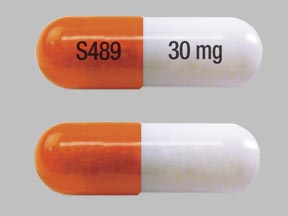
Vyvanse Dosage
Generic name: LISDEXAMFETAMINE DIMESYLATE 10mg
Dosage forms: capsule, tablet, chewable
Drug class: CNS stimulants
Medically reviewed by Drugs.com. Last updated on Oct 13, 2023.
Pretreatment Screening
Prior to treating patients with VYVANSE, assess:
- for the presence of cardiac disease (i.e., perform a careful history, family history of sudden death or ventricular arrhythmia, and physical exam).
- the family history and clinically evaluate patients for motor or verbal tics or Tourette's syndrome before initiating VYVANSE.
General Administration Information
Take VYVANSE orally in the morning with or without food; avoid afternoon doses because of the potential for insomnia. VYVANSE may be administered in one of the following ways:
Information for VYVANSE capsules:
- Swallow VYVANSE capsules whole, or
- Open capsules, empty and mix the entire contents with yogurt, water, or orange juice. If the contents of the capsule include any compacted powder, a spoon may be used to break apart the powder. The contents should be mixed until completely dispersed. Consume the entire mixture immediately. It should not be stored. The active ingredient dissolves completely once dispersed; however, a film containing the inactive ingredients may remain in the glass or container once the mixture is consumed.
Information for VYVANSE chewable tablets:
- VYVANSE chewable tablets must be chewed thoroughly before swallowing.
VYVANSE capsules can be substituted with VYVANSE chewable tablets on a unit per unit/mg per mg basis (for example, 30 mg capsules for 30 mg chewable tablet).
Do not take anything less than one capsule or chewable tablet per day. A single dose should not be divided.
Dosage for Treatment of ADHD
The recommended starting dosage in adults and pediatric patients 6 years and older is 30 mg once daily in the morning. Dosage may be adjusted in increments of 10 mg or 20 mg at approximately weekly intervals up to maximum recommended dosage of 70 mg once daily.
Dosage for Treatment of Moderate to Severe BED in Adults
The recommended starting dosage in adults is 30 mg once daily to be titrated in increments of 20 mg at approximately weekly intervals to achieve the recommended target dose of 50 mg to 70 mg once daily. The maximum recommended dosage is 70 mg once daily. Discontinue VYVANSE if binge eating does not improve.
Dosage in Patients with Renal Impairment
In patients with severe renal impairment (GFR 15 to < 30 mL/min/1.73 m2), the maximum dosage should not exceed 50 mg once daily. In patients with end stage renal disease (ESRD, GFR < 15 mL/min/1.73 m2), the maximum recommended dosage is 30 mg once daily.
Dosage Modifications due to Drug Interactions
Agents that alter urinary pH can impact urinary excretion and alter blood levels of amphetamine. Acidifying agents (e.g., ascorbic acid) decrease blood levels, while alkalinizing agents (e.g., sodium bicarbonate) increase blood levels. Adjust VYVANSE dosage accordingly.
Frequently asked questions
- Adderall vs Vyvanse - What's the difference between them?
- How soon for Vyvanse to start working and how long does it last?
- How long does Vyvanse stay in your system?
- Is Vyvanse a controlled substance / narcotic drug?
- Is it okay to take Vyvanse while on birth control?
- Does Vyvanse (lisdexamfetamine) show up on a drug test?
- Ritalin vs Vyvanse - What's the difference between them?
More about Vyvanse (lisdexamfetamine)
- Check interactions
- Compare alternatives
- Pricing & coupons
- Reviews (975)
- Drug images
- Latest FDA alerts (2)
- Side effects
- Patient tips
- During pregnancy
- Generic availability
- Support group
- FDA approval history
- Drug class: CNS stimulants
- Breastfeeding
- En español
Patient resources
Other brands
Professional resources
Related treatment guides
See also:
Arynta
Arynta is used to treat Attention Deficit Hyperactivity Disorder (ADHD) in adults and children 6 ...
Adderall
Adderall (amphetamine and dextroamphetamine) is used to treat narcolepsy and ADHD. Includes side ...
Botox
Botox is used for cosmetic purposes and to treat overactive bladder symptoms, urinary incontinence ...
Adipex-P
Adipex-P (phentermine) is an appetite suppressant used togther with diet and exercise to treat ...
Further information
Always consult your healthcare provider to ensure the information displayed on this page applies to your personal circumstances.