Open Colectomy
WHAT YOU SHOULD KNOW:
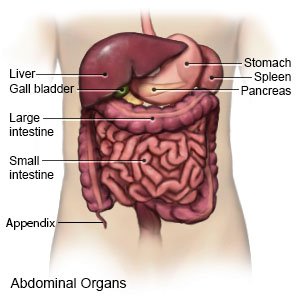
- An open colectomy is surgery to remove some or all of your colon. The colon is the long tube that connects the small bowel with the anus (opening through which stool passes). The colon absorbs water from digested foods and turns the digested food into stool. It stores the stool until it passes out through your anus. Your caregiver may have told you that you need an open colectomy because you have cancer. You may also need an open colectomy if you have a bowel obstruction. This is where all or part of your bowels are blocked and stool cannot easily travel through them. You may also need an open colectomy if you have a disease that causes bleeding, infection, or swelling.

- During your colectomy, your caregiver will cut your abdomen (belly) and remove part or all of your colon. If you have cancer, your caregiver will look at your nearby organs and body tissue. He will check to see if the cancer has spread to other parts of your body. Having an open colectomy may help you be in less pain. Your swelling may go away and you may stop bleeding. It may be easier for your stool to travel through your bowels. If you have cancer, an open colectomy may remove part or all of the cancer from your body. An open colectomy may help you live longer and improve the quality of your daily life.
CARE AGREEMENT:
You have the right to help plan your care. To help with this plan, you must learn about your health condition and how it may be treated. You can then discuss treatment options with your caregivers. Work with them to decide what care may be used to treat you. You always have the right to refuse treatment.
RISKS:
- You may get an infection in your urinary tract (the tube used for urinating). You may develop an infection or inflammation (redness or swelling) in your lungs, like pneumonia. You may get an abscess (pus pocket) near your cuts. Your bowel may leak and cause an infection in or around your intestines. You may get a serious infection in your blood. Blood clots may form inside your veins. You may get an adhesion (body tissue that joins your organs together) that may block your intestines. Your surgery may not have removed all of the disease and you may need surgery again.
- Your intestines, stomach, or other organs inside may be damaged during surgery. This may cause more bleeding than expected. You may need a blood transfusion if too much bleeding occurs during surgery. Without surgery, your symptoms may get worse. You may continue to be in pain and it may be difficult for you to have a bowel movement. Your intestines may develop more blockages or holes. Cancer or other diseases may spread to other parts of your body and you may die. Call your caregiver if you have questions or concerns about your surgery, medicine, or care.
WHILE YOU ARE HERE:
Before your surgery:
- Informed consent: You have the right to understand your health condition in words that you know. You should be told what tests, treatments, or procedures may be done to treat your condition. Your doctor should also tell you about the risks and benefits of each treatment. You may be asked to sign a consent form that gives caregivers permission to do certain tests, treatments, or procedures. If you are unable to give your consent, someone who has permission can sign this form for you. A consent form is a legal piece of paper that tells exactly what will be done to you. Before giving your consent, make sure all your questions have been answered so that you understand what may happen.
- IV: An IV is a tube placed in your vein for giving medicine or liquids. This tube is capped or connected to tubing and liquid.
- Antibiotics: Antibiotics may be given to help treat or prevent an infection caused by germs called bacteria.
- Blood thinners: This medicine helps stop clots from forming in your blood. Blood thinners may be given before, during, and after a surgery or procedure. Blood thinners make it easier for you to bleed or bruise. If you shave, use an electric shaver. Use a soft toothbrush to help keep your gums from bleeding.
- General anesthesia: This is medicine that may be given in your IV or as a gas that you breathe. You may wear a face mask or have a tube placed in your mouth and throat. This tube is called an endotracheal tube or ET tube. Usually you are asleep before caregivers put the tube into your throat. The ET tube is usually removed before you wake up. You are completely asleep and free from pain during surgery.
- Pre-op care: You may be given medicine right before your surgery. This medicine may help you feel relaxed and sleepy. You are taken to the room where your surgery will be done and moved to a special table. After you are asleep, your caregiver may tilt the table upwards so your buttocks is in the air.
- Foley catheter: A Foley catheter is a tube that is put into your bladder to drain your urine into a bag. The bladder is an organ where urine is kept. Keep the bag of urine well below your waist. Lifting the urine bag higher will make the urine flow back into your bladder, which can cause an infection. Avoid pulling on the catheter because this may cause pain and bleeding, and the catheter may come out. Do not allow the catheter tubing to kink because this will block the flow of urine.
- Nasogastric (NG) tube: A nasogastric tube is put into your nose and down into your stomach. The tube may be attached to suction (vacuum) to keep your stomach empty. You may need a NG tube if your stomach gets too full or if you throw up a lot after surgery. You may also need it if you cannot use your mouth to eat. An NG tube may also be used to help get your bowels working. Food or medicine may be given through your NG tube.
During your surgery:
- Your caregiver makes a cut along the middle of your abdomen. Muscles and other tissue may need to be cut using cautery (a special tool that may use heat). Your caregiver looks at your colon and then removes the part that has disease. How much your caregiver removes depends on the location of the disease. If you have cancer, it may have spread to other body organs, such as your lymph nodes. Lymph nodes are organs made of body tissue that fight germs. Your caregiver may remove many of your nearby lymph nodes and send them to a lab for testing. Your caregiver also checks nearby organs and tissue for holes, tears, or bleeding.
- Your caregiver may remove some or part of any body organs that also have cancer. The remaining healthy parts of your colon are attached to other parts of your intestines. If your entire colon is removed, your intestine is attached to your rectum. Your rectum is the lower part of your bowel just behind your anus. Your caregiver closes your cut with stitches or staples and covers it with bandages. Pieces of your colon, lymph nodes, or other body organs are sent to a lab for testing.
After your surgery: You will be taken to a room where you can rest. A caregiver may remove the bandage after surgery to check your stitches. You will be taken back to your hospital room once your caregiver decides it is OK. Do not get out of bed until your caregiver says it is OK.
- Medicines:
- Antibiotics: Antibiotics may be given to help treat or prevent an infection caused by germs called bacteria.
- Blood thinners: This medicine helps stop clots from forming in your blood. Blood thinners may be given before, during, and after a surgery or procedure. Blood thinners make it easier for you to bleed or bruise. If you shave, use an electric shaver. Use a soft toothbrush to help keep your gums from bleeding.
- Patient controlled analgesia: You may get pain medicine from a special pump. You can receive the pain medicine through an IV or an epidural line. This is called patient controlled analgesia (PCA) or patient controlled epidural analgesia (PCEA). Your caregivers set up the PCA pump to give you small amounts of pain medicine. The PCA pump has a cord coming from it, with a push button on the end. When you feel pain and push the button, you will give yourself pain medicine. To keep you from getting too much medicine, there is a limit on how often you can get the medicine. Do not let anyone else push the button for you. Your pump may give you a constant dose of pain medicine, as well as the medicine that you give yourself. If your pain is still bad even with using the PCA, let your caregivers know.
- Stool softeners: You may be given stool softeners to soften your bowel movements, making them easier to pass.
- Chemotherapy:
- This medicine, often called chemo, is used to treat cancer. It works by killing tumor cells. Chemotherapy may also be used to shrink lymph nodes that have cancer in them. Once the tumor is smaller, you may need surgery to cut out the rest of the cancer.
- Many different chemotherapy medicines are used to treat cancer. You may need blood tests often. These blood tests show how your body is doing and how much chemotherapy is needed. Chemotherapy can have many side effects. Caregivers will watch you closely and will work with you to decrease side effects. Chemotherapy can cure some cancers. Even if the chemotherapy does not cure your cancer, it may help you feel better or live longer.
- This medicine, often called chemo, is used to treat cancer. It works by killing tumor cells. Chemotherapy may also be used to shrink lymph nodes that have cancer in them. Once the tumor is smaller, you may need surgery to cut out the rest of the cancer.
- Antibiotics: Antibiotics may be given to help treat or prevent an infection caused by germs called bacteria.
- Radiation: This is a treatment using x-rays or gamma rays to treat cancer. Radiation kills cancer and keeps the cancer from spreading. It also keeps cancer cells from dividing into new cells, which is one way cancer spreads. Lymph nodes with cancer are also treated with radiation. In some cancers, radiation may be given after surgery to kill cancer cells that were not removed. It may also be given with chemotherapy. Radiation may help decrease pain, control bleeding, and shrink the tumor.
- Pneumatic boots: These are plastic boots or leggings put on your feet or legs over pressure stockings or ace wraps. The boots or leggings are connected to an air pump machine. The pump tightens and loosens different parts of the pneumatic boots. This helps push the blood back up to the heart to keep clots from forming.
- Pressure stockings: These tight elastic stockings help to keep blood from staying in the legs and causing clots. The stockings are also called Ted Hose® or Jobst Stockings®.
- Diet: You may be able to eat when bowel sounds are heard. Your caregiver will listen to your stomach for bowel sounds using a stethoscope. You may be given ice chips at first, and then liquids such as water, broth, juice, or soda pop. If you do not have problems after drinking liquids, caregivers may then give you soft foods. Some examples of soft foods are ice cream, applesauce, or custard. Once you can eat soft food easily, you may begin eating your usual diet.
Copyright © 2008 Thomson Healthcare Inc. All rights reserved. Information is for End User's use only and may not be sold, redistributed or otherwise used for commercial purposes.
The above information is an educational aid only. It is not intended as medical advice for individual conditions or treatments. Talk to your doctor, nurse or pharmacist before following any medical regimen to see if it is safe and effective for you.
| Link to Page | Print Page | Email Page |