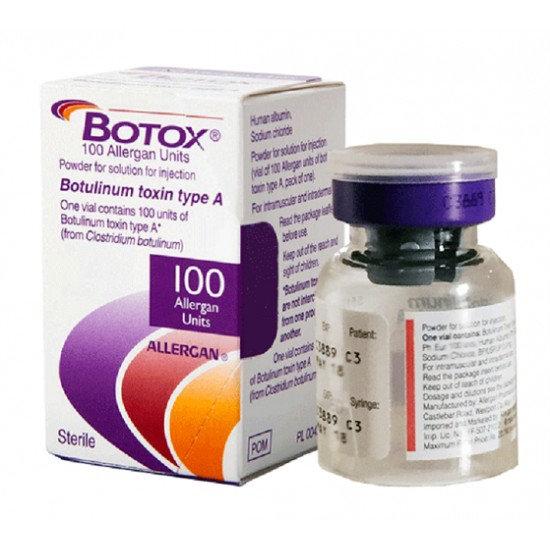
Botox
Pronunciation: Boe-tox
Generic name: onabotulinumtoxinA
Other brand names of onabotulinumtoxinA include: Botox Therapeutic, Botox Cosmetic
Dosage form: single-dose vial (100 Units, 200 Units)
Drug class: Skeletal muscle relaxants
What is Botox?
Botox is used cosmetically to reduce facial lines and wrinkles and for medical purposes to treat overactive bladder symptoms, urinary incontinence due to detrusor overactivity, neurogenic detrusor overactivity (NDO) in children 5 and older, chronic migraine, muscle stiffness in people 2 and older with spasticity, cervical dystonia, strabismus or blepharospasm in patients 12 and older, and severe underarm sweating. Botox Cosmetic is the brand used to smooth wrinkles. Botox Therapeutic is used for medical purposes and injected into specific muscles to relax them, or sweat glands to reduce sweat production.
- The effects of Botox are temporary, and it requires reinjection every 3 to 6 months.
This guide covers Botox Therapeutic for medical use. For detailed information about using Botox to improve the look of moderate to severe frown lines, crow’s feet, forehead lines, and vertical bands connecting the neck and jaw (platysma bands) in adults, see Botox Cosmetic.
Botox (onabotulinumtoxinA, also called botulinum toxin type A) first gained FDA approval on December 9, 1991. There is no generic, but there are Botox alternatives.
FDA approvals and uses
When used for medical purposes, Botox Therapeutic injections are approved for:
- Overactive bladder (OAB), with symptoms such as urge urinary incontinence, urgency, and frequency, in adults who have had an inadequate response to or are intolerant of an anticholinergic medication
- Urinary incontinence due to detrusor overactivity associated with a neurologic condition (such as spinal cord injury [SCI], multiple sclerosis [MS]) in adults who have had an inadequate response to or are intolerant of an anticholinergic medication
- Neurogenic detrusor overactivity (NDO) in children 5 years of age and older who have had an inadequate response to or are intolerant of anticholinergic medication
- Prophylaxis of headaches in adults with chronic migraine (15 or more days per month with headache lasting 4 hours a day or longer)
- Spasticity in adults and children 2 years of age and older
- Cervical dystonia in adults, to reduce the severity of abnormal head position and neck pain
- Severe axillary hyperhidrosis (severe underarm sweating) that is inadequately managed by topical agents in adults
- Blepharospasm associated with dystonia in adults and children 12 years of age and older
- Strabismus in adults and children 12 years of age and older.
Note that the safety and effectiveness of Botox have not been established for:
- Prophylaxis of episodic migraine (14 headache days or fewer per month)
- Treatment of hyperhidrosis in body areas other than the axillary (armpits).
Although Botox Therapeutic and Botox Cosmetic contain the same active ingredient, onabotulinumtoxinA, they have different FDA-approved uses and vial strengths, and are not interchangeable.
How quickly does Botox work?
Botox begins to relax the injected muscles within 24 to 48 hours after administration, when used for medical conditions. Patients will notice maximum muscle relaxation and full treatment results approximately 2 weeks following the injection.
The effects are temporary, gradually wearing off over 3 to 9 months as nerve signals recover or nerves regenerate, allowing muscle function to return to normal.
How does Botox for medical use work?
Botox is a neurotoxin that temporarily blocks nerve signals to specific muscles or sweat glands. This targeted approach:
- Relaxes muscles
- Eliminates or reduces muscle spasms
- Improves bladder capacity and incontinence symptoms
- Improves eye alignment
- Prevents migraines
- Inactivates overactive sweat glands, reducing sweating.
Botox wears off with time as new nerve endings sprout and gradually reconnect with muscles or sweat glands, allowing them to work normally again in the treated area.
Side effects
The most common side effects of Botox for medical use are:
- injection site bruising, pain, redness, swelling, or tenderness
- dry mouth
- tiredness
- headache
- neck pain
- mild weakness in the treatment area.
Additional side effects in people being treated with Botox for strabismus include:
- double vision
- blurred vision
- decreased eyesight
- drooping eyelids/eyebrows
- swelling of your eyelids
- dry eyes.
Other common side effects reported by those being treated with Botox for bladder conditions are:
- urinary tract infections (children and adults)
- painful urination (adults)
- bacteria, white blood cells, and blood in the urine (children)
- inability to empty your bladder on your own.
If you experience incomplete bladder emptying following Botox treatment, temporary use of disposable self-catheters may be necessary several times daily until normal bladder function resumes.
Most of these side effects are temporary and resolve within a few days to weeks.
Serious side effects and warnings
Rarely, Botox can cause the following serious side effects. These can happen hours, days, or weeks after an injection. Seek urgent medical attention if you develop:
- Spread of toxin effects (this carries a Boxed warning in the Botox Prescribing Information). In some cases, the effect of botulinum toxin A may affect areas of the body away from the injection site and cause symptoms of a serious condition called botulism. The symptoms of botulism include:
- loss of strength and muscle weakness all over the body
- double vision, blurred vision, and drooping eyelids
- hoarseness or change or loss of voice (dysphonia)
- trouble saying words clearly (dysarthria)
- loss of bladder control
- trouble breathing
- trouble swallowing.
These problems could make it unsafe for you to drive a car or do other dangerous activities. There has not been a confirmed serious case of the spread of toxin effect away from the injection site when Botox has been used at the recommended dose to treat chronic migraine, severe underarm sweating, blepharospasm, or strabismus.
- Problems swallowing, speaking, or breathing. These problems can happen hours, days, to weeks after an injection of Botox, usually because the muscles that you use to breathe and swallow can become weak after the injection. Death can happen as a complication if you have severe problems with swallowing or breathing after treatment with Botox.
People with certain breathing problems may need to use muscles in their neck to help them breathe. These people may be at greater risk for serious breathing problems with Botox.
Swallowing problems may last for several months. People who cannot swallow well may need a feeding tube to receive food and water. If swallowing problems are severe, food or liquids may go into your lungs. People who already have swallowing or breathing problems before receiving Botox have the highest risk of developing these problems.
Call your healthcare provider or get emergency medical help if you have any of these problems after treatment with Botox:
-
- Difficulty swallowing, speaking, or breathing
- Vision problems
- Muscle weakness spreading beyond the injection site
- Allergic reactions (itching, rash, wheezing).
Allergic reactions may happen with Botox. Seek medical attention right away if you develop itching, rash, red itchy welts, wheezing, asthma symptoms, dizziness, or feeling faint.
Tell your healthcare provider if you have any side effects that bother you or do not go away. These are not all the possible side effects of Botox. For more information, ask your doctor or pharmacist. Call your healthcare provider for medical advice about side effects. You may report side effects to the FDA at 1-800-FDA1088.
Related/similar drugs
Aimovig
Learn about Aimovig (erenumab-aooe) a once-monthly, injectable medication that can be ...
Ubrelvy
Ubrelvy (ubrogepant) tablets are used for the acute treatment of migraine. Includes Ubrelvy side ...
Qulipta
Qulipta is used to help prevent episodic or chronic migraine headaches in adults. Qulipta is an ...
Nurtec ODT
Nurtec ODT (rimegepant) is used to treat acute migraines and prevent episodic migraines, by ...
Xeomin
Xeomin (incobotulinumtoxinA) is used to treat cervical dystonia, blepharospasm, upper facial lines ...
Dysport
Dysport (abobotulinumtoxinA) is used to treat cervical dystonia, glabellar lines and limb ...
Botox Cosmetic
Botox Cosmetic is a prescription treatment for fine lines and wrinkles. It temporarily improves the ...
Tazorac
Tazorac cream and gel is used to treat acne and plaque psoriasis. Includes Tazorac side effects ...
Before taking
It is not known whether medical Botox injections are safe and effective for people with:
- urinary incontinence, chronic migraine, or overactive bladder, younger than 18 years of age
- bladder symptoms due to NDO, younger than 5 years old
- cervical dystonia, younger than 16 years of age
- strabismus or blepharospasm, younger than 12 years
- spasticity, younger than 2 years.
It is not known whether Botox is safe and effective:
- to prevent headaches in people with migraine who have 14 or fewer headache days each month (episodic migraine)
- for severe sweating anywhere other than your armpits.
Do not receive Botox if you:
- are allergic to any of the ingredients in Botox or Botox Cosmetic. See the end of this Guide for a complete list of ingredients in Botox and Botox Cosmetic
- had an allergic reaction to any other botulinum toxin product such as Myobloc (rimabotulinumtoxinB), Dysport (abobotulinumtoxinA), Xeomin (incobotulinumtoxinA), Jeuveau (prabotulinumtoxinA-xvfs), Daxxify (daxibotulinumtoxinA-lanm), or Letybo (letibotulinumtoxinA-wlbg). This may not be a complete list of all botulinum toxin products
- have a skin infection at the planned injection site.
Before receiving Botox, tell your healthcare provider about all your medical conditions, including if you:
- have a disease that affects your muscles and nerves (such as amyotrophic lateral sclerosis [ALS or Lou Gehrig's disease], myasthenia gravis, or Lambert-Eaton syndrome)
- have allergies to any botulinum toxin product
- had any side effects from any botulinum toxin product in the past
- have or have had a breathing problem, such as asthma or emphysema
- have or have had swallowing problems
- have or have had bleeding problems
- have plans to have surgery
- had surgery on your face
- have drooping eyelids
- have any other changes in the way your face normally looks
- are pregnant or plan to become pregnant
- are breastfeeding or plan to breastfeed.
Pregnancy
It is not known if Botox can harm your unborn baby.
Breastfeeding
It is not known if Botox passes into breast milk.
How is Botox for medical use administered?
Botox is given by a healthcare provider as a series of tiny injections into the affected muscle(s) or skin.
- This treatment is injected directly into specific muscles, areas of skin, or the bladder.
- Your healthcare provider may change your dose of Botox until they find the best dose for you.
- The effects of Botox are temporary. Your healthcare provider will tell you how often you will receive your injections, but it is usually not more frequently than every 3 months.
Dosing Information
Your healthcare provider will follow medical condition-specific dosing and administration recommendations. In a 3-month interval, they should not exceed a total dose of:
- Adults: 400 Units
- Children: the lesser of 10 Units/kg or 340 Units.
The following dosage recommendations are from the Botox Therapeutic Package Insert:
Dose of Botox for Overactive Bladder (OAB) in adults:
- Recommended total dose: 100 Units. Give as 0.5 mL (5 Units) injections across 20 sites into the detrusor muscle.
Dose of Botox for Detrusor Overactivity associated with a Neurologic Condition:
- Recommended total dose (adults): 200 Units. Give as 1 mL (~6.7 Units) injections across 30 sites into the detrusor muscle.
- Recommended total dose (children ≥ 34 kg): 200 Units. Give as 0.5 mL injections across 20 sites into the detrusor muscle.
- Recommended total dose (children ≤ 34 kg): 6 Units/kg. Give as 0.5 mL injections across 20 sites into the detrusor muscle.
Dose of Botox for Chronic Migraine in adults:
- Recommended total dose: 155 Units. Give as 0.1 mL (5 Units) injections per site, divided across 7 head/neck muscles.
Dose of Botox for Spasticity:
- Adult upper limb spasticity, recommended total dose: Up to 400 Units divided among affected muscles.
- Adult lower limb spasticity, recommended total dose: 300 to 400 Units divided across ankle and toe muscles.
- Child upper limb spasticity, recommended total dose: 3 to 6 Units/kg (maximum 200 Units) divided among affected muscles.
- Child lower limb spasticity, recommended total dose: 4 to 8 Units/kg (maximum 300 Units) divided among affected muscles.
Dose of Botox for Cervical Dystonia (adults):
- Base dosing on the patient’s head and neck position, localization of pain, muscle hypertrophy, patient response, and adverse event history; use a lower initial dose in botulinum toxin naïve patients.
- The average dose used in a clinical study detailed in the Botox Therapeutic Prescribing Information was a total of 236 Units (range 198 Units to 300 Units) divided among the affected muscles.
Dose of Botox for Severe Axillary Hyperhidrosis (adults):
- 50 Units per axilla.
Dose of Botox for Blepharospasm (adults and children 12+):
- 1.25 Units-2.5 Units into each of 3 sites per affected eye.
Dose of Botox for Strabismus (adults and children 12+):
- The dose is based on prism diopter correction or previous response to treatment with Botox.
- The volume of Botox injected for the treatment of strabismus should be between 0.05-0.15 mL per muscle. See the Botox Therapeutic Prescribing Information for more details.
What should I avoid while receiving Botox?
Botox may cause loss of strength or general muscle weakness, vision problems, or dizziness within hours to weeks of receiving the injection. If this happens, do not drive a car, operate machinery, or do other dangerous activities.
What other drugs affect Botox?
Tell your doctor about all your medicines, including prescription and over-the-counter medicines, vitamins, and herbal supplements. Using Botox with certain other medicines may cause serious side effects. Do not start any new medicines until you have told your doctor that you have received Botox in the past. Especially tell your doctor if you:
- have received any other botulinum toxin product in the last four months
- have received injections of botulinum toxin, such as Myobloc (rimabotulinumtoxinB), Dysport (abobotulinumtoxinA), Xeomin (incobotulinumtoxinA), Jeuveau (prabotulinumtoxinA-xvfs), Daxxify (daxibotulinumtoxinA-lanm), or Letybo (letibotulinumtoxinA-wlbg) in the past. This may not be a complete list of all botulinum toxin products. Be sure your doctor knows exactly which product you received
- have recently received an antibiotic by injection
- take muscle relaxants
- take an allergy or cold medicine
- take a sleep medicine
- take anti-platelets (aspirin-like products) or anti-coagulants (blood thinners).
Ask your doctor if you are not sure if your medicine is listed above. Know the medicines you take. Keep a list of your medicines with you to show your doctor and pharmacist each time you get a new medicine.
Botox ingredients
Active ingredient: onabotulinumtoxinA
Inactive ingredients: human albumin and sodium chloride.
Available as 100 Units or 200 Units as a vacuum-dried powder in a single-dose vial.
Manufacturer
Botox is made by AbbVie, which acquired the previous manufacturer, Allergan, in 2020. AbbVie is headquartered in North Chicago, Illinois, USA.
Botox Biosimilars
Biosimilar and interchangeable products are biological products that are highly similar to and have no clinically meaningful differences from the reference product.
Reference products
These are biological products that have already been approved by the FDA, against which biosimilar products are compared. There are 2 for Botox.
Botox (onabotulinumtoxinA) - AbbVie Inc.
| Formulation type | Strength |
|---|---|
| Single-Dose Vial | 100 units |
| Single-Dose Vial | 200 units |
| Single-Dose Vial | 50 units Discontinued |
Botox Cosmetic (onabotulinumtoxinA) - AbbVie Inc.
| Formulation type | Strength |
|---|---|
| Single-Dose Vial | 100 units |
| Single-Dose Vial | 50 units |
View Botox Cosmetic information in detail.
Popular FAQ
Does Masseter Botox work for TMJ and jaw slimming?
Masseter Botox is a procedure where Botox is injected directly into your masseter muscle – this is one of the muscles located on the side of your face that helps you chew. The masseter Botox procedure has become popular recently because it can slim a square face and reshape the jaw line. The cosmetic benefits of this procedure were discovered by accident – the original reason Botox was injected into the masseter muscle was to relieve teeth grinding (also called bruxism) and jaw pain or tension. Continue reading
How many units of Botox do I need and what will it cost?
Botox (onabotulinumtoxinA) is measured in units, and the number of units you need depends on the treatment area, muscle strength, and your goals. Most providers charge $10–$25 per unit in the U.S.
Continue readingWhere do they inject Botox for migraines?
Botox is injected into 7 specific muscle areas around your head and neck to help prevent migraine headaches before they start. Areas include your forehead, bridge of the nose, temples, neck, back of the head, and just above the shoulder blades in your upper back. Continue reading
Does Botox for migraines also help with wrinkles?
Botox Cosmetic is used for aesthetic purposes for wrinkles and Botox is used as a therapeutic treatment for different medical conditions, including migraine headache prevention. Botox Cosmetic and Botox come as separate products but are both prescription medicines that contain the active ingredient onabotulinumtoxinA. Continue reading
Daxxify vs Botox: Which should you use?
Both Daxxify (daxibotulinumtoxinA-lanm) and Botox (onabotulinumtoxinA) are effective neuromodulators derived from botulinum toxin type A, designed to smooth dynamic wrinkles. Botox offers a long-established track record with results typically lasting 3-4 months. Daxxify represents a newer innovation, distinguished primarily by its longer duration of effect, often lasting 6 months or more, thanks to its unique peptide stabilizer.
Continue readingWhat is Daxxify, the recent FDA-alternative to Botox?
Daxxify (daxibotulinumtoxinA-lanm) is the first Botox alternative that is free of human albumin or animal-based components, and it was FDA-approved in September 2022. It is also the longest-lasting of all the cosmetic injectable wrinkle treatments, lasting for 6 months in most people and 9 months in some. Continue reading
How much does Botox cost?
The cash price for Botox is around $677 to $1,344 for a 100 or 200 unit vial, but you will not pay this price. Most people (80%) pay $0 and may save money on the injection procedure with the Botox Savings Program offered through AbbVie, the manufacturer of Botox. Continue reading
Xeomin vs Botox: How do they compare?
Xeomin and Botox both contain botulinum toxin type A, but each has distinctive characteristics that may benefit different patient populations. Xeomin's pure formulation without complexing proteins potentially offers advantages for long-term treatment and for patients concerned about developing resistance. Its generally lower cost also provides a more accessible option for many patients seeking neurotoxin treatments.
Continue readingHow many units of Botox are used for migraines?
The recommended total dose of Botox (onabotulinumtoxinA) for chronic migraine prevention is 155 Units administered intramuscularly (into the muscle). This is given as 0.1 mL (5 Units) injections per each site divided across 7 specific head/neck muscle areas, for a total of 31 individual injections. Continue reading
More about Botox (onabotulinumtoxinA)
- Check interactions
- Compare alternatives
- Pricing & coupons
- Reviews (477)
- Drug images
- Latest FDA alerts (3)
- Side effects
- Dosage information
- Patient tips
- During pregnancy
- Support group
- FDA approval history
- Drug class: skeletal muscle relaxants
- Breastfeeding
- En español
Professional resources
Other formulations
Related treatment guides
Further information
Always consult your healthcare provider to ensure the information displayed on this page applies to your personal circumstances.