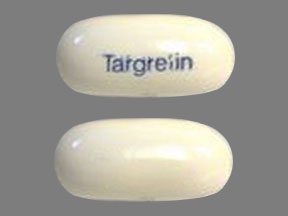
Targretin Side Effects
Generic name: bexarotene
Medically reviewed by Drugs.com. Last updated on Oct 1, 2024.
Note: This document provides detailed information about Targretin Side Effects associated with bexarotene. Some dosage forms listed on this page may not apply specifically to the brand name Targretin.
Applies to bexarotene: oral capsule, oral capsule liquid filled.
Important warnings
This medicine can cause some serious health issues
Oral route (capsule)
Bexarotene capsules are a member of the retinoid class of drugs that is associated with birth defects in humans.
Bexarotene capsules also caused birth defects when administered orally to pregnant rats.
Bexarotene capsules must not be administered to a pregnant woman.
Precautions
It is very important that your doctor check your progress at regular visits to make sure that this medicine is working properly and to check for unwanted effects.
While you are being treated with bexarotene (the active ingredient contained in Targretin), and after you stop treatment with it, do not have any immunizations (vaccinations) without your doctor's approval. Bexarotene may lower your body's resistance, and there is a chance you might get the infection that the immunization is meant to prevent. In addition, other persons living in your household should not take oral polio vaccine, since there is a chance they could pass the polio virus on to you. Also, avoid persons who have taken oral polio vaccine within the last several months. Do not get close to them, and do not stay in the room with them for very long. If you cannot take these precautions, you should consider wearing a protective face mask that covers the nose and mouth.
Bexarotene can temporarily lower the number of white blood cells in your blood, increasing the chance of getting an infection. It can also lower the number of platelets, which are necessary for proper blood clotting. If this occurs, there are certain precautions you can take, especially when your blood count is low, to reduce the risk of infection or bleeding:
- If you can, avoid people with infections. Check with your doctor immediately if you think you are getting an infection or if you get a fever or chills, cough or hoarseness, lower back or side pain, or painful or difficult urination.
- Check with your doctor immediately if you notice any unusual bleeding or bruising; black, tarry stools; blood in urine or stools; or pinpoint red spots on your skin.
- Be careful when using a regular toothbrush, dental floss, or toothpick. Your medical doctor, dentist, or nurse may recommend other ways to clean your teeth and gums. Check with your medical doctor before having any dental work done.
- Do not touch your eyes or the inside of your nose unless you have just washed your hands and have not touched anything else in the meantime.
- Be careful not to cut yourself when you are using sharp objects such as a safety razor or fingernail or toenail cutters.
- Avoid contact sports or other situations where bruising or injury could occur.
Bexarotene may cause your skin to be more sensitive to sunlight than it is normally. Exposure to sunlight, even for brief periods of time, may cause a skin rash, itching, redness or other discoloration of the skin, or a severe sunburn. When you begin taking this medicine:
- Stay out of direct sunlight, especially between the hours of 10:00 a.m. and 3:00 p.m., if possible.
- Wear protective clothing, including a hat. Also, wear sunglasses.
- Apply a sun block product that has a skin protection factor (SPF) of at least 15. Some patients may require a product with a higher SPF number, especially if they have a fair complexion. If you have any questions about this, check with your health care professional.
- Apply a sun block lipstick that has an SPF of at least 15 to protect your lips.
- Do not use a sunlamp or tanning bed or booth.
Serious side effects of Targretin
Along with its needed effects, bexarotene may cause some unwanted effects. Although not all of these side effects may occur, if they do occur they may need medical attention.
Since this medication is given in varying doses, the actual frequency of side effects may vary. In general, side effects are less common with lower doses than with higher doses.
Check with your doctor as soon as possible if any of the following side effects occur while taking bexarotene:
More common side effects
- unusual tiredness or weakness
- skin rash or other skin and mucous membrane lesions
- fever
- increase in lipid or cholesterol levels
- coldness, dry, puffy skin or weight gain
- chills, cough, hoarseness, lower back or side pain or painful or difficult urination
- swelling of the arms, feet, hands, or legs
Less common side effects
- severe stomach pain with nausea or vomiting
- shortness of breath
- yellow eyes or skin
Other side effects of Targretin
Some side effects of bexarotene may occur that usually do not need medical attention. These side effects may go away during treatment as your body adjusts to the medicine. Also, your health care professional may be able to tell you about ways to prevent or reduce some of these side effects.
Check with your health care professional if any of the following side effects continue or are bothersome or if you have any questions about them:
More common side effects
- abdominal pain
- hair loss
- loss of appetite
- loss of strength or energy, tiredness or weakness
- back pain
- diarrhea
- dry skin
- general feeling of discomfort or illness
- trouble in sleeping
- headache
- nausea or vomiting
See also:
For healthcare professionals
Applies to bexarotene: oral capsule.
General adverse events
Due to its primarily retinoid X receptor (RXR)-binding activity, this drug is less likely to cause adverse effects (arthralgia; myalgia; and mucocutaneous, nail, and hair toxicities) frequently reported with retinoic acid receptor (RAR)-binding agents.[Ref]
Endocrine
- Very common (10% or more): Decreased TSH (up to 60%), hypothyroidism (up to 53%), decreased total T4 (up to 45%)
- Common (1% to 10%): Thyroid disorder, altered hormone level
- Uncommon (0.1% to 1%): Hyperthyroidism
- Frequency not reported: Hyperglycemia, decreased libido, increased and decreased gonadotropic luteinizing hormone[Ref]
Hematologic
- Very common (10% or more): Leukopenia (up to 47%), anemia (up to 25%), hypochromic anemia (up to 13%)
- Common (1% to 10%): Lymphoma-like reaction, lymphadenopathy
- Uncommon (0.1% to 1%): Blood dyscrasia, coagulation disorder, increased coagulation time, thrombocytopenia, thrombocythemia, eosinophilia, leukocytosis, lymphocytosis, abnormal erythrocytes
- Frequency not reported: Neutropenia, decreased thromboplastin, bone marrow suppression, decreased absolute neutrophil count, decreased absolute lymphocyte count, decrease white blood cell count, decreased hemoglobin[Ref]
Other
- Very common (10% or more): Asthenia (up to 45%), infection (up to 23%), fever (up to 17%), bacterial infection (up to 13%), chills (up to 13%), flu syndrome (up to 13%), peripheral edema (up to 13%), pain (up to 12%)
- Common (1% to 10%): Deafness
- Uncommon (0.1% to 1%): Ear disorder, parasitic infection, edema, mucous membrane disorder, abnormal lab test
- Frequency not reported: Chest pain, breast pain, breast enlargement, sepsis, ear pain, otitis externa, tinnitus, malaise, viral infection[Ref]
Gastrointestinal
- Very common (10% or more): Diarrhea (up to 42%), nausea (up to 16%), vomiting (up to 13%), abdominal pain (up to 11%)
- Common (1% to 10%): Cheilitis, constipation, dry mouth, flatulence
- Uncommon (0.1% to 1%): Pancreatitis, gastrointestinal disorder
- Frequency not reported: Colitis, melena, dyspepsia, gastroenteritis, gingivitis, increased amylase, increased lipase, stomatitis, abnormal stools, tenesmus, pelvic pain, eructation, enlarged abdomen, dysphagia, mouth ulceration, oral moniliasis, gingivitis[Ref]
Nervous system
- Very common (10% or more): Headache (up to 42%)
- Common (1% to 10%): Dizziness, hypesthesia
- Uncommon (0.1% to 1%): Ataxia, neuropathy, vertigo, hyperesthesia
- Frequency not reported: Syncope, cerebrovascular accident, subdural hematoma, migraine, peripheral neuritis, paresthesia, somnolence, stupor, circumoral paresthesia, taste perversion[Ref]
Dermatologic
- Very common (10% or more): Exfoliative dermatitis (up to 28%), rash (up to 23%), pruritus (up to 20%), dry skin (up to 17%), alopecia (up to 11%)
- Common (1% to 10%): Skin ulcer, skin hypertrophy, skin nodule, acne, sweating, skin disorder
- Uncommon (0.1% to 1%): Purpura, serous drainage, herpes simplex, pustular rash, cellulitis, skin discoloration, hair disorder, nail disorder
- Frequency not reported: Maculopapular rash, vesicular bullous rash, ecchymosis, petechia, pallor, psoriasis, furunculosis, contact dermatitis, herpes zoster, seborrhea, lichenoid dermatitis, photosensitivity reaction, face edema, body odor[Ref]
Ocular
- Very common (10% or more): Cataracts/lens opacities (up to 19%)
- Common (1% to 10%): Dry eyes, eye disorder
- Uncommon (0.1% to 1%): Amblyopia, visual field defect, corneal lesion, abnormal vision, blepharitis, conjunctivitis
- Frequency not reported: Keratitis, night blindness, nystagmus, lacrimation disorder, eye pain[Ref]
Musculoskeletal
- Very common (10% or more): Back pain (up to 11%)
- Common (1% to 10%): Arthralgia, myalgia, bone pain
- Uncommon (0.1% to 1%): Myasthenia
- Frequency not reported: Arthrosis, increased creatinine phosphokinase, hypertonia, leg cramps, abnormal gait, arthritis, joint disorder[Ref]
Psychiatric
- Very common (10% or more): Insomnia (up to 11%)
- Uncommon (0.1% to 1%): Depression, agitation
- Frequency not reported: Anxiety, emotional lability, abnormal thinking, confusion, nervousness[Ref]
Metabolic
- Very common (10% or more): Decreased HDL cholesterol (up to 90%), hyperlipemia (up to 79%), elevated cholesterol (up to 75%), elevated triglycerides (up to 70%), hypercholesterolemia (up to 62%), hypocholesterolemia (up to 28%), anorexia (up to 23%), increased lactic dehydrogenase (up to 13%)
- Common (1% to 10%): Weight gain, hypoproteinemia
- Uncommon (0.1% to 1%): Gout
- Frequency not reported: Elevated LDL cholesterol, decreased weight, dehydration, increased alkaline phosphatase, hypercalcemia, hypocalcemia, hypernatremia, hyponatremia, hyperkalemia, hypokalemia, hypolipemia, hypomagnesemia, increased appetite, thirst, hypovolemia[Ref]
Hepatic
- Common (1% to 10%): Increased SGPT/ALT, increased SGOT/AST, increased bilirubin
- Uncommon (0.1% to 1%): Bilirubinemia, liver failure
- Frequency not reported: Cholestasis, cholecystitis, liver damage, jaundice[Ref]
Immunologic
- Common (1% to 10%): Allergic reaction[Ref]
Renal
- Common (1% to 10%): Increased creatinine
- Uncommon (0.1% to 1%): Increased BUN, abnormal kidney function[Ref]
Cardiovascular
- Uncommon (0.1% to 1%): Tachycardia, hemorrhage, hypertension, vasodilation, varicose vein
- Frequency not reported: Angina pectoris, right heart failure, arrhythmia, peripheral vascular disorder, decreased prothrombin, congestive heart failure, palpitation, vascular anomaly, vascular disorder[Ref]
Genitourinary
- Uncommon (0.1% to 1%): Albuminuria
- Frequency not reported: Hematuria, urinary incontinence, urinary tract infection, urinary urgency, dysuria, monilia infection, hyperuricemia, urinary retention, impaired urination, polyuria, nocturia, urine abnormality[Ref]
Oncologic
- Uncommon (0.1% to 1%): Neoplasm
- Frequency not reported: Carcinoma[Ref]
Respiratory
- Frequency not reported: Pharyngitis, rhinitis, dyspnea, pleural effusion, bronchitis, increased cough, lung edema, hemoptysis, hypoxia, pneumonia, sinusitis, epistaxis, respiratory disorder, lung disorder, pleural disorder, laryngismus[Ref]
References
1. (2001) "Product Information. Targretin (bexarotene)." Ligand Pharmaceuticals
More about Targretin (bexarotene)
- Check interactions
- Compare alternatives
- Pricing & coupons
- Reviews (2)
- Drug images
- Dosage information
- During pregnancy
- Generic availability
- Drug class: miscellaneous antineoplastics
- En español
Patient resources
Professional resources
Other formulations
Related treatment guides
Further information
Targretin side effects can vary depending on the individual. Always consult your healthcare provider to ensure the information displayed on this page applies to your personal circumstances.
Note: Medication side effects may be underreported. If you are experiencing side effects that are not listed, submit a report to the FDA by following this guide.