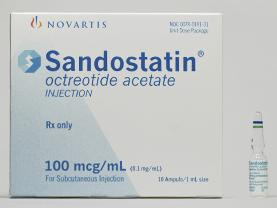
Sandostatin Side Effects
Generic name: octreotide
Medically reviewed by Drugs.com. Last updated on May 15, 2025.
Note: This document provides detailed information about Sandostatin Side Effects associated with octreotide. Some dosage forms listed on this page may not apply specifically to the brand name Sandostatin.
Applies to octreotide: oral capsule delayed release.
Other dosage forms:
Precautions
It is very important that your doctor check your progress at regular visits to make sure that this medicine is working properly. Blood and urine tests may be needed to check for unwanted effects.
This medicine may increase your risk of having gallstones (cholelithiasis), which may lead to swelling of the gallbladder (cholecystitis), bile ducts (cholangitis), or pancreas (pancreatitis). Check with your doctor right away if you have severe stomach pain with nausea and vomiting, indigestion, fever, chills, pains in the stomach or side, possibly radiating to the back, fast heartbeat, dark urine, bloating, or yellow eyes or skin.
This medicine may cause your blood sugar levels to rise or fall. It may cover up signs of hypoglycemia (low blood sugar), such as a change in your pulse rate. If you notice a change in the results of your blood sugar or urine sugar test, check with your doctor.
Octreotide may cause hypothyroidism (underactive thyroid gland). Check with your doctor right away if you have constipation, a depressed mood, dry skin and hair, cold skin, hair loss, hoarseness or husky voice, muscle cramps and stiffness, a slow heartbeat, weight gain, or unusual tiredness or weakness.
Contact your doctor right away if you have any changes to your heart rhythm. You might feel dizzy or faint, or you might have a fast, slow, pounding, or uneven heartbeat. Make sure your doctor knows if you had a heart rhythm problem, such as QT prolongation.
This medicine may cause a serious allergic reaction, called anaphylaxis, which can be life-threatening and requires immediate medical attention. Tell your doctor right away if you have a rash, itching, hoarseness, trouble breathing or swallowing, or any swelling of your hands, face, or mouth after using this medicine.
This medicine may improve fertility in some women, which could increase the risk for unplanned pregnancies. Talk to your doctor if you have any concerns.
Before you have any medical tests, tell the medical doctor in charge that you are using this medicine. The results of some tests may be affected by this medicine.
Do not take other medicines unless they have been discussed with your doctor. This includes prescription or nonprescription (over-the-counter [OTC]) medicines and herbal or vitamin supplements.
Serious side effects of Sandostatin
Along with its needed effects, octreotide (the active ingredient contained in Sandostatin) may cause some unwanted effects. Although not all of these side effects may occur, if they do occur they may need medical attention.
Check with your doctor immediately if any of the following side effects occur while taking octreotide:
More common side effects
- bladder pain
- bloody or cloudy urine
- blurred vision
- chest tightness
- chills
- cough
- diarrhea
- difficult, burning, or painful urination
- dry mouth
- fever
- flushed, dry skin
- frequent urge to urinate
- fruit-like breath odor
- gaseous stomach pain
- general feeling of discomfort or illness
- headache
- increased hunger
- increased thirst
- increased urination
- joint pain
- loss of appetite
- lower back or side pain
- muscle aches or pains
- nausea
- pain or tenderness around the eyes and cheekbones
- recurrent fever
- shivering
- sore throat
- stomach pain or fullness
- stuffy or runny nose
- sweating
- swelling of the hands, ankles, feet, or lower legs
- trouble breathing
- trouble sleeping
- unexplained weight loss
- unusual tiredness or weakness
- vomiting
- yellow eyes or skin
Less common side effects
- anxiety
- body aches or pain
- burning feeling in the chest or stomach
- cold sweats
- confusion
- constipation
- cool, pale skin
- depressed mood
- dizziness
- dry skin and hair
- ear congestion
- fainting
- fast, slow, or irregular heartbeat
- hair loss
- hoarseness or husky voice
- indigestion
- loss of consciousness
- loss of voice
- muscle cramps or stiffness
- nervousness
- nightmares
- pounding in the ears
- seizures
- shakiness
- slurred speech
- sneezing
- stomach upset or tenderness
- weight gain
Incidence not known
- black, tarry stools
- bleeding gums
- blindness
- bloating
- blood in vomit
- change in the frequency or amount of urine
- changes in vision
- chest pain or discomfort
- dark urine
- darkening of the skin
- deafness
- decreased vision
- dizziness, fainting, or lightheadedness when getting up suddenly from lying or sitting position
- double vision
- eye pain
- hives, skin rash
- itching, pain, redness, swelling, tenderness, or warmth of the skin
- light-colored stools
- loss of appetite
- migraine headache
- pain or discomfort in the arms, jaw, back, or neck
- pale skin
- paleness or cold feeling in the fingertips and toes
- pinpoint red spots on the skin
- problems with speech or speaking
- puffiness or swelling of the eyelids or around the eyes, face, lips, or tongue
- severe cramping
- sores, ulcers, or white spots on the lips or in the mouth
- tearing
- tingling or pain in the fingers or toes when exposed to cold temperature
- unusual bleeding or bruising
- vomiting of blood or material that looks like coffee grounds
- weakness of the muscles in your face
Other side effects of Sandostatin
Some side effects of octreotide may occur that usually do not need medical attention. These side effects may go away during treatment as your body adjusts to the medicine. Also, your health care professional may be able to tell you about ways to prevent or reduce some of these side effects.
Check with your health care professional if any of the following side effects continue or are bothersome or if you have any questions about them:
More common side effects
- difficulty in moving
- joint swelling or redness
- lack or loss of strength
- passing gas
- pressure in the stomach
- swelling of the abdominal or stomach area
Less common side effects
- bleeding after defecation
- uncomfortable swelling around the anus
Incidence not known
- decreased interest in sexual intercourse
- inability to have or keep an erection
- loss in sexual ability, desire, drive, or performance
- swelling of the breasts or breast soreness in both females and males
- unexpected or excess milk flow from breasts
See also:
For healthcare professionals
Applies to octreotide: injectable solution, intramuscular powder for injection extended release, oral delayed release capsule, subcutaneous solution.
General adverse events
The most common adverse events were gastrointestinal disorders, nervous system disorders, hepatobiliary disorders, and metabolism and nutritional disorders.[Ref]
Gastrointestinal
- Very common (10% or more): Diarrhea (57.9%), abdominal pain (43.9%), nausea (29.8%), flatulence (25.3%), constipation (18.8%), abdominal pain upper (10.5%), abdominal discomfort, loose stools
- Common (1% to 10%): Fat malabsorption, vomiting, dyspepsia, steatorrhea, discoloration of feces, tenesmus, abdominal distension
- Uncommon (0.1% to 1%): GI bleeding, hemorrhoids, appendicitis, gastric/peptic ulcer
- Frequency not reported: Pancreatitis, vomiting, abnormal stools, severe epigastric pain, abdominal tenderness and guarding
- Postmarketing reports: Intestinal obstruction[Ref]
Cardiovascular
- Very common (10% or more): Bradycardia (25%), hypertension (12.6%), conduction abnormalities (10%)
- Common (1% to 10%): Arrhythmias, flushing
- Uncommon (0.1% to 1%): Chest pain, shortness of breath, thrombophlebitis, ischemia, congestive heart failure, palpitations, orthostatic blood pressure decrease, tachycardia[Ref]
Hepatic
- Very common (10% or more): Gallstones (27%), sludge without stones (24%), cholelithiasis (38.2%), biliary duct dilatation (12%)
- Common (1% to 10%): Transaminase increased
- Uncommon (0.1% to 1%): Hepatitis, jaundice, increase in liver enzymes, gallbladder polyp
- Rare (less than 0.1%): Acute pancreatitis
- Frequency not reported: Acute cholecystitis, ascending cholangitis, biliary obstruction, cholestatic hepatitis, pancreatitis[Ref]
Nervous system
- Very common (10% or more): Headache (30%), dizziness (20%)
- Uncommon (0.1% to 1%): Syncope, tremor, seizure, vertigo, Bell's palsy, pituitary apoplexy, amnesia, neuritis[Ref]
Metabolic
- Very common (10% or more): Hyperglycemia (16%)
- Common (1% to 10%): Hypoglycemia, edema, anorexia
- Uncommon (0.1% to 1%): Weight loss, dehydration
- Frequency not reported: Depressed vitamin B12 levels, abnormal Schilling's test[Ref]
Hematologic
- Very common (10% or more): Anemia (15.3%)
- Uncommon (0.1% to 1%): Iron deficiency
- Postmarketing reports: Thrombocytopenia[Ref]
Endocrine
- Very common (10% or more): Biochemical hypothyroidism (12%)
- Common (1% to 10%): Goiter, thyroid dysfunction (e.g. decreased TSH, decreased Total T4, and decreased Free T4)
- Uncommon (0.1% to 1%): Galactorrhea, hypoadrenalism, diabetes insipidus[Ref]
Local
- Very common (10% or more): Injection site pain (13.8%), injection site reactions
- Common (1% to 10%): Injection site hematoma[Ref]
Dermatologic
- Very common (10% or more): Alopecia (13.2%)
- Common (1% to 10%): Pruritus, bruise, rash
- Uncommon (0.1% to 1%): Cellulitis, petechiae, urticaria, basal cell carcinoma[Ref]
Musculoskeletal
- Common (1% to 10%): Joint pain, backache
- Uncommon (0.1% to 1%): Arthritis, joint effusion, muscle pain, Raynaud's phenomenon[Ref]
Psychiatric
- Common (1% to 10%): Depression
- Uncommon (0.1% to 1%): Anxiety, paranoia, libido decrease[Ref]
Other
- Very common (10% or more): Fatigue (31.8%), generalized pain (15%)
- Common (1% to 10%): Weakness
- Uncommon (0.1% to 1%): Hearing loss, otitis[Ref]
Respiratory
- Very common (10% or more): Upper respiratory tract infection (18.2%), sinusitis (12%)
- Common (1% to 10%): Cold symptoms, flu symptoms, epistaxis
- Uncommon (0.1% to 1%): Pneumonia, pulmonary nodule, status asthmaticus[Ref]
Renal
- Uncommon (0.1% to 1%): Increased creatinine kinase[Ref]
Hypersensitivity
- Uncommon (0.1% to 1%): Allergic reaction
- Frequency not reported: Anaphylactic reaction[Ref]
Immunologic
- Very common (10% or more): Antibodies to octreotide (the active ingredient contained in Sandostatin) (25%)
Ocular
- Common (1% to 10%): Blurred vision, visual disturbance
- Uncommon (0.1% to 1%): Increased intraocular pressure[Ref]
Genitourinary
- Common (1% to 10%): Urinary tract infection, pollakiuria
- Uncommon (0.1% to 1%): Gynecomastia, amenorrhea, polymenorrhea, oligomenorrhea, vaginitis, nephrolithiasis, hematuria[Ref]
References
1. (2001) "Product Information. Sandostatin (octreotide)." Sandoz Pharmaceuticals Corporation
2. (2005) "Product Information. Octreotide Acetate (octreotide)." Teva SICOR Pharmaceuticals Inc
3. Cerner Multum, Inc. "UK Summary of Product Characteristics."
4. Cerner Multum, Inc. "Australian Product Information."
5. (2016) "Product Information. SandoSTATIN LAR Depot (octreotide)." Novartis Consumer Health
Frequently asked questions
- Is Sandostatin a chemotherapy drug?
- How is Sandostatin given/administered?
- How does Sandostatin work for GI bleeds?
- Does Sandostatin shrink or slow tumor growth?
More about Sandostatin (octreotide)
- Check interactions
- Compare alternatives
- Pricing & coupons
- Reviews (7)
- Drug images
- Latest FDA alerts (1)
- Dosage information
- During pregnancy
- Generic availability
- Drug class: somatostatin and somatostatin analogs
- Breastfeeding
- En español
Patient resources
Other brands
Professional resources
Other brands
Other formulations
Related treatment guides
Further information
Sandostatin side effects can vary depending on the individual. Always consult your healthcare provider to ensure the information displayed on this page applies to your personal circumstances.
Note: Medication side effects may be underreported. If you are experiencing side effects that are not listed, submit a report to the FDA by following this guide.