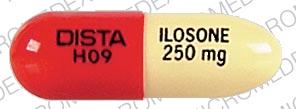
Ilosone Side Effects
Generic name: erythromycin
Medically reviewed by Drugs.com. Last updated on Aug 19, 2023.
Note: This document contains side effect information about erythromycin. Some dosage forms listed on this page may not apply to the brand name Ilosone.
Applies to erythromycin: oral capsule delayed release, oral powder for suspension, oral tablet, oral tablet delayed release, oral tablet enteric coated. Other dosage forms:
Warning
Oral route (Suspension)
Erythromycin estolate is contraindicated in patients with preexisting liver disease. Hepatic dysfunction with or without jaundice has occurred, mainly in adults. It may be accompanied by malaise, nausea, vomiting, abdominal colic, fever, and in some instances, severe abdominal pain may lead to an abdominal surgical emergency. Discontinue erythromycin promptly if the above findings occur.
Serious side effects of Ilosone
Along with its needed effects, erythromycin (the active ingredient contained in Ilosone) may cause some unwanted effects. Although not all of these side effects may occur, if they do occur they may need medical attention.
Check with your doctor immediately if any of the following side effects occur while taking erythromycin:
Rare
- Blistering, peeling, or loosening of the skin
- chills
- cough
- diarrhea
- difficulty with swallowing
- dizziness
- fast heartbeat
- hives or welts, skin rash
- joint or muscle pain
- puffiness or swelling of the eyelids or around the eyes, face, lips, or tongue
- red, irritated eyes
- red skin lesions, often with a purple center
- redness of the skin
- sore throat
- sores, ulcers, or white spots in the mouth or on the lips
- tightness in the chest
- unusual tiredness or weakness
Incidence not known
- Bloating
- bloody or cloudy urine
- chest pain or discomfort
- dark urine
- diarrhea, watery and severe, which may also be bloody
- fainting
- fever
- general tiredness and weakness
- greatly decreased frequency of urination or amount of urine
- hearing loss
- increased thirst
- irregular heartbeat recurrent
- irregular or slow heart rate
- light-colored stools
- nausea
- pain
- stomach cramp or tenderness
- swelling of the feet or lower legs
- unusual weight loss
- upper right abdominal or stomach pain
- vomiting
- yellow eyes and skin
Other side effects of Ilosone
Some side effects of erythromycin may occur that usually do not need medical attention. These side effects may go away during treatment as your body adjusts to the medicine. Also, your health care professional may be able to tell you about ways to prevent or reduce some of these side effects.
Check with your health care professional if any of the following side effects continue or are bothersome or if you have any questions about them:
Incidence not known
- Diarrhea (mild)
- loss of appetite
- weight loss
For Healthcare Professionals
Applies to erythromycin: compounding powder, injectable powder for injection, oral capsule, oral delayed release capsule, oral delayed release tablet, oral granule for reconstitution, oral suspension, oral tablet, oral tablet chewable, oral tablet coated particles.
General
The most commonly reported side effect included localized irritation, abdominal cramping, abdominal discomfort, and decreased appetite.[Ref]
Gastrointestinal
Common (1% to 10%): Abdominal cramping, abdominal pain, diarrhea, flatulence, infantile hypertrophic pyloric stenosis, nausea, severe non¬-bilious vomiting, soft defecation, vomiting
Uncommon (0.1% to 1%): Abdominal discomfort, oral candidiasis
Rare (0.01% to 0.1%): Pancreatitis, pseudomembranous colitis
Very rare (less than 0.01%): Spastic hypertrophic pyloric stenosis (in children)[Ref]
Abdominal pain, diarrhea, nausea, and vomiting may occur with treatment, and appear to be dose-related.
In a study with 157 infants given oral formations for pertussis prophylaxis, 7 (approximately 5%) developed irritability with feeding and severe, non-bilious vomiting associated with IHPS.
Pseudomembranous colitis may occur during or after treatment.[Ref]
Metabolic
Common (1% to 10%): Anorexia, decreased appetite[Ref]
Anorexia may occur with treatment, and appears to be dose-related.[Ref]
Cardiovascular
Common (1% to 10%): Thrombophlebitis
Uncommon (0.1% to 1%): Chest pain, palpitations
Rare (0.01% to 0.1%): Atypical ventricular tachycardia, palpitations, QT interval prolongation/QT prolongation, torsade de pointes, ventricular arrhythmias/fatal ventricular arrhythmias
Very rare (less than 0.01%): Cardiac arrhythmias
Frequency not reported: Cardiac rhythmic disorders, hypotension, ventricular tachyarrhythmias, ventricular tachycardia[Ref]
Local
Common (1% to 10%): Local irritation
Uncommon (0.1% to 1%): Venous irritation
Rare (0.01% to 0.1%): Pain, vessel trauma[Ref]
Slow infusion of diluted parenteral formulations (continuously or intermittently via IV over no less than 20 to 60 minutes) may alleviate venous trauma and pain.[Ref]
Musculoskeletal
Common (1% to 10%): Muscle spasms
Rare (0.01% to 0.1%): Joint swelling, rhabdomyolysis
Very rare (less than 0.01%): Myasthenia gravis unmasking, myasthenia gravis worsening[Ref]
Psychiatric
Common (1% to 10%): Irritability with feeding
Rare (0.01% to 0.1%): Neonatal irritability
Frequency not reported: Confusion, confusional state, hallucinations[Ref]
Dermatologic
Uncommon (0.1% to 1%): Erythema, exanthema, mild rash, pruritus, urticaria, urticarial exanthema
Rare (0.01% to 0.1%): Erythema multiforme, mild skin eruptions, skin reactions, Stevens-Johnson syndrome, toxic epidermal necrolysis
Frequency not reported: Acute generalized exanthematous pustulosis (AGEP), bullous fixed eruptions, eczema, rashes with/without pruritus, skin eruptions, upper abdominal discomfort[Ref]
Hepatic
Abnormal liver function test results, hepatitis, and/or liver dysfunction may occur with oral formulations.[Ref]
Uncommon (0.1% to 1%): Alkaline phosphatase elevations, ALT elevations, AST elevations, elevation of liver enzymes, GGT elevations
Rare (0.01% to 0.1%): Cholestasis, cholestatic jaundice
Very rare (less than 0.01%): Abnormal liver function test results, hepatitis, hepatomegaly, liver dysfunction with/without jaundice, liver failure
Frequency not reported: Cholestatic hepatitis, hepatocellular hepatitis, jaundice, liver dysfunction[Ref]
Immunologic
Uncommon (0.1% to 1%): Overgrowth of nonsusceptible bacteria, overgrowth of nonsusceptible fungi[Ref]
Hypersensitivity
Uncommon (0.1% to 1%): Hypersensitivity
Rare (0.01% to 0.1%): Allergic edema, allergic reactions, anaphylactic reaction, anaphylactic shock, anaphylaxis, angioedema
Frequency not reported: Serious allergic reactions[Ref]
Other
Uncommon (0.1% to 1%): Reversible hearing loss
Rare (0.01% to 0.1%): Pyrexia
Very rare (less than 0.01%): Deafness, reversible deafness, tinnitus
Frequency not reported: Discomfort, fever, malaise[Ref]
Reversible hearing loss was more frequently reported in patients with renal or liver dysfunction.
Older patients, especially those with liver and/or renal dysfunction, may be at higher risk of developing increased risk of hearing loss, especially when given doses of at least 4 grams/day.[Ref]
Genitourinary
Uncommon (0.1% to 1%): Vaginal candidiasis[Ref]
Endocrine
Uncommon (0.1% to 1%): Lactate dehydrogenase (LDH) elevations[Ref]
Nervous system
Rare (0.01% to 0.1%): Central nervous system (CNS) damage, convulsions, seizures
Frequency not reported: Dizziness, headache, mitochondrial optic neuropathy, somnolence, transient CNS side effects, vertigo[Ref]
Renal
Rare (0.01% to 0.1%): Damage to the kidneys
Very rare (less than 0.01%): Tubulointerstitial nephritis
Frequency not reported: Interstitial nephritis[Ref]
Hematologic
Rare (0.01% to 0.1%): Damage to the blood
Frequency not reported: Eosinophilia[Ref]
Ocular
Frequency not reported: Blurred vision, diplopia, visual impairment[Ref]
Respiratory
Frequency not reported: Asthmatic states, dyspnea[Ref]
Frequently asked questions
- What causes black hairy tongue?
- What are enteric-coated tablets?
- Can you take antibiotics while pregnant?
More about Ilosone (erythromycin)
- Check interactions
- Compare alternatives
- Drug images
- Dosage information
- During pregnancy
- Drug class: macrolides
- Breastfeeding
Patient resources
Other brands
Erythrocin, EryPed, E.E.S. Granules, Ery-Tab, ... +3 more
Professional resources
Other brands
Erythrocin, EryPed, E.E.S. Granules, Ery-Tab, PCE Dispertab
Related treatment guides
References
1. Product Information. Eryc (erythromycin). Parke-Davis. PROD.
2. Product Information. Ery-Tab (erythromycin). Abbott Pharmaceutical. 2022.
3. Product Information. Erythrocin Lactobionate (erythromycin). Abbott Pharmaceutical. 2003.
4. Cerner Multum, Inc. UK Summary of Product Characteristics.
5. Cerner Multum, Inc. Australian Product Information.
Further information
Always consult your healthcare provider to ensure the information displayed on this page applies to your personal circumstances.
Some side effects may not be reported. You may report them to the FDA.